Bakumatsu Timeline: From the Black Ships to Meiji
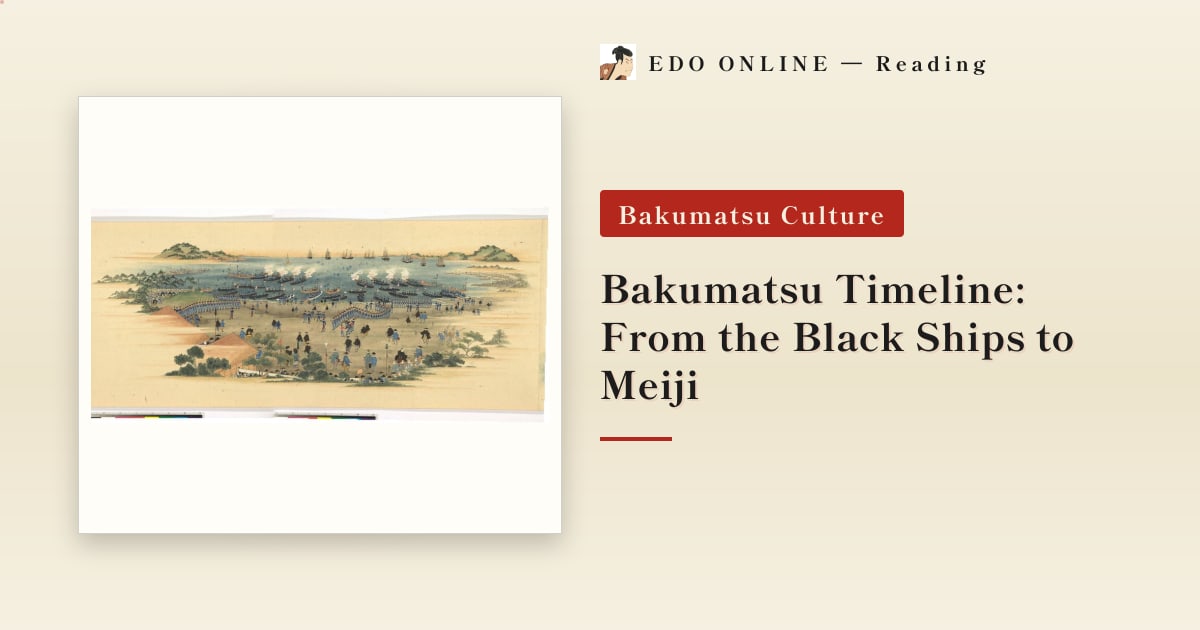
The Bakumatsu is difficult to follow because the events and the people overlap so densely. This page sets out sixteen years in order and shows how each stage produced the next.
Contents
When was the Bakumatsu?
There is no strict definition, but the usual boundaries are these.
| Boundary | Year | Event |
|---|---|---|
| Start | 1853 | The Black Ships arrive |
| End | 1868 | The Meiji Restoration, or 1869 with the surrender of Goryōkaku |
Sixteen years. Out of an Edo period lasting 260, this final fraction occupies most of the textbook.
Bakumatsu timeline
All dates are given in the Gregorian calendar, not the lunisolar calendar in use at the time; the two differ by roughly a month. The return of power to the emperor, for example, is 14th day of the 10th month of Keiō 3 in the old calendar, and 9 November 1867 in the new.
Opening the country, 1853-1858
| Year | Event |
|---|---|
| 1853 | The Black Ships arrive. Perry demands that Japan open |
| 1854 | Convention of Kanagawa. Yoshida Shōin attempts to stow away at Shimoda |
| 1855 | The Nagasaki Naval Training Center opens; Katsu Kaishū studies there |
| 1857 | Construction begins on Goryōkaku |
| 1858 | Ii Naosuke becomes chief minister; commercial treaty signed without imperial sanction; the Ansei Purge begins |
The question of this phase is open the country or expel the foreigners. That the shogunate signed a treaty on its own authority is what ignited the Sonnō Jōi movement.
Upheaval, 1859-1864
| Year | Event |
|---|---|
| 1859 | Yokohama opens. Yoshida Shōin executed |
| 1860 | The Sakuradamon incident. Ii Naosuke assassinated. The Man'en recoinage |
| 1862 | Sakamoto Ryōma leaves Tosa. Matsudaira Katamori of Aizu becomes Protector of Kyoto |
| 1863 | The Shinsengumi is formed. Chōshū driven from Kyoto. Takasugi Shinsaku raises the Kiheitai |
| 1864 | The Ikedaya incident. Chōshū declared an enemy of the court at the Kinmon incident. First shogunal expedition |
A chief minister murdered in daylight destroyed shogunal authority permanently, and political killing became routine.
Overthrow, 1865-1867
| Year | Event |
|---|---|
| 1865 | Takasugi's rising at Kōzan-ji returns Chōshū to the anti-shogunal line |
| 1866 | The Satsuma-Chōshū Alliance. Ryōma attacked at the Terada-ya. The shogunate loses the second Chōshū campaign |
| Jan 1867 | Tokugawa Yoshinobu becomes shogun |
| Nov 1867 | Return of power to the emperor |
| Dec 1867 | Ryōma and Nakaoka Shintarō assassinated. Ee ja nai ka spreads |
The turning point is the second Chōshū campaign of 1866. Once the shogunate had failed to defeat one domain, overthrowing it became a realistic proposition.
Restoration, 1868-1869
| Year | Event |
|---|---|
| Jan 1868 | Restoration of Imperial Rule; the Boshin War begins at Toba-Fushimi |
| May 1868 | Surrender of Edo, agreed between Katsu Kaishū and Saigō Takamori |
| May 1868 | Kondō Isami executed at Itabashi |
| Oct 1868 | The Aizu campaign; the Byakkotai die at Iimoriyama |
| Oct 1868 | The Meiji era is proclaimed |
| Nov 1868 | Tsuruga Castle surrenders and Aizu capitulates |
| Jun 1869 | Hijikata Toshizō killed; Goryōkaku surrenders and the war ends |
Three threads through the Bakumatsu
A list of dates does not explain itself. Three lines run through the whole period.
External pressure eroded shogunal authority. Black Ships → treaty without imperial sanction → the rise of Sonnō Jōi. The conclusion spread that the shogunate could not defend the country.
Repression amplified opposition. Ansei Purge → Sakuradamon → assassination as normal politics. Control by force accelerated the loss of control.
Enemies combined and outgrew the shogunate. Chōshū and Satsuma, who had killed each other at the Ikedaya and the Kinmon incident, allied in 1866 and beat the shogunate in the field. The balance of power inverted at that point.
Bakumatsu figures against the timeline
| Person | Dates | Position in the timeline |
|---|---|---|
| Yoshida Shōin | 1830-1859 | Executed in the Ansei Purge; his students made the Restoration |
| Ii Naosuke | 1815-1860 | Opened the country by force; killed at Sakuradamon |
| Sakamoto Ryōma | 1836-1867 | Brokered the alliance; killed weeks after the return of power |
| Takasugi Shinsaku | 1839-1867 | Kiheitai and the Kōzan-ji rising; died before the Restoration |
| Kondō Isami | 1834-1868 | Shinsengumi commander; executed in the Boshin War |
| Hijikata Toshizō | 1835-1869 | Fought to Hakodate; among the last to die |
| Saigō Takamori | 1828-1877 | Led the overthrow; died in the Satsuma Rebellion |
| Tokugawa Yoshinobu | 1837-1913 | The last shogun, who lived until 1913 |
Look at the death dates. Most of the men who drove the Bakumatsu died between 1867 and 1869. The man they removed outlived all of them by decades.
Frequently asked questions
When was the Bakumatsu?
Generally from the arrival of the Black Ships in 1853 to the Meiji Restoration in 1868, about sixteen years, or to 1869 including the end of the Boshin War.
What were the most important events of the Bakumatsu?
The arrival of the Black Ships in 1853, the Sakuradamon incident in 1860, the Satsuma-Chōshū Alliance and the failed Chōshū campaign in 1866, and the return of power in 1867.
Why did the shogunate fall?
It could not answer foreign pressure, its repression multiplied its opponents, and it was finally defeated militarily by the strongest domains.
For individual events see Bakumatsu culture; for individual lives see Bakumatsu figures.
Related reading
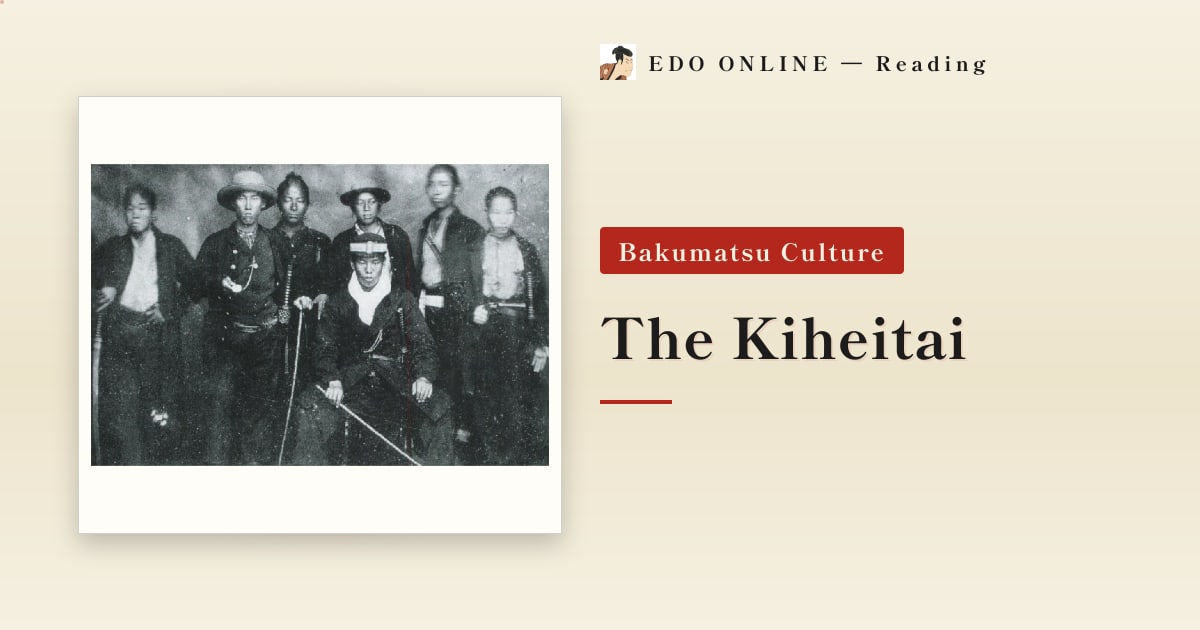
The Kiheitai — Takasugi's Army That Ignored Class
Raised in 1863 by Takasugi Shinsaku, the Kiheitai took commoners as soldiers. Why Choshu did it, how it differed from the regular army, what it won, and how the new government crushed it.
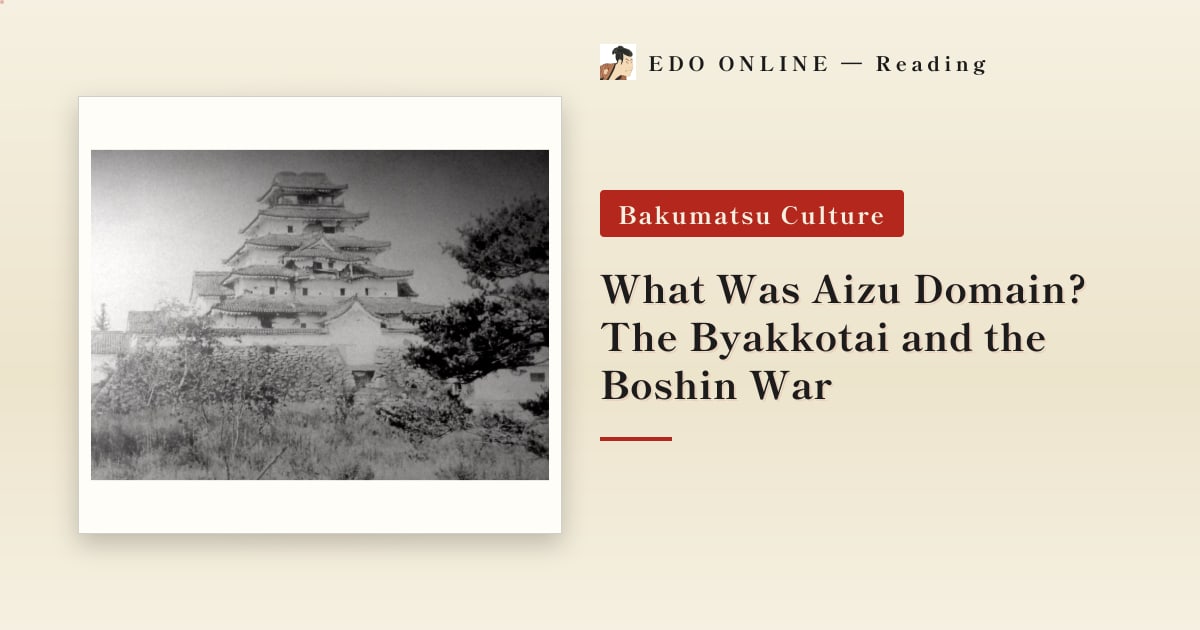
What Was Aizu Domain? The House Code, the Byakkotai, the Siege
Aizu stayed loyal to the shogunate to the end and was destroyed for it. Why Matsudaira Katamori took the Kyoto post, what happened to the Byakkotai, and how the domain was punished.
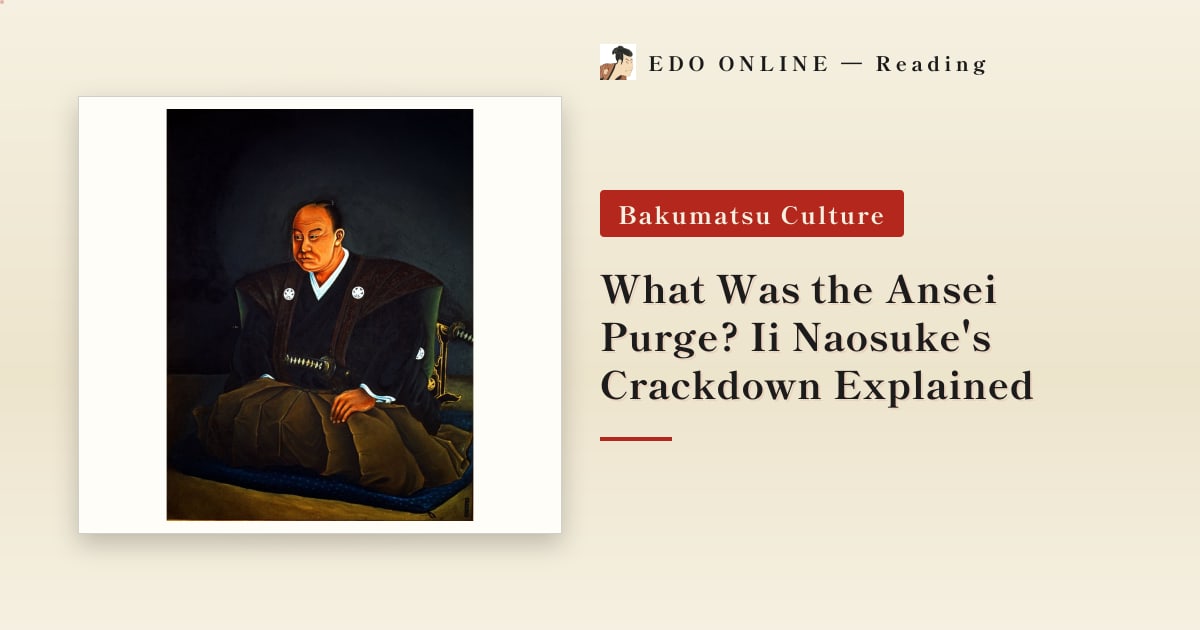
What Was the Ansei Purge? Ii Naosuke's Crackdown Explained
Between 1858 and 1859 the shogunate's chief minister Ii Naosuke purged more than a hundred opponents and executed eight, including Yoshida Shoin. Why it happened and what it destroyed.