What Was the Ansei Purge? Ii Naosuke's Crackdown Explained
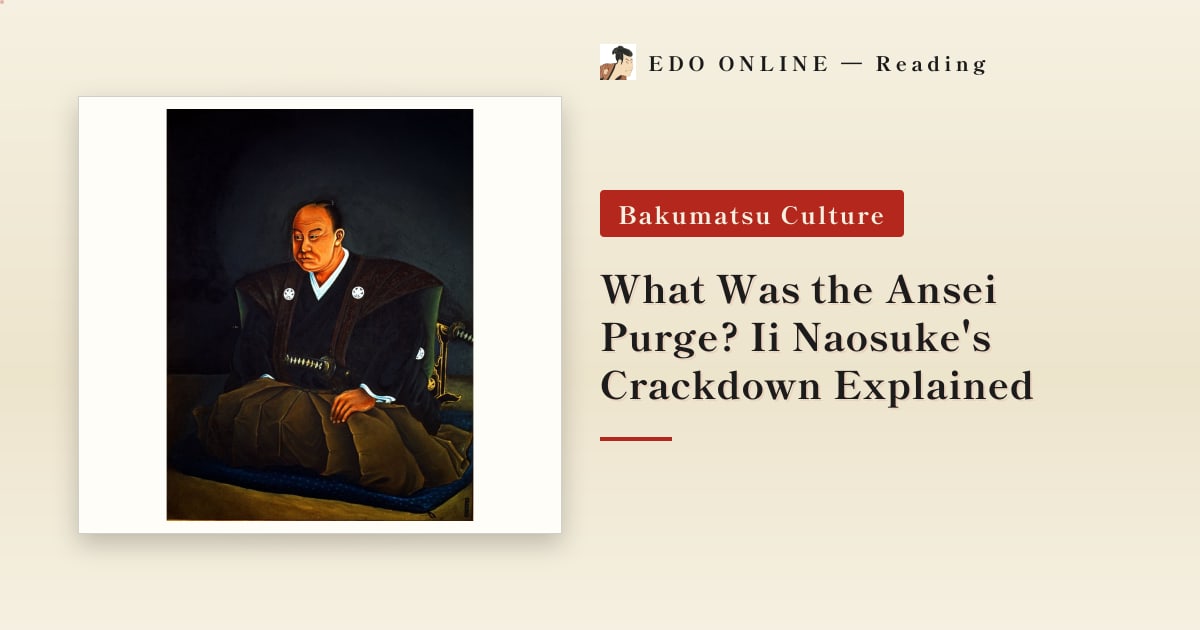
A single crackdown transformed the politics of late Tokugawa Japan. The Ansei Purge, directed by the chief minister Ii Naosuke, was intended to restore the shogunate's authority. It hastened its collapse instead.
Contents
What was the Ansei Purge?
A campaign of arrests, exiles and executions carried out between 1858 and 1859 on the orders of Ii Naosuke, against those who opposed his policies.
More than a hundred people were punished and eight were put to death. Among them were two of the most admired men of their generation: Yoshida Shōin of Chōshū and Hashimoto Sanai of Fukui.
| Item | Detail |
|---|---|
| Period | 1858-1859 |
| Directed by | Chief minister Ii Naosuke; executed largely by senior councillor Manabe Akikatsu |
| Targets | Lords of the Hitotsubashi faction, court nobles, loyalist activists and scholars |
| Scale | Over 100 punished, 8 executed |
| Aftermath | Ii Naosuke assassinated at Sakuradamon in 1860 |
"Ansei" is the era name; the Japanese term literally means "the great imprisonment of the Ansei era."
Why did the Ansei Purge happen?
Two disputes converged.
The shogunal succession
The thirteenth shogun had no heir, and the government split over who should follow him.
- The Nanki faction backed Tokugawa Yoshitomi of Kii, arguing from proximity of blood. Ii Naosuke belonged to this group
- The Hitotsubashi faction backed Hitotsubashi Yoshinobu, later Tokugawa Yoshinobu, arguing that ability should decide. Tokugawa Nariaki of Mito and Shimazu Nariakira of Satsuma supported it
On taking office as chief minister, Ii settled the matter in favour of Yoshitomi. The Hitotsubashi faction lost completely.
Signing a treaty without imperial sanction
In the same year, Ii signed the Treaty of Amity and Commerce with the United States — without obtaining the emperor's approval.
Opening the country may have been unavoidable, but concluding a treaty with a foreign power over the throne's head enraged those who held to Sonnō Jōi principles, and the anger extended into the court itself.
The trigger: the secret imperial letter
Then came the decisive event. In 1858 Emperor Kōmei sent an edict directly to the Mito domain, bypassing the shogunate entirely.
For a shogunate whose authority rested on standing between the throne and the lords, this was an existential challenge. Ii demanded the document's return, pressed Mito hard, and launched a general round-up of everyone connected with it. That is where the Ansei Purge begins.
Who was executed in the Ansei Purge?
Eight were put to death. Three are especially remembered.
Yoshida Shōin (Chōshū, aged 29) — the teacher whose Shōka Sonjuku academy produced Takasugi Shinsaku, Itō Hirobumi and others. He volunteered, under questioning, his plan to assassinate a senior councillor, which is generally held to have sealed his fate. He wrote the Ryūkonroku in prison shortly before his execution.
Hashimoto Sanai (Fukui, aged 25) — an adviser to the reforming lord Matsudaira Shungaku and a central figure in the Hitotsubashi faction. Trained in medicine and Western studies, his loss was regretted even by his opponents.
Rai Mikisaburō (a scholar, aged 34) — a Confucian and loyalist thinker, son of the historian Rai San'yō.
Others executed included Ajima Tatewaki and the Ukai father and son of Mito. Umeda Unpin died in custody. Beyond the executions, Tokugawa Nariaki was confined for life, and Matsudaira Shungaku, Yamauchi Yōdō and Hitotsubashi Yoshinobu were forced into retirement or house arrest.
The shogunate destroyed a portion of the most capable talent of its own generation. That was the real cost.
Ansei Purge timeline
| Date | Event |
|---|---|
| Apr 1858 | Ii Naosuke becomes chief minister |
| Jun 1858 | Treaty of Amity and Commerce signed without imperial sanction |
| Jul 1858 | Tokugawa Yoshitomi confirmed as heir; the Hitotsubashi faction defeated |
| Aug 1858 | The secret imperial edict reaches Mito |
| Sep 1858 | Mass arrests begin |
| Oct 1859 | Yoshida Shōin, Hashimoto Sanai and Rai Mikisaburō executed |
| Mar 1860 | Ii Naosuke assassinated; the purge ends |
What the Ansei Purge achieved
Ii's aim was to restore shogunal authority and impose order by force. The result was the opposite.
The purge created martyrs. Yoshida Shōin's execution above all radicalised his students. Takasugi Shinsaku, Itō Hirobumi, Yamagata Aritomo — the men who would build Meiji Japan were, among other things, men whose teacher had been killed by the shogunate.
Mito's grievance returned to Ii personally. In March 1860, Mito men who had suffered most from the crackdown cut him down outside the Sakuradamon gate of Edo Castle. A chief minister murdered in broad daylight, at the shogun's own gate, announced to the country that the government could no longer protect its own.
Eighteen months separate the height of the purge from the assassination. Rule by force accelerated the collapse of the very order it was meant to preserve.
Frequently asked questions
What was the Ansei Purge?
A crackdown in 1858-59 in which the shogunate's chief minister Ii Naosuke punished more than a hundred lords, courtiers and activists who opposed his policies.
Why did the Ansei Purge happen?
It grew out of the disputed shogunal succession and the signing of a foreign treaty without imperial approval, and was triggered directly by an imperial edict sent to Mito over the shogunate's head.
Who was executed?
Eight people, including Yoshida Shōin, Hashimoto Sanai and Rai Mikisaburō. Umeda Unpin died in custody.
How did the Ansei Purge end?
With the assassination of Ii Naosuke outside the Sakuradamon gate in March 1860.
For the man behind it see Ii Naosuke; for its most famous victim see Yoshida Shōin.
Related reading
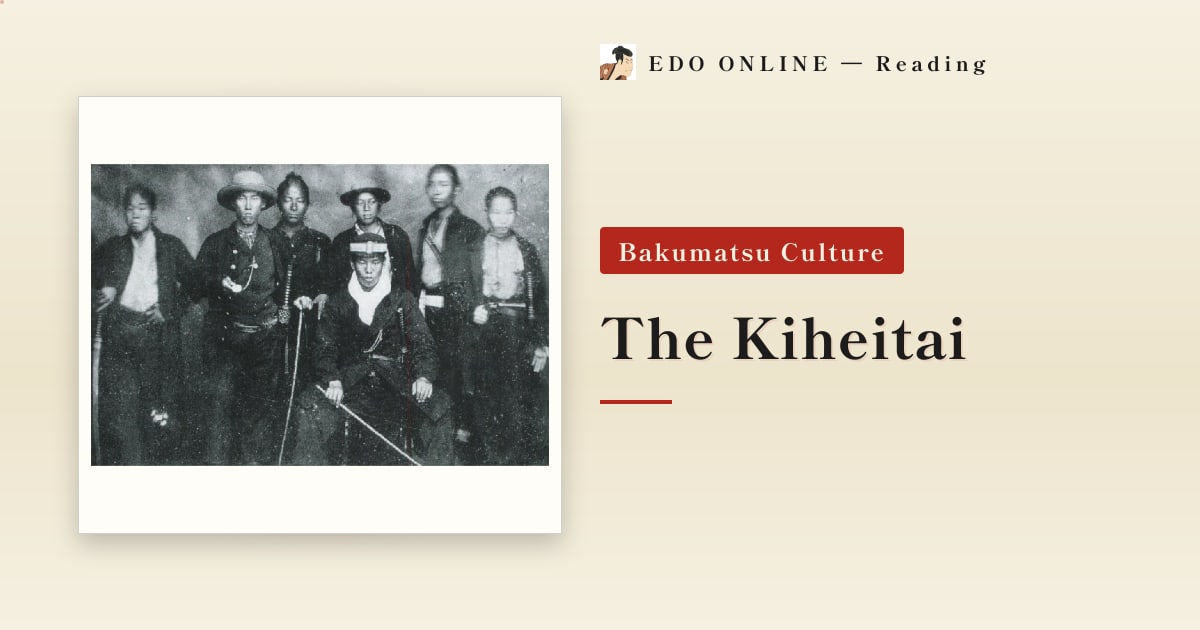
The Kiheitai — Takasugi's Army That Ignored Class
Raised in 1863 by Takasugi Shinsaku, the Kiheitai took commoners as soldiers. Why Choshu did it, how it differed from the regular army, what it won, and how the new government crushed it.
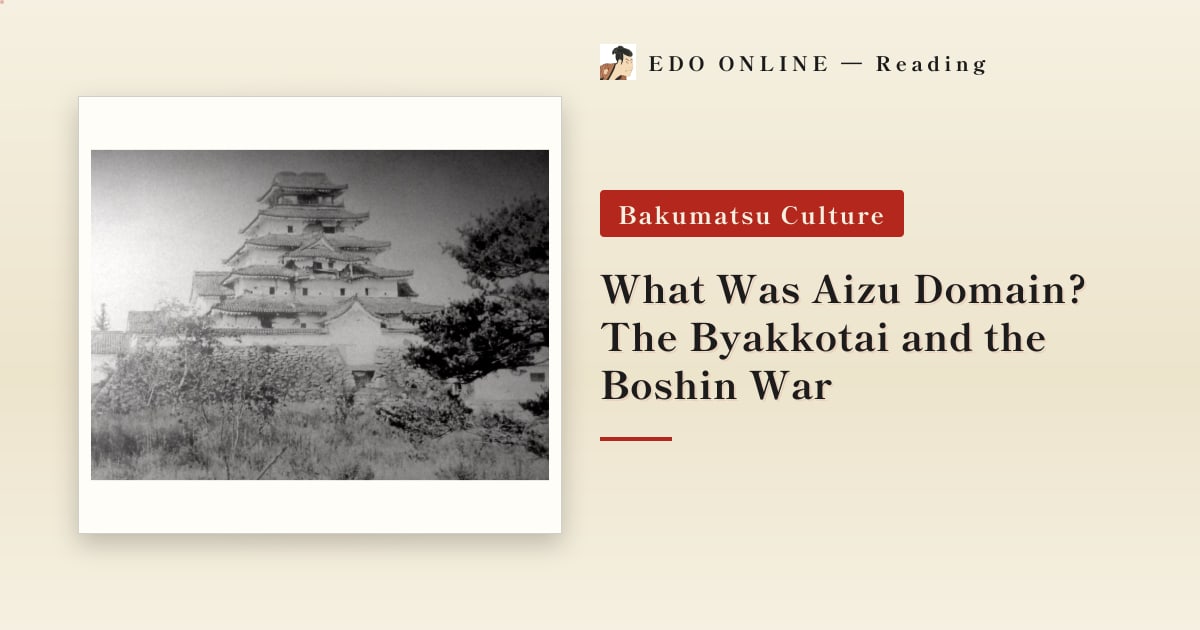
What Was Aizu Domain? The House Code, the Byakkotai, the Siege
Aizu stayed loyal to the shogunate to the end and was destroyed for it. Why Matsudaira Katamori took the Kyoto post, what happened to the Byakkotai, and how the domain was punished.
Domains of the Bakumatsu: Satsuma, Choshu and the Rest
The domains that decided the end of the shogunate, listed with their size and allegiance. Why outside lords led the overthrow, and how a few provinces outgrew the central government.