
What Was Aizu Domain? The House Code, the Byakkotai, the Siege
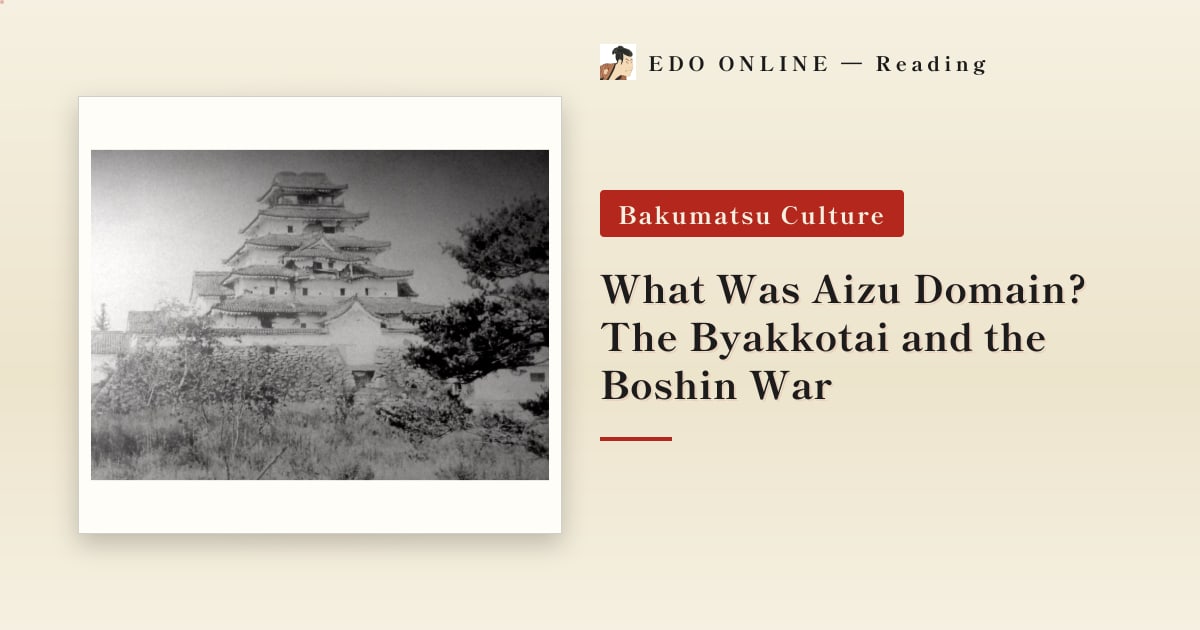
Which domain paid the highest price in the Bakumatsu? Most answers name Aizu. It was branded a traitor precisely because it kept faith, its castle town was burned, and boys still in their teens died in the ruins.
Contents
What was Aizu domain?
Aizu was a 230,000-koku domain in what is now western Fukushima Prefecture, unusually close to the Tokugawa house. Its founder, Hoshina Masayuki, was a half-brother of the third shogun.
| Item | Detail |
|---|---|
| Territory | Aizu, Mutsu Province (around present-day Aizu-Wakamatsu, Fukushima) |
| Assessed yield | 230,000 koku |
| Ruling house | Aizu Matsudaira |
| Founder | Hoshina Masayuki, half-brother of the shogun Tokugawa Iemitsu |
| Bakumatsu lord | Matsudaira Katamori |
| Domain academy | Nisshinkan |
The house code that decided Aizu's fate
Aizu cannot be understood without the fifteen-article house code left by Hoshina Masayuki. Its first article states that the domain must serve the shogunal house with single-minded loyalty, and that if a lord should ever waver, his retainers must not follow him.
That sentence determined the domain's course two centuries later.
When shogunal authority collapsed in the 1860s and most domains were calculating which way to jump, Aizu effectively had no option to abandon the shogunate. Its founding law forbade it.
Why did Matsudaira Katamori accept the Kyoto post?
In 1862 the shogunate created the office of Protector of Kyoto to restore order in the capital, and assigned it to the Aizu lord Matsudaira Katamori.
Katamori initially refused. Kyoto was full of loyalist activists and killings were routine; the financial burden was enormous; and his senior retainers opposed it strongly.
He was brought round, according to tradition, by an appeal to the house code. Measured against an obligation of absolute loyalty to the shogunal house, refusal was a betrayal of the founder. Katamori gave way.
That decision placed Aizu at the front line. The Shinsengumi was raised under the Protector's authority, and Aizu was a principal actor in the Ikedaya incident and the Kinmon incident.
Policing Kyoto meant suppressing loyalists, above all from Chōshū. Aizu became Chōshū's unforgivable enemy, and the slogan the Satsuma bandits and the Aizu villains entered the language.
Why was Aizu declared an enemy of the court?
When the Boshin War opened in 1868, the new government marked Aizu for destruction.
The reason lay in Kyoto. For Satsuma and Chōshū, now running the government, Aizu was the domain that had hunted them. Chōshū's resentment in particular ran deep.
Aizu had already submitted. Katamori made repeated formal apologies and petitions to the new government. They were refused.
Against this the domains of the north and Echigo formed the Northern Alliance, more than thirty strong. The conviction that the punishment of Aizu was disproportionate was the glue that held it together.
Aizu and the Byakkotai
In the autumn of 1868 the imperial army entered Aizu.
The domain had organised its forces by age: Genbutai (50 and over), Seiryūtai (36-49), Suzakutai (18-35) and Byakkotai (16-17). The Byakkotai was intended as a reserve.
As the position deteriorated, the Byakkotai was committed. One section, driven back in the fighting, withdrew to the hill of Iimoriyama and saw smoke rising from the castle town. Concluding that the castle had fallen, twenty of them took their own lives.
The castle had not fallen. What was burning was the town. Tsuruga Castle held out for another month.
One boy survived, and the episode is known through his account.
During the siege women of the domain also took up arms, or killed themselves to avoid becoming a burden. Twenty-one members of the family of the chief retainer Saigō Tanomo died together in this way.
Tsuruga Castle surrendered on 6 November 1868, after roughly a month under siege.
What happened to Aizu afterwards?
The terms imposed were severe.
Former retainers and their families were relocated to Tonami, at the northern tip of Honshu in what is now Aomori Prefecture. The territory was assessed at 30,000 koku, but the volcanic soil produced little and the climate was brutal. Many of those who went died of hunger and cold.
The sense of having been exiled to the north persisted in Aizu for generations, along with lasting bitterness toward a government run from Satsuma and Chōshū.
Public reconciliation between Aizu-Wakamatsu and Hagi, the old Chōshū capital, is a recent development.
Frequently asked questions
Where was Aizu domain?
In present-day western Fukushima Prefecture, centred on Aizu-Wakamatsu. It was assessed at 230,000 koku.
Why did Matsudaira Katamori accept the Kyoto post?
He refused at first but was persuaded by the domain's founding house code, which required absolute loyalty to the shogunal house.
What was the Byakkotai?
A unit of Aizu boys aged sixteen and seventeen. Twenty of them killed themselves at Iimoriyama after wrongly concluding the castle had fallen.
Why was Aizu treated as a traitor?
Because as Protector of Kyoto it had suppressed loyalist activists, making it the target of Satsuma and Chōshū once they controlled the new government. Its offers of submission were rejected.
For the war it fought see the Boshin War; for the unit under its command see the Shinsengumi.
Related reading
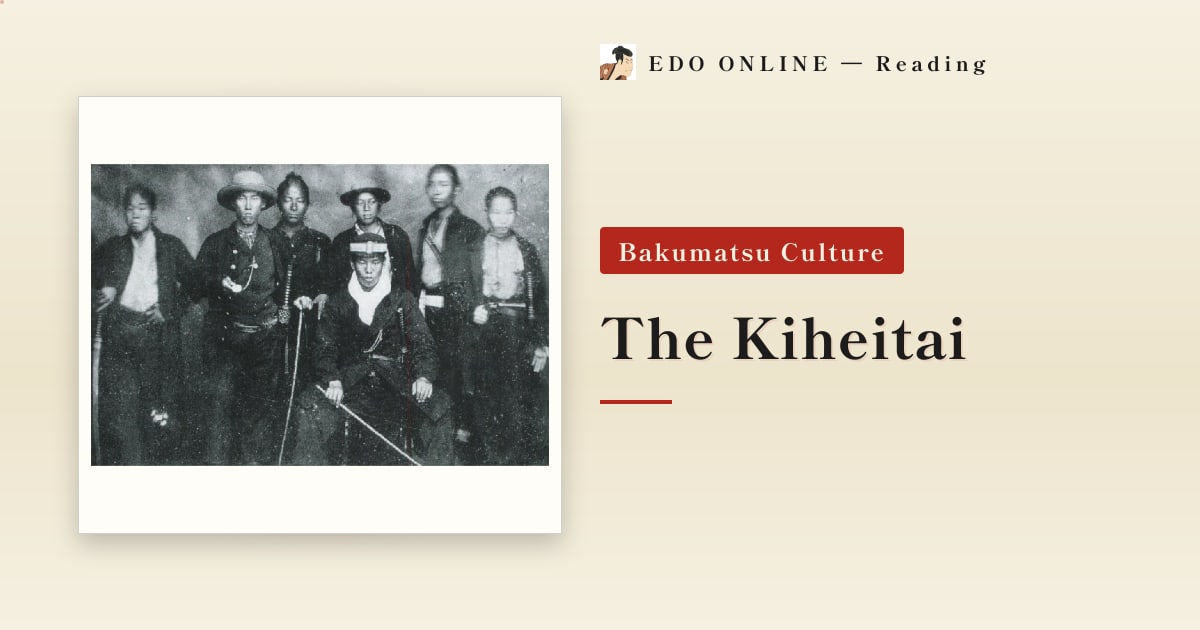
The Kiheitai — Takasugi's Army That Ignored Class
Raised in 1863 by Takasugi Shinsaku, the Kiheitai took commoners as soldiers. Why Choshu did it, how it differed from the regular army, what it won, and how the new government crushed it.
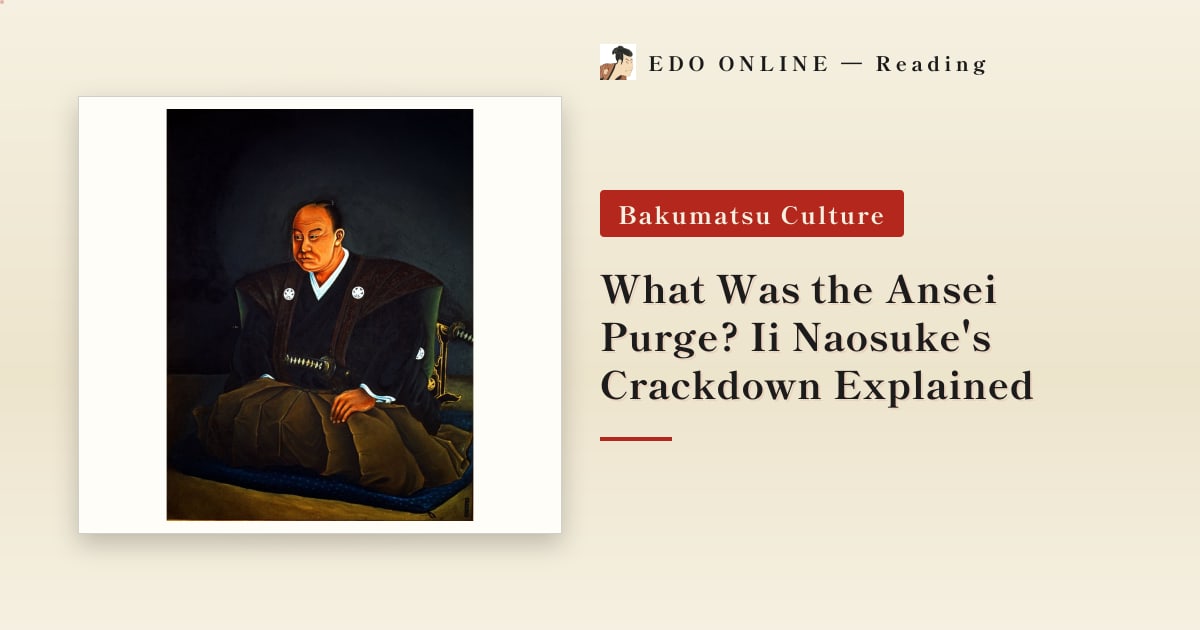
What Was the Ansei Purge? Ii Naosuke's Crackdown Explained
Between 1858 and 1859 the shogunate's chief minister Ii Naosuke purged more than a hundred opponents and executed eight, including Yoshida Shoin. Why it happened and what it destroyed.
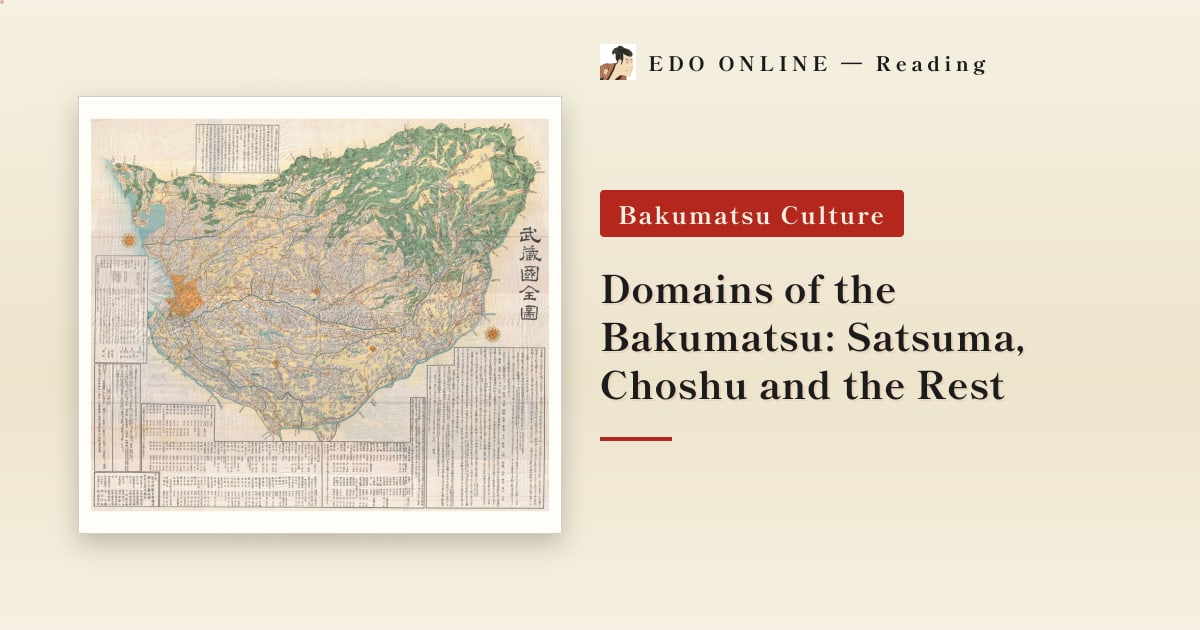
Domains of the Bakumatsu: Satsuma, Choshu and the Rest
The domains that decided the end of the shogunate, listed with their size and allegiance. Why outside lords led the overthrow, and how a few provinces outgrew the central government.