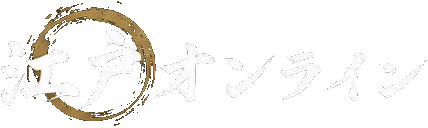
What Was the Ikedaya Incident? The Night the Shinsengumi Rose
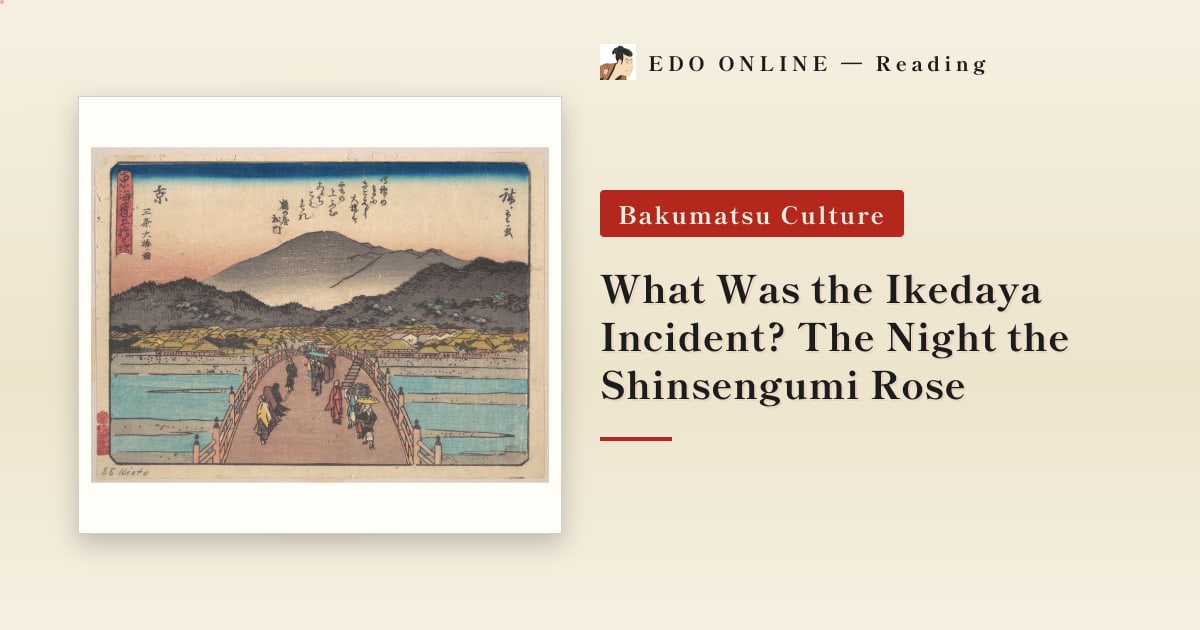
One night made the Shinsengumi famous across Japan. At the Ikedaya, an inn in central Kyoto, Kondō Isami and a handful of men attacked a gathering of anti-shogunal activists.
Contents
What was the Ikedaya incident?
On the night of 8 July 1864, the Shinsengumi raided the Ikedaya inn at Sanjō Kobashi in Kyoto, where activists from Chōshū, Tosa, Kumamoto and elsewhere were meeting.
| Item | Detail |
|---|---|
| Date | Night of 8 July 1864 |
| Place | The Ikedaya inn, Sanjō Kobashi, Kyoto |
| Attackers | The Shinsengumi, under commander Kondō Isami |
| Targets | Loyalist activists, traditionally about twenty (some put it at 13 or 14) |
| Outcome | Heavy casualties among the activists; the Shinsengumi's reputation made |
What triggered the Ikedaya raid?
It began with a man arrested that same morning.
Furutaka Shuntarō ran a fuel business in Kyoto while working as a loyalist agent, and was found to be holding weapons and correspondence. The Shinsengumi seized him and, by contemporary accounts, tortured him at their headquarters.
From that interrogation came intelligence of a plot: to set fires across Kyoto on a windy day, seize the emperor in the confusion and carry him to Chōshū. This is the version that has been repeated ever since.
How much of the plot was real is genuinely uncertain. Confessions extracted under torture are unreliable, and later accounts had every incentive to inflate the danger. That the activists were planning some action to recover their position is clear enough; the scale and specificity claimed for it are not.
What happened at the Ikedaya
Unable to locate the meeting, the Shinsengumi split into two parties and searched the city.
Kondō's group found it. Kondō and three other men are said to have entered the inn, against a gathering traditionally put at about twenty, though some estimates are as low as 13 or 14. The fighting was ferocious, and the cramped interior worked against the defenders, who could not use their numbers.
Hijikata Toshizō's party arrived after the fighting had started and sealed the exits.
Among the activists killed were:
- Miyabe Teizō (Kumamoto) — a senior figure in the loyalist movement and an associate of Yoshida Shōin
- Yoshida Toshimaro (Chōshū) — a Shōka Sonjuku graduate ranked with Takasugi and Kusaka
- Kitazoe Kitsuma (Tosa)
The Shinsengumi also took casualties. The story that Okita Sōji collapsed during the fight is widely told, though the cause and timing are disputed.
Consequences of the Ikedaya incident
The Shinsengumi's reputation
The raid turned an obscure patrol unit into the most feared body in Kyoto. Rewards came from both the court and the shogunate, recruitment expanded, and the corps grew rapidly.
It also made them the permanent object of loyalist hatred. Every subsequent year of the Shinsengumi's existence carried the risk of reprisal.
Its part in the Kinmon incident
The more consequential effect was on Chōshū.
Chōshū had already decided, the day before the raid, to send troops to Kyoto. News that capable men had been cut down there is said to have inflamed the hardliners further. By late July Chōshū forces had gathered around the capital, and on 20 August they fought Satsuma and Aizu around the imperial palace — the Kinmon incident.
Chōshū lost and was declared an enemy of the court. From there followed the first shogunal expedition, the Satsuma-Chōshū Alliance, and the collapse of the shogunate.
The Shinsengumi acted to preserve order in Kyoto, and in doing so helped make a showdown with Chōshū unavoidable. That, on one reading, is the irony of the Ikedaya.
Ikedaya incident timeline
| Date | Event |
|---|---|
| Sep 1863 | Coup expels Chōshū from Kyoto |
| 8 Jul 1864 (morning) | Furutaka Shuntarō arrested |
| 8 Jul 1864 | The Ikedaya incident |
| 20 Aug 1864 | Kinmon incident; Chōshū declared an enemy of the court |
| 1864 | First shogunal expedition against Chōshū |
| Mar 1866 | Satsuma-Chōshū Alliance concluded |
Is the Ikedaya still there?
The building does not survive. A stone marker reading "site of the Ikedaya disturbance" stands near Sanjō Kobashi in Nakagyō ward, Kyoto.
The Sanjō area concentrates several sites from the period. The Ōmiya, where Sakamoto Ryōma was assassinated, is within walking distance.
Frequently asked questions
When was the Ikedaya incident?
On the night of 8 July 1864.
Who carried out the Ikedaya raid?
The Shinsengumi. Kondō Isami's party entered first; Hijikata Toshizō's arrived later and secured the perimeter.
Why did the Shinsengumi attack?
Intelligence obtained from the arrested activist Furutaka Shuntarō indicated a plot in Kyoto, though the reliability and scale of that plot are debated.
Why did the incident make the Shinsengumi famous?
Because a very small party overcame a much larger group, and both the imperial court and the shogunate rewarded them for it.
For the men who led the raid see Kondō Isami and Hijikata Toshizō; for the unit see the Shinsengumi.
Related reading
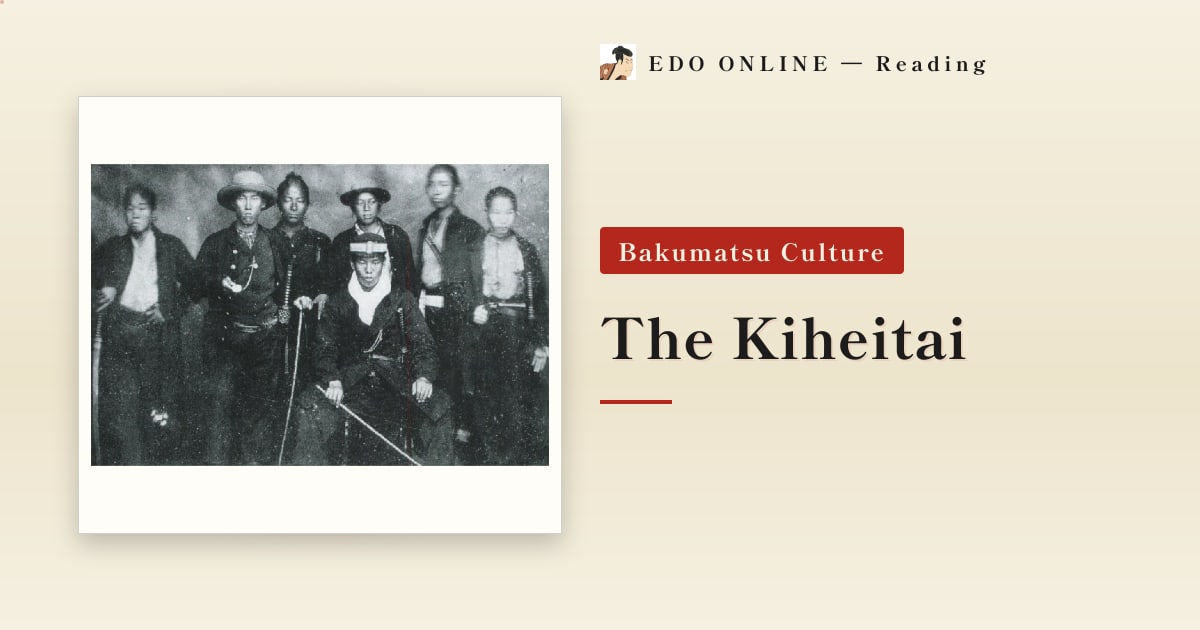
The Kiheitai — Takasugi's Army That Ignored Class
Raised in 1863 by Takasugi Shinsaku, the Kiheitai took commoners as soldiers. Why Choshu did it, how it differed from the regular army, what it won, and how the new government crushed it.
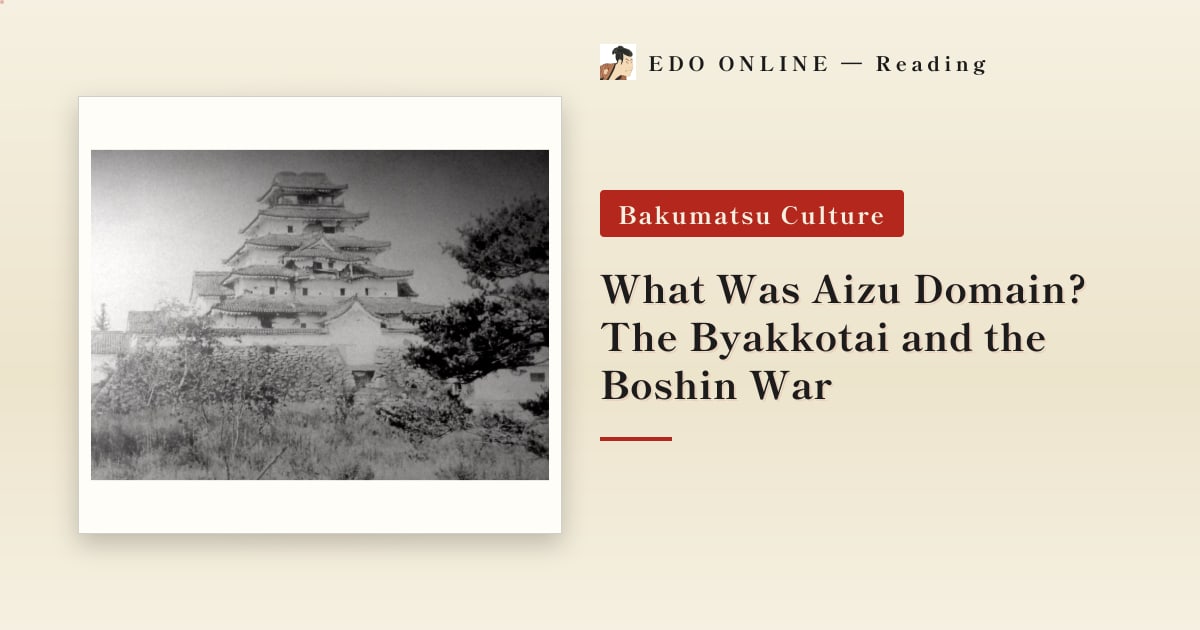
What Was Aizu Domain? The House Code, the Byakkotai, the Siege
Aizu stayed loyal to the shogunate to the end and was destroyed for it. Why Matsudaira Katamori took the Kyoto post, what happened to the Byakkotai, and how the domain was punished.
What Was the Ansei Purge? Ii Naosuke's Crackdown Explained
Between 1858 and 1859 the shogunate's chief minister Ii Naosuke purged more than a hundred opponents and executed eight, including Yoshida Shoin. Why it happened and what it destroyed.