Ee Ja Nai Ka — The 1867 Dancing Frenzy, and the Falling Talismans
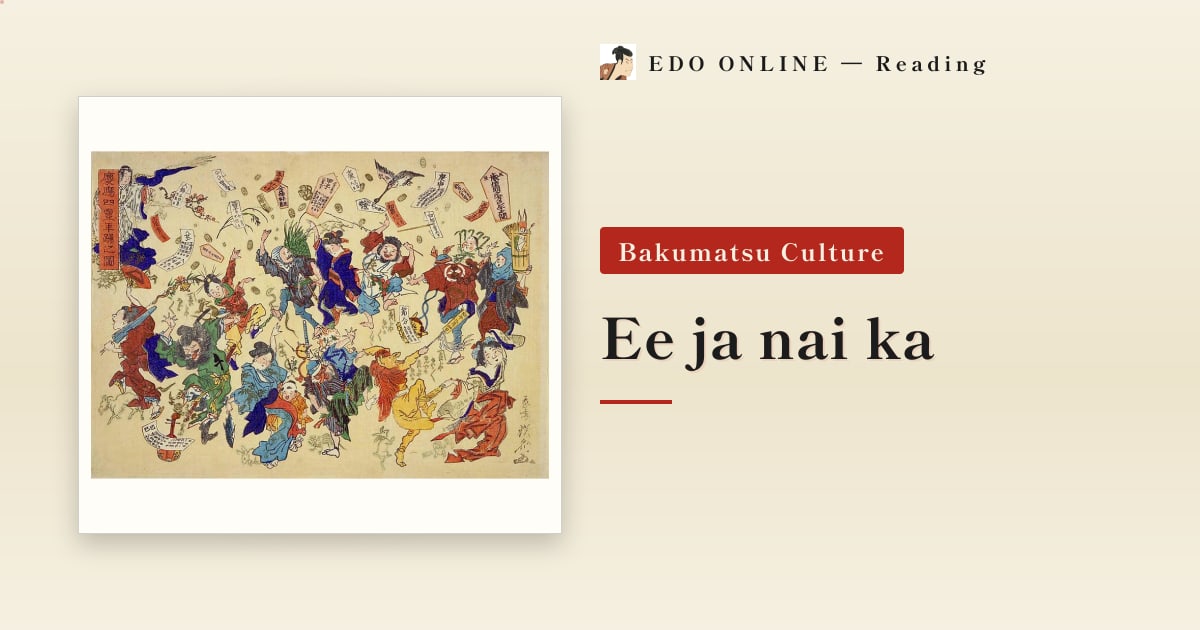
Ee ja nai ka was a frenzy that is genuinely hard to explain, and it happened in the same few months as the shogun's return of power.
Contents
What Was Ee Ja Nai Ka?
It was a mass outbreak of public dancing that spread from the Tokai region across the Kansai in the autumn of 1867 and into the following year.
| Item | Detail |
|---|---|
| Period | From summer–autumn 1867 into spring 1868 |
| Area | Beginning in Tokai (Mikawa, Owari), spreading to Kyoto and Osaka and beyond |
| Trigger | Falling talismans — charms from Ise and other shrines said to drop from the sky |
| Behaviour | People dressed up, poured into the streets and danced, chanting |
| The chant | "Ee ja nai ka" — roughly "why not?" — with regional variations |
| End | Petered out in 1868 as the new government suppressed it |
What defines it is the absence of leaders, demands or a programme. It was not a tax revolt, and it did not target particular merchants for destruction.
What Were the Falling Talismans?
It began with talismans — paper charms from Ise and other shrines — reported to have fallen from the sky.
A household where one fell was expected to celebrate, with food and drink for all comers. People gathered, music started, the celebration spread to the next street. The party turned into a procession.
Did they really fall from the sky? Someone scattering or placing them is the obvious explanation, and contemporaries suspected as much. But no reliable record identifies who did it, or over how wide an area.
Was It a Plot by the Anti-Shogunate Faction?
The claim that loyalist agitators staged the whole thing to distract the shogunate is old and popular. It cannot be treated as established.
What can be said:
- The timing does line up. The peak of the frenzy, the return of power on 9 November 1867 and the restoration decree of 3 January 1868 fall in the same few months
- Streets full of dancing crowds do make troop and weapon movements less conspicuous, and the anti-shogunate side plausibly benefited
- No primary source establishes organised orchestration
"Somebody may have taken advantage of it" and "somebody staged it" are different claims. This article stops at the first.
What Did It Mean to the People Dancing?
The background was inflation after the ports opened. Silk exports through Yokohama drained goods from the domestic market, the Man'en recoinage debased the currency, and the price of rice jumped.
On top of that came political fog. Ordinary people had no way of telling who would be governing next.
The verses people chanted included lines about the world being put right. The sense that things were about to change came first, and the mood came out as festival.
Read Bakumatsu popular movements only through tax revolts and you miss this entirely. Ee ja nai ka was not a demand made of the system, but a reaction to the system changing.
Timeline
| Date | Event |
|---|---|
| Jul–Aug 1867 | Talismans "fall" in the Tokai region; the dancing begins |
| Sep–Nov 1867 | It reaches Kyoto and Osaka; crowds fill the streets for days on end |
| 9 Nov 1867 | The return of power to the emperor |
| 3 Jan 1868 | The restoration decree |
| 27 Jan 1868 | Toba-Fushimi opens the Boshin War |
| spring 1868 | The frenzy dies out under the new government |
Frequently Asked Questions
What was ee ja nai ka?
A mass outbreak of street dancing across central and western Japan in 1867–68, with no leaders and no demands.
What were the falling talismans?
Shrine charms said to have dropped from the sky. Households where one fell held celebrations, and those turned into the dancing.
Was it staged by the anti-shogunate side?
It is often claimed, but no primary evidence of organised orchestration exists. That the timing helped them is as far as the record goes.
Why did it happen?
Post-opening inflation and political uncertainty, with the hope of a world set right coming out in festival form.
When did it end?
Around 1868, as the new government suppressed public gatherings.
For the politics of the same months see the return of power; for the inflation, the Man'en koban.
Related reading
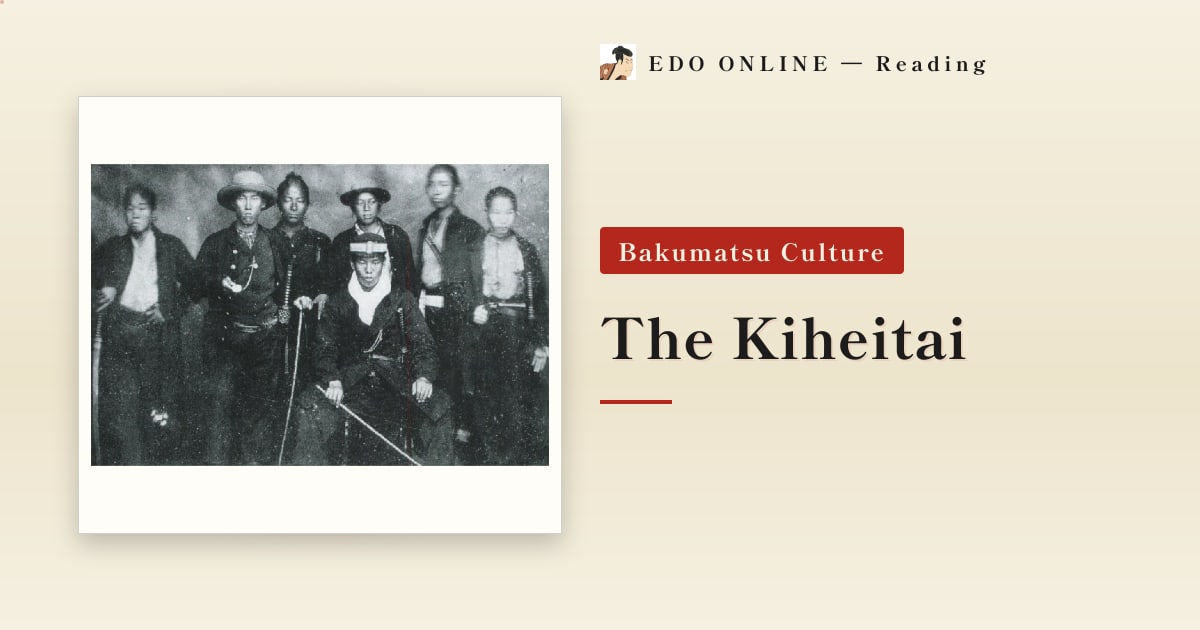
The Kiheitai — Takasugi's Army That Ignored Class
Raised in 1863 by Takasugi Shinsaku, the Kiheitai took commoners as soldiers. Why Choshu did it, how it differed from the regular army, what it won, and how the new government crushed it.
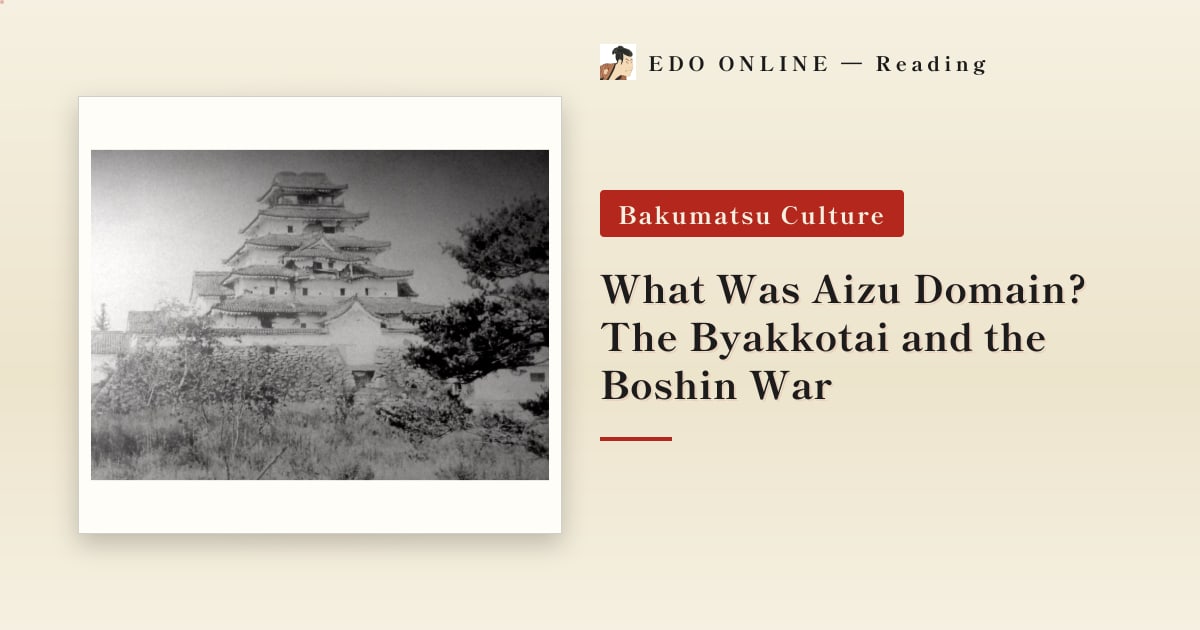
What Was Aizu Domain? The House Code, the Byakkotai, the Siege
Aizu stayed loyal to the shogunate to the end and was destroyed for it. Why Matsudaira Katamori took the Kyoto post, what happened to the Byakkotai, and how the domain was punished.
What Was the Ansei Purge? Ii Naosuke's Crackdown Explained
Between 1858 and 1859 the shogunate's chief minister Ii Naosuke purged more than a hundred opponents and executed eight, including Yoshida Shoin. Why it happened and what it destroyed.