Who Was Saigo Takamori? Life, Achievements and Final Stand
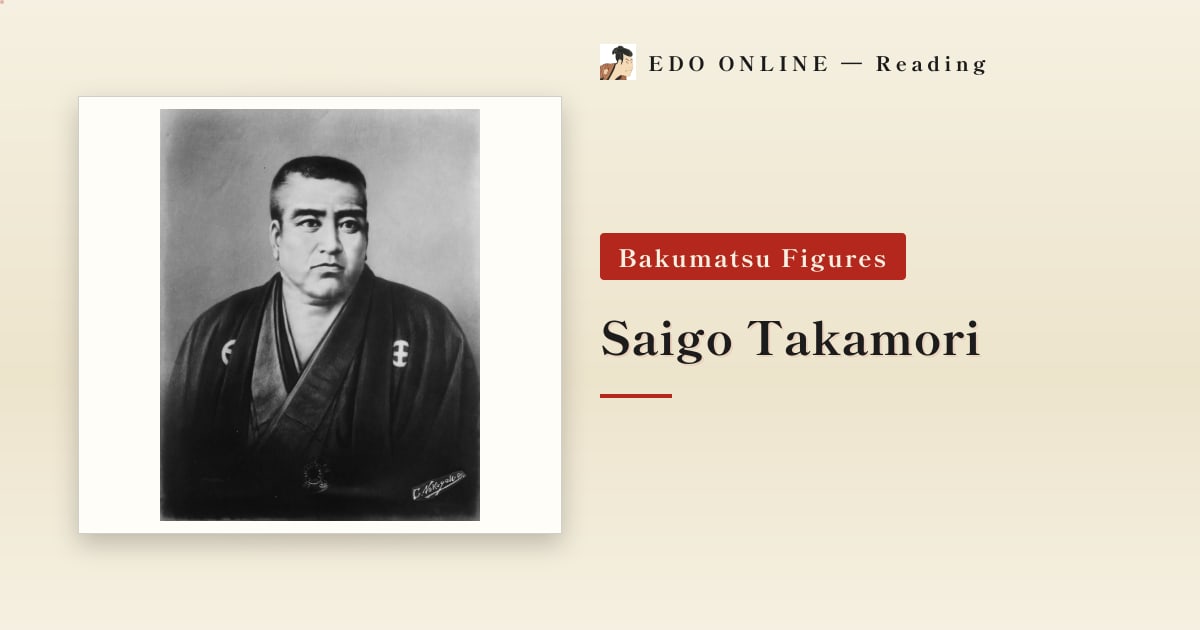
Saigō Takamori, who took "revere heaven, love people" as his motto, was both a central figure in the Meiji Restoration and, in the end, its greatest rebel. He carries two opposing faces: hero of the Restoration, and the man who rose against the government he helped create.
Contents
What did Saigo Takamori do?
Three things secure his place in Japanese history.
| Achievement | What it meant |
|---|---|
| Led Satsuma into the overthrow of the shogunate | Commanded the domain's forces behind the Satsuma-Chōshū Alliance |
| Negotiated the bloodless surrender of Edo | Spared a city of a million people from becoming a battlefield |
| Led the Satsuma Rebellion of 1877 | Japan's last civil war, in which he died |
The third item is what makes him unusual. The man who won the Restoration was killed by the state he had built, less than a decade later.
Saigo Takamori's early life and two exiles
Saigō was born in 1828 into a low-ranking samurai family in Satsuma. His talent was recognised by the domain lord Shimazu Nariakira, who brought him into service.
When Nariakira died, Saigō lost his protection and was exiled twice, first to Amami Ōshima and later to Okinoerabu. The second period of confinement was severe. These years of reversal are usually credited with forming the endurance and the standing among his peers that defined him later.
Saigo Takamori and the bloodless surrender of Edo
In 1868, during the Boshin War, the new government's army advanced on Edo and set a date for a general assault.
Edo held more than a million people. Street fighting would have been catastrophic. In a meeting with the shogunal official Katsu Kaishū, Saigō agreed to call off the attack in exchange for the shogun's submission.
The city was handed over without a battle. It remains one of the most consequential decisions of the period, and the clearest example of Saigō choosing restraint when he held the advantage.
Why did Saigo Takamori break with the new government?
The turning point was the Seikanron crisis of 1873, a dispute over sending an envoy to Korea. Saigō argued for going himself. Ōkubo Toshimichi, freshly returned from touring Europe and America, insisted that domestic reform came first.
Saigō lost, resigned, and returned to Kagoshima.
The deeper cause ran beneath the specific quarrel. The new government was systematically stripping the samurai of their stipends and privileges. Ōkubo drove that policy; Saigō became the figure the dispossessed samurai gathered around. The two men were no longer standing in compatible places.
How did Saigo Takamori die?
In 1877 the samurai of Kagoshima rose in what became the Satsuma Rebellion, and Saigō was placed at their head. Against a conscript army with modern equipment, they were gradually forced back to Shiroyama, a hill above Kagoshima.
On 24 September 1877, under a final assault, Saigō was wounded and unable to move. He is said to have asked his retainer Beppu Shinsuke to act as his second. He was forty-nine.
Whether Saigō actively wanted the rebellion is doubted. The fighting began when students of his private academy raided a government arsenal. He was, in a meaningful sense, carried into it by men who had made him their symbol.
He was posthumously pardoned in 1889 and restored to court rank. The famous statue in Ueno Park was erected afterwards.
Saigo Takamori's family
Saigō married three times.
- Suga — his first wife, divorced during a period of hardship
- Aikana — an Amami Ōshima woman with whom he lived during his exile. They had a son, Kikujirō, and a daughter. She was not permitted to leave the island when he was pardoned
- Itoko — married after his return to Kagoshima; three children, and she supported the household to the end
His son Saigō Kikujirō later studied in the United States and served as mayor of Kyoto. He fought alongside his father in the rebellion and lost a leg.
His younger brother Saigō Tsugumichi stayed with the government and rose to become navy minister. The brothers ended on opposite sides, which says much about the period.
What did Saigo Takamori look like?
The face everyone recognises is not his. Saigō appears to have avoided being photographed, and no reliable portrait from life survives. The Ueno statue and the standard painted likeness were both produced after his death, based partly on the features of relatives.
Contemporary accounts agree on his physical size and, more importantly, on his effect on people. He did not persuade by argument; men followed him because of his presence. Katsu Kaishū, who faced him across the table at Edo, wrote admiringly of his composure.
Saigo Takamori sites
- Nanshu Cemetery and Shrine (Kagoshima) — where Saigō and the rebellion's dead are buried
- Shiroyama (Kagoshima) — the site of his death; the cave survives
- Statues in Kagoshima and Ueno Park, Tokyo
- Amami Ōshima and Okinoerabu — his places of exile
Timeline of Saigo Takamori's life
| Year | Event |
|---|---|
| 1828 | Born into a low-ranking samurai family in Satsuma |
| 1854 | Taken into service by Shimazu Nariakira |
| 1858 | Falls from favour after Nariakira's death; exiled to Amami Ōshima |
| 1862 | Recalled, then exiled again to Okinoerabu |
| 1866 | The Satsuma-Chōshū Alliance is concluded |
| 1868 | Bloodless surrender of Edo; commands in the Boshin War |
| 1873 | Loses the Seikanron dispute and leaves the government |
| 24 Sep 1877 | Dies at Shiroyama during the Satsuma Rebellion, aged 49 |
| 1889 | Posthumously pardoned |
Frequently asked questions
Who was Saigo Takamori?
A Satsuma samurai who led the overthrow of the shogunate, negotiated the bloodless surrender of Edo, and later died leading the Satsuma Rebellion against the government he had helped establish.
How did Saigo Takamori die?
He was wounded during the final assault on Shiroyama in September 1877 and died there, reportedly asking a retainer to act as his second.
Was Saigo Takamori the "last samurai"?
He is often described that way, and the 2003 film drew loosely on the Satsuma Rebellion. The characterisation is popular rather than historical.
Is the Ueno statue an accurate likeness?
No. No reliable image of Saigō from life is known to survive.
For his lifelong counterpart see Ōkubo Toshimichi; for the war he directed see the Boshin War.
Related reading
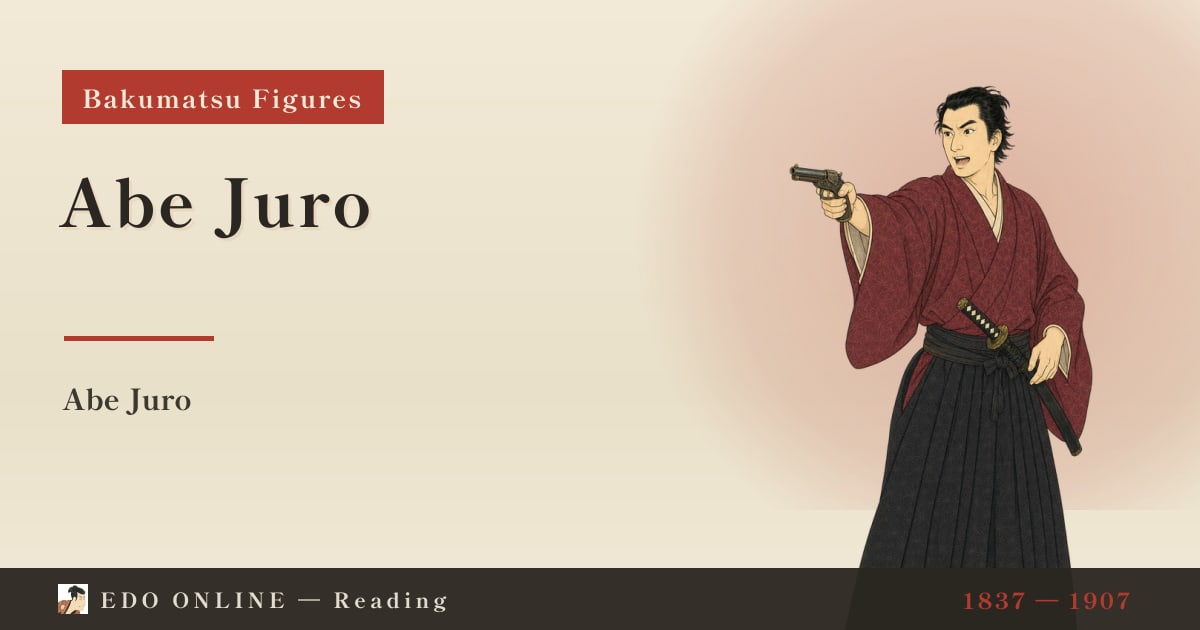
Abe Juro — The Former Member Who Talked
He deserted the Shinsengumi and rejoined under another name, shot at Kondo Isami as one of the Goryō Eji, and then grew apples in Sapporo. His late-Meiji testimony is where the ranking of the corps' best swordsmen comes from.
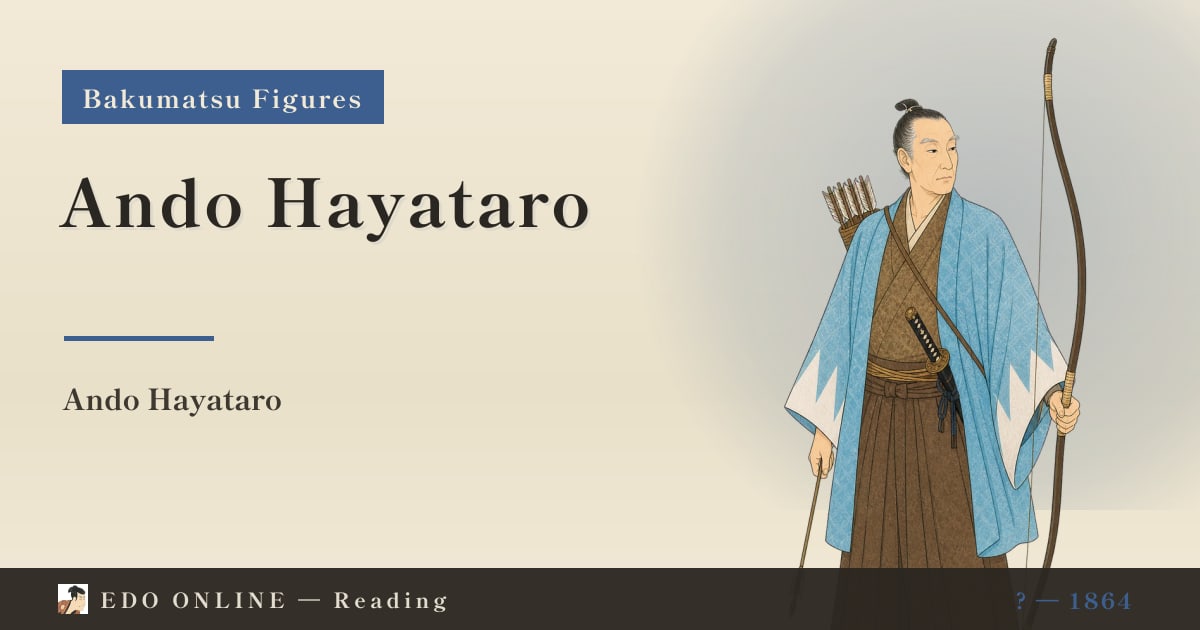
Ando Hayataro — The Shinsengumi's Record-Breaking Archer
He set the standing national record in the long-range shooting at the Tōdai-ji Great Buddha Hall, sending 8,685 arrows the length of the corridor. Nearly fifty, he joined the Shinsengumi and died of wounds taken in the back garden of the Ikedaya.
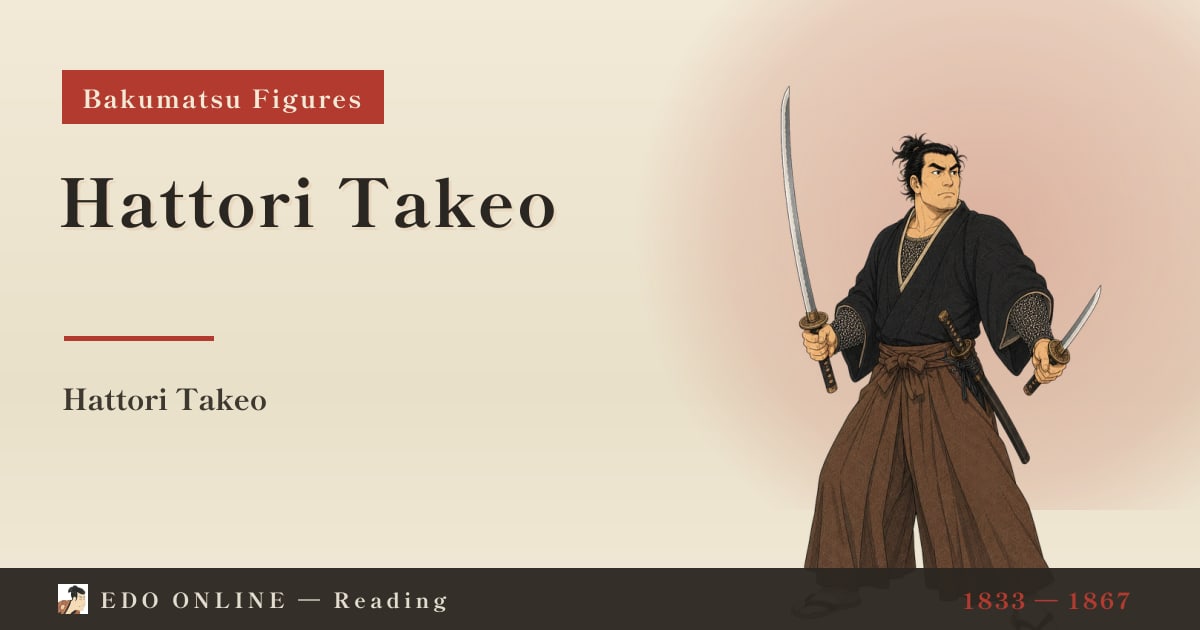
Hattori Takeo — Two Swords at Aburanokoji
A two-sword master and fencing instructor of the Shinsengumi who defected with the Goryō Eji. At Aburanokōji he alone wore mail, held a wall against the whole corps, and fell with more than twenty wounds.