Who Was Ii Naosuke? The Ansei Purge and His Assassination
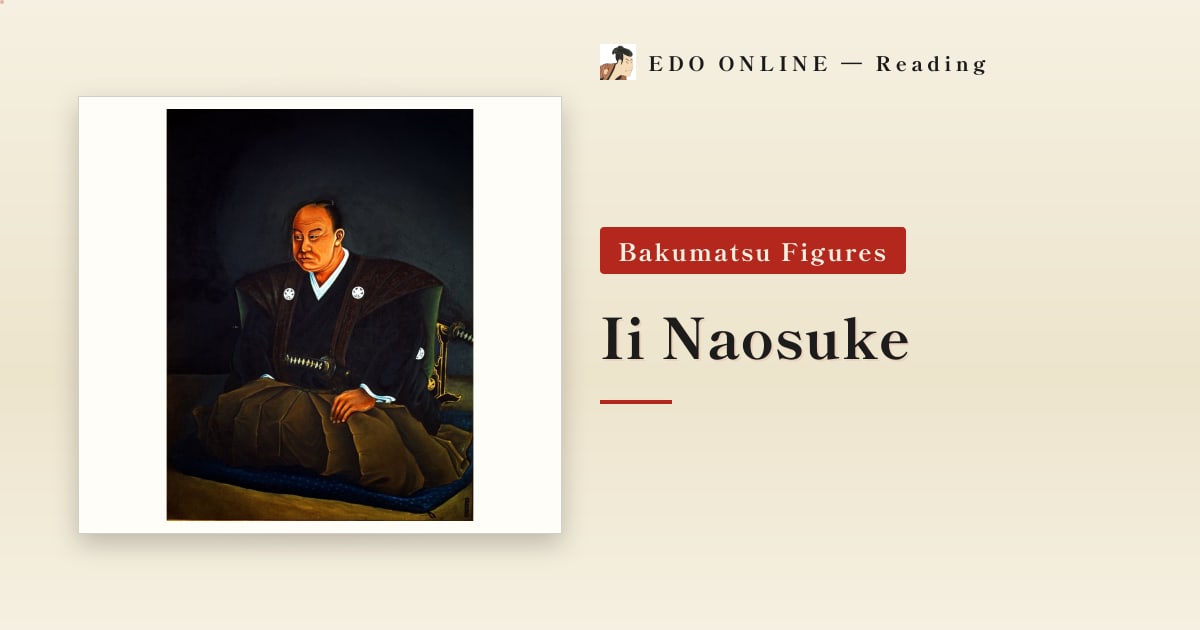
Someone had to steer the shogunate through the opening of Japan, and Ii Naosuke took the wheel with both hands. His decisiveness moved the country forward and destroyed him.
Contents
Who was Ii Naosuke and what did he do?
Ii Naosuke was lord of Hikone domain and chief minister of the Tokugawa shogunate, the highest office in the government and one filled only in emergencies.
In his two years in power he did three things, each of which made him enemies.
- Signed the Treaty of Amity and Commerce with the United States in 1858 without imperial sanction
- Settled the shogunal succession in favour of the Kii candidate, defeating the Hitotsubashi faction
- Carried out the Ansei Purge, punishing over a hundred opponents and executing eight
He was assassinated in 1860, less than two years after taking office.
Why did Ii Naosuke sign the treaty without imperial approval?
He judged that there was no time.
The American consul Townsend Harris was pressing hard, and the recent fate of China at Western hands was a live warning. Ii concluded that refusing to sign risked war, and signed.
Opening the country was probably unavoidable. Doing it over the emperor's head was not. The decision handed the Sonnō Jōi movement its central grievance, and the anger reached into the imperial court itself.
The Ansei Purge directed by Ii Naosuke
With opposition mounting, Ii moved to suppress it. The Ansei Purge followed.
More than a hundred lords, courtiers and activists were punished; eight were executed, among them Yoshida Shōin of Chōshū and Hashimoto Sanai of Fukui. Tokugawa Nariaki of Mito was confined for life.
The crackdown did not restore order. It multiplied the opposition and turned its victims into martyrs, whose students would later dismantle the shogunate.
Who killed Ii Naosuke, and why?
Ii was attacked on the morning of 24 March 1860, in unseasonable snow, as his procession approached the Sakuradamon gate of Edo Castle.
The attackers were seventeen ronin from Mito domain and one Satsuma retainer, Arimura Jizaemon — eighteen men. Because of the weather the Hikone escort wore capes and had covers fitted over their sword hilts, and could not respond in time. Ii was shot inside his palanquin and beheaded. He was forty-four.
The immediate cause was Mito. Emperor Kōmei had sent an edict directly to Mito, bypassing the shogunate; Ii demanded its return and destroyed the men involved.
Three resentments lay behind it:
- The unsanctioned treaty — concluding an agreement with a foreign power without imperial consent
- The succession — rejecting Hitotsubashi Yoshinobu, Mito's candidate
- The Ansei Purge — the executions of Yoshida Shōin, Hashimoto Sanai and others
The shogunate did not announce his death, describing him as wounded and later recording it as illness. That a chief minister could be killed in daylight at the shogun's own gate was too damaging to admit.
Where is Ii Naosuke's grave?
His grave is at Gōtoku-ji in Setagaya, Tokyo, the Ii family's Edo temple. The temple is also known as a claimed origin of the beckoning-cat figure.
In Hikone the family temple is Seiryō-ji, and Ii Shrine is dedicated to him. The area around Hikone Castle preserves a number of sites connected with him.
Ii Naosuke's fifteen years at the Umoreginoya
Ii Naosuke was the fourteenth son of the lord of Hikone. He had, on any reasonable expectation, no prospect whatever of inheriting.
As a younger son with no future, he spent fifteen years in a modest residence he named the Umoreginoya, "the house of buried wood." With nothing to advance toward, he studied tea, poetry, national learning and swordsmanship in depth.
His commitment to tea was serious. In his treatise on the tea ceremony he set out the principle of ichi-go ichi-e — one meeting, one chance — holding that host and guest should treat every gathering as unrepeatable and give it their whole sincerity. The phrase's currency in Japanese today derives largely from him.
The autocrat who ordered the executions and the aesthete who wrote about one meeting, one chance are the same man. The deaths of his elder brothers made him lord unexpectedly, and the office of chief minister did the rest.
Timeline of Ii Naosuke's life
| Year | Event |
|---|---|
| 1815 | Born the fourteenth son of Ii Naonaka, lord of Hikone |
| c. 1831 | Begins fifteen years at the Umoreginoya as a younger son |
| 1850 | Becomes lord of Hikone after his brother's death |
| 1853 | The Black Ships arrive; he accepts that Japan must open |
| Apr 1858 | Appointed chief minister |
| Jun 1858 | Signs the Treaty of Amity and Commerce without imperial sanction |
| 1858-59 | The Ansei Purge; Yoshida Shōin and Hashimoto Sanai executed |
| 24 Mar 1860 | Assassinated at Sakuradamon, aged 44 |
Frequently asked questions
Who was Ii Naosuke?
The lord of Hikone domain and chief minister of the Tokugawa shogunate, who signed Japan's first commercial treaty with the United States and suppressed his opponents in the Ansei Purge.
Why was Ii Naosuke assassinated?
Mito ronin killed him in revenge for the Ansei Purge, and for signing a foreign treaty without the emperor's approval.
Where is Ii Naosuke buried?
At Gōtoku-ji in Setagaya, Tokyo.
What is Ii Naosuke's connection to ichi-go ichi-e?
He set out the principle in his own treatise on the tea ceremony, and it is largely through that work that the phrase became widely known.
For the crackdown he directed see the Ansei Purge; for his death see the Sakuradamon incident.
Related reading
Abe Juro — The Former Member Who Talked
He deserted the Shinsengumi and rejoined under another name, shot at Kondo Isami as one of the Goryō Eji, and then grew apples in Sapporo. His late-Meiji testimony is where the ranking of the corps' best swordsmen comes from.
Ando Hayataro — The Shinsengumi's Record-Breaking Archer
He set the standing national record in the long-range shooting at the Tōdai-ji Great Buddha Hall, sending 8,685 arrows the length of the corridor. Nearly fifty, he joined the Shinsengumi and died of wounds taken in the back garden of the Ikedaya.
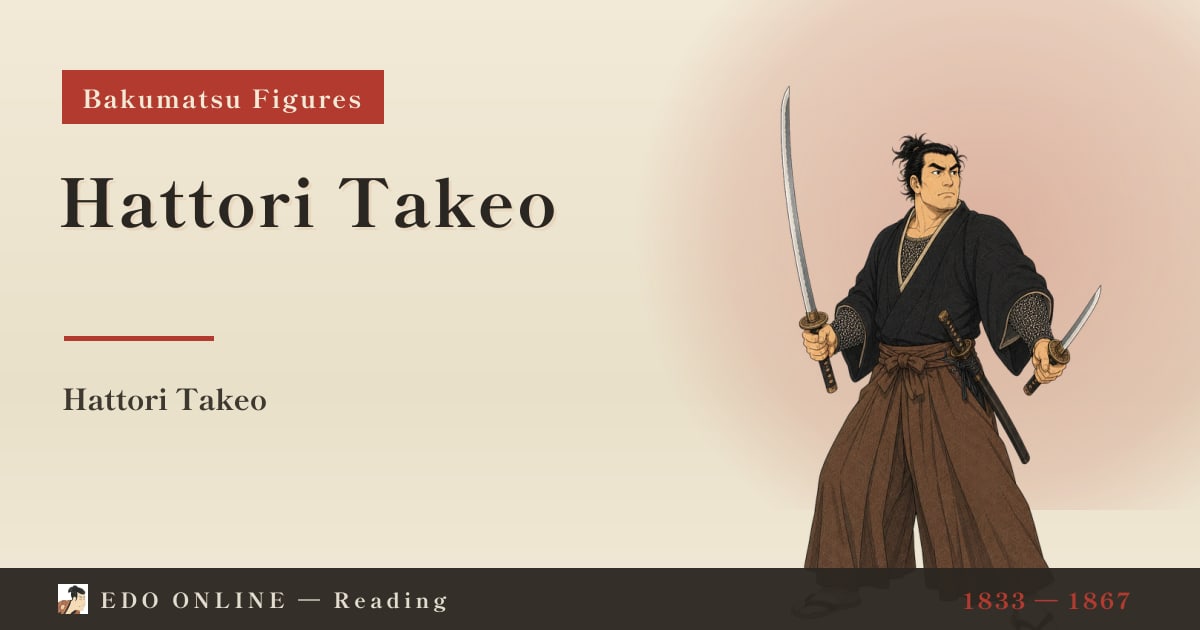
Hattori Takeo — Two Swords at Aburanokoji
A two-sword master and fencing instructor of the Shinsengumi who defected with the Goryō Eji. At Aburanokōji he alone wore mail, held a wall against the whole corps, and fell with more than twenty wounds.