Who Was Yoshida Shoin? The Teacher Who Trained the Restoration
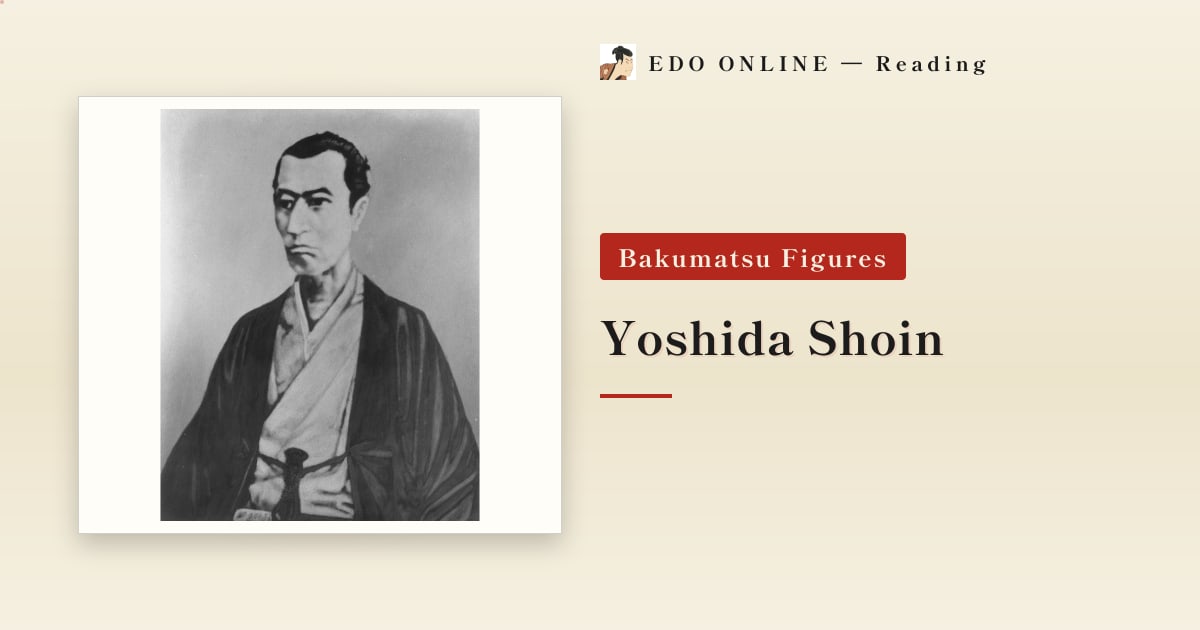
In the Chōshū domain there was a man who, in barely more than a year of running a small private school, sent out a stream of figures who would shape the future of Japan. His name was Yoshida Shōin. He himself ended his thirty-year life in an Edo cell, yet his thought and teaching bore fruit in his students and, through them, in the Restoration. Here is his life, from birth to death, as the record allows.
Contents
What Did Yoshida Shoin Do?
Yoshida Shoin was a military scholar of Hagi in Choshu, and the teacher who trained the men who made the Meiji Restoration.
He tried to stow away on an American warship and was imprisoned for it. Then, in a school that ran for barely more than a year, he taught Takasugi Shinsaku, Kusaka Genzui, Ito Hirobumi and Yamagata Aritomo, before being executed at thirty in the Ansei Purge. He is remembered less for a body of thought than for the people he moved.
A childhood between two uncles
Yoshida Shōin was born in 1830 in Matsumoto village, just outside the castle town of Hagi, the second son of a Chōshū samurai named Sugi Yurinosuke. His childhood name was Toranosuke; in adulthood he was known as Torajirō. The Sugi were low-ranking samurai on a stipend of only about twenty-six koku, and the family worked their own fields to get by; the young Shōin is said to have kept a book in hand even while tilling the soil.
Around 1834 he was adopted by his uncle Yoshida Daisuke, a hereditary instructor of the Yamaga school of military science. When Daisuke died the following year, Shōin inherited the Yoshida house as a small child. His education was sternly overseen by another uncle, Tamaki Bunnoshin, whose discipline is said to have been severe — learning, he taught, was to be pursued without private feeling, for the sake of the world.
A prodigy of military science
The family discipline descended from Yamaga Sokō, the military thinker who founded the Yamaga school. Shōin mastered it early, and in 1840, at just eleven, he is said to have lectured on the Bukyō Zensho before the daimyō Mōri Takachika and won his praise.
In time Shōin took the lectern at the Chōshū domain academy, the Meirinkan, serving as an instructor of military science while still young. But the age was shifting. News that Qing China had been defeated by Britain in the Opium War (1840–42) reached Japan and sharpened fears for coastal defense. Sensing the limits of the Yamaga school, Shōin turned toward Western military science and resolved to seek learning beyond his domain.
Travels of study
In 1850 Shōin set out for Kyūshū, visiting Hirado, Nagasaki, and Kumamoto. In Nagasaki he encountered Western goods and ideas, and in Kumamoto he formed a lifelong friendship with Miyabe Teizō.
The next year, 1851, he went to Edo and entered the school of Sakuma Shōzan, the great advocate of Western learning. Late that year, having promised a friend they would travel through the northeast, Shōin set out without waiting for the official travel pass — leaving his domain without permission rather than break his word. He encountered the Mito school of thought at Mito, visited Aizu, and saw the coastal defenses of the northeast with his own eyes. That he would abandon his domain rather than his pledge says much about the character that defined him.
On his return he was stripped of his samurai status and stipend for leaving without permission. Yet the daimyō Mōri Takachika, prizing his talent, allowed him to travel the provinces to study — a punishment that was, in truth, an act of cultivation.
The Black Ships and the Shimoda crossing
In 1853 Commodore Perry's American squadron arrived at Uraga and demanded that Japan open its ports. Shōin, then studying in Edo, saw the Black Ships for himself at Uraga, and his resolve to see the nature of the foreign threat with his own eyes only deepened.
When Perry returned in 1854, Shōin and his student Kaneko Shigenosuke attempted to stow away at Shimoda, rowing out by night to board an American ship. They were refused, turned themselves in, and were imprisoned; his teacher Sakuma Shōzan was punished as an accessory. Around this time Shōin wrote the Yūshūroku in confinement. "Though I knew well what would come of such a deed, my Yamato spirit would not be stilled" — a poem famously attributed to Shōin and linked to his resolve at Shimoda.
Learning in Noyama prison
After the Shimoda affair Shōin was sent back to Hagi and confined in Noyama, a jail for samurai-rank prisoners. Even there he did not stop learning. He lectured his fellow inmates on the Mencius, and the record became the Kōmō Yowa. He is said to have drawn out the strengths of each prisoner and fostered a spirit of mutual study within the jail — proof of his conviction that learning is no mere desk exercise but can change people anywhere, in any circumstance.
After about a year he was released and placed under house arrest at the Sugi family home.
The Shōka Sonjuku — a miracle of barely a year
Around 1857, still under house arrest, Shōin took over the Shōka Sonjuku — a private school his uncle Tamaki Bunnoshin had founded and Kubo Gorōzaemon had also helped run — and began teaching young men. The school admitted students regardless of status and prized dialogue and practice. Shōin ran it for little more than a year.
Even so, in that brief span its students included Kusaka Genzui, Takasugi Shinsaku (see our article on Takasugi Shinsaku), Itō Hirobumi, Yamagata Aritomo, Yoshida Toshimaro, Irie Kuichi, and Maebara Issei — men who would go on to lead the Restoration movement and the Meiji government. The outsized influence of one small school testifies to how intense Shōin's teaching was. In an age when the terakoya taught commoners to read and write, the Shōka Sonjuku was a singular place where men sharpened their resolve across the lines of status.
Shōin's thought — sincerity and the rising of the grassroots
At the root of his teaching lay a creed drawn from the Mencius: "There has never yet been one who, with utmost sincerity, failed to move others." He made shisei, utmost sincerity, the banner of his life, and prized the Yōmeigaku doctrine that knowing and acting are one — that what one knows, one must act upon.
He also taught hiji chōmoku, "flying ears and far-seeing eyes," urging students to gather news of the world far and wide. As he lost faith in the shogunate and the upper ranks of the domains, Shōin came to preach sōmō kukki — that it was the nameless men of the grass roots who must now rise. This idea passed quietly but deeply to the men who would carry the sonnō jōi movement.
The Ansei Purge and the end
In 1858, under the government of the chief minister Ii Naosuke, the Treaty of Amity and Commerce with the United States was signed without imperial sanction. Enraged, Shōin laid plans to ambush the senior councillor Manabe Akikatsu, who was traveling to Kyoto to manage the court and the crackdown, and even asked his domain to supply weapons. His students, alarmed at how radical he had become, are said to have kept their distance. The domain, fearing trouble, threw him back into Noyama prison.
As the Ansei Purge spread across the country, Shōin was sent to Edo and held in the Denmachō jail. It is said that, questioned before the magistrates, he volunteered the Manabe plot himself, and that this led to his death sentence. On the twenty-seventh day of the tenth lunar month of Ansei 6 — November 21, 1859 — he was executed. By the traditional count he was thirty; by Western reckoning, twenty-nine.
Shortly before his execution Shōin completed the Ryūkonroku, a final testament to his students. In it he likened his life to the four seasons and affirmed that, however short, it had been a fruitful one. "Though my body may rot in the fields of Musashi, my Yamato spirit I leave behind" — the death poem he left in his cell. Together with the verse for his parents — "Greater even than a child's love for parents is a parent's love; how will they hear today's news?" — it still moves readers today.
Chronology
A year-by-year outline of Shōin's life, kept as close to the record as possible (ages given by the traditional Japanese count).
- 1830 (Tenpō 1, age 1) — Born in Matsumoto village near Hagi, the second son of the samurai Sugi Yurinosuke. Childhood name Toranosuke (later known as Torajirō).
- 1834 (Tenpō 5, age 5) — Adopted by his uncle Yoshida Daisuke, an instructor of Yamaga-school military science.
- 1835 (Tenpō 6, age 6) — Daisuke dies; Shōin inherits the Yoshida house as a child and is sternly tutored by his uncle Tamaki Bunnoshin.
- 1840 (Tenpō 11, age 11) — Said to have lectured on the Bukyō Zensho before the daimyō Mōri Takachika and won his praise.
- 1850 (Kaei 3, age 21) — Travels through Kyūshū (Hirado, Nagasaki, Kumamoto); meets Miyabe Teizō.
- 1851 (Kaei 4, age 22) — Goes to Edo and studies under Sakuma Shōzan; late in the year leaves the domain without a travel pass to journey through the northeast.
- 1852 (Kaei 5, age 23) — Returns home; stripped of samurai status and stipend, but permitted by the daimyō to travel the provinces to study.
- 1853 (Kaei 6, age 24) — Perry arrives at Uraga; Shōin, studying in Edo, sees the Black Ships at Uraga and resolves to study abroad directly.
- 1854 (Kaei 7 / Ansei 1, age 25) — Attempts with Kaneko Shigenosuke to stow away on Perry's returning fleet at Shimoda; refused, he turns himself in and is imprisoned.
- 1855 (Ansei 2, age 26) — Lectures on the Mencius to prisoners in Noyama jail (Kōmō Yowa); released late in the year to house arrest at the Sugi home.
- 1857 (Ansei 4, age 28) — Takes over the Shōka Sonjuku, founded by his uncle Tamaki Bunnoshin and also run by Kubo Gorōzaemon, and begins teaching.
- 1858 (Ansei 5, age 29) — The U.S. commercial treaty is signed without imperial sanction; Shōin plots to ambush Manabe Akikatsu and is imprisoned again in Noyama.
- 1859 (Ansei 6, age 30) — Sent to Edo in the Ansei Purge; executed at the Denmachō jail on the 27th day of the 10th lunar month (November 21, 1859; aged 29 by Western count). He leaves behind the Ryūkonroku.
What became of his students
The greatest legacy Shōin left was neither a book nor a building, but people. Kusaka Genzui and Takasugi Shinsaku became central figures of the Chōshū loyalist movement, and Takasugi organized the Kiheitai militia that sustained the fight against the shogunate. Itō Hirobumi would become Japan's first prime minister, and Yamagata Aritomo a pillar of the Meiji state, shaping modern Japan between them.
It was after his death that his teaching truly flowered. The legacy of "raising people," from a school he ran for barely a year, passed surely on to the Restoration.
Shōin's students and the other figures of his age can be traced in the articles of Bakumatsu Figures.
Related reading
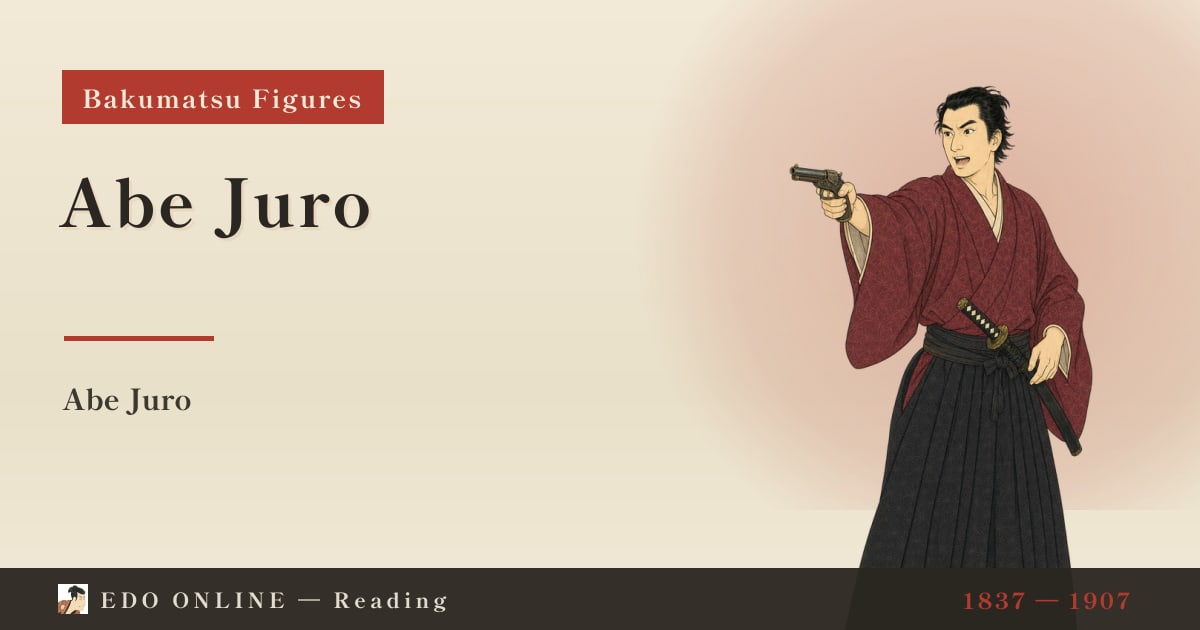
Abe Juro — The Former Member Who Talked
He deserted the Shinsengumi and rejoined under another name, shot at Kondo Isami as one of the Goryō Eji, and then grew apples in Sapporo. His late-Meiji testimony is where the ranking of the corps' best swordsmen comes from.
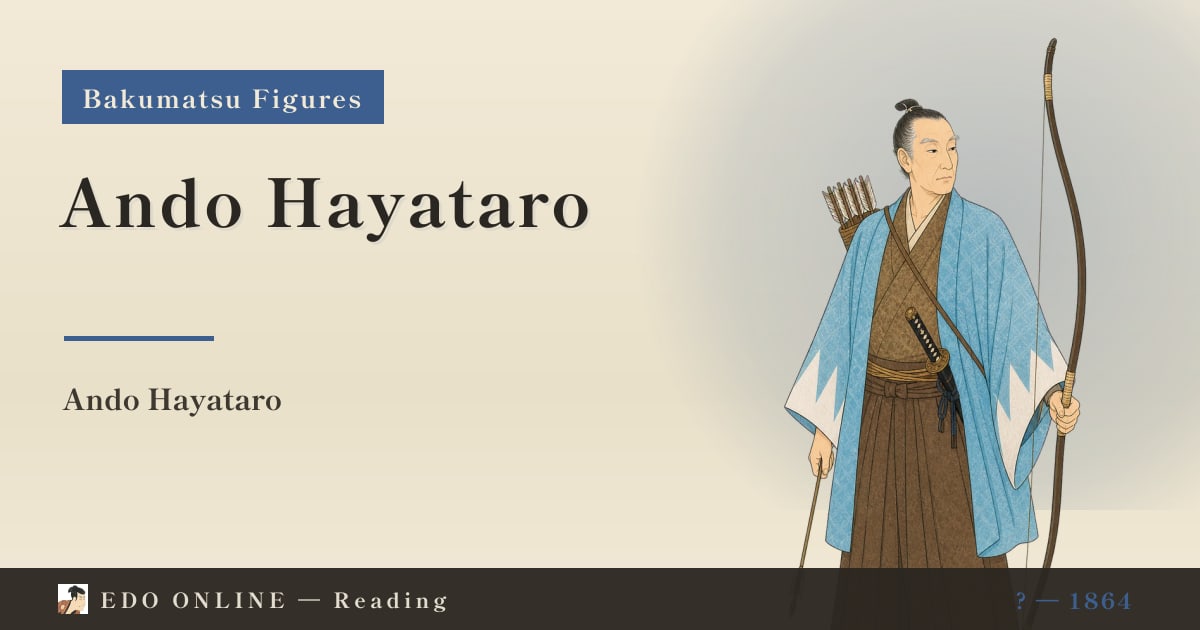
Ando Hayataro — The Shinsengumi's Record-Breaking Archer
He set the standing national record in the long-range shooting at the Tōdai-ji Great Buddha Hall, sending 8,685 arrows the length of the corridor. Nearly fifty, he joined the Shinsengumi and died of wounds taken in the back garden of the Ikedaya.
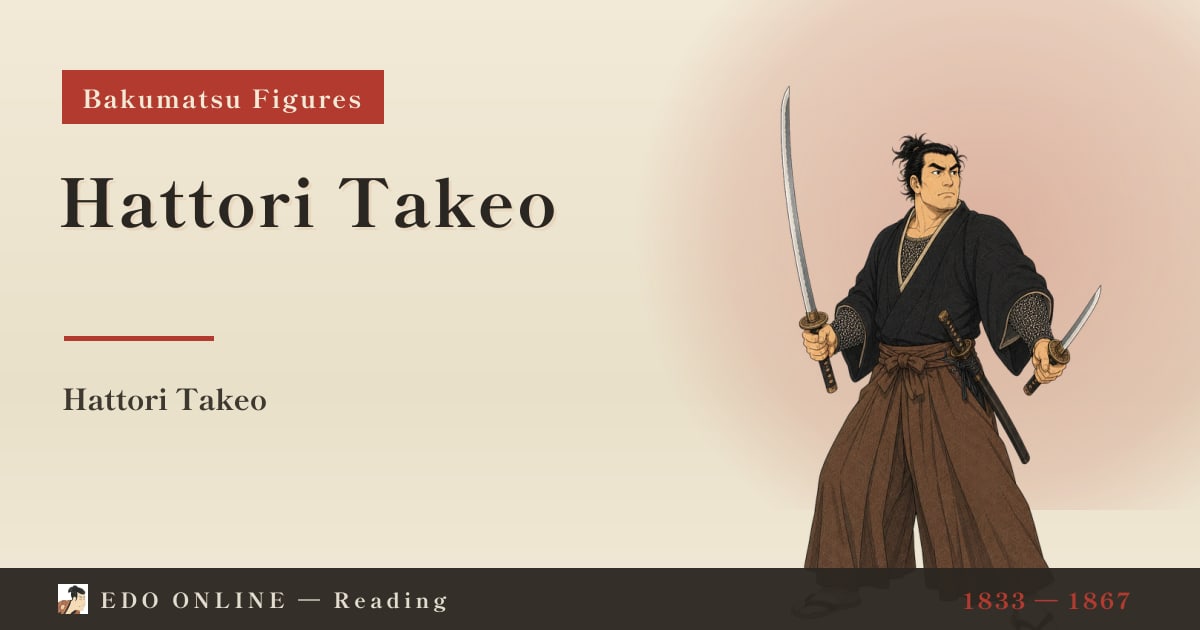
Hattori Takeo — Two Swords at Aburanokoji
A two-sword master and fencing instructor of the Shinsengumi who defected with the Goryō Eji. At Aburanokōji he alone wore mail, held a wall against the whole corps, and fell with more than twenty wounds.