Who Was Hijikata Toshizo? The Shinsengumi Demon Vice-Commander
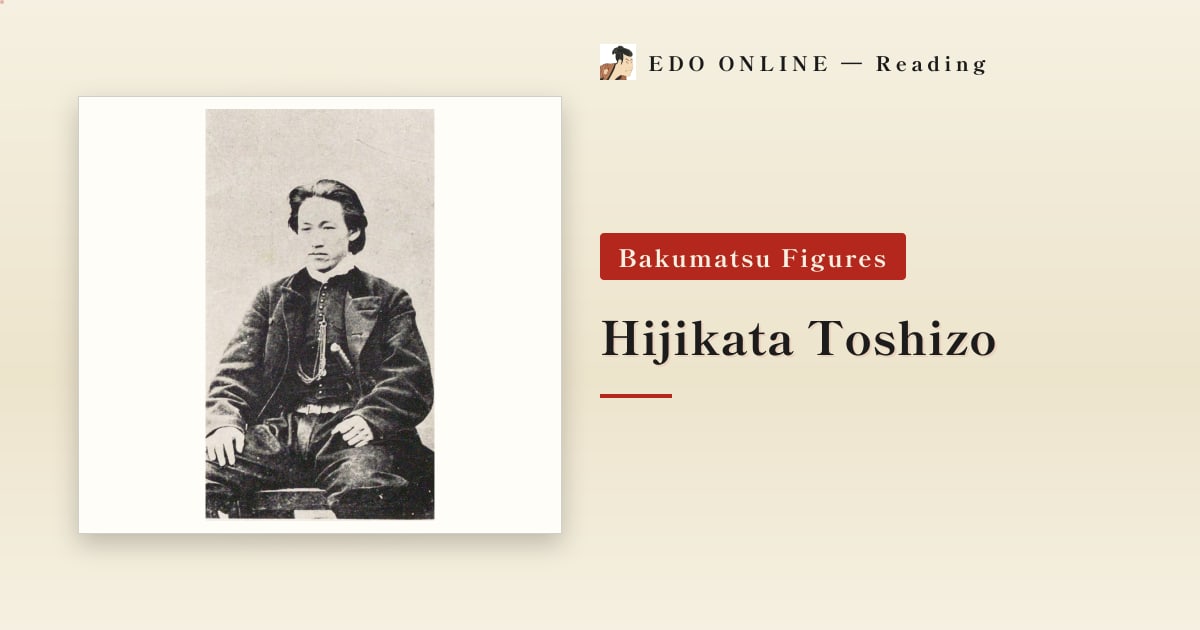
Hijikata Toshizō enforced the iron discipline of the Shinsengumi and has come to be known as the Demon Vice-Commander. As the age of the samurai ended around him, he kept fighting long after the cause was lost.
Contents
What did Hijikata Toshizo do?
He was the organisational engine of the Shinsengumi. Where the commander Kondō Isami served as its public face, Hijikata ran the unit: he enforced its regulations strictly, and held together a body of men drawn from very different backgrounds.
After the shogunate collapsed he refused to surrender, retreating north through the Boshin War until he reached Hokkaido, where he died in 1869.
Hijikata Toshizo's early life
Born in 1835 to a farming family in Tama, west of Edo, Hijikata was not born a samurai. He trained in the Tennen Rishin style of swordsmanship, where he met Kondō Isami and the men who would form the core of the Shinsengumi.
As a young man he is said to have sold his family's medicine, travelling the region on foot while pursuing his sword training. It is an unglamorous detail, and it may have given him a familiarity with people outside the warrior class.
Why was Hijikata called the Demon Vice-Commander?
The Shinsengumi drew its members from ronin, farmers and drifters. Left to itself, such a body would have dissolved into a gang.
Hijikata prevented that by enforcing the rules severely. As the former captain Nagakura Shinpachi later recalled them, the prohibitions were four: betraying the way of the warrior, leaving the corps, raising money privately, and taking up lawsuits privately. Violations carried the penalty of ordered suicide. The severity was not personal cruelty but the price of holding the unit together.
The nickname itself is a later one. No record shows his men calling him that in his lifetime, and the familiar name for the rules, kyokuchū hatto, along with a fifth article against private quarrels, first appears in a book by Shimozawa Kan published in 1928.
Hijikata Toshizo's death and age
Hijikata was killed on 20 June 1869, by most accounts near the Ippongi barricade at Hakodate. He is said to have been shot while directing his men on horseback. He was thirty-four.
Born on 31 May 1835, he died about twenty days after his thirty-fourth birthday. The Shinsengumi had formed in 1863, when he was in his late twenties: his entire career in the public eye lasted about six years.
Where is Hijikata Toshizo's grave?
Where his body was buried is not known. It was lost in the confusion at Hakodate, and several locations have been proposed, including inside Goryōkaku and near the Ippongi barricade.
Two sites serve as his grave today.
- Sekiden-ji (Hino, Tokyo) — the Hijikata family temple, close to his birthplace, where his gravestone stands. This is the site most often visited
- Hekketsuhi (Hakodate, Hokkaido) — a memorial to the shogunal dead of the Hakodate campaign. Not his personal grave, but it commemorates him among them
The Hijikata Toshizō Museum in Hino displays items preserved by his family.
Hijikata Toshizo's last poems
The poem traditionally given as his death verse reads:
Though my body may rot on the island of Ezo, my spirit shall guard my lord in the east
It captures precisely the position of a man who threw himself into an unwinnable fight. But it first appears in a biography compiled in the Meiji era by the family of his patron Kojima Shikanosuke, and there is no way to confirm that Hijikata wrote it. It also survives in two slightly different wordings.
A second candidate exists. At the head of a poetry notebook kept by Shimada Kai, who followed him all the way to Hakodate, is a verse written under Hijikata's name: each time I take up the spear and look at the moon, I wonder whether tomorrow it will shine on my corpse. Some historians consider this the more likely last poem.
His view of the sword is better attested. Back in Edo after the defeat at Toba-Fushimi, he told the Sakura retainer Yoda Gakkai that weapons were useless unless they were guns: he had carried a sword and a spear, and neither had been of any use. Yoda wrote the remark down, and it is the source of the familiar line that the age of the sword was over.
Less expected is that Hijikata wrote haiku. A collection survives under the pen name Hōgyoku, probably composed before he went to Kyoto. The verses are technically unremarkable, but they are difficult to reconcile with the Demon Vice-Commander of legend.
What was Hijikata Toshizo like?
Two things sit awkwardly together in him.
The first is the disciplinarian, feared by his own men, who enforced the rules with a severity few dared to test. The second is the pragmatist: he wrote poetry, sat for photographs, adopted Western dress and commanded rifle units. He did not let the sword define how he fought: he recognised the importance of firearms and changed his tactics to match.
His loyalty to Kondō never wavered. That he kept fighting for more than a year after Kondō's execution, all the way to Hokkaido, is the clearest evidence of it.
His modern popularity rests on this combination of severity, a doomed cause, and a clear-eyed willingness to adapt.
Timeline of Hijikata Toshizo's life
| Year | Event |
|---|---|
| 1835 | Born to a farming family in Tama, Musashi Province |
| 1859 | Formally enters the Tennen Rishin school, having already trained alongside Kondō Isami |
| 1863 | Travels to Kyoto with the Rōshigumi; the Shinsengumi takes shape |
| 1864 | The Ikedaya incident brings the unit fame |
| 1867 | Granted direct shogunal retainer status |
| 1868 | Defeated at Toba-Fushimi; retreats east. Kondō is executed |
| 20 Jun 1869 | Killed at Hakodate (traditionally near the Ippongi barricade), aged 34 |
Frequently asked questions
Who was Hijikata Toshizo?
The vice-commander of the Shinsengumi, responsible for its discipline and organisation, who continued fighting the new government until his death at Hakodate in 1869.
How did Hijikata Toshizo die?
He was shot while leading his men at Hakodate on 20 June 1869, traditionally said to have been near the Ippongi barricade.
Where is Hijikata Toshizo buried?
His actual burial place is unknown. His gravestone stands at Sekiden-ji in Hino, Tokyo, and he is commemorated at the Hekketsuhi memorial in Hakodate.
Was Hijikata Toshizo a samurai by birth?
No. He was born into a farming family and became a warrior by training and choice.
For the unit he ran see the Shinsengumi; for his commander see Kondō Isami.
Related reading
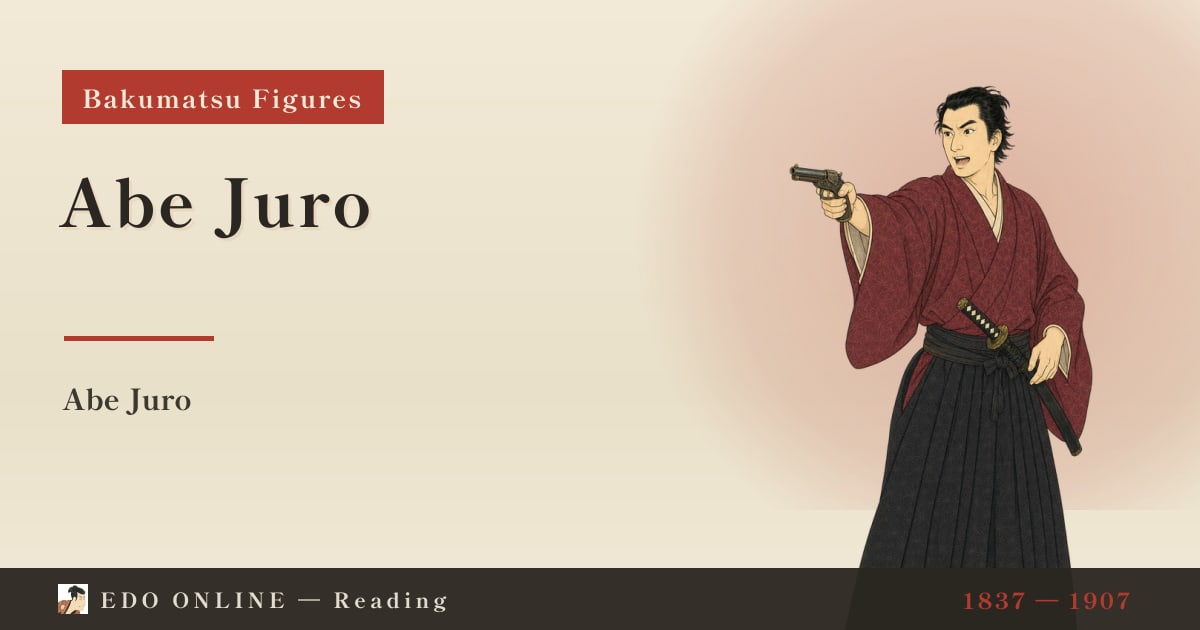
Abe Juro — The Former Member Who Talked
He deserted the Shinsengumi and rejoined under another name, shot at Kondo Isami as one of the Goryō Eji, and then grew apples in Sapporo. His late-Meiji testimony is where the ranking of the corps' best swordsmen comes from.
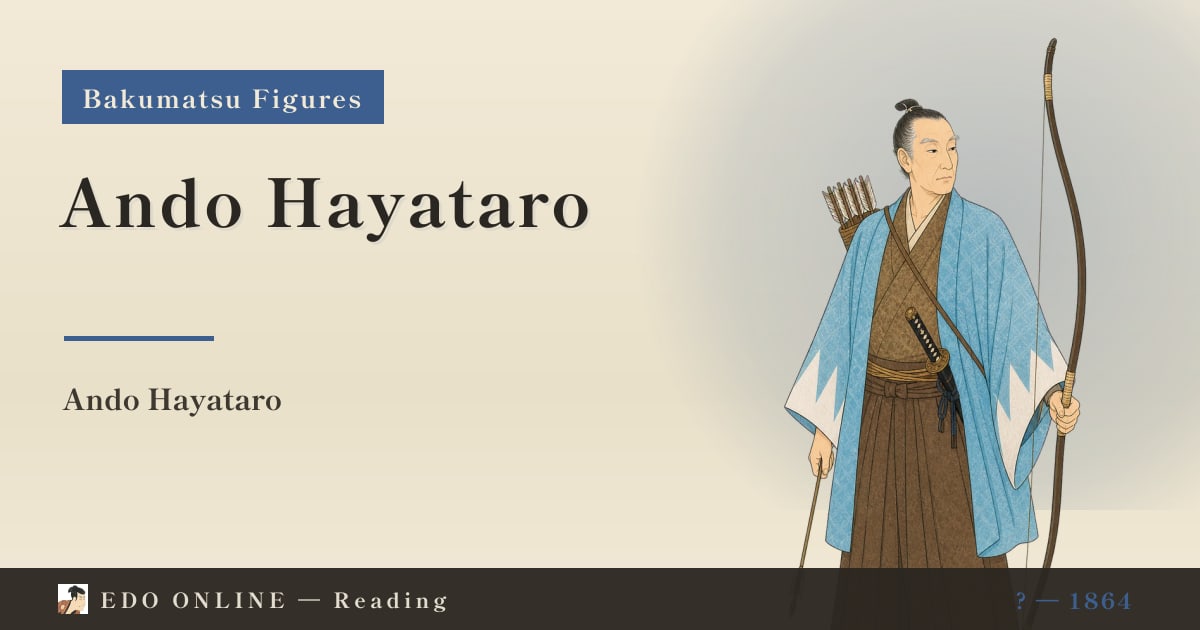
Ando Hayataro — The Shinsengumi's Record-Breaking Archer
He set the standing national record in the long-range shooting at the Tōdai-ji Great Buddha Hall, sending 8,685 arrows the length of the corridor. Nearly fifty, he joined the Shinsengumi and died of wounds taken in the back garden of the Ikedaya.
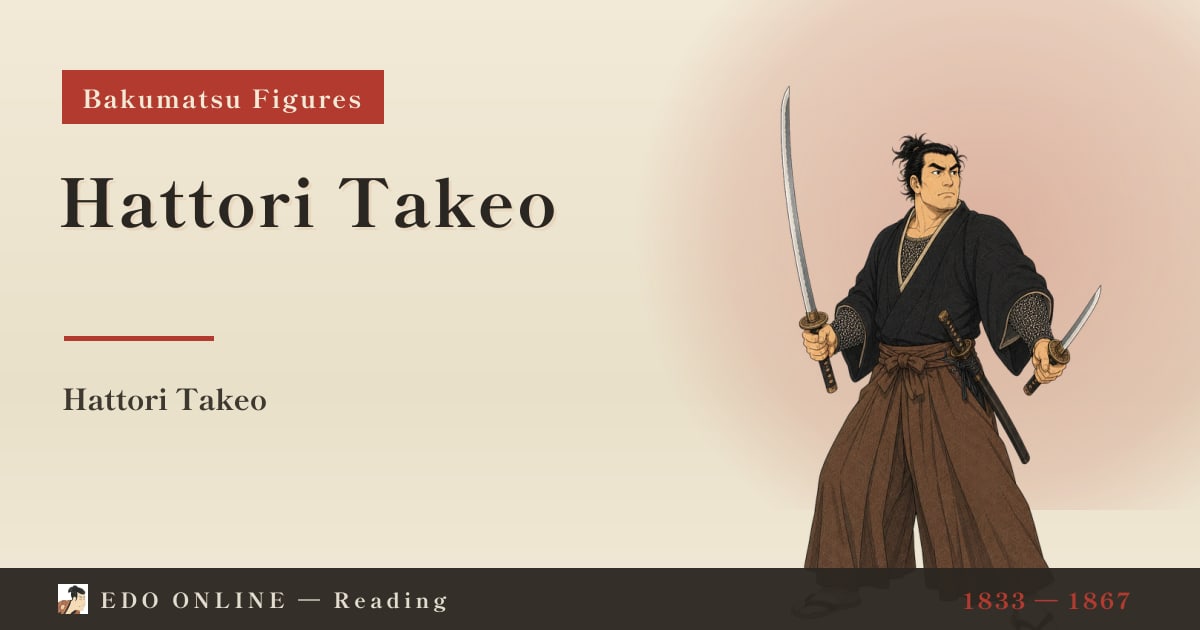
Hattori Takeo — Two Swords at Aburanokoji
A two-sword master and fencing instructor of the Shinsengumi who defected with the Goryō Eji. At Aburanokōji he alone wore mail, held a wall against the whole corps, and fell with more than twenty wounds.