
The Man'en Koban — Why Japan's Gold Drained Away in 1859
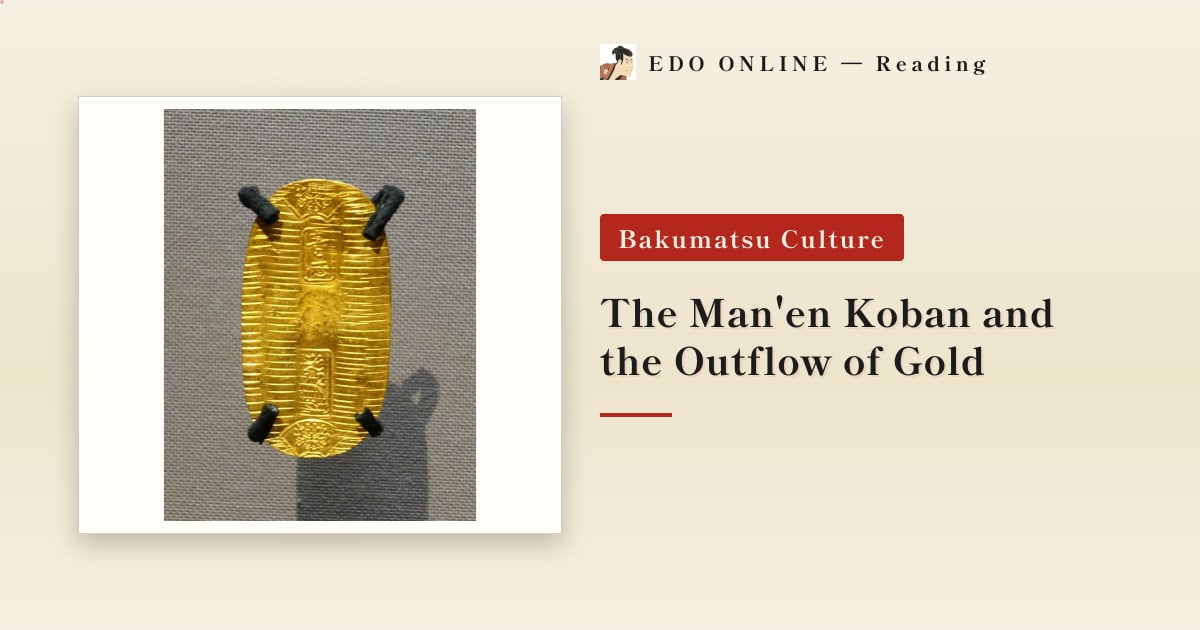
The Man'en koban was minted to stop Japanese gold leaving the country. It is also the smallest koban ever struck.
Contents
What Was the Man'en Koban?
A gold coin issued by the shogunate in 1860.
| Item | Detail |
|---|---|
| Issued | 1860 (Man'en 1) |
| Purpose | To stop the outflow of gold by bringing Japan's gold-silver ratio closer to the world's |
| Feature | Far smaller, with far less gold, than earlier koban |
| Nickname | The "doll koban," for its size |
| Result | The outflow stopped — and prices exploded |
Recoinage was routine in Edo Japan whenever finances tightened. The Man'en recoinage was different: it was an emergency response to foreign trade.
Why Did Japan's Gold Drain Away?
Because gold and silver traded at different ratios inside and outside Japan.
| Market | Silver per unit of gold |
|---|---|
| Japan | about 1 : 5 |
| Abroad | about 1 : 15 |
Gold was cheap in Japan relative to silver.
So foreign traders did this:
- bring silver coin into Japan
- exchange it for gold koban at the Japanese ratio
- take the gold out and convert it back to silver
The silver multiplied several times over. In the short period after Yokohama opened in 1859, koban left the country in quantity.
This was not a conspiracy — it is arbitrage, and it happens automatically wherever such a gap exists. The shogunate simply had not priced the difference in before opening to trade.
What the Recoinage Did
The fix was to bring the koban into line with the world ratio.
Cut the gold content enough and exporting koban stops paying. Hence the Man'en koban.
The outflow stopped. The policy worked.
The side effects followed immediately. Less gold per coin means less that a coin will buy.
- Prices surged, rice above all, which hit ordinary households hardest
- Samurai incomes fell in real terms, since stipends were fixed in rice or in cash
- The shogunate's credibility suffered — the government was seen to have debased the money
That inflation fed straight into sonno joi, because the causal chain from foreign trade to a harder life was visible to everyone. The ee ja nai ka frenzy of 1867 had the same economic pressure behind it.
Opening the ports, recoinage, inflation and the expulsion movement are one connected line.
Where It Sits Among the Koban
| Coin | Period | Trend |
|---|---|---|
| Keicho koban | early Edo | High gold content; the benchmark |
| Genroku koban | Genroku era | Debased for revenue |
| Kyoho koban | Kyoho era | Quality restored |
| Tenpo koban | Tenpo era | Debased again |
| Man'en koban | 1860 | Weight itself slashed; the smallest ever |
Recoinage recurs throughout the Edo period — but only the Man'en recoinage was done to match a foreign exchange ratio.
For what a koban was actually worth, see how much was one ryo.
Timeline
| Year | Event |
|---|---|
| 1858 | The commercial treaty settles that trade will begin |
| 1859 | Yokohama and other ports open; gold starts leaving |
| 1860 | The Man'en recoinage; the new koban halts the outflow |
| early 1860s | Prices surge; samurai and commoners alike are squeezed |
| 1867 | Ee ja nai ka — popular anxiety boils over |
Frequently Asked Questions
What was the Man'en koban?
A gold coin issued in 1860 with sharply reduced gold content, minted to stop gold leaving Japan.
Why was Japanese gold flowing out?
Japan valued gold against silver at roughly 1:5 while the world used roughly 1:15, so importing silver and exporting gold was pure profit.
Did the recoinage work?
Yes, the outflow stopped — at the cost of severe inflation.
Why is the Man'en koban so small?
Because the gold content was cut to match the world ratio. It is the smallest koban in the series.
Did the inflation affect politics?
Yes. Hardship traceable to the opening of the ports strengthened the case for expelling the foreigners.
For the value of the currency see how much was one ryo; for the port itself, the opening of Yokohama.
Related reading
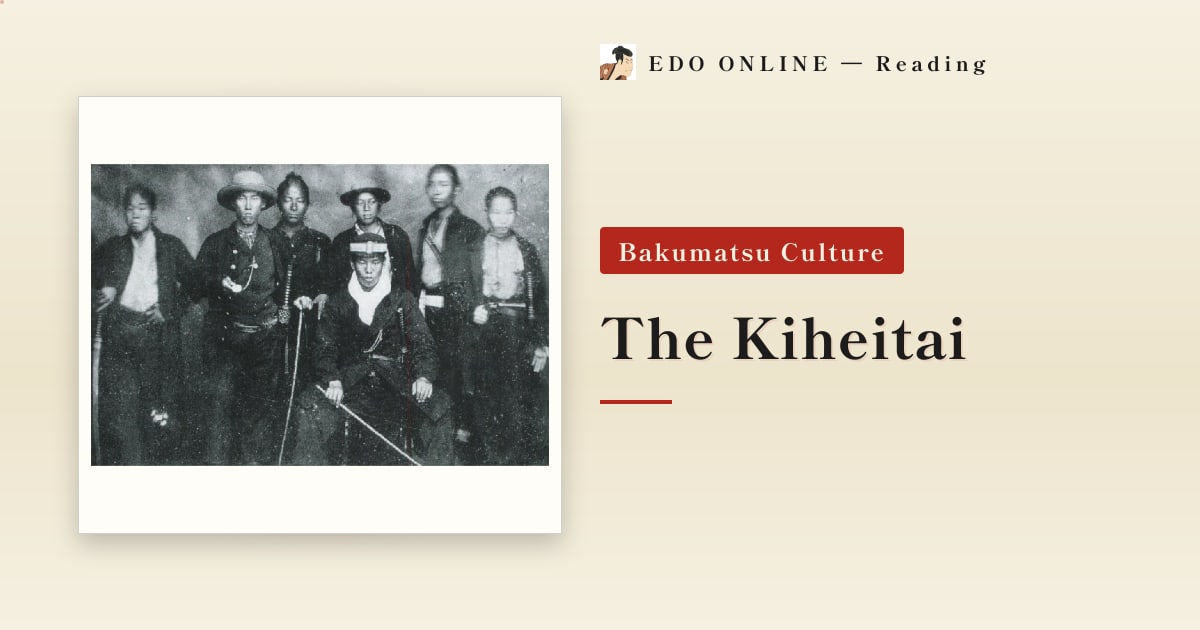
The Kiheitai — Takasugi's Army That Ignored Class
Raised in 1863 by Takasugi Shinsaku, the Kiheitai took commoners as soldiers. Why Choshu did it, how it differed from the regular army, what it won, and how the new government crushed it.
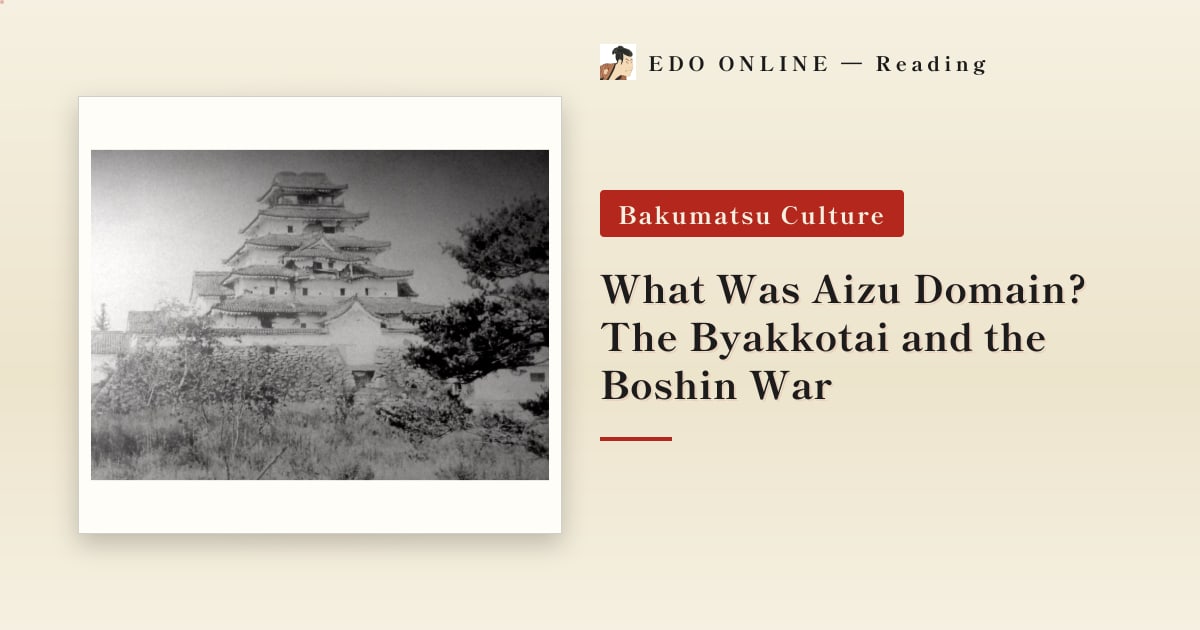
What Was Aizu Domain? The House Code, the Byakkotai, the Siege
Aizu stayed loyal to the shogunate to the end and was destroyed for it. Why Matsudaira Katamori took the Kyoto post, what happened to the Byakkotai, and how the domain was punished.
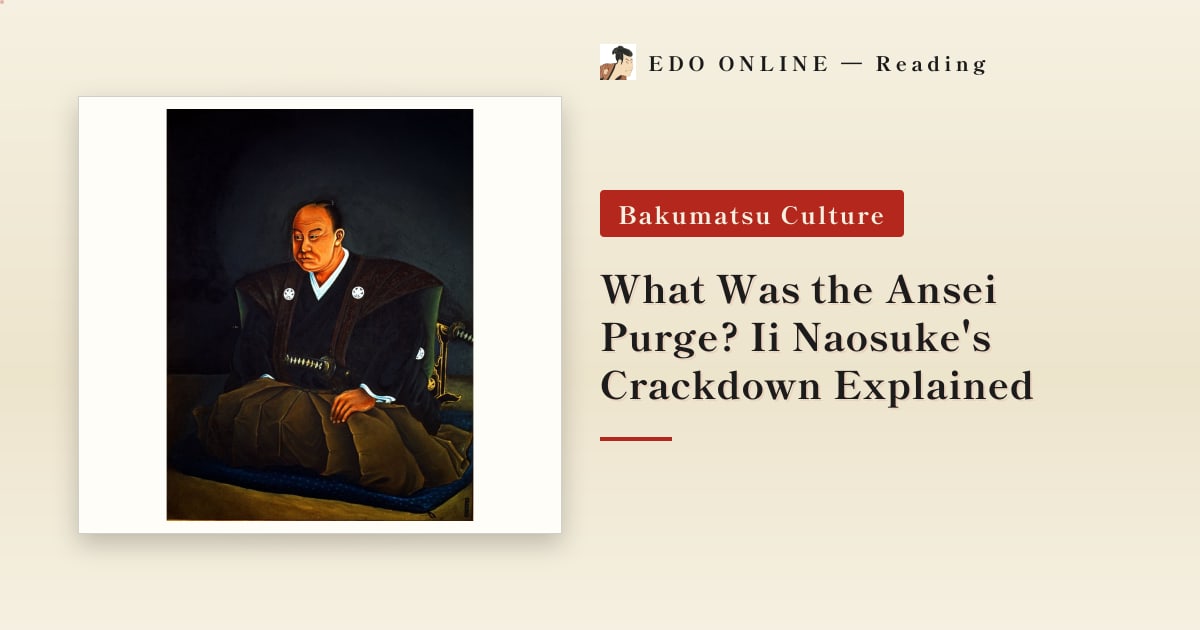
What Was the Ansei Purge? Ii Naosuke's Crackdown Explained
Between 1858 and 1859 the shogunate's chief minister Ii Naosuke purged more than a hundred opponents and executed eight, including Yoshida Shoin. Why it happened and what it destroyed.