What Was the Boshin War? Causes, Course and Outcome
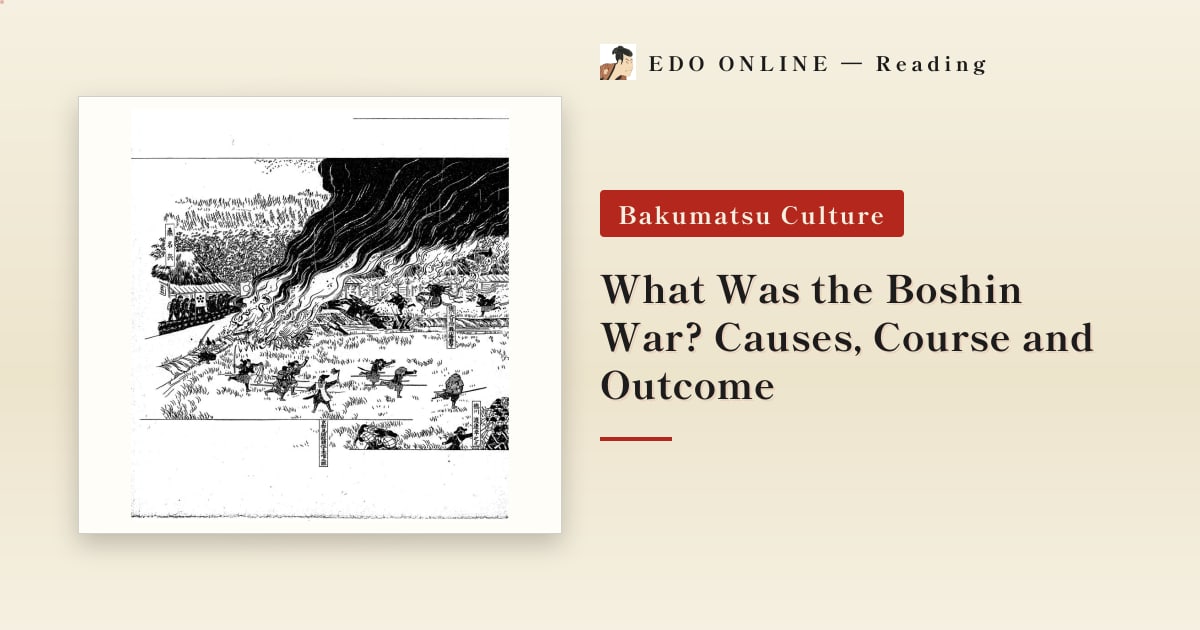
The fall of the Tokugawa shogunate and the birth of modern Japan were not settled by negotiation alone. They were settled by an eighteen-month civil war: the Boshin War.
Contents
What was the Boshin War?
The Boshin War was the conflict fought between January 1868 and June 1869 between the newly proclaimed imperial government and the forces of the old shogunate.
| Item | Detail |
|---|---|
| Dates | January 1868 to June 1869 (about 18 months) |
| Sides | Imperial forces (Satsuma, Chōshū, Tosa) against shogunal forces (Tokugawa retainers, Aizu, Kuwana and the Northern Alliance) |
| Theatres | Kyoto → Kantō → Echigo and Tōhoku → Hokkaido |
| Outcome | Imperial victory; the country unified under the new government |
It ended more than six centuries of warrior government. The shogun had already surrendered his authority on paper in 1867; the Boshin War is what made that surrender real.
Why is it called the Boshin War?
"Boshin" is the name of the year in the sexagenary cycle, the sixty-year system of naming years used across East Asia. The fighting began in a boshin year, and the war took its name from it.
The convention was common at the time. Other events of the period are likewise named for the era or the cycle year in which they occurred, such as the Ansei Purge.
What caused the Boshin War?
In late 1867, the fifteenth shogun Tokugawa Yoshinobu had already returned political authority to the emperor. If power had changed hands peacefully, why was there a war at all?
The answer is that the transfer settled the title and left the substance untouched.
Yoshinobu expected to remain dominant within any new council of lords. The Tokugawa house still held the largest landholdings in Japan and its entire body of retainers. From the point of view of Satsuma and Chōshū, who wanted the Tokugawa broken, nothing of consequence had changed.
So on 3 January 1868 the anti-shogunal faction issued the Restoration of Imperial Rule decree. It proclaimed a new government, abolished the shogunate outright, and demanded that Yoshinobu surrender both his court rank and his lands.
The shogunal side refused. Within weeks their army was marching on Kyoto.
Course of the Boshin War
Toba-Fushimi, January 1868
The opening battle decided the war's direction.
The shogunal army was probably the larger force, but the Satsuma-Chōshū side had better weapons and tactics — and, decisively, the imperial banner. Once that standard was raised, the shogunal army became a rebel force against the throne. Domains began changing sides rather than be branded traitors.
Then, mid-battle, Yoshinobu left Osaka Castle with a few attendants and sailed for Edo. With its commander gone, the shogunal army lost coherence. This act remains the principal reason opinion on Yoshinobu is still divided.
The surrender of Edo, May 1868
The imperial army advanced east and fixed a date to storm Edo, then a city of over a million people.
The assault was averted by a meeting between the shogunal official Katsu Kaishū and the imperial commander Saigō Takamori. In exchange for Yoshinobu's submission, Edo Castle was handed over without a shot.
Not everyone accepted it. Retainers who refused to submit formed the Shōgitai and held Ueno until they were destroyed in a single day of fighting that July.
Echigo and the north, summer to autumn 1868
The bitterest phase of the war.
The new government treated Aizu as its principal enemy and demanded that the northern domains punish it. They refused, forming the Northern Alliance of more than thirty domains.
- Echigo — Nagaoka domain, under the chief retainer Kawai Tsugunosuke, fought hard with modern weapons before the castle fell
- Aizu — Aizu-Wakamatsu Castle held out under siege for a month. The Byakkotai, a unit of teenage boys, killed themselves at Iimoriyama after mistakenly concluding the castle had fallen
With Aizu defeated the alliance collapsed.
Hakodate, winter 1868 to June 1869
One force still refused to surrender: the shogunal navy under Enomoto Takeaki.
Enomoto sailed north and seized the fortress of Goryōkaku at Hakodate. Hijikata Toshizō of the Shinsengumi was among his officers.
The imperial assault began in May 1869. Hijikata was shot dead near the Ippongi barricade, and Goryōkaku surrendered on 27 June, ending the war.
Boshin War timeline
Dates are given in the Gregorian calendar; the lunisolar calendar in use at the time runs about a month behind.
| Date | Event |
|---|---|
| Nov 1867 | Yoshinobu returns political power to the emperor |
| 3 Jan 1868 | Restoration of Imperial Rule decree; Yoshinobu ordered to surrender lands |
| Late Jan 1868 | Battle of Toba-Fushimi; Yoshinobu withdraws to Edo |
| May 1868 | Surrender of Edo Castle |
| Jun 1868 | Northern Alliance formed |
| Jul 1868 | Battle of Ueno; the Shōgitai destroyed |
| Summer 1868 | Echigo campaign; Nagaoka falls |
| Oct 1868 | The Aizu campaign; the Byakkotai die at Iimoriyama |
| Oct 1868 | The Meiji era is proclaimed |
| Nov 1868 | Aizu-Wakamatsu Castle surrenders |
| Dec 1868 | Enomoto seizes Hokkaido |
| Jun 1869 | Hijikata killed; Goryōkaku surrenders |
Consequences of the Boshin War
National unification was completed, which made the sweeping centralising reforms of the following years possible.
The war also left durable damage.
- The treatment of the losing side. Aizu in particular was relocated to barren land at the northern tip of Honshu. Resentment toward a government dominated by Satsuma and Chōshū persisted for generations
- The end of the samurai as a military class. Units including conscripted farmers and townsmen, armed with modern rifles, decided the outcome
- A dispossessed samurai population. Their grievances fuelled a series of revolts, culminating in the Satsuma Rebellion of 1877
Total deaths are estimated at around 8,000 — small by the standards of contemporary European civil wars, but decisive for the direction of the country.
Boshin War and Satsuma Rebellion compared
| Item | Boshin War | Satsuma Rebellion |
|---|---|---|
| Date | 1868-69 | 1877 |
| Sides | New government vs. old shogunate | Meiji government vs. disaffected samurai |
| Saigō Takamori | Imperial commander | Leader of the rebellion |
| Issue | Who governs Japan | Samurai privileges and grievances |
| Significance | End of the shogunate | Japan's last civil war |
Note where Saigō stands in each. The commander who won the Boshin War for the new government died nine years later leading a revolt against it.
Frequently asked questions
When was the Boshin War?
From January 1868 to June 1869, about eighteen months.
Who fought in the Boshin War?
The new imperial government, led by Satsuma and Chōshū, against forces loyal to the Tokugawa shogunate, including Aizu and the domains of the Northern Alliance.
Why did the shogunal side lose?
Inferior weapons and coordination, the devastating effect of being declared enemies of the throne, and the early withdrawal of their commander Tokugawa Yoshinobu.
Where was the Boshin War fought?
It began near Kyoto and moved steadily north through the Kantō region, Echigo, Tōhoku and finally Hokkaido.
For the men who fought it see Hijikata Toshizō and Saigō Takamori; for what led to it see the return of power.
Related reading
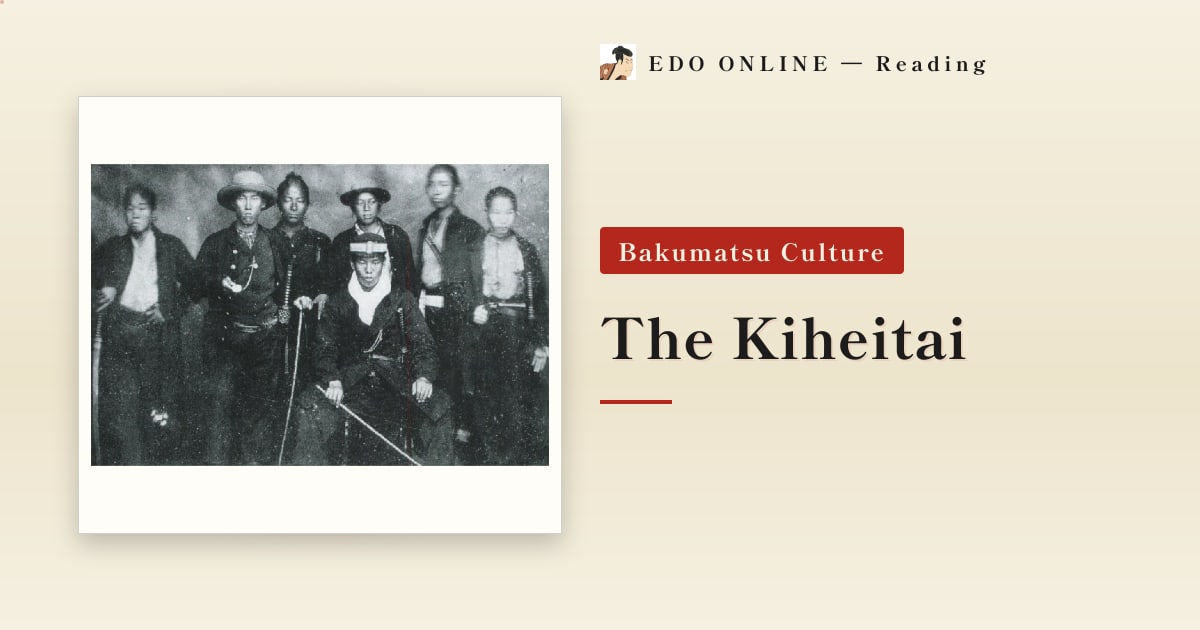
The Kiheitai — Takasugi's Army That Ignored Class
Raised in 1863 by Takasugi Shinsaku, the Kiheitai took commoners as soldiers. Why Choshu did it, how it differed from the regular army, what it won, and how the new government crushed it.
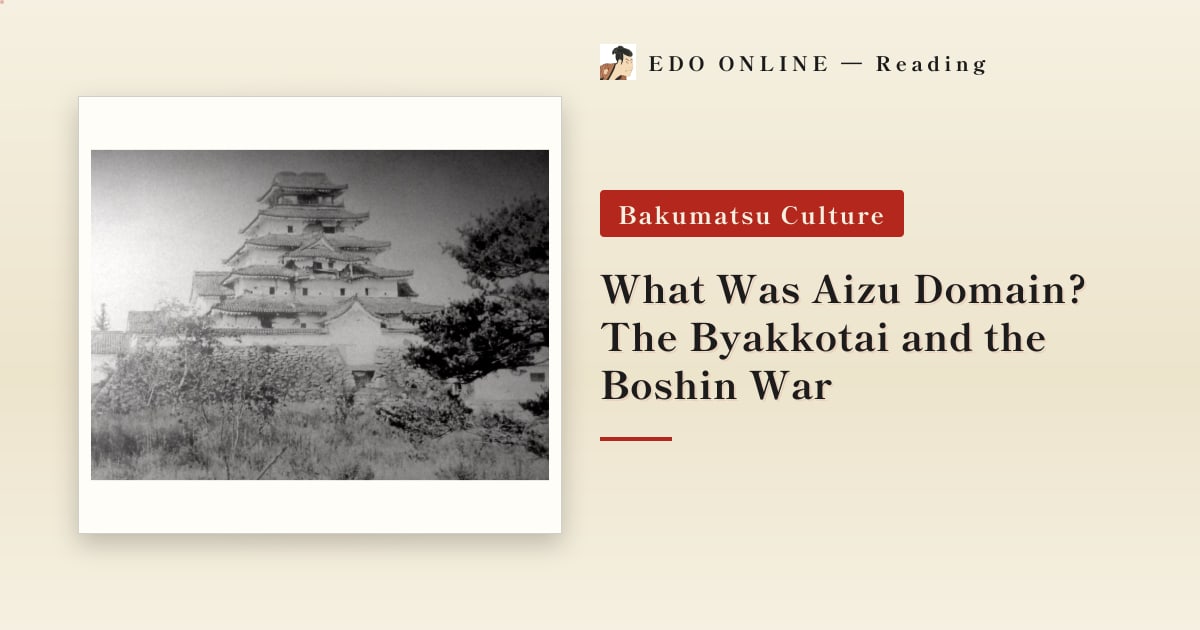
What Was Aizu Domain? The House Code, the Byakkotai, the Siege
Aizu stayed loyal to the shogunate to the end and was destroyed for it. Why Matsudaira Katamori took the Kyoto post, what happened to the Byakkotai, and how the domain was punished.
What Was the Ansei Purge? Ii Naosuke's Crackdown Explained
Between 1858 and 1859 the shogunate's chief minister Ii Naosuke purged more than a hundred opponents and executed eight, including Yoshida Shoin. Why it happened and what it destroyed.