Who Was Nakaoka Shintaro? Life, Achievements and Death
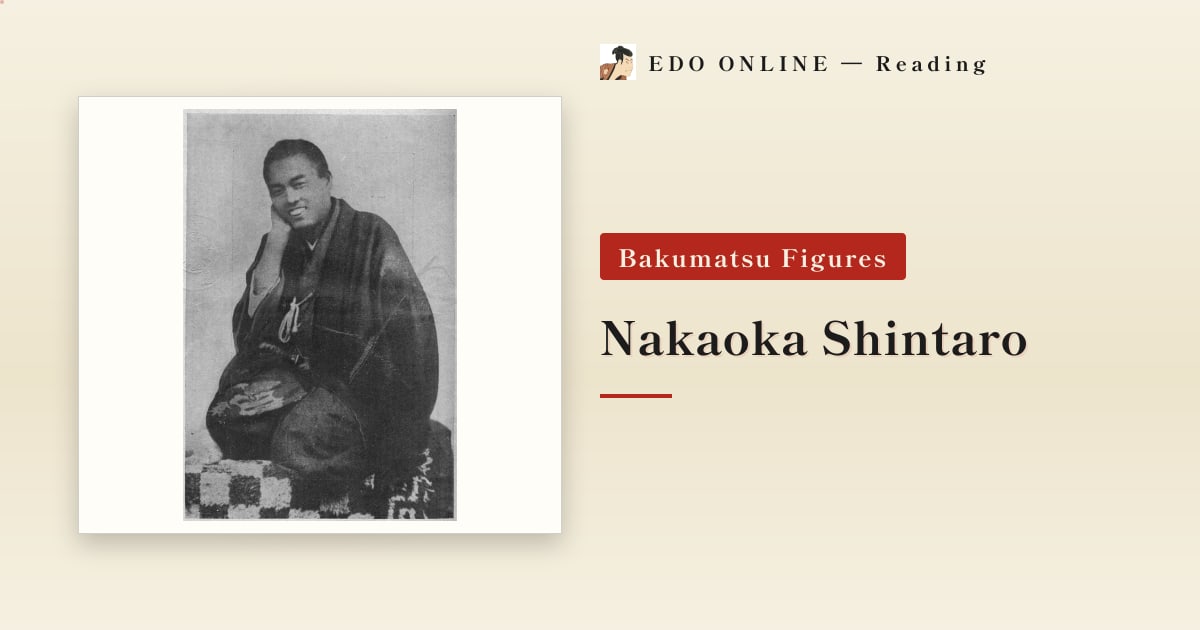
Nakaoka Shintarō worked beside Sakamoto Ryōma to bring Satsuma and Chōshū together. He is habitually overshadowed by his more famous colleague, and his contribution deserves better.
Contents
What did Nakaoka Shintaro do?
In a sentence: he was one of the two men who made the Satsuma-Chōshū Alliance possible. The credit usually goes to Ryōma alone; in fact the work was divided between them.
Nakaoka's strength was the Chōshū side. He spent long periods there and had the confidence of Takasugi Shinsaku, Kusaka Genzui and the domain's leadership, while also meeting Saigō Takamori repeatedly. Getting inside both camps and grinding down the mutual suspicion is what made the alliance possible at all.
The second point is his commitment to armed overthrow. Where Ryōma envisaged something closer to a council of lords, Nakaoka worked for the destruction of the shogunate by force, and the Rikuentai was the instrument for it. Two men moving in the same direction by different means — and cut down in the same room.
Nakaoka Shintaro's birthplace and family
Nakaoka was born in 1838 at Kitagawa in Aki district, Tosa, in what is now Kitagawa village, Kōchi Prefecture. It is an inland mountain settlement, and his family were ōjōya, senior village headmen.
- Nakaoka Shintarō's birthplace (Kitagawa) — the reconstructed house is open to visitors
- Nakaoka Shintarō Museum (Kitagawa) — covering his life and work
- Cape Muroto (Muroto) — where his statue stands facing the Pacific
That he was born a headman rather than a warrior matters. The role meant administering a village and managing its farmers. He handled village business young and is recorded dealing with famine relief. The practical instinct for organising people and resources is what later allowed him to shuttle between two hostile domains and to raise a fighting unit.
How did Nakaoka Shintaro die?
The Ōmiya in Kyoto was attacked on the night of 10 December 1867. Ryōma died almost immediately; Nakaoka did not.
Cut severely about the head and hands, he remained conscious. He died two days later, on 12 December, aged twenty-nine.
Those two days matter historically. They are the only occasion on which a victim of the attack could describe it. Nakaoka gave a fragmentary account to those who reached him, and that testimony underpins what is known about the incident.
It was not enough to identify anyone. He could relate the sequence of the attack but not who had wielded the swords, which is part of why the question of who killed Ryōma has never been closed.
The two men are buried side by side at Kyoto Ryozen Gokoku Shrine.
Timeline of Nakaoka Shintaro's life
| Year | Event |
|---|---|
| 1838 | Born to a village headman's family at Kitagawa, Tosa |
| 1861 | Joins the Tosa Loyalist Party |
| 1863 | Leaves Tosa to escape the domain's crackdown; takes refuge in Chōshū |
| 1864 | Fights on the Chōshū side at the Kinmon incident and is wounded |
| 1866 | Works with Ryōma to conclude the Satsuma-Chōshū Alliance |
| Jul 1867 | Becomes commander of the Rikuentai |
| 10 Dec 1867 | Attacked at the Ōmiya |
| 12 Dec 1867 | Dies of his wounds, aged 29 |
Frequently asked questions
Who was Nakaoka Shintaro?
A Tosa activist who, with Sakamoto Ryōma, brokered the Satsuma-Chōshū Alliance, and who led the Rikuentai in pursuit of armed overthrow of the shogunate.
How did Nakaoka Shintaro die?
He was attacked with Ryōma at the Ōmiya in Kyoto on 10 December 1867 and died of his wounds two days later.
What is the difference between the Rikuentai and the Kaientai?
The Rikuentai, under Nakaoka, was a land force intended for armed action. The Kaientai, under Ryōma, operated at sea in shipping and trade.
Where was Nakaoka Shintaro born?
At Kitagawa in Aki district, Tosa, now Kitagawa village in Kōchi Prefecture, into a family of senior village headmen.
For the man who died beside him see Sakamoto Ryōma; for the alliance they made see the Satsuma-Chōshū Alliance.
Related reading
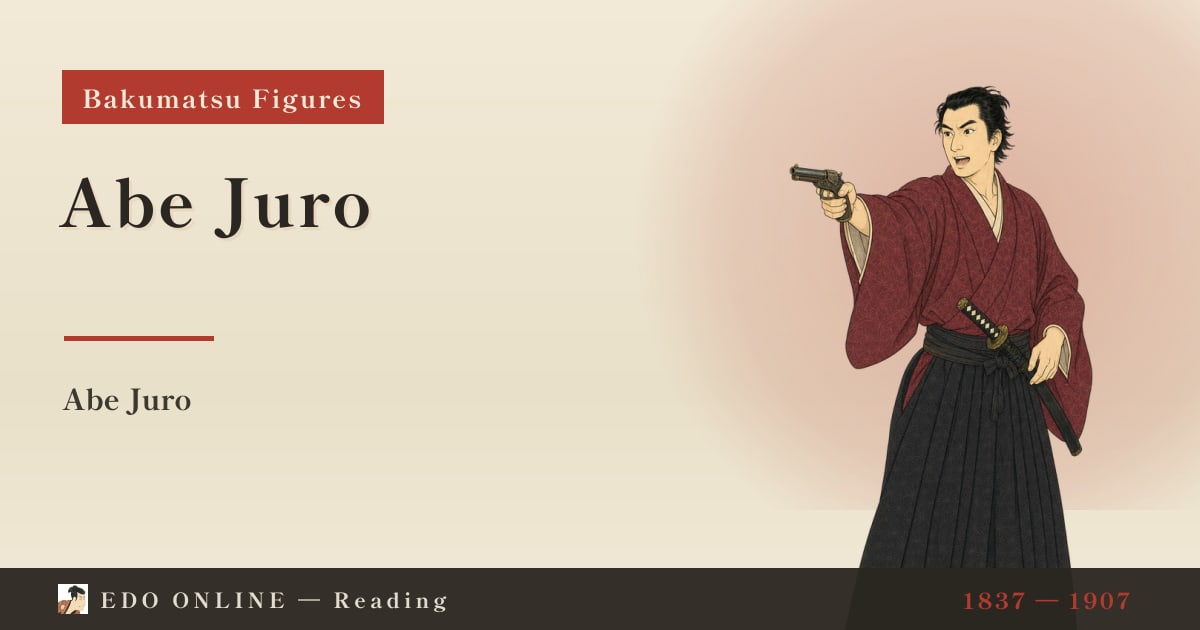
Abe Juro — The Former Member Who Talked
He deserted the Shinsengumi and rejoined under another name, shot at Kondo Isami as one of the Goryō Eji, and then grew apples in Sapporo. His late-Meiji testimony is where the ranking of the corps' best swordsmen comes from.
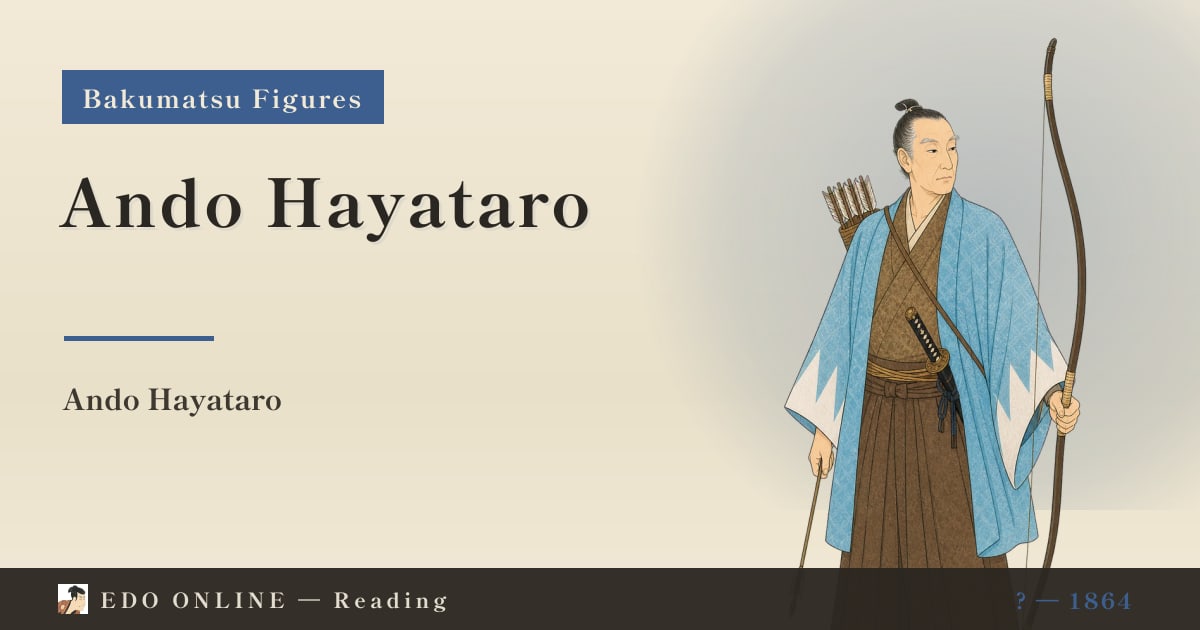
Ando Hayataro — The Shinsengumi's Record-Breaking Archer
He set the standing national record in the long-range shooting at the Tōdai-ji Great Buddha Hall, sending 8,685 arrows the length of the corridor. Nearly fifty, he joined the Shinsengumi and died of wounds taken in the back garden of the Ikedaya.
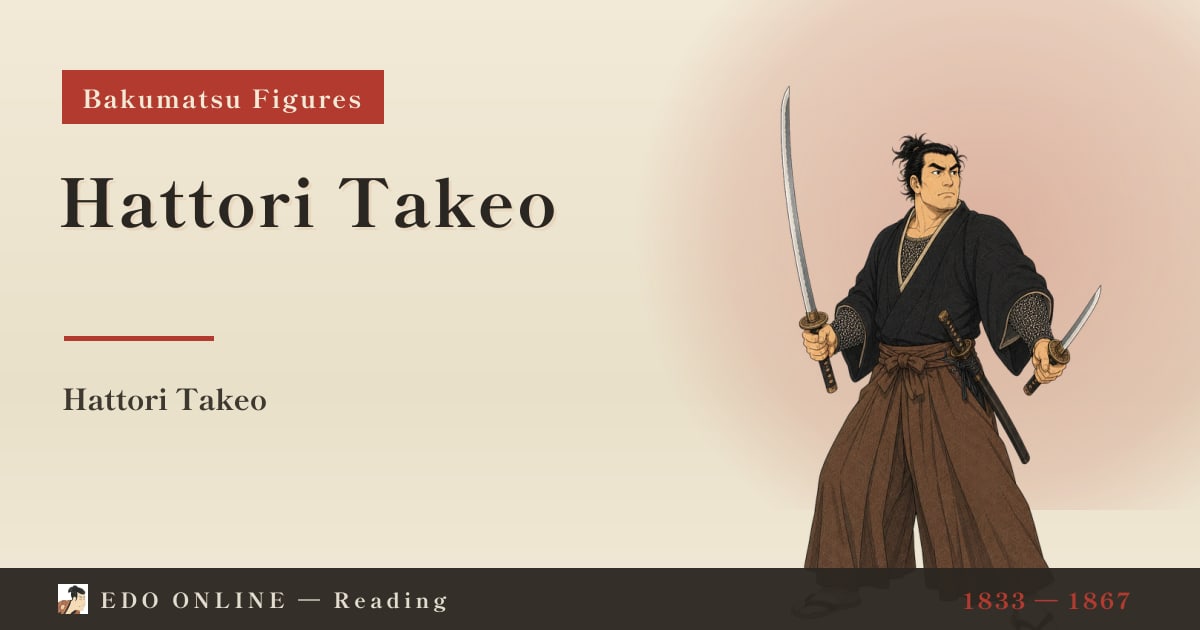
Hattori Takeo — Two Swords at Aburanokoji
A two-sword master and fencing instructor of the Shinsengumi who defected with the Goryō Eji. At Aburanokōji he alone wore mail, held a wall against the whole corps, and fell with more than twenty wounds.