What Was the Shinsengumi? From Founding to Final Stand
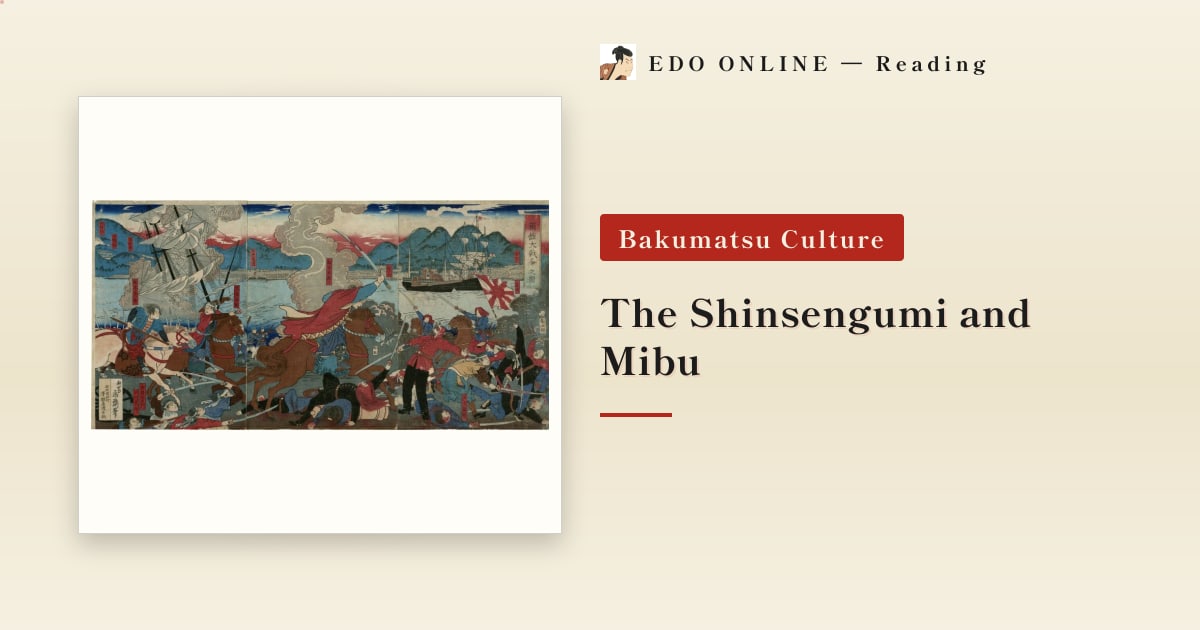
The most feared armed band in Bakumatsu Kyoto was the Shinsengumi. It existed for barely five years. Here is what it actually was, and why it is still remembered.
Contents
What Was the Shinsengumi?
The Shinsengumi was an armed corps that policed Kyoto in the last years of the shogunate, operating under the Aizu domain.
| Item | Detail |
|---|---|
| Founded | 1863, at Mibu in Kyoto |
| Predecessor | The Roshigumi, a corps of ronin recruited by the shogunate |
| Status | Held under Matsudaira Katamori of Aizu; later made direct shogunal retainers |
| Commander | Kondo Isami |
| Vice-commander | Hijikata Toshizo |
| Size | Around 200 men at its peak |
| Duties | Policing Kyoto, suppressing the loyalist movement |
| End | 1869, at Hakodate |
Its defining feature is that it was full of men who had not been born samurai. Kondo and Hijikata both came from the farming families of Tama and reached the top of the organisation on swordsmanship alone. The Bakumatsu was a period in which that could happen.
Who Founded the Shinsengumi, and When?
It began with the Roshigumi, a corps of masterless samurai recruited by the shogunate.
In 1862, on a proposal from Kiyokawa Hachiro, the shogunate raised a corps of ronin to escort the shogun Tokugawa Iemochi to Kyoto. More than two hundred men enrolled, and because recruitment ignored rank, unaffiliated swordsmen such as Kondo Isami and the rest of the Shieikan school joined in numbers.
The corps reached Kyoto in the spring of 1863 — whereupon Kiyokawa announced that it served the emperor, not the shogunate, and the shogunate recalled it to Edo.
The men who refused to go back are the Shinsengumi in embryo. Kondo Isami, Hijikata Toshizo and Okita Soji of the Shieikan, together with Serizawa Kamo's Mito faction, placed themselves under Matsudaira Katamori of Aizu, quartered at Mibu, and called themselves the Mibu Roshigumi.
The name Shinsengumi is traditionally said to have been granted for their service guarding the palace during the coup of the eighteenth day of the eighth month, in the autumn of 1863.
Shinsengumi or Shinsengumi? The Two Spellings
In Japanese the name is written either 新選組 or 新撰組, and both were in use at the time — the corpsmen's own documents contain each. Neither is an error. Modern usage, including the temple at Mibu, favours 新選組.
The Kyoku-chu Hatto, the Corps Regulations
The Shinsengumi is famous for the Kyoku-chu Hatto, its internal code. As handed down, it forbade departing from the way of the samurai, raising money privately, private quarrels and taking up outside lawsuits — with seppuku as the penalty.
Whether the code existed in exactly that form is disputed. Much of it reaches us through later memoirs, and even the number of articles varies between accounts.
What is not in doubt is that the corps really did order men to kill themselves for breaking discipline. Yamanami Keisuke, one of its most senior officers, was made to commit seppuku for desertion, and Serizawa Kamo, its first co-commander, was assassinated from inside the corps for his violent conduct.
That ruthlessness is what held a scratch band of swordsmen together as an organisation — and it is also why the Shinsengumi is remembered for its purges.
Organisation and Members
Under commander Kondo Isami and vice-commander Hijikata Toshizo, the corps was organised into ten units. The unit captains included Okita Soji, Nagakura Shinpachi, Saito Hajime, Harada Sanosuke, Inoue Genzaburo and Todo Heisuke.
The full roster is in the article on the Shinsengumi's members.
The famous pale blue haori with the jagged white hem appears to have been worn only in the corps' first period; for most of its existence the men dressed ordinarily.
The Ikedaya Incident
What made the Shinsengumi's name was the raid on the Ikedaya inn on 8 July 1864.
Loyalist activists had gathered at the inn on Sanjo in Kyoto, and Kondo's men attacked. A number of leading figures died that night, including Yoshida Toshimaro of Choshu. Full detail is in the Ikedaya Incident.
Their standing with the shogunate and Aizu rose sharply — and the loyalists now had one enemy above all others. Choshu marched on the capital the following month, and the corps turned out to fight at the Kinmon Incident.
How the Shinsengumi Ended
In 1867 the corpsmen were promoted to direct shogunal retainers. In the same year, the shogun returned power to the emperor — leaving them a police force whose employer had dissolved itself.
The old shogunate's army lost at Toba-Fushimi in January 1868, and the corps fell back on Edo.
- Kondo Isami was captured after a defeat at Koshu-Katsunuma and beheaded at Itabashi on 17 May 1868
- Okita Soji died of tuberculosis in Edo on 19 July 1868
- Hijikata Toshizo sailed to Ezo with Enomoto Takeaki, fought on from Goryokaku, and was killed near the Ippongi checkpoint at Hakodate on 20 June 1869
Goryokaku surrendered a week later, ending the Boshin War — and the Shinsengumi with it.
Some men did survive. Nagakura Shinpachi lived into the Taisho era and Saito Hajime served as a police officer in the Satsuma Rebellion. Much of what we know about the corps comes from the testimony of these survivors.
Shinsengumi Timeline
| Year | Event |
|---|---|
| Apr 1863 | The Roshigumi reaches Kyoto; the Shieikan and Mito factions stay on as the Mibu Roshigumi |
| Sep 1863 | Granted the name Shinsengumi after the coup of the eighteenth day of the eighth month (by tradition) |
| Oct 1863 | Serizawa Kamo is assassinated from within the corps |
| 8 Jul 1864 | The Ikedaya Incident makes the corps' name |
| Aug 1864 | The corps turns out for the Kinmon Incident |
| Mar 1865 | Yamanami Keisuke commits seppuku for desertion |
| Jul 1867 | The corpsmen become direct shogunal retainers |
| Dec 1867 | The Aburanokoji affair: Ito Kashitaro's Goryo Eji are purged |
| Jan 1868 | Defeat at Toba-Fushimi; withdrawal to Edo |
| 17 May 1868 | Kondo Isami is beheaded at Itabashi |
| 20 Jun 1869 | Hijikata Toshizo is killed at Hakodate; the corps ends |
Places to Visit
Mibu, Kyoto — where it started. The Yagi and former Maekawa residences that served as barracks still stand, and Mibu-dera holds a bust of Kondo Isami and the graves of corpsmen.
The Ikedaya site, Kyoto — a stone marker by Sanjo-kobashi.
Nishi Hongan-ji and Fudodo-mura — as the corps grew, its barracks moved from Mibu to Nishi Hongan-ji and then to Fudodo-mura.
Itabashi, Tokyo — Kondo Isami's grave, with a memorial raised by Nagakura Shinpachi.
Goryokaku and the Hekketsu-hi, Hakodate — where Hijikata Toshizo died.
Frequently Asked Questions
What did the Shinsengumi actually do?
They policed Kyoto and suppressed the loyalist movement, operating under the command of the Aizu domain.
Who founded the Shinsengumi?
It grew out of the men of the shogunate's Roshigumi who stayed in Kyoto — chiefly Kondo Isami and Hijikata Toshizo's Shieikan group and Serizawa Kamo's Mito faction — placed under the Aizu domain.
Was the Kyoku-chu Hatto real?
Whether the code existed in the exact form handed down is disputed, but the practice of ordering seppuku for breaches of discipline is well attested.
When did the Shinsengumi end?
Effectively in 1869, when Hijikata Toshizo was killed at Hakodate.
Did any of them survive?
Yes — Nagakura Shinpachi and Saito Hajime among others, and their accounts underpin what is known today.
For the individual members see the Shinsengumi's members; for the raid that made them, the Ikedaya Incident.
Related reading
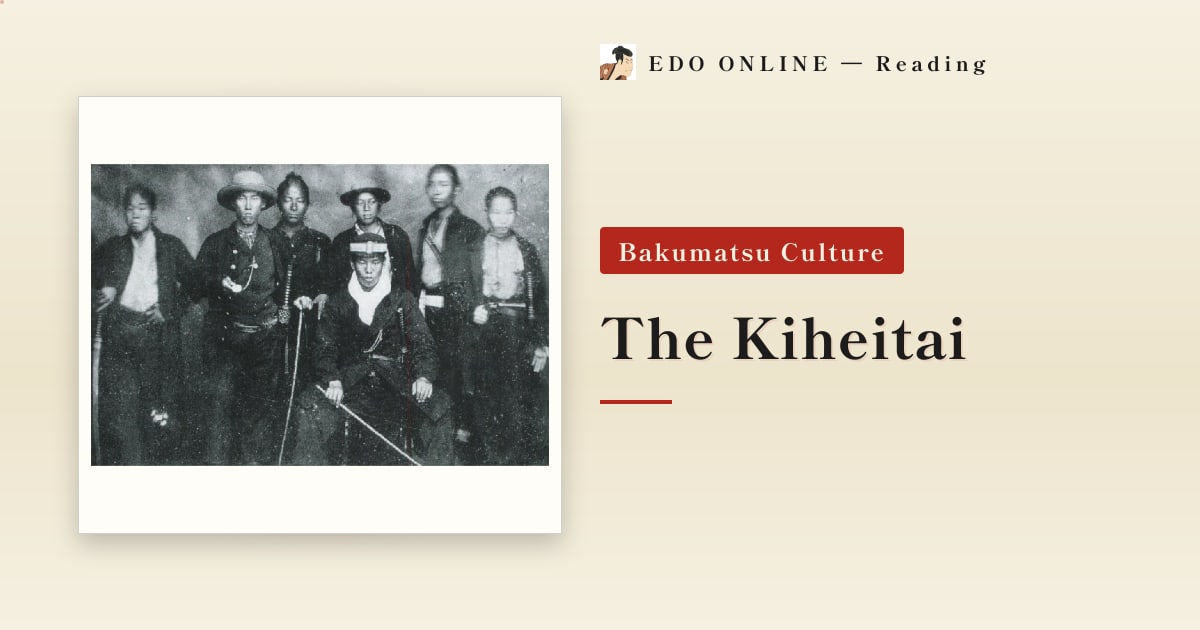
The Kiheitai — Takasugi's Army That Ignored Class
Raised in 1863 by Takasugi Shinsaku, the Kiheitai took commoners as soldiers. Why Choshu did it, how it differed from the regular army, what it won, and how the new government crushed it.
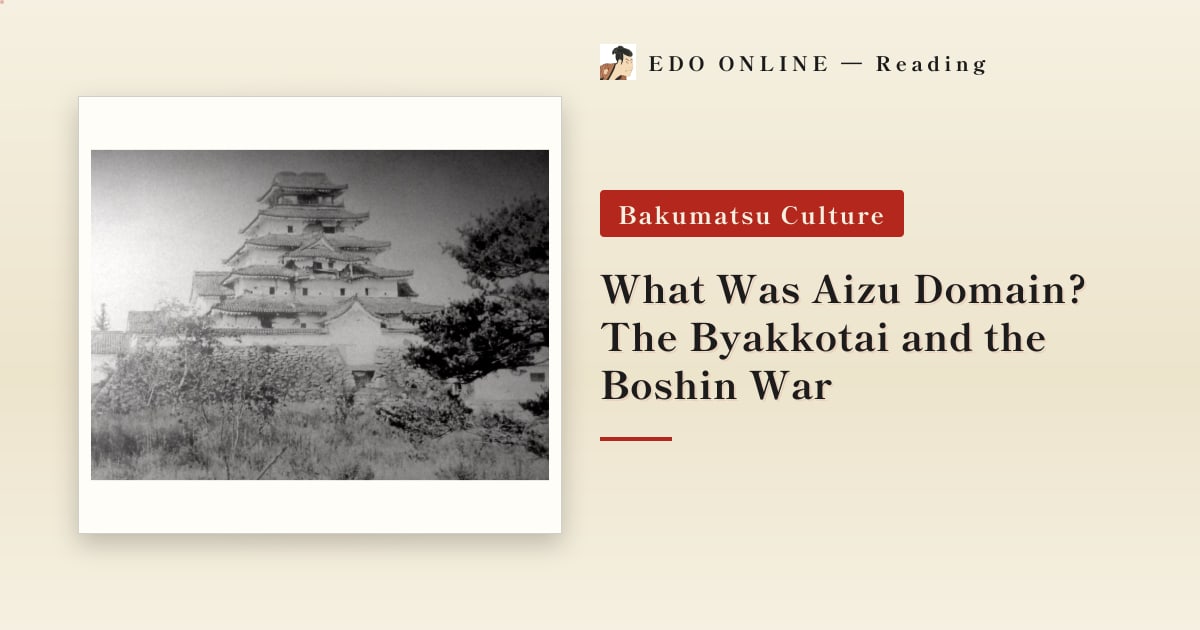
What Was Aizu Domain? The House Code, the Byakkotai, the Siege
Aizu stayed loyal to the shogunate to the end and was destroyed for it. Why Matsudaira Katamori took the Kyoto post, what happened to the Byakkotai, and how the domain was punished.
What Was the Ansei Purge? Ii Naosuke's Crackdown Explained
Between 1858 and 1859 the shogunate's chief minister Ii Naosuke purged more than a hundred opponents and executed eight, including Yoshida Shoin. Why it happened and what it destroyed.