What Was the Taisei Hokan? Why the Shogun Gave Up Power
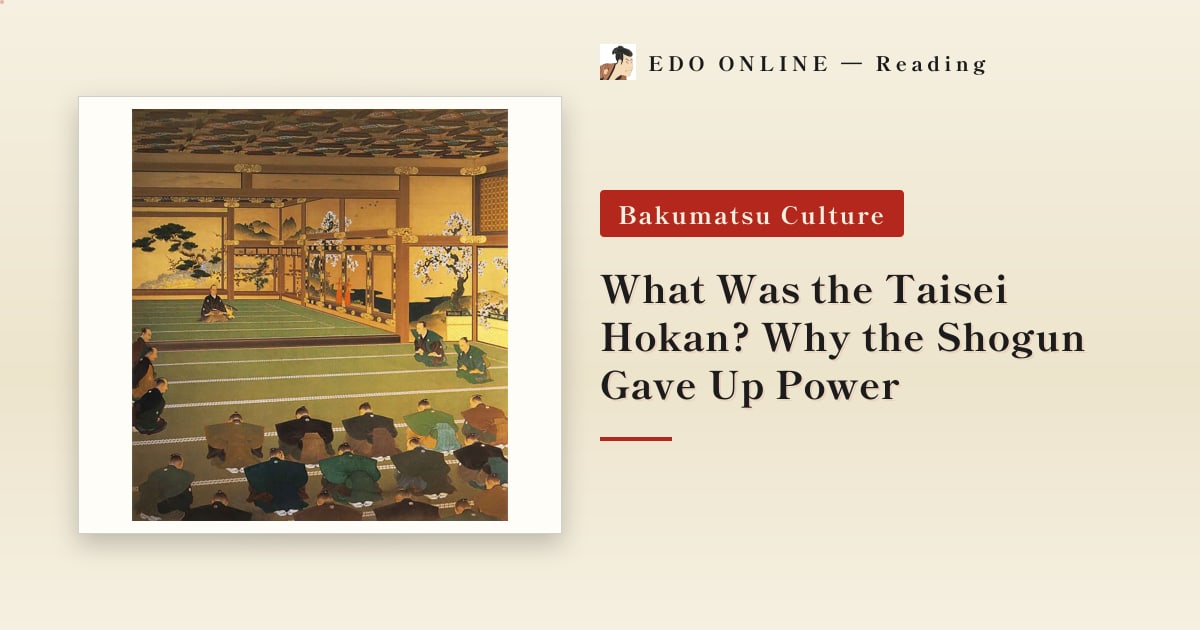
More than six centuries of warrior government were ended by the warrior government itself. The Taisei Hōkan — the return of political authority to the emperor — moved power without a battle, which makes it unusual in any country's history.
Contents
What was the Taisei Hokan?
On 9 November 1867, Tokugawa Yoshinobu, the fifteenth shogun, formally offered to return political authority to the imperial court. The court accepted the following day.
| Item | Detail |
|---|---|
| Date | Submitted 9 November 1867; approved 10 November |
| Place | Nijō Castle, Kyoto |
| Who | The fifteenth shogun, Tokugawa Yoshinobu |
| Act | Return of political authority to the emperor |
| Significance | End of roughly 680 years of warrior government |
The term combines taisei, the authority to govern, with hōkan, returning something held in trust. The framing was deliberate: authority had always belonged to the emperor, and the shogun had merely been exercising it on his behalf.
Why did the shogun give up power?
A ruler voluntarily surrendering his office needs explaining. The answer is that it was Yoshinobu's best available move.
By 1867 Satsuma and Chōshū were preparing to destroy the shogunate militarily. The Satsuma-Chōshū Alliance had been concluded, and the shogunate had just been beaten in a war against a single domain. Giving them a pretext meant risking the destruction of the Tokugawa house as enemies of the throne.
So Yoshinobu surrendered the title first.
Once authority had returned to the court, the slogan "overthrow the shogunate" had nothing left to attack. And the court possessed no administrative apparatus of its own. Actual government would have to be conducted by a council of the great lords — in which the Tokugawa, still holding the largest landholdings and their entire retainer corps, would dominate.
This was not surrender. It was an attempt to trade the form of power for the substance of it.
Sakamoto Ryoma and the Senchu Hassaku
Sakamoto Ryōma is inseparable from this episode in popular memory.
The formal proposal to the shogun came from Tosa domain: Gotō Shōjirō assembled the domain's position, submitted in the name of the former lord Yamauchi Yōdō. Tosa's thinking is said to have been shaped by a plan Ryōma drafted aboard ship, known as the Senchū Hassaku — the eight-point plan.
Its elements included returning authority to the court, establishing upper and lower assemblies, and appointing officials by ability. Much of it anticipates the shape of the later Meiji state.
A caution is required. The existence of the Senchū Hassaku as a document has been seriously questioned in recent scholarship. That Ryōma held ideas about a new political order is not in doubt; the famous eight-article version drafted on a ship may well be a later construction.
What is solid is that Tosa sought a route that avoided armed overthrow, and Yoshinobu took it.
Taisei Hokan and Restoration of Imperial Rule compared
These two are constantly confused. They are separate events, and the second followed the first.
| Item | Taisei Hōkan | Restoration of Imperial Rule |
|---|---|---|
| Date | 9 November 1867 | 3 January 1868 |
| Initiated by | Tokugawa Yoshinobu (the shogunate) | Satsuma and Iwakura Tomomi (the opposition) |
| Content | Returns authority to the emperor | Proclaims a new government, abolishes the shogunate |
| Yoshinobu's position | Retains his lands and forces | Ordered to surrender rank and lands |
| Character | Voluntary transfer by the shogunate | A coup by the anti-shogunal faction |
What Yoshinobu tried to preserve, the second decree took. That is what happened in the eight weeks between them.
The decree was engineered by Iwakura Tomomi and Ōkubo Toshimichi. It excluded the shogunate entirely from the new structure of offices and demanded Yoshinobu give up both court rank and territory.
The shogunal side refused, and the Boshin War began that January. Yoshinobu's calculation had failed. His bloodless transition lasted two months.
Taisei Hokan timeline
| Date | Event |
|---|---|
| Mar 1866 | Satsuma-Chōshū Alliance concluded |
| Jan 1867 | Tokugawa Yoshinobu becomes shogun |
| Late Oct 1867 | Tosa submits its proposal |
| 9 Nov 1867 | Yoshinobu offers to return authority |
| 10 Nov 1867 | The court accepts |
| 10 Dec 1867 | Sakamoto Ryōma assassinated at the Ōmiya |
| 3 Jan 1868 | Restoration of Imperial Rule decree |
| Late Jan 1868 | Battle of Toba-Fushimi; the Boshin War begins |
Why the Taisei Hokan matters
Political authority changed hands without a revolution, which is rare enough to be worth stating plainly. Had Yoshinobu chosen to fight to the end, Japan would have faced a prolonged civil war — and prolonged civil wars in nineteenth-century Asia tended to invite foreign intervention.
At the same time, it settled nothing on its own. The Tokugawa retained their power in practice, and the question of what to do about that was answered with war. This is why the Taisei Hōkan is not remembered as a bloodless transfer of power: it was the first half of one.
What it did achieve was to put the question of who should govern onto a negotiating table, even briefly. The bloodless surrender of Edo a few months later drew on the memory of that possibility.
Key Dates and Common Confusions
9 November 1867 for the return of power; 3 January 1868 for the restoration decree — fifty-five days apart. Both fall in the same year of the Japanese era calendar, which is why they are so often collapsed into one event.
| Common mistake | Actually |
|---|---|
| The Taisei Hokan abolished the shogunate | The restoration decree did that. The Taisei Hokan only returned political authority |
| It avoided a war | The decree came 55 days later and Toba-Fushimi about three weeks after that. The Boshin War happened anyway |
| Yoshinobu retired from politics | The plan assumed the Tokugawa would remain the largest domain. The decree was designed to block exactly that |
Frequently asked questions
When was the Taisei Hokan?
Tokugawa Yoshinobu submitted it on 9 November 1867, and the imperial court accepted it the next day.
Who carried out the Taisei Hokan?
Tokugawa Yoshinobu, the fifteenth and last shogun. The proposal had been put to him by Tosa domain.
Where did it take place?
At Nijō Castle in Kyoto, where Yoshinobu assembled senior retainers of the domains to announce his decision.
Did the Taisei Hokan end the shogunate?
Not by itself. Authority was returned, but the shogunate was formally abolished about eight weeks later by the Restoration of Imperial Rule decree.
For the man who made the decision see Tokugawa Yoshinobu; for what followed see the Boshin War.
Related reading
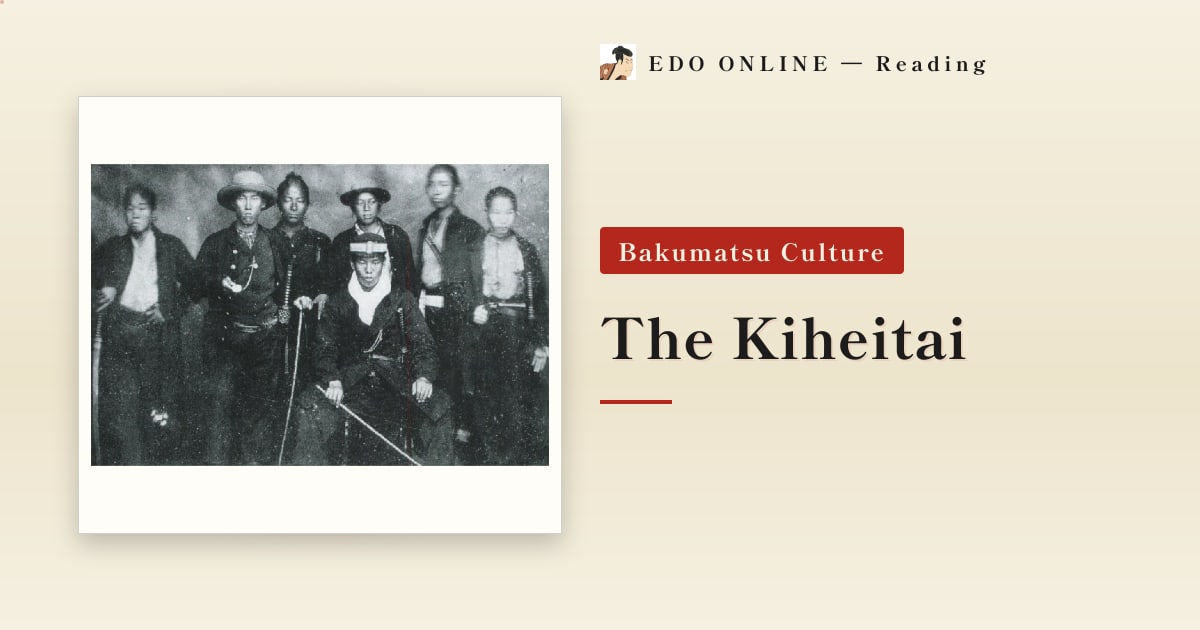
The Kiheitai — Takasugi's Army That Ignored Class
Raised in 1863 by Takasugi Shinsaku, the Kiheitai took commoners as soldiers. Why Choshu did it, how it differed from the regular army, what it won, and how the new government crushed it.
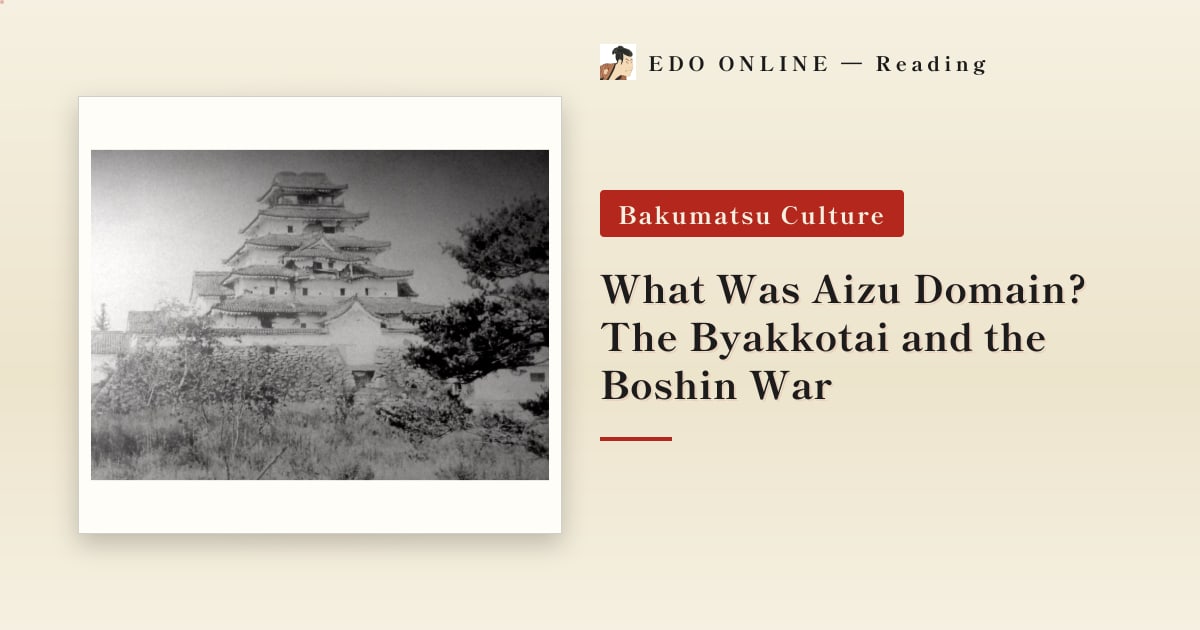
What Was Aizu Domain? The House Code, the Byakkotai, the Siege
Aizu stayed loyal to the shogunate to the end and was destroyed for it. Why Matsudaira Katamori took the Kyoto post, what happened to the Byakkotai, and how the domain was punished.
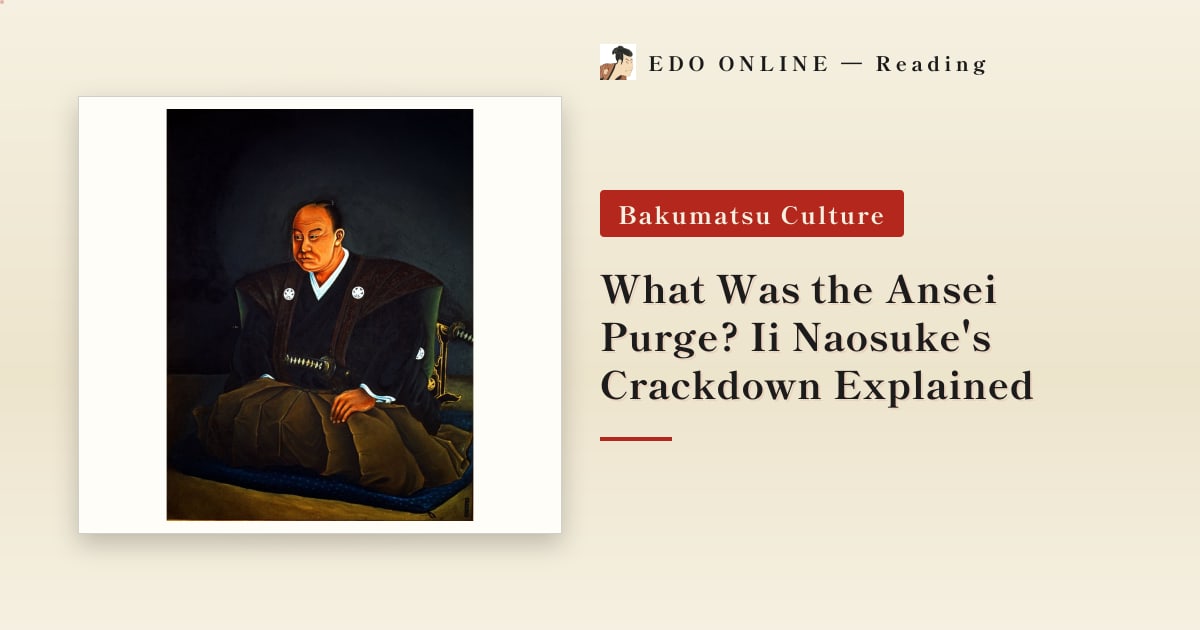
What Was the Ansei Purge? Ii Naosuke's Crackdown Explained
Between 1858 and 1859 the shogunate's chief minister Ii Naosuke purged more than a hundred opponents and executed eight, including Yoshida Shoin. Why it happened and what it destroyed.