Who Was Tokugawa Yoshinobu? Japan's Last Shogun Explained
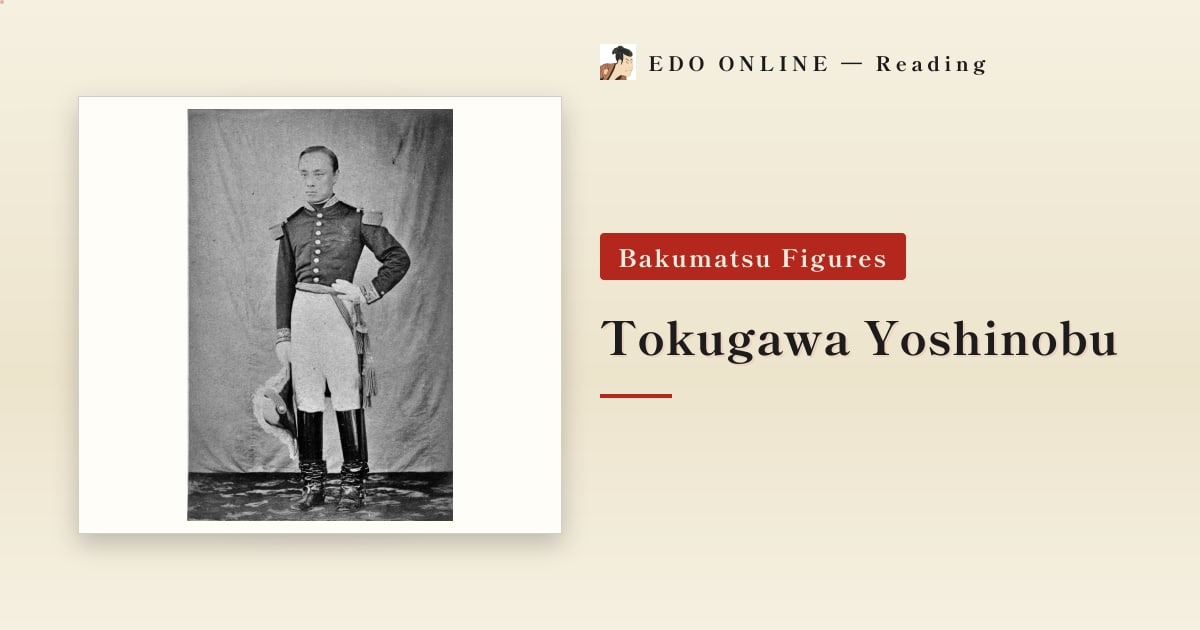
Tokugawa Yoshinobu ended a shogunate that had lasted more than 260 years, and he ended it himself. As the fifteenth and last shogun, his decision redirected the course of Japanese history.
Contents
What did Tokugawa Yoshinobu do?
He carried out the return of political power to the emperor in October 1867, formally surrendering the authority the Tokugawa house had held since 1603.
He then withdrew from the fighting that followed, ordering submission rather than resistance after the defeat at Toba-Fushimi. That decision made the bloodless surrender of Edo possible and spared the city.
How did Tokugawa Yoshinobu become shogun?
Born in 1837 into the Mito branch of the Tokugawa house, he was later adopted into the Hitotsubashi family. He was recognised early as exceptionally able, and during the succession dispute of the 1850s a faction pushed for him as the next shogun.
That faction lost. Ii Naosuke installed a rival candidate and placed Yoshinobu under house arrest during the Ansei Purge.
He returned to power as guardian to the shogun in 1862 and finally took the office himself in 1866 — at the moment when it had become nearly ungovernable.
Why did Tokugawa Yoshinobu return power to the emperor?
This is the question that defines him, and the answer is not surrender.
By 1867 Satsuma and Chōshū were preparing to destroy the shogunate by force. The Satsuma-Chōshū Alliance had been concluded, and the shogunate had just lost a war against a single domain.
Yoshinobu's calculation was that giving up the office would remove the pretext for attacking him. The imperial court had no administrative machinery of its own; real government would still have to be conducted by a council of the great lords, in which the Tokugawa, holding the largest landholdings in Japan, would inevitably dominate.
He surrendered the title in order to keep the substance. It was a sophisticated manoeuvre, and it failed within two months when the Restoration of Imperial Rule decree stripped him of lands and rank.
Why did Tokugawa Yoshinobu abandon Osaka Castle?
In January 1868 his forces were defeated at Toba-Fushimi. Yoshinobu then left Osaka Castle by night with a handful of attendants and sailed to Edo, abandoning an army that still had the numbers to fight.
This single act is the reason opinion on him remains divided. It can be read as cowardice, or as a refusal to prolong a civil war he had already decided not to win. Once the imperial banner appeared on the other side, continuing would have meant fighting as an declared enemy of the throne.
When did Tokugawa Yoshinobu die?
He died on 22 November 1913, aged seventy-six, of pneumonia.
The length of his life is startling. He was thirty when he gave up the shogunate, and he lived a further forty-five years afterwards. Saigō Takamori, Ōkubo Toshimichi and Kido Takayoshi — the men who removed him — were all dead by 1878. Yoshinobu outlived every one of them, saw two foreign wars, and lived to the end of the Meiji era.
Where is Tokugawa Yoshinobu buried?
His grave is at Yanaka Cemetery in Tokyo.
What is unusual is the form. Previous Tokugawa shoguns were buried at Zōjō-ji or Kan'ei-ji in Buddhist rites; Yoshinobu chose Shinto burial under a round tumulus, deliberately separating himself from the line of shoguns. He appears to have wished to be buried as a private man.
His principal wife Mikako lies beside him.
Tokugawa Yoshinobu's family
Yoshinobu had a principal wife and two known concubines, and is recorded as fathering more than twenty children, though many died young.
- Principal wife — Ichijō Mikako, from the Ichijō court family
- Concubines — Shinmura Nobu and Nakane Sachi, who shared his life in Shizuoka after the Restoration
- Children — more than twenty, most born after 1868
He founded a new Tokugawa Yoshinobu house in the Meiji period, separate from the main Tokugawa line continued by Tokugawa Iesato.
His father was Tokugawa Nariaki of Mito, the centre of the Sonnō Jōi ideology. The man born in the home of imperial loyalism was the one who handed power back to the throne.
What was Tokugawa Yoshinobu like?
Contemporary assessments diverge sharply.
On ability there is agreement: he was called brilliant from a young age. But he is also repeatedly described as changing course, and the abandonment of Osaka Castle is the case always cited.
After 1868 he said almost nothing about any of it. He avoided political comment entirely and spent his long retirement on photography, hunting, cycling and go. He became a serious photographer, and his work survives.
Coward, or the man who declined an unnecessary war? The verdict stays unsettled because the role he took could not make him either a winner or a loser.
Timeline of Tokugawa Yoshinobu's life
| Year | Event |
|---|---|
| 1837 | Born to Tokugawa Nariaki of Mito |
| 1847 | Adopted into the Hitotsubashi house |
| 1858 | Loses the succession dispute; confined during the Ansei Purge |
| 1862 | Appointed guardian to the shogun |
| 1866 | Becomes the fifteenth shogun |
| Oct 1867 | Returns political power to the emperor |
| Jan 1868 | Defeated at Toba-Fushimi; withdraws to Edo and submits |
| 1897 | Moves to Tokyo; later made a prince and member of the House of Peers |
| 22 Nov 1913 | Dies, aged 76 |
Frequently asked questions
Who was Tokugawa Yoshinobu?
The fifteenth and final shogun of the Edo shogunate, who returned political authority to the emperor in 1867.
Why did Tokugawa Yoshinobu give up power?
To remove the justification for an armed attack on the Tokugawa house, while expecting to retain real influence through a council of lords. The plan collapsed within two months.
When did Tokugawa Yoshinobu die?
On 22 November 1913, aged 76 — forty-five years after the end of the shogunate.
Where is Tokugawa Yoshinobu's grave?
Yanaka Cemetery in Tokyo, in a Shinto-style round tumulus rather than with the other Tokugawa shoguns.
For the act that ended the shogunate see the return of power; for the war that followed see the Boshin War.
Related reading
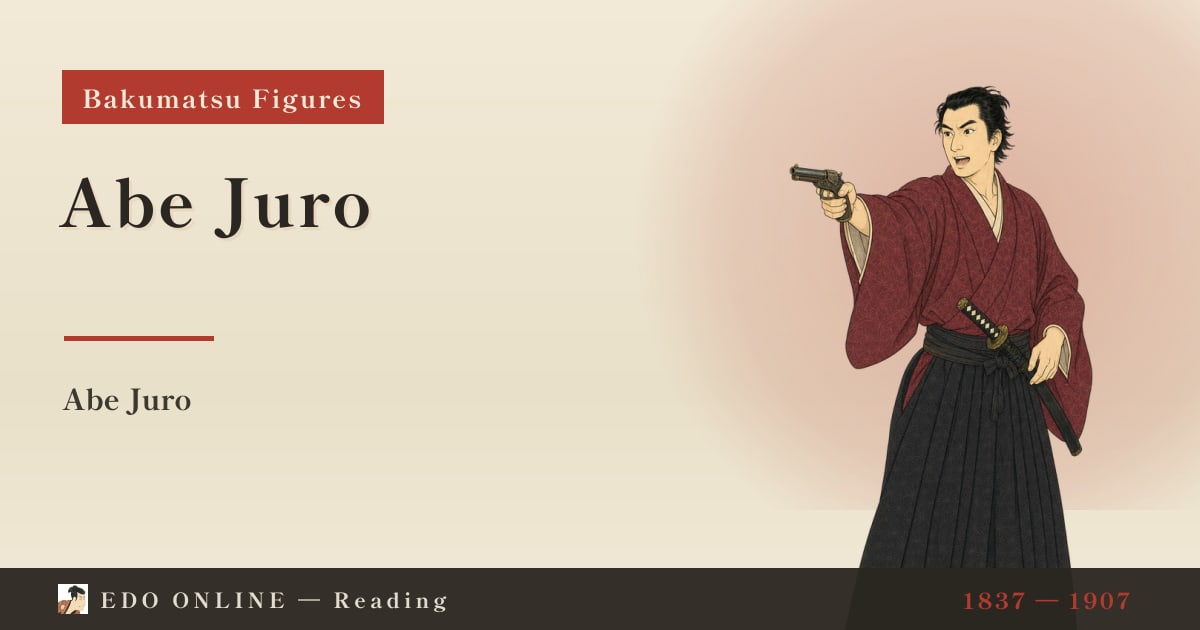
Abe Juro — The Former Member Who Talked
He deserted the Shinsengumi and rejoined under another name, shot at Kondo Isami as one of the Goryō Eji, and then grew apples in Sapporo. His late-Meiji testimony is where the ranking of the corps' best swordsmen comes from.
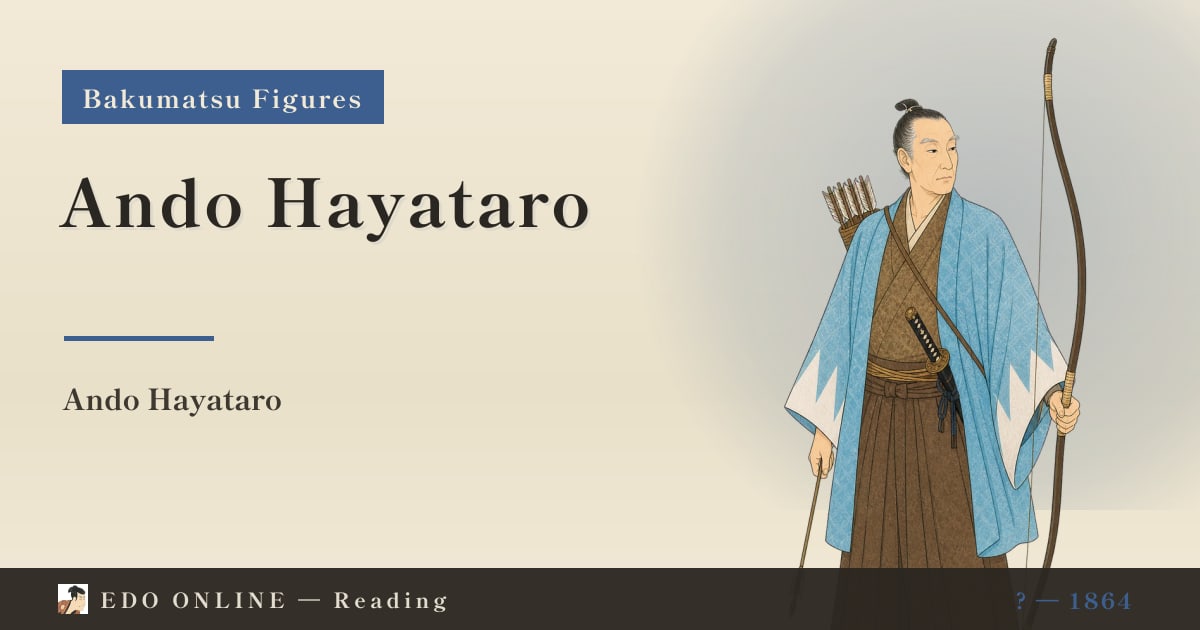
Ando Hayataro — The Shinsengumi's Record-Breaking Archer
He set the standing national record in the long-range shooting at the Tōdai-ji Great Buddha Hall, sending 8,685 arrows the length of the corridor. Nearly fifty, he joined the Shinsengumi and died of wounds taken in the back garden of the Ikedaya.
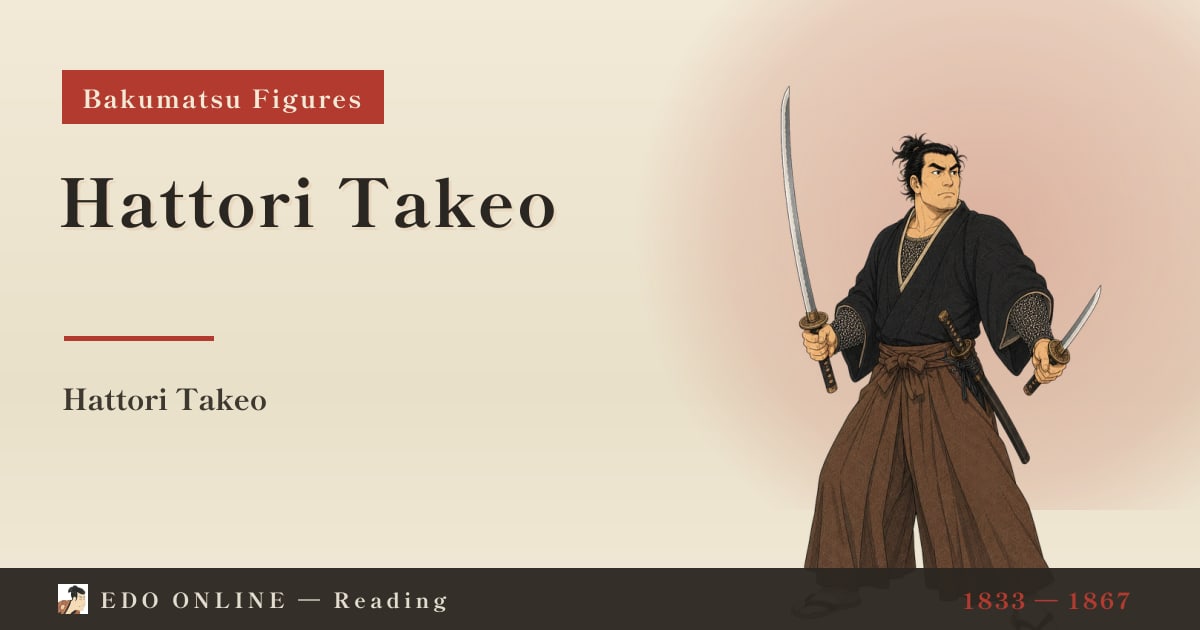
Hattori Takeo — Two Swords at Aburanokoji
A two-sword master and fencing instructor of the Shinsengumi who defected with the Goryō Eji. At Aburanokōji he alone wore mail, held a wall against the whole corps, and fell with more than twenty wounds.