The Nagasaki Naval School — Four Years That Made Japan's Navy
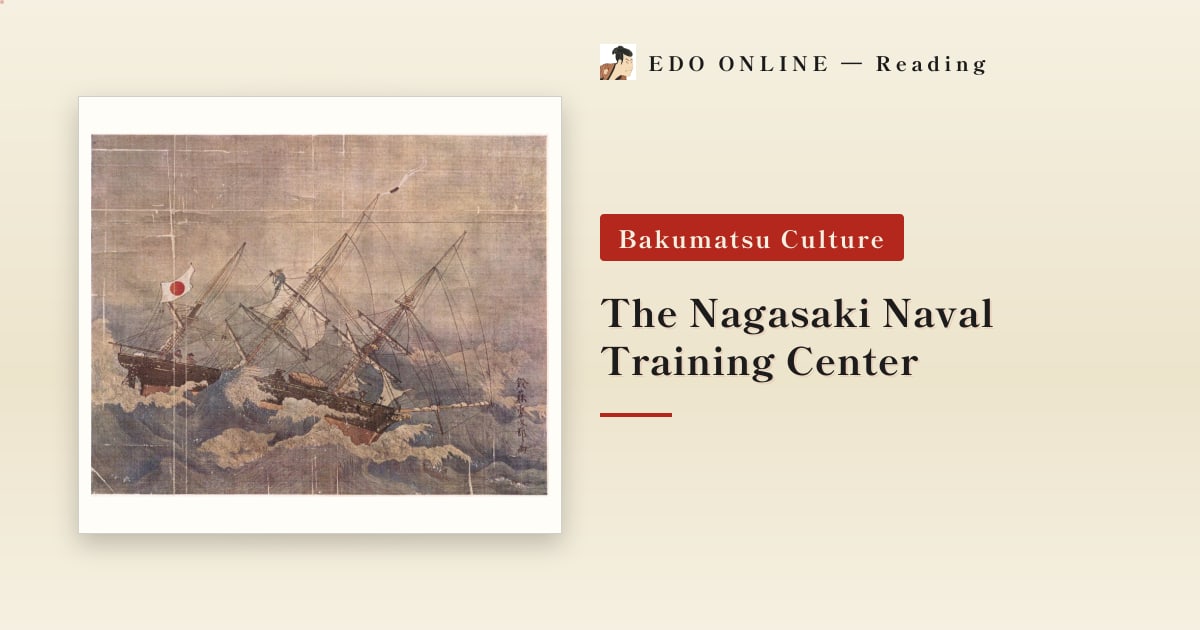
The Nagasaki Naval Training Centre is where the modern Japanese navy began — and it lasted four years.
Contents
What Was It?
A school of Western naval practice, opened by the shogunate at Nagasaki in 1855.
| Item | Detail |
|---|---|
| Opened | 1855 |
| Location | Nagasaki, at the western magistracy |
| Instructors | Officers of the Dutch navy (Pels Rijcken, later Kattendijke) |
| Training ship | The Kanko Maru — the Soembing, presented by the Netherlands |
| Students | Shogunal retainers, plus men sent by Saga, Satsuma, Fukuoka and other domains |
| Subjects | Navigation, gunnery, shipbuilding, surveying, engineering, Dutch |
| Closed | 1859 |
Note that it was not a shogunal school only. Because domains sent students, the men trained there ended up on both sides of the coming civil war.
Why It Opened
Because of the black ships.
No number of shore batteries like Odaiba can chase a squadron. Defending the coast required Japanese who could operate warships — that conclusion produced the school.
The difficulty was that nobody in Japan knew how. So the shogunate asked the Dutch, its one Western trading partner, for instructors.
The Netherlands sent officers and, as a training ship, the steam warship Soembing, renamed the Kanko Maru — the first practical steam warship in Japanese service.
Who Studied There
The roll explains the school's importance.
- Katsu Kaishu — a first-intake student and supervisor, later captain on the Pacific crossing of the Kanrin Maru and the negotiator of Edo Castle's surrender
- Enomoto Takeaki — later sent to study in the Netherlands, and commander of the old shogunate's fleet at Goryokaku
- Godai Tomoatsu — sent by Satsuma, later the builder of Osaka's business world
- Saga's students fed directly into Nabeshima Naomasa's naval and industrial programme
Enomoto, who fought for the shogunate, and Godai, who served the new government, sat in the same classroom. That technical people were spread across both sides is one reason post-war Japan modernised as fast as it did.
What They Learned
Teaching was in Dutch, through interpreters, and covered navigation, surveying, gunnery, shipbuilding and engineering — not only on paper. Students went to sea on the Kanko Maru, sailing from Nagasaki to ports around Japan.
The largest lesson was structural: running a ship requires an organisation. A captain, officers, engine-room crew — people assigned by function rather than by birth, which was not how Japanese military service then worked.
When Katsu Kaishu later argued for a navy and for reform of the shogunate itself, the skeleton of the argument came from here.
Why It Closed After Four Years
The school shut in 1859 — not because it failed.
- A naval academy had opened in Edo, and training shifted there; Nagasaki was far from the centre of government
- the Dutch instructors' terms ended
- enough men had been trained to move on to operating real ships and to studying abroad
Its graduates went on to the Pacific crossing of the Kanrin Maru in 1860 and to study in the Netherlands. A school that lasted four years supplied the human framework of the Japanese navy.
Timeline
| Year | Event |
|---|---|
| 1853 | The black ships make coastal defence urgent |
| 1855 | The school opens; the Netherlands presents the Soembing (Kanko Maru) |
| 1855–59 | Katsu Kaishu, Enomoto Takeaki and Godai Tomoatsu study there |
| 1857 | A naval academy opens in Edo; the Kanrin Maru arrives from the Netherlands |
| 1859 | The Nagasaki school closes |
| 1860 | The Kanrin Maru crosses the Pacific |
Frequently Asked Questions
What was the Nagasaki Naval Training Centre?
Japan's first school of Western naval practice, opened by the shogunate at Nagasaki in 1855 with Dutch instructors.
Who studied there?
Katsu Kaishu, Enomoto Takeaki and Godai Tomoatsu, among shogunal retainers and men sent by the domains.
What was taught?
Navigation, surveying, gunnery, shipbuilding and engineering, with sea training aboard the Kanko Maru.
Why did it close so soon?
Training moved to a new academy in Edo and the Dutch instructors' terms ran out. It was not closed for failure.
How is it connected to the Kanrin Maru?
Its graduates crewed the Kanrin Maru on the 1860 Pacific crossing. The ship itself was built in the Netherlands and delivered in 1857.
For the batteries that came first see Odaiba; for the men, Katsu Kaishu and Enomoto Takeaki.
Related reading
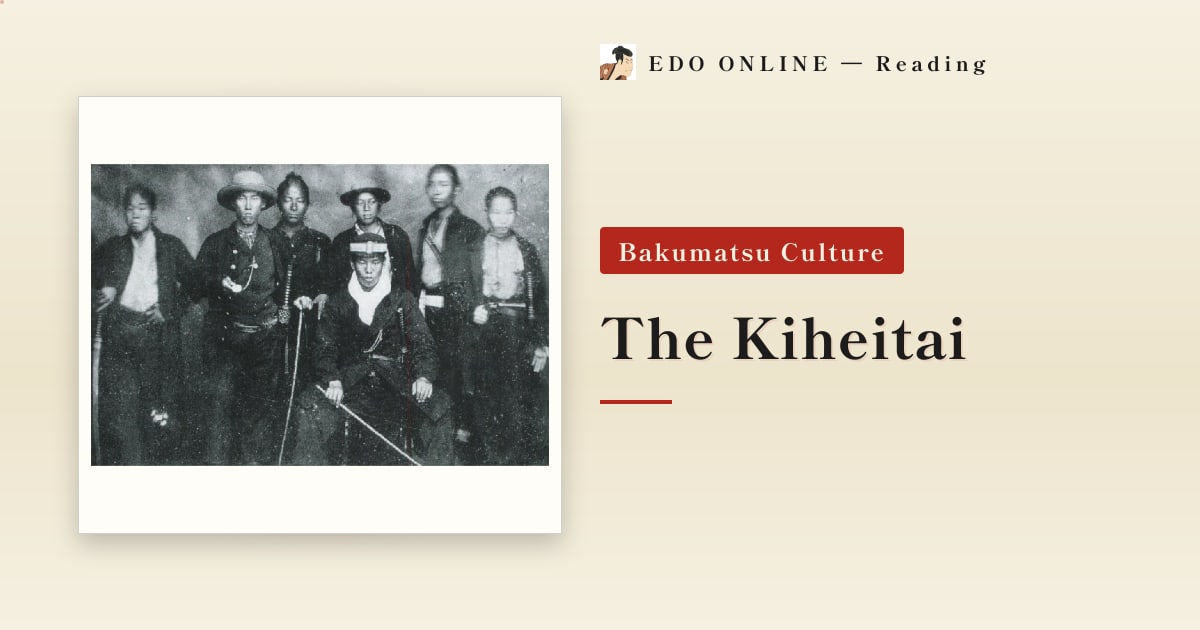
The Kiheitai — Takasugi's Army That Ignored Class
Raised in 1863 by Takasugi Shinsaku, the Kiheitai took commoners as soldiers. Why Choshu did it, how it differed from the regular army, what it won, and how the new government crushed it.
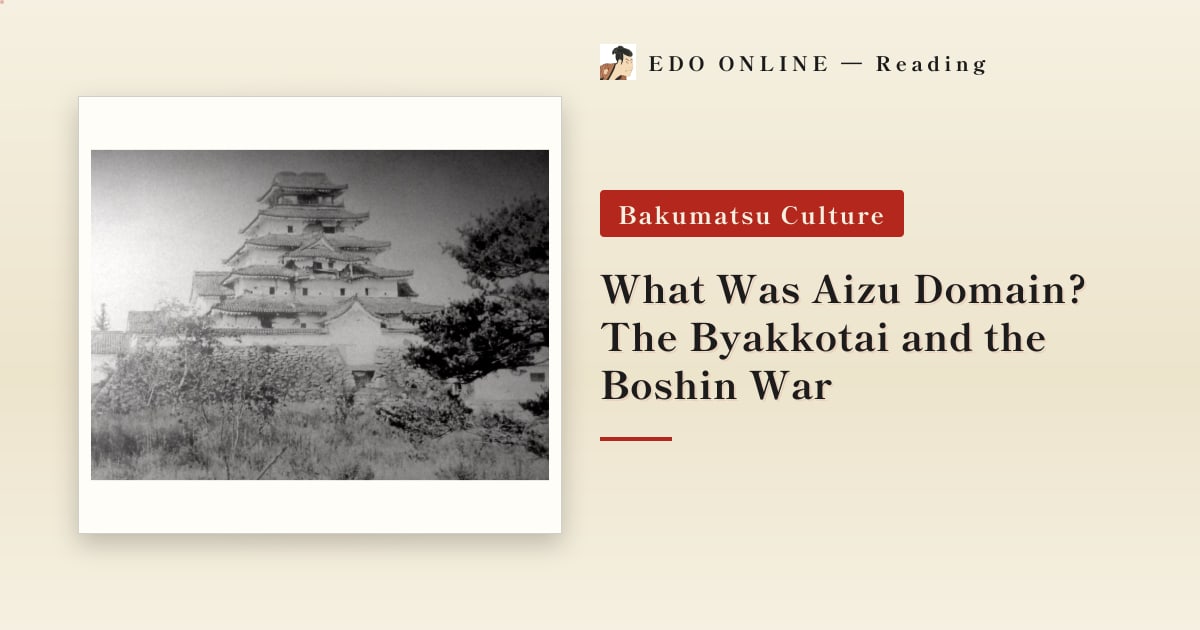
What Was Aizu Domain? The House Code, the Byakkotai, the Siege
Aizu stayed loyal to the shogunate to the end and was destroyed for it. Why Matsudaira Katamori took the Kyoto post, what happened to the Byakkotai, and how the domain was punished.
What Was the Ansei Purge? Ii Naosuke's Crackdown Explained
Between 1858 and 1859 the shogunate's chief minister Ii Naosuke purged more than a hundred opponents and executed eight, including Yoshida Shoin. Why it happened and what it destroyed.