The Kiheitai — Takasugi's Army That Ignored Class
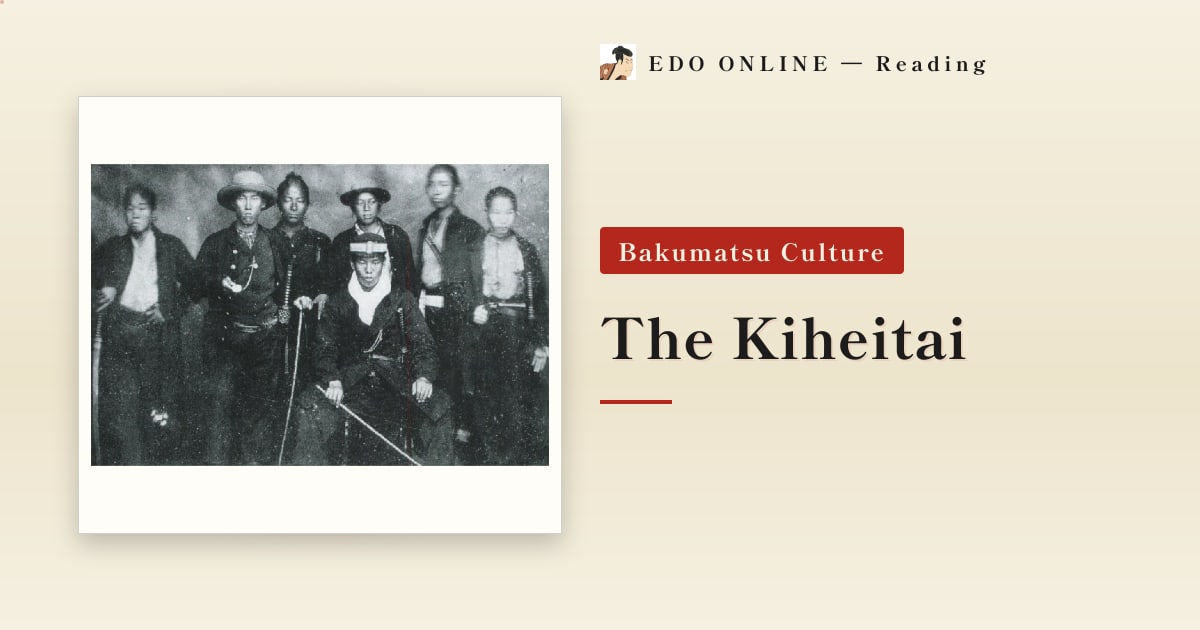
The Kiheitai was Takasugi Shinsaku's army of men who were not samurai. It changed what a Japanese army was.
Contents
What Was the Kiheitai?
A volunteer unit raised in the Choshu domain in 1863, open regardless of social class.
| Item | Detail |
|---|---|
| Raised | Summer 1863 |
| Founder | Takasugi Shinsaku |
| Domain | Choshu |
| Membership | Samurai, rural gentry, farmers, townsmen, monks, sumo wrestlers — volunteers of any status |
| Equipment | Western rifles and drill |
| Position | One of the shotai, irregular units standing outside the domain's hereditary army |
| Dissolved | 1869–70, as the units were folded into the new national army |
Ki means irregular, as against sei, the regular troops. The name says it: a force built outside the standing army, on a different principle.
Why It Was Raised
Because Choshu lost.
In mid-1863 the domain fired on foreign shipping in the Shimonoseki Strait to carry out the expulsion policy. American and French warships retaliated and destroyed the batteries — and the domain's hereditary army proved useless.
Takasugi proposed the Kiheitai to the domain immediately afterwards.
The logic is simple.
- If the weapon is a rifle, years of sword training are irrelevant. Anyone can be trained to shoot
- There are only so many samurai. Farmers and townsmen are most of the population
- An army whose officers are set by birth cannot replace them after a defeat
"Stop building armies out of samurai only" is the whole idea. Yoshida Toshimaro's petition to enlist men from outside the class order belongs to the same movement.
What It Did
Shimonoseki. The four-nation bombardment of 1864 was another defeat, but the experience accelerated the domain's military reform.
The rising at Kozan-ji (winter 1864–65). After the Kinmon Incident, Choshu leaned toward submitting to the shogunate. Takasugi rose in arms and took the domain back with the irregular units. Choshu's road to the end of the shogunate is decided here.
The second Choshu campaign (1866). Choshu met a far larger shogunal army with rifle-armed irregulars and beat it back on every front — the campaign that showed the country the shogunate could not win. Omura Masujiro's organisation and command told here.
The Boshin War. The units fought as part of the imperial army through Echigo, Aizu and Hakodate.
Kiheitai Versus the Regular Army
| Item | Hereditary army | Kiheitai and the shotai |
|---|---|---|
| Recruitment | Retainers (samurai) | Volunteers of any class |
| Officers | Determined by family rank | Some room for ability and record |
| Weapons | Sword and spear | Western rifles |
| Training | Individual martial arts | Collective drill and musketry |
| Pay | Hereditary stipend | Wages from the domain |
It was not an egalitarian organisation. Differences in treatment between samurai and commoner members persisted, and so did status consciousness inside the unit. But on the single point of recruiting from outside the warrior class, it was something new.
How It Ended
The end of the Kiheitai is rarely told.
After the Restoration the irregular units were surplus. The new state was moving toward a conscript national army — Omura Masujiro's design — and Choshu disbanded most of the units.
At the end of 1869 the discharged men rose in protest.
They were put down by Choshu itself, under leaders including Kido Takayoshi, and many were executed.
The force that brought down the shogunate was dissolved by the government it created, resisted, and was destroyed. The same shape recurs in Maebara Issei's Hagi rebellion and in Saigo Takamori's Satsuma Rebellion.
Timeline
| Year | Event |
|---|---|
| May 1863 | Choshu shells foreign ships at Shimonoseki and is bombarded in return |
| Jul 1863 | Takasugi Shinsaku raises the Kiheitai |
| Aug 1864 | Four-nation bombardment of Shimonoseki; Choshu loses the Kinmon Incident |
| Dec 1864 | Takasugi rises at Kozan-ji; the irregulars take control of the domain |
| 1866 | The second Choshu campaign is beaten back on every front |
| May 1867 | Takasugi dies of tuberculosis, aged 27 |
| 1868–69 | The units fight in the Boshin War |
| 1869–70 | The units are disbanded; the discharged men rise and are suppressed |
Frequently Asked Questions
What was the Kiheitai?
A volunteer military unit raised in Choshu in 1863, open to men regardless of social class.
Who founded it?
Takasugi Shinsaku, immediately after Choshu's batteries were destroyed by foreign warships.
What does the name mean?
"Irregular troops," as opposed to the regular hereditary army.
Did farmers really serve in it?
Yes — farmers, townsmen, monks and sumo wrestlers among others, though differences in treatment inside the unit remained.
What happened to the Kiheitai?
It was disbanded after the Restoration. The discharged men rose in protest at the end of 1869 and were suppressed by Choshu itself.
For its founder see Takasugi Shinsaku; for the military design behind it, Omura Masujiro; for a parallel proposal, Yoshida Toshimaro.
Related reading
What Was Aizu Domain? The House Code, the Byakkotai, the Siege
Aizu stayed loyal to the shogunate to the end and was destroyed for it. Why Matsudaira Katamori took the Kyoto post, what happened to the Byakkotai, and how the domain was punished.
What Was the Ansei Purge? Ii Naosuke's Crackdown Explained
Between 1858 and 1859 the shogunate's chief minister Ii Naosuke purged more than a hundred opponents and executed eight, including Yoshida Shoin. Why it happened and what it destroyed.
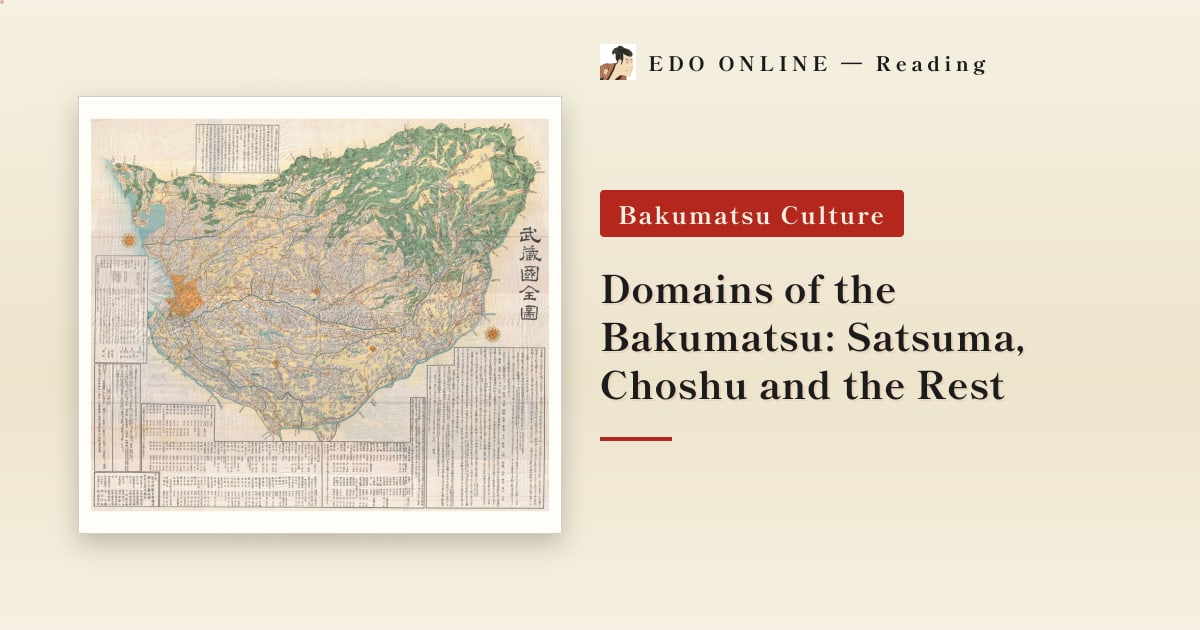
Domains of the Bakumatsu: Satsuma, Choshu and the Rest
The domains that decided the end of the shogunate, listed with their size and allegiance. Why outside lords led the overthrow, and how a few provinces outgrew the central government.