The Opening of Yokohama — Why There, and What It Changed
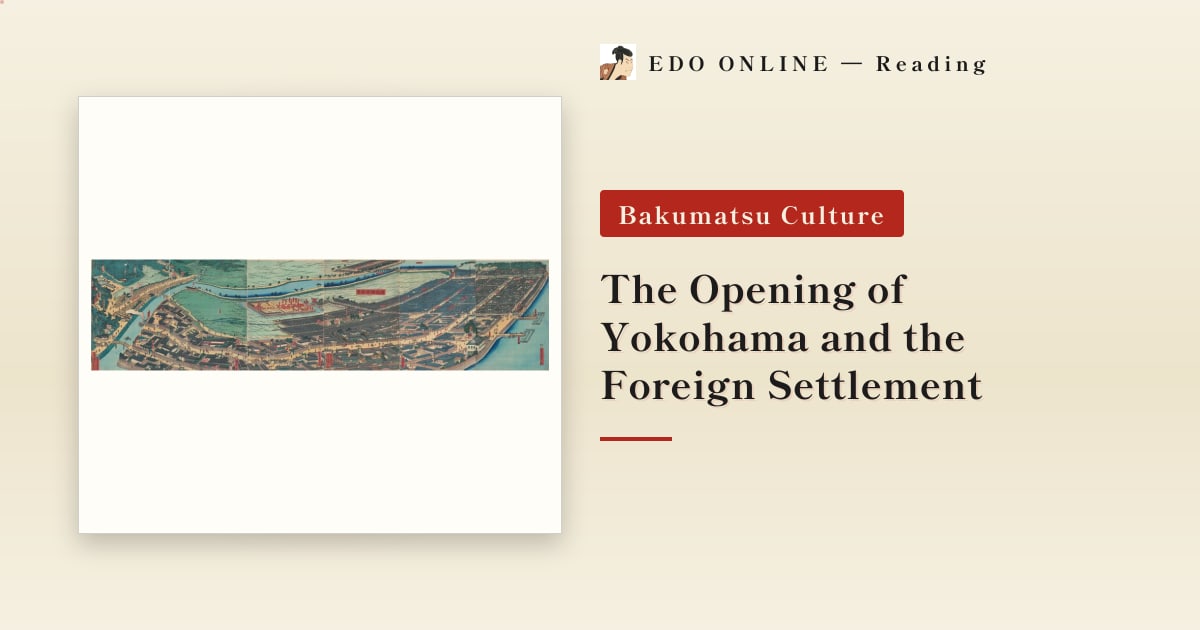
Yokohama opened on 1 July 1859. A fishing village of about a hundred households became Japan's largest trading port within a decade. Here is how.
Contents
When Did Yokohama Open, and Why Yokohama?
The port opened on 1 July 1859, as one of the ports agreed in the commercial treaty of the previous year.
But the treaty named Kanagawa, not Yokohama.
Kanagawa was a post station on the Tokaido — the main highway, travelled by daimyo processions and ordinary travellers alike. Putting foreigners there, in a climate of anti-foreign feeling, invited exactly the sort of clash that the Namamugi Incident would soon become.
So the shogunate built the wharf, customs house and settlement at Yokohama village, across the inlet from Kanagawa, and insisted that this too counted as Kanagawa.
The foreign powers protested — but Yokohama was where the buildings were. The merchants went there anyway, and the fait accompli held.
The shogunate wanted foreigners off the highway; the traders wanted to start trading. The two interests happened to coincide.
What Was the Foreign Settlement Like?
The new town was a district ringed by canals and moats. Inside was Kannai — "inside the barrier" — a name Yokohama still uses.
| Area | Character |
|---|---|
| Kannai / Yamashita-cho | The foreign settlement: trading houses, consulates, banks |
| Western Kannai | The Japanese quarter: Japanese merchants and the customs house |
| Yamate (the Bluff) | Foreign residences on the hill, with churches, schools and a cemetery |
| Outside the barrier | The town of artisans and labourers |
The settlement had its own police and fire service, foreign-language newspapers, hotels and a theatre. British and French troops were stationed there for a period after the Namamugi Incident.
Because of extraterritoriality, foreigners in the settlement could not be tried under Japanese law — the grievance at the centre of the later treaty-revision campaigns. The settlement system was abolished in 1899.
What the Port Did to Trade
The great export was raw silk.
Silkworm disease had devastated European production, and Japanese silk arrived into a shortage. Tea followed.
Imports were woollens and cottons — and weapons. Much of the rifle and warship purchasing done by the domains in the 1860s passed through this port, which is where traders like Thomas Glover made their money.
The suddenness of it shook the domestic economy:
- silk went abroad, and Japanese weavers ran short of thread
- the gap between Japanese and world gold-silver ratios drained gold overseas, forcing the Man'en recoinage and driving prices up
- rising prices hit ordinary households and fed the anti-foreign movement
The opening was an economic event and a political fuse at the same time.
What Arrived Here First
The settlement was the beachhead for Western things, which is why so many Japanese "firsts" are Yokohama firsts.
Beef hot pot — restaurants serving beef appeared in a country that had not eaten it, and the fashion spread to Tokyo as a symbol of the new era.
Newspapers — foreign-language papers first, then Japanese ones.
Photography — one of the main sites of Bakumatsu photography, where foreign and Japanese photographers worked side by side.
And also — bread, beer, ice cream, Western tailoring, tennis, horse racing, gas lamps.
Timeline
| Year | Event |
|---|---|
| 1858 | The commercial treaty designates Kanagawa and other ports |
| 1 Jul 1859 | Yokohama opens; customs house and settlement begin operating |
| 1862 | The Namamugi Incident near Yokohama |
| 1863 | The Anglo-Satsuma War; the settlement's garrison is strengthened |
| 1866 | A great fire destroys most of the settlement and Kannai; the district is rebuilt on a new plan |
| 1872 | Japan's first railway opens between Shimbashi and Yokohama |
| 1899 | Treaty revision abolishes the settlement system |
Places to Visit
Yokohama Archives of History — housed in the former British consulate.
Nihon-odori and Kannai — the boundary street that separated the settlement from the Japanese quarter survives as a boulevard.
The Yamate Western houses and the Foreign General Cemetery — the residential settlement on the Bluff.
The Namamugi Incident monument, Tsurumi — the site of the clash the opening produced.
Frequently Asked Questions
When did Yokohama open?
1 July 1859.
Why Yokohama when the treaty said Kanagawa?
Kanagawa sat on the Tokaido highway, where clashes with foreigners were likely. The shogunate built the port and settlement across the inlet at Yokohama village instead and made it stick.
What was the foreign settlement?
The district where foreigners lived and traded, under extraterritorial jurisdiction. It was abolished in 1899.
What did Yokohama export?
Raw silk above all, then tea. Imports were textiles and weapons.
Why is Yokohama full of Japanese "firsts"?
It was the point of entry for Western goods and customs — beef, beer, ice cream, newspapers, railways, horse racing.
For the opening of the country see the black ships; for the traders, Thomas Glover; for the currency crisis, the Man'en koban.
Related reading
The Kiheitai — Takasugi's Army That Ignored Class
Raised in 1863 by Takasugi Shinsaku, the Kiheitai took commoners as soldiers. Why Choshu did it, how it differed from the regular army, what it won, and how the new government crushed it.
What Was Aizu Domain? The House Code, the Byakkotai, the Siege
Aizu stayed loyal to the shogunate to the end and was destroyed for it. Why Matsudaira Katamori took the Kyoto post, what happened to the Byakkotai, and how the domain was punished.
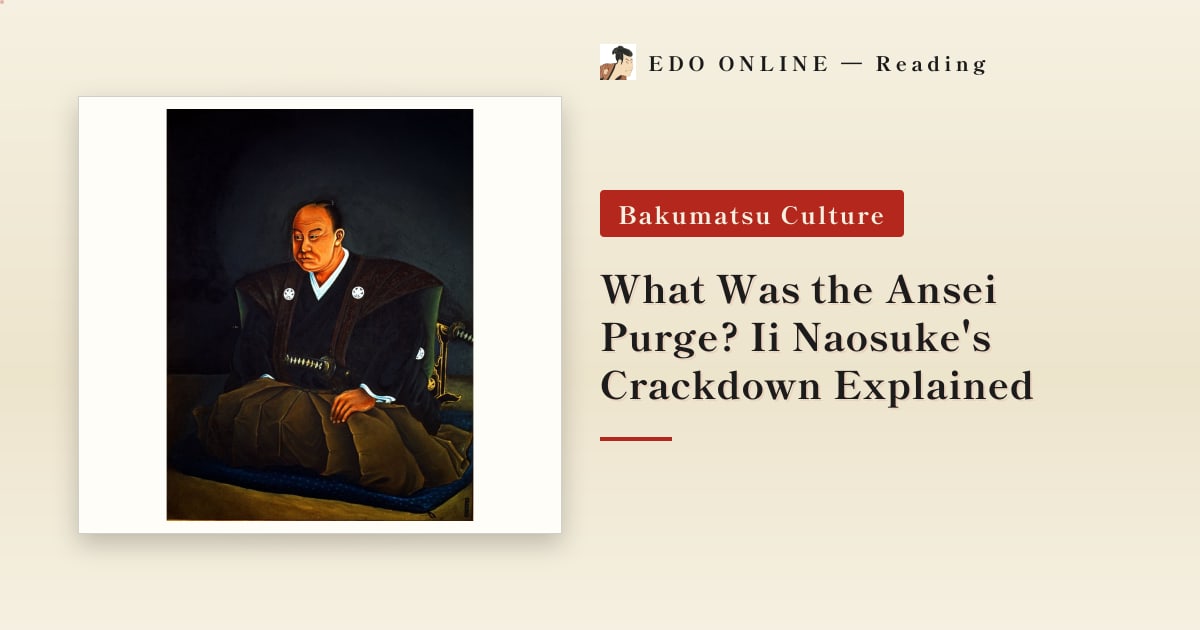
What Was the Ansei Purge? Ii Naosuke's Crackdown Explained
Between 1858 and 1859 the shogunate's chief minister Ii Naosuke purged more than a hundred opponents and executed eight, including Yoshida Shoin. Why it happened and what it destroyed.