
Who Was Kondo Isami? Life and Death of the Shinsengumi Chief
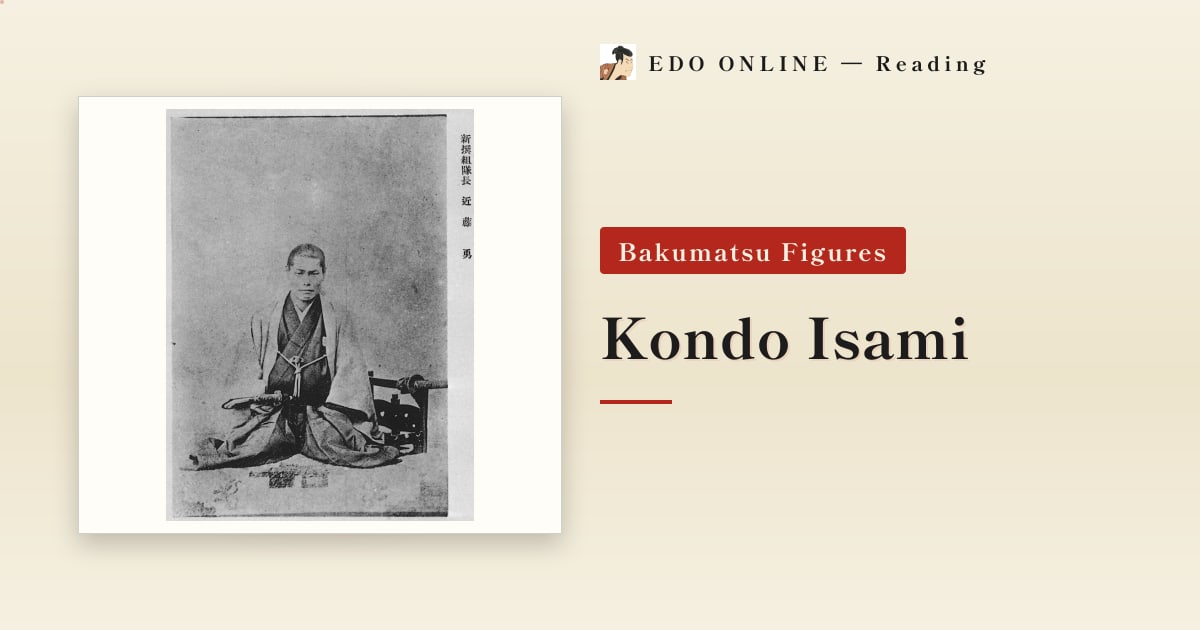
In the turbulent Kyoto of the 1860s, one band tried to hold a collapsing order together with swords: the Shinsengumi. At its head stood Kondō Isami.
Contents
What did Kondo Isami do?
He commanded the Shinsengumi, the police force of shogunal Kyoto, from its formation until the collapse of the shogunate. Under him the unit suppressed the anti-shogunal activists operating in the capital, most famously at the Ikedaya in 1864.
He was not born a samurai. Kondō came from a farming family and reached the rank of direct shogunal retainer through the sword and through service. That trajectory explains a great deal about him.
Kondo Isami's early life
Born in 1834 to a farming household in Tama, west of Edo, Kondō trained in the Tennen Rishin style of swordsmanship and eventually inherited the school. Among those who trained there were Hijikata Toshizō and Okita Sōji, the men who would form the Shinsengumi's core.
He inherited the school as its fourth-generation head in 1861, having been adopted into the Kondō family.
Kondo Isami and the Ikedaya incident
The Ikedaya incident of July 1864 transformed the Shinsengumi from an obscure patrol into the most feared body in Kyoto.
Acting on information extracted from a captured activist, Kondō led a small party into an inn where more than twenty men were meeting. Accounts suggest he entered with only about four men. The fight was won, the unit was rewarded by both court and shogunate, and recruitment expanded sharply.
It also made the Shinsengumi the object of lasting hatred among the men they had fought.
How did Kondo Isami die?
The Boshin War went badly. After the defeat at Toba-Fushimi the unit fell back east, and Kondō was eventually captured.
On 17 May 1868 he was beheaded at the execution ground at Itabashi. He was thirty-three.
The manner of death matters. A samurai would have been permitted seppuku; Kondō was executed as a commoner criminal. A man who had spent his life becoming a warrior was denied a warrior's death at the end of it.
Where is Kondo Isami's grave?
There is more than one. His head and body were separated after the execution and their fate is uncertain. Three sites are maintained as his grave.
| Site | Basis |
|---|---|
| Ryūgen-ji (Mitaka, Tokyo) | The Kondō family temple. His body is said to be buried here; his birthplace is nearby |
| Memorial at Itabashi (Kita, Tokyo) | Near the execution ground. Raised by the surviving member Nagakura Shinpachi |
| Ten'nei-ji (Aizu-Wakamatsu, Fukushima) | Said to have been erected by Hijikata Toshizō |
What became of his head is unknown. It was displayed at Sanjō riverbank in Kyoto; after that the record gives out, and several conflicting traditions exist.
Kondo Isami's sword, the Kotetsu
Kondō's sword is famous as a Nagasone Kotetsu, the work of a celebrated seventeenth-century smith. After the Ikedaya he wrote home that, while his men's blades were damaged, his own had come through unharmed — thanks, he supposed, to its being a Kotetsu. That line made the association permanent.
Whether it was genuine has long been doubted. Kotetsu blades were extremely valuable and heavily forged; whether the heir to the Shieikan dojo in Edo could have acquired an authentic one is questionable, and it is not known what Kondō himself believed.
The story survives less as evidence about the blade than as evidence about the man's attachment to it.
What was Kondo Isami like?
Two traits come up constantly: generosity toward his men, and an intense desire to be a samurai.
For a farmer's son, warrior status was not inherited but earned. When he was finally granted direct shogunal retainer status in 1867, his satisfaction was reportedly considerable. It also made him attentive, sometimes excessively, to matters of form and precedence.
Boisterous anecdotes survive, including his party trick of fitting his fist into his mouth.
He was also capable of ruthlessness at the top of an organisation. Serizawa Kamo, the unit's original senior commander, was purged from within, and Kondō and Hijikata are thought to have been involved. A body that governed by discipline had to turn that discipline inward — the defining characteristic of the Shinsengumi.
Timeline of Kondo Isami's life
| Year | Event |
|---|---|
| 1834 | Born to a farming family in Tama (present-day Chōfu, Tokyo) |
| 1849 | Enters the Tennen Rishin school; later adopted into the Kondō family |
| 1861 | Becomes fourth head of the school |
| 1863 | Goes to Kyoto with the Rōshigumi; the Shinsengumi is formed |
| 1864 | The Ikedaya incident makes the unit famous |
| 1867 | Granted direct shogunal retainer status |
| Jan 1868 | Defeated at Toba-Fushimi; withdraws to Edo |
| 17 May 1868 | Beheaded at Itabashi, aged 33 |
Frequently asked questions
Who was Kondo Isami?
The commander of the Shinsengumi, the shogunate's police force in Kyoto, and a farmer's son who rose to the rank of direct shogunal retainer.
How did Kondo Isami die?
He was beheaded at Itabashi on 17 May 1868 after being captured during the Boshin War.
Where is Kondo Isami's grave?
Three sites are maintained: Ryūgen-ji in Mitaka, a memorial at Itabashi, and Ten'nei-ji in Aizu-Wakamatsu. The location of his head is unknown.
Was Kondo Isami's Kotetsu sword genuine?
It is doubted. Authentic Kotetsu blades were expensive and widely counterfeited, and there is no proof his was real.
For his second-in-command see Hijikata Toshizō; for the unit itself see the Shinsengumi.
Related reading
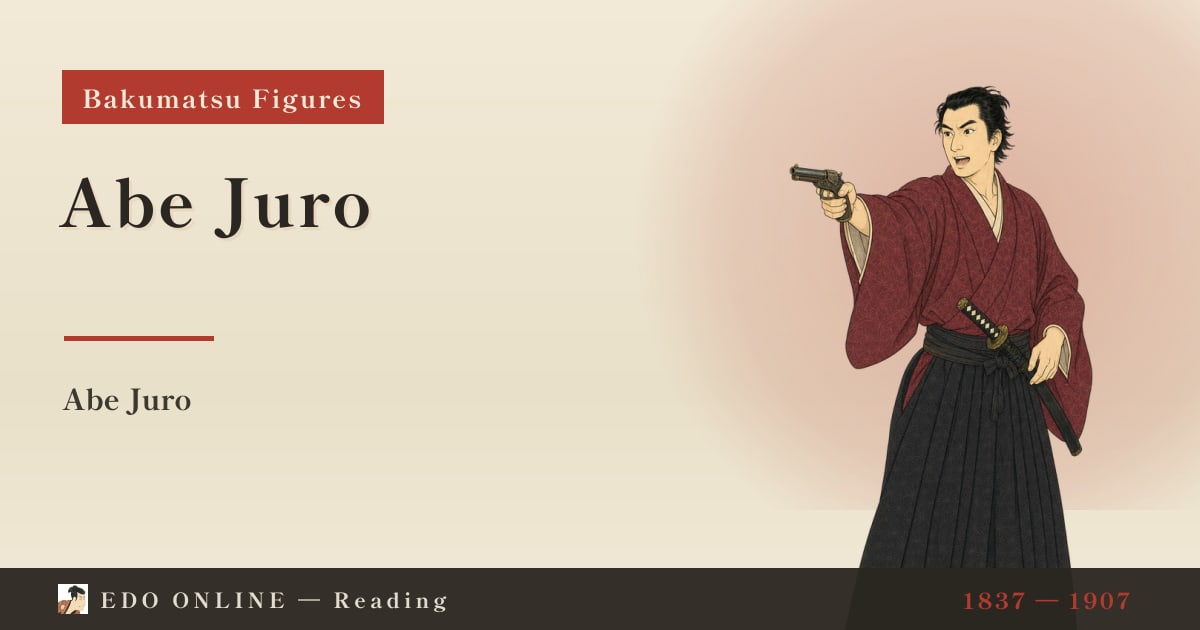
Abe Juro — The Former Member Who Talked
He deserted the Shinsengumi and rejoined under another name, shot at Kondo Isami as one of the Goryō Eji, and then grew apples in Sapporo. His late-Meiji testimony is where the ranking of the corps' best swordsmen comes from.
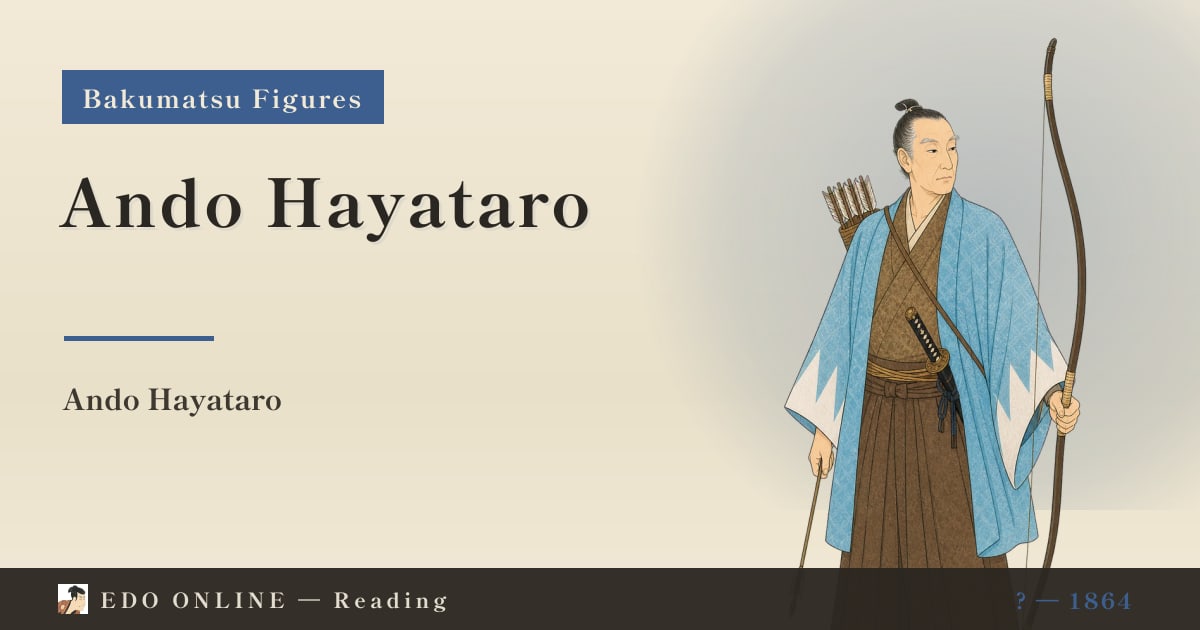
Ando Hayataro — The Shinsengumi's Record-Breaking Archer
He set the standing national record in the long-range shooting at the Tōdai-ji Great Buddha Hall, sending 8,685 arrows the length of the corridor. Nearly fifty, he joined the Shinsengumi and died of wounds taken in the back garden of the Ikedaya.
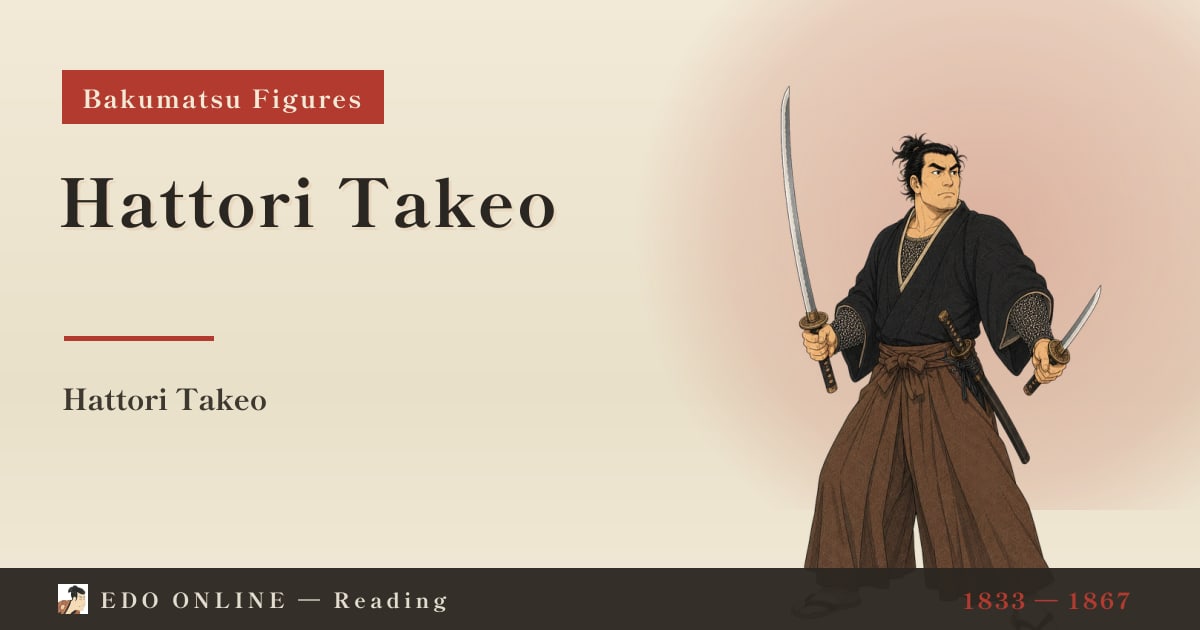
Hattori Takeo — Two Swords at Aburanokoji
A two-sword master and fencing instructor of the Shinsengumi who defected with the Goryō Eji. At Aburanokōji he alone wore mail, held a wall against the whole corps, and fell with more than twenty wounds.