Sonno Joi — What It Meant, and Why It Became Revolution
Sonno joi was the slogan of the Bakumatsu. The men who shouted it went on to Westernise Japan — here is how that reversal happened.
Contents
What Does Sonno Joi Mean?
It joins two claims.
| Term | Meaning |
|---|---|
| Sonno | Revere the emperor as the centre of the realm |
| Joi | Expel foreign powers |
The phrase comes from the Chinese classics. In Japan it was worked into a political doctrine through Mito learning, the school built around the domain's great history project, in the domain governed by Tokugawa Nariaki.
The crucial point: it did not begin as a demand to destroy the shogunate. Emperor above, shogun governing — that arrangement was not in question. Within fifteen years it had become a doctrine of revolution.
Why Did It Explode After 1853?
The trigger was the black ships.
The crisis itself mattered, but what mattered more was the shogunate's response. When the chief councillor Abe Masahiro asked the daimyo and the court for their views, foreign policy stopped being the shogunate's private business.
The decisive moment came in 1858. The regent Ii Naosuke signed the commercial treaty with the United States without the emperor's sanction.
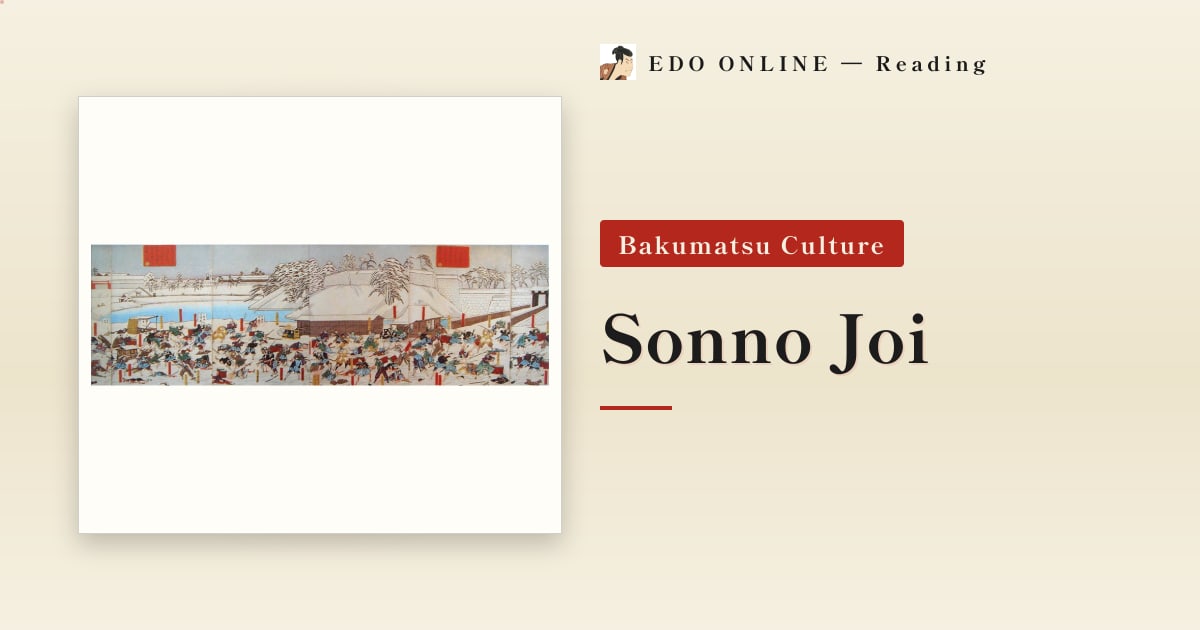
Revering the emperor and expelling the barbarians now pointed at the same target. Criticism of the shogunate acquired legitimacy overnight. Ii crushed his opponents in the Ansei Purge and was assassinated in reprisal at the Sakuradamon Incident in 1860.
A regent was cut down in daylight and the shogunate could not answer for it. That fact told the country the government was no longer untouchable.
Expulsion Was Tried — and Failed
This was not only talk.
On 10 May 1863, under pressure from the court, the shogunate set a date for expulsion. That day Choshu opened fire on foreign shipping in the Shimonoseki Strait.
The results:
- August 1863, the Anglo-Satsuma War. A British squadron, retaliating for the Namamugi Incident, exchanged fire with Satsuma and burned much of Kagoshima
- August 1864, the bombardment of Shimonoseki. A combined British, French, Dutch and American fleet silenced Choshu's batteries
Expulsion turned out to be impossible in practice.
And the irony: the two domains that lost these fights, Satsuma and Choshu, then ran the country — because losing pushed them fastest toward learning from the West.
Why It Turned Into Overthrowing the Shogunate
The reasoning went like this. To expel foreigners you need a strong state. To build one you need Western technology and institutions. The present shogunate cannot deliver either. Therefore unify power under the emperor and build a stronger country.
The banner kept its words and swapped its contents. Takasugi Shinsaku's mixed-class Kiheitai and the Satcho Alliance of 1866, brokered by Sakamoto Ryoma, both sit on top of that shift.
Many did not make the turn. Activists who went on believing in literal expulsion died at the Ikedaya and at the Kinmon Incident of 1864 — Kusaka Genzui and Yoshida Toshimaro among them.
What Survived Into the Meiji Era
After the Restoration, the new government did the opposite of expulsion: it sent the Iwakura Mission to Europe and America, built railways, adopted Western dress and hired foreign experts by the hundred.
The men who overthrew the shogunate in the name of expulsion led the Westernisation.
But the sonno half survived. Placing the emperor at the centre of the state was carried into the Meiji constitutional order and became the frame of modern Japan.
Expulsion was discarded; reverence became an institution. That is the accurate summary.
Timeline
| Year | Event |
|---|---|
| 1853 | The black ships make the foreign threat concrete |
| 1858 | The commercial treaty is signed without imperial sanction; the Ansei Purge begins |
| 1860 | Ii Naosuke is assassinated at the Sakuradamon Incident |
| 1862 | The Namamugi Incident turns expulsion into a diplomatic crisis |
| May 1863 | Choshu fires on foreign ships at Shimonoseki |
| Aug 1863 | The Anglo-Satsuma War; the coup of the eighteenth day drives the loyalists from Kyoto |
| Jul 1864 | The Ikedaya Incident |
| Aug 1864 | The Kinmon Incident; four-nation fleet silences Shimonoseki |
| 1866 | The Satcho Alliance shifts the axis to overthrow |
| 1867 | The return of power and the restoration decree |
| 1868– | The Meiji Restoration; the new government opens the country |
Frequently Asked Questions
What does sonno joi mean?
Revere the emperor (sonno) and expel foreign powers (joi).
Who originated it?
It spread through Mito learning, with Tokugawa Nariaki's domain as one source; the activists who acted on it were largely Choshu men from Yoshida Shoin's school.
Was expulsion actually attempted?
Yes — Choshu shelled foreign ships in 1863, and the retaliation at Kagoshima and Shimonoseki proved it could not be sustained.
Why did men who demanded expulsion open the country?
Because expulsion required strength, and strength required Western technology and institutions. The goal stayed; the method inverted.
For the ideological source see Tokugawa Nariaki; for the activists, the loyalists of the Bakumatsu; for the turning point, the Satcho Alliance.
Related reading
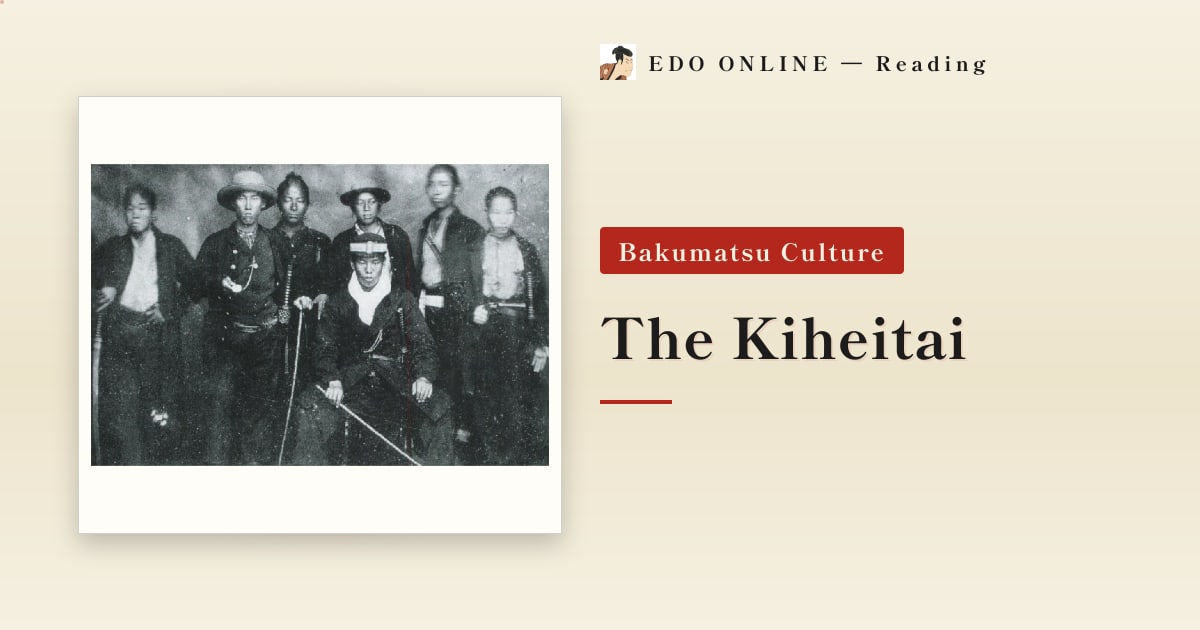
The Kiheitai — Takasugi's Army That Ignored Class
Raised in 1863 by Takasugi Shinsaku, the Kiheitai took commoners as soldiers. Why Choshu did it, how it differed from the regular army, what it won, and how the new government crushed it.
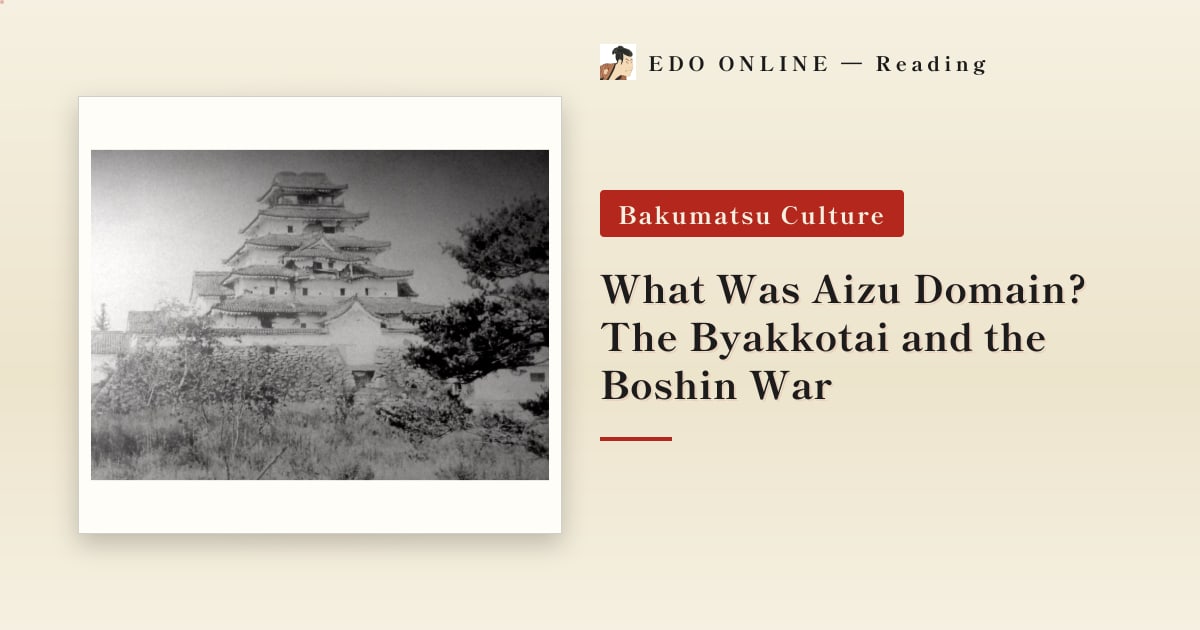
What Was Aizu Domain? The House Code, the Byakkotai, the Siege
Aizu stayed loyal to the shogunate to the end and was destroyed for it. Why Matsudaira Katamori took the Kyoto post, what happened to the Byakkotai, and how the domain was punished.
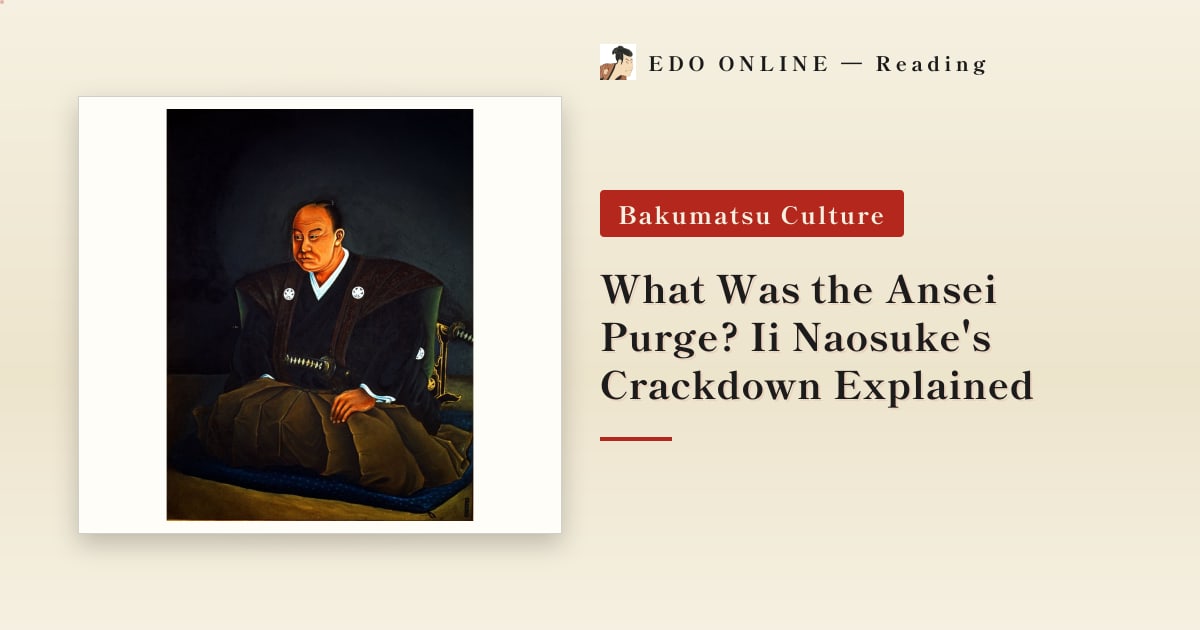
What Was the Ansei Purge? Ii Naosuke's Crackdown Explained
Between 1858 and 1859 the shogunate's chief minister Ii Naosuke purged more than a hundred opponents and executed eight, including Yoshida Shoin. Why it happened and what it destroyed.