When Was the Edo Period? 265 Years Explained
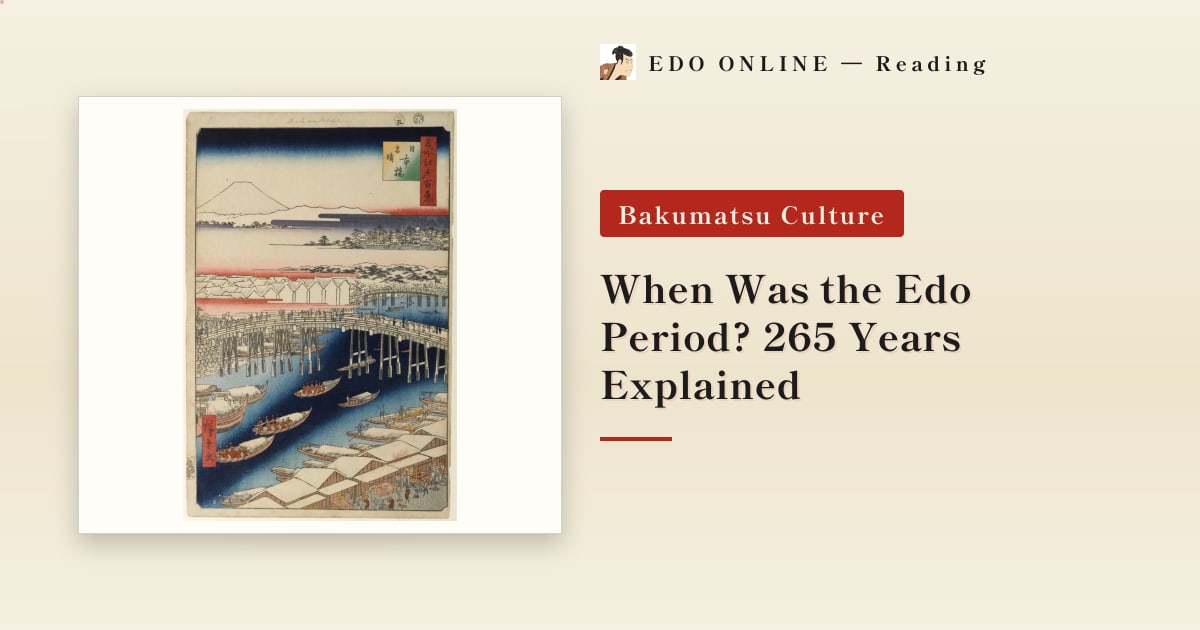
The Edo period is one of the longest continuous eras in Japanese history. It is worth fixing the numbers first.
Contents
When did the Edo period start and end?
| Item | Detail |
|---|---|
| Beginning | 1603 — Tokugawa Ieyasu is appointed shogun and establishes his government at Edo |
| End | 1868 — the Meiji government is established |
| Duration | about 265 years |
| Shoguns | 15 |
| Seat of government | Edo, present-day Tokyo |
265 years exceeds both the Kamakura period (about 150 years) and the Muromachi (about 240).
The end date is disputed
The 1603 start is uncontested. Where the period ends depends on what you count.
| Year | Event | Significance |
|---|---|---|
| Oct 1867 | Return of power to the emperor | The shogun surrenders political authority |
| Jan 1868 | Restoration of Imperial Rule | The shogunate is formally abolished |
| 1868 | Meiji era begins | A new era name is proclaimed |
| Jun 1869 | Surrender of Goryōkaku | End of the Boshin War |
Textbooks usually take 1867 or 1868. In practice, fighting continued until shogunal forces surrendered at Hakodate in 1869: there was no single day on which one era became another.
The three phases of the Edo period
Treating 265 years as a unit is unhelpful. Conventionally it divides in three.
Early (1603 to about 1680)
The consolidation of the system. The Laws for Warrior Houses, the institution of alternate attendance, and the completion of the maritime restrictions usually called the closed country policy. After the Shimabara rebellion there were no more large internal wars, and the long peace became real.
Middle (about 1680 to about 1780)
Economic growth and the flowering of townsman culture. The Genroku era produced its literature and theatre; woodblock prints, kabuki and haikai spread widely. Shogunal finances meanwhile deteriorated, prompting the Kyōhō reforms and their successors.
Late (about 1780 to 1868)
Famine and rural unrest exposed the strain in the system. Then the Black Ships arrived and the shogunate was forced to open the country. The Bakumatsu turmoil follows, and the 265-year settlement ends.
The fifteen Tokugawa shoguns
| No. | Shogun | Associated with |
|---|---|---|
| 1 | Tokugawa Ieyasu | Founding the shogunate |
| 3 | Tokugawa Iemitsu | Alternate attendance; completion of the closed country system |
| 5 | Tokugawa Tsunayoshi | The animal protection edicts; Genroku culture |
| 8 | Tokugawa Yoshimune | The Kyōhō reforms |
| 13 | Tokugawa Iesada | The Black Ships; the succession dispute |
| 14 | Tokugawa Iemochi | The Kazunomiya marriage; the Chōshū expeditions |
| 15 | Tokugawa Yoshinobu | Returning power to the emperor; the last shogun |
Only the final three belong to the Bakumatsu. Most of the Edo period consists of decades in which very little happened that a textbook needs to record.
Edo period timeline
| Year | Event |
|---|---|
| 1603 | Tokugawa Ieyasu becomes shogun; the Edo shogunate begins |
| 1615 | The Toyotomi are destroyed at Osaka; the Laws for Warrior Houses issued |
| 1635 | Alternate attendance made compulsory |
| 1639 | Portuguese ships banned; the closed country system complete |
| 1657 | The Meireki fire destroys much of Edo |
| 1716 | The Kyōhō reforms begin |
| 1782 | The Tenmei famine |
| 1853 | The Black Ships arrive; the Bakumatsu begins |
| 1858 | Commercial treaty signed; the Ansei Purge |
| 1860 | The Sakuradamon incident |
| 1866 | The Satsuma-Chōshū Alliance |
| 1867 | Return of power to the emperor |
| 1868 | The Boshin War begins; the Meiji era is proclaimed |
Why did the Edo period last so long?
Several mechanisms held it in place.
Constraints on the daimyo. Alternate attendance kept lords moving between Edo and their domains and held their families in the capital, narrowing the scope for rebellion by design.
A fixed status order. The division of society into warrior, farmer, artisan and merchant limited social mobility and, with it, disruption.
Restricted foreign contact. Limiting trading partners and ports reduced exposure to outside political interference.
All three then worked against it. The constraints on the daimyo depended on shogunal finances and prestige remaining intact; the fixed status order prevented able men from being promoted; and restricted contact left Japan badly misjudging the strength of the Western powers. When the Black Ships arrived, the structure came apart with remarkable speed.
Key Dates and Common Confusions
1603 for the founding of the shogunate and 1867 for the return of power gives the familiar figure of 265 years.
| Common mistake | Actually |
|---|---|
| The Edo period ended in 1868 | The cut-off is debated. 1867 is the usual choice, though some take the restoration decree or the 1869 return of the domain registers |
| It began at Sekigahara in 1600 | The shogunate was established in 1603. Sekigahara is the preceding battle |
| Ieyasu ruled as shogun to the end | He handed the title to Hidetada in 1605 and kept power as retired shogun |
Frequently asked questions
When was the Edo period?
From 1603 to 1868, about 265 years.
How long was the Edo period?
About 265 years, under fifteen shoguns.
When did the Edo period end?
Usually dated to the return of power in 1867 or the Meiji Restoration in 1868, though shogunal resistance continued until the surrender at Hakodate in 1869.
Who started the Edo period?
Tokugawa Ieyasu, appointed shogun in 1603.
For how it ended see the Boshin War; for how people lived see food in Edo Japan.
Related reading
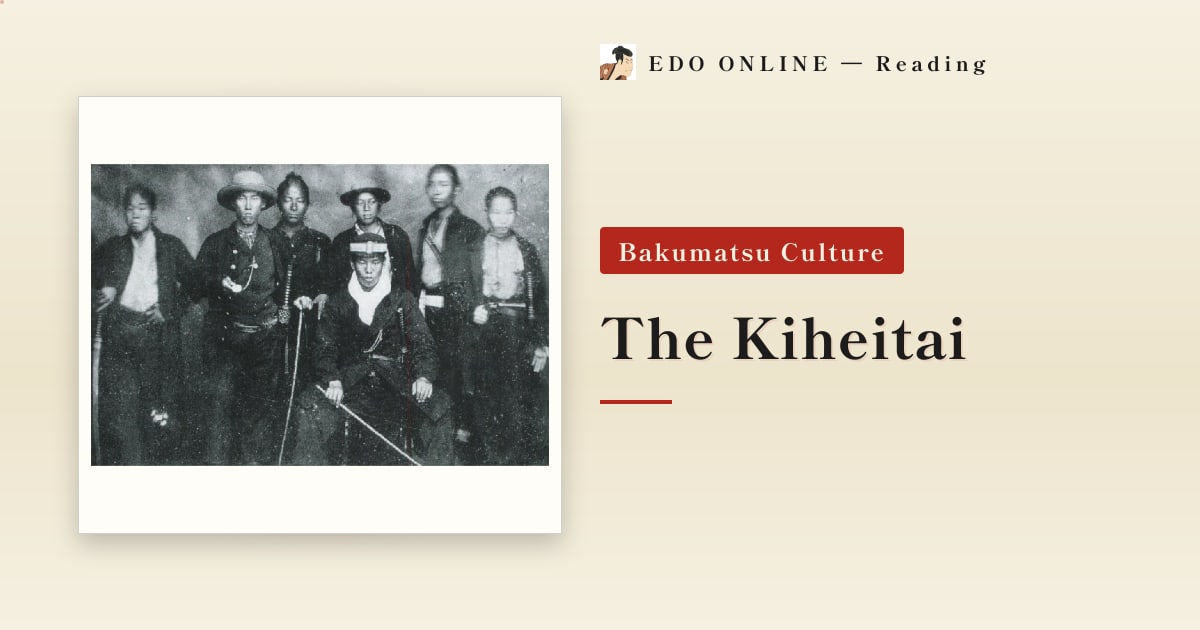
The Kiheitai — Takasugi's Army That Ignored Class
Raised in 1863 by Takasugi Shinsaku, the Kiheitai took commoners as soldiers. Why Choshu did it, how it differed from the regular army, what it won, and how the new government crushed it.
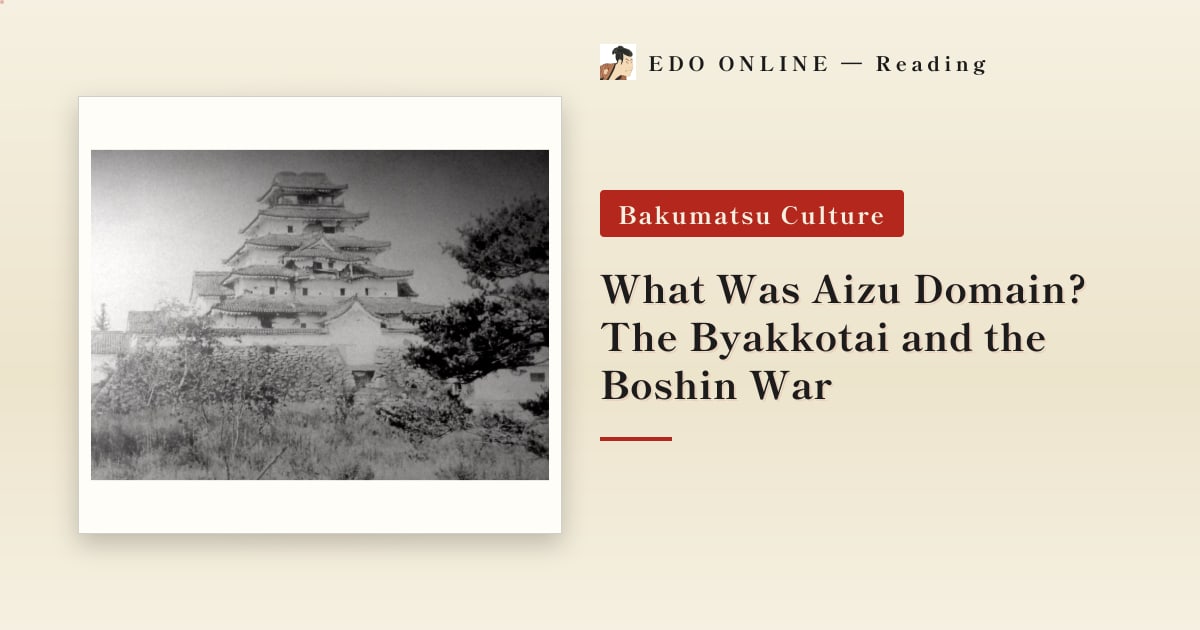
What Was Aizu Domain? The House Code, the Byakkotai, the Siege
Aizu stayed loyal to the shogunate to the end and was destroyed for it. Why Matsudaira Katamori took the Kyoto post, what happened to the Byakkotai, and how the domain was punished.
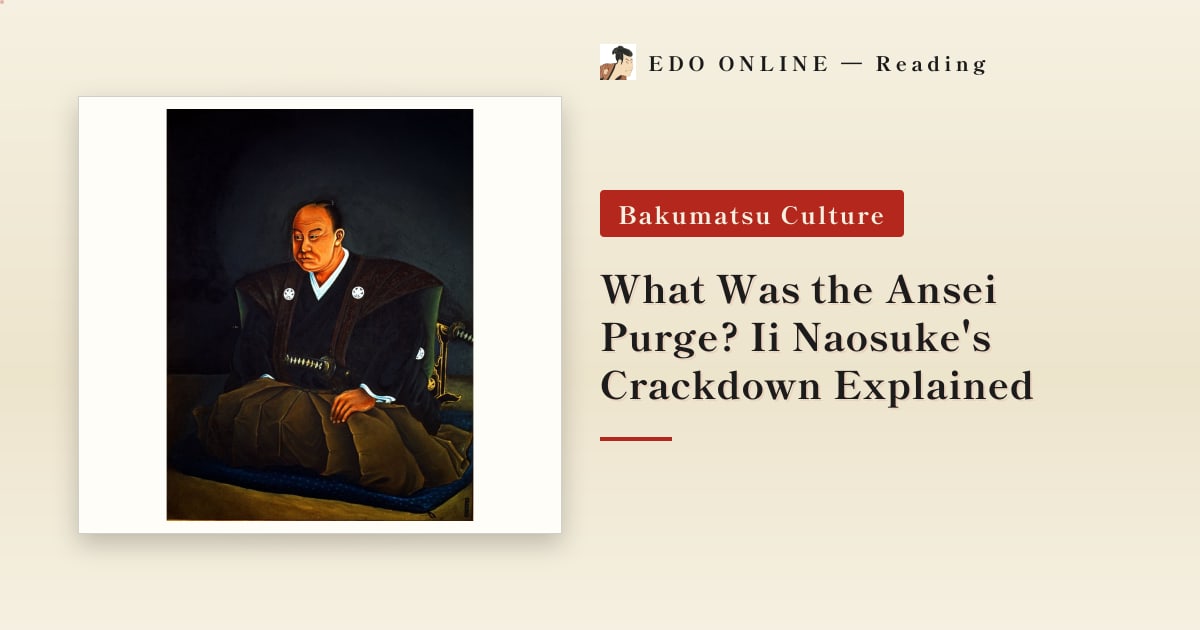
What Was the Ansei Purge? Ii Naosuke's Crackdown Explained
Between 1858 and 1859 the shogunate's chief minister Ii Naosuke purged more than a hundred opponents and executed eight, including Yoshida Shoin. Why it happened and what it destroyed.