Domains of the Bakumatsu: Satsuma, Choshu and the Rest
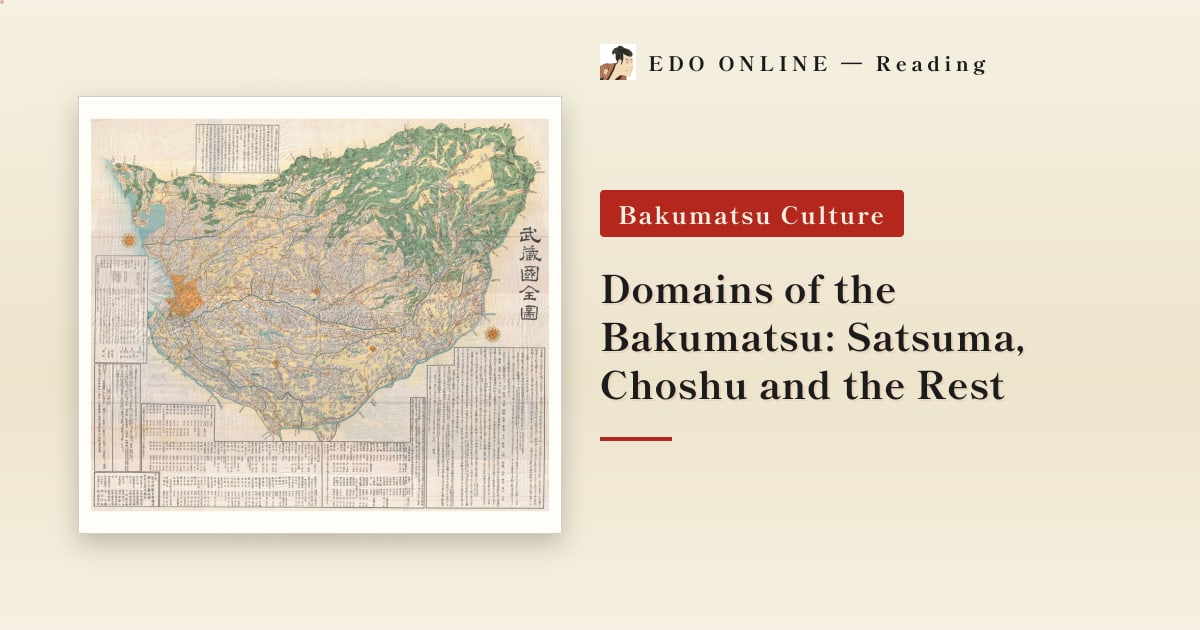
The Bakumatsu was not decided by individuals alone. Which domain a man was born into very largely fixed his position, so the domains are worth setting out.
Contents
How domains were classified
Tokugawa domains fell into three categories according to their relationship with the ruling house. That classification shaped how each behaved in the 1860s.
| Category | Meaning | Typical Bakumatsu stance |
|---|---|---|
| Shinpan | Branches of the Tokugawa family | Supported the shogunate |
| Fudai | Vassals from before Sekigahara | Held the shogunate's senior offices |
| Tozama | Lords who submitted after Sekigahara | Excluded from government; led the overthrow |
Satsuma, Chōshū, Tosa and Hizen — the four domains that made the Restoration — were all tozama. Houses kept at arm's length from government for 260 years were the ones that finally ended it.
The domains that overthrew the shogunate
Satsuma (770,000 koku, tozama)
Present-day Kagoshima, and the second largest domain in Japan by assessed yield. Wealth accumulated through semi-clandestine trade via the Ryukyus funded early modernisation under the lord Shimazu Nariakira.
Initially it worked for cooperation between court and shogunate, then shifted to overthrow through the Satsuma-Chōshū Alliance. It produced Saigō Takamori and Ōkubo Toshimichi.
Choshu (370,000 koku, tozama)
Present-day Yamaguchi, and the centre of the loyalist movement. Yoshida Shōin's academy produced Takasugi Shinsaku, Kido Takayoshi and Itō Hirobumi.
Declared an enemy of the court after the Kinmon incident and subjected to two shogunal expeditions, it defeated the shogunal army outright in the second. That victory made the Restoration possible.
Tosa (200,000 koku, tozama)
Present-day Kōchi, with an unusually harsh division between upper and lower samurai. Sakamoto Ryōma and Nakaoka Shintarō both left the domain to act.
As a domain it avoided armed overthrow and instead proposed the return of power to the shogunate.
Hizen (350,000 koku, tozama)
Present-day Saga. Responsibility for guarding Nagasaki gave it exceptional access to Western technology, and it built Japan's first practical steamship and reverberatory furnace.
Politically slow to move, it nonetheless supplied Ōkuma Shigenobu and Etō Shinpei to the new government, making up the fourth of the four leading domains.
The domains that stood with the shogunate
Aizu (230,000 koku, shinpan)
Present-day western Fukushima. Bound by its founder's house code, it remained loyal to the shogunate to the end. Matsudaira Katamori served as Protector of Kyoto with the Shinsengumi under his authority.
In the Boshin War it fought the Aizu campaign, including the Byakkotai tragedy, and its people were relocated north after defeat.
Kuwana (110,000 koku, shinpan)
Present-day Mie. Its lord Matsudaira Sadaaki was the younger brother of Aizu's Katamori and served as Kyoto deputy. Two brothers held the shogunate's key Kyoto posts and fought on the same side.
Nagaoka (74,000 koku, fudai)
Present-day Niigata. Its chief retainer Kawai Tsugunosuke attempted neutrality; when negotiations failed the domain fought the imperial army with modern weapons and lost.
Domains at a glance
| Domain | Koku | Category | Bakumatsu position |
|---|---|---|---|
| Kaga | 1,020,000 | tozama | Largest in Japan, politically quiet |
| Satsuma | 770,000 | tozama | Led the overthrow |
| Sendai | 620,000 | tozama | Head of the Northern Alliance |
| Owari | 620,000 | shinpan | A Tokugawa branch; submitted early |
| Kii | 550,000 | shinpan | A Tokugawa branch; produced the 14th shogun |
| Chōshū | 370,000 | tozama | Led the overthrow |
| Hizen | 350,000 | tozama | Contributed technology |
| Mito | 350,000 | shinpan | A Tokugawa branch; home of loyalist thought |
| Aizu | 230,000 | shinpan | Core of the shogunal side |
| Tosa | 200,000 | tozama | Proposed the return of power |
| Hikone | 350,000 | fudai | Ii Naosuke's domain |
Why did a few domains outgrow the shogunate?
The difference was money and weapons.
Successful domain reform. Satsuma, Chōshū and Hizen had all put their finances in order before the crisis, through monopolies on local products and debt restructuring. That left money available for arms. The shogunate attempted comparable reforms and failed.
Western weapons. Chōshū bought modern rifles in Satsuma's name under the alliance and re-equipped its army. That is the direct reason the shogunal expedition of 1866 failed.
Promotion by ability. The reforming domains advanced capable men regardless of rank; Saigō and Ōkubo were both of low birth. The shogunate never escaped appointment by family standing.
Relaxation of alternate attendance. When the requirement was eased in 1862, lords could finally settle in their own territories. The shogunate loosened its own restraint on the daimyo, and the strong domains grew into the space.
Frequently asked questions
Which were the main Bakumatsu domains?
On the anti-shogunal side, Satsuma, Chōshū, Tosa and Hizen. On the shogunal side, Aizu and Kuwana among others.
Why did tozama domains lead the overthrow?
Having been excluded from government since Sekigahara, they had every reason to change the system, and their distance from the shogunate gave them room to reform independently.
Which was the largest domain?
Kaga, at 1,020,000 koku, though it played little part in the politics of the period. Size did not translate into influence.
For the war they fought see the Boshin War; for the individuals see Bakumatsu figures.
Related reading
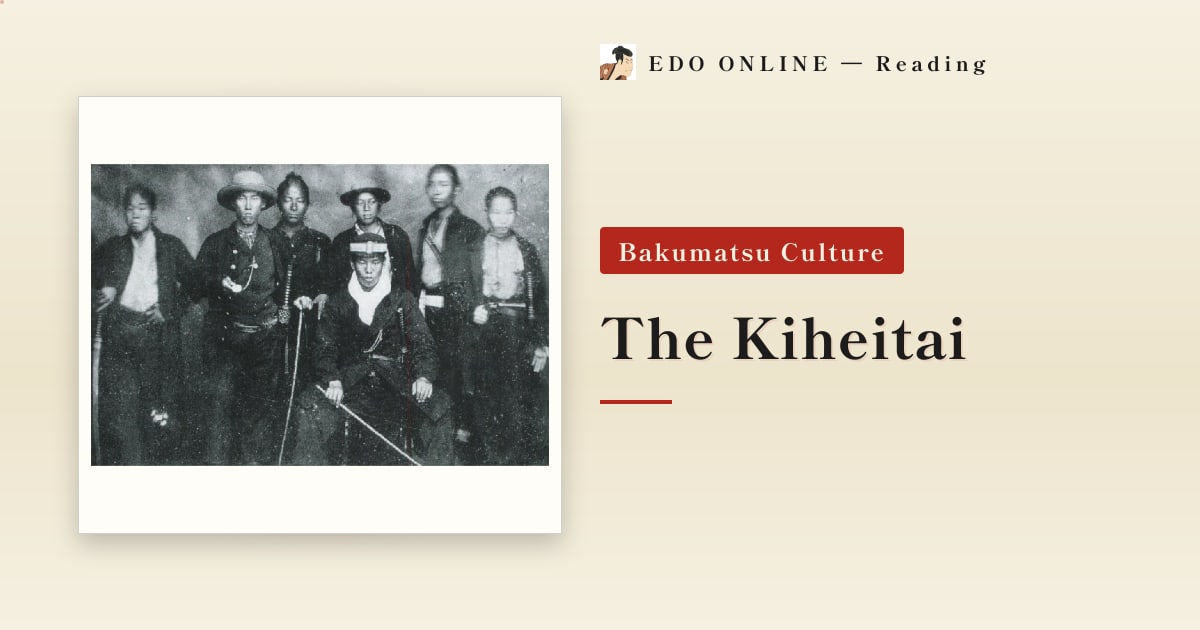
The Kiheitai — Takasugi's Army That Ignored Class
Raised in 1863 by Takasugi Shinsaku, the Kiheitai took commoners as soldiers. Why Choshu did it, how it differed from the regular army, what it won, and how the new government crushed it.
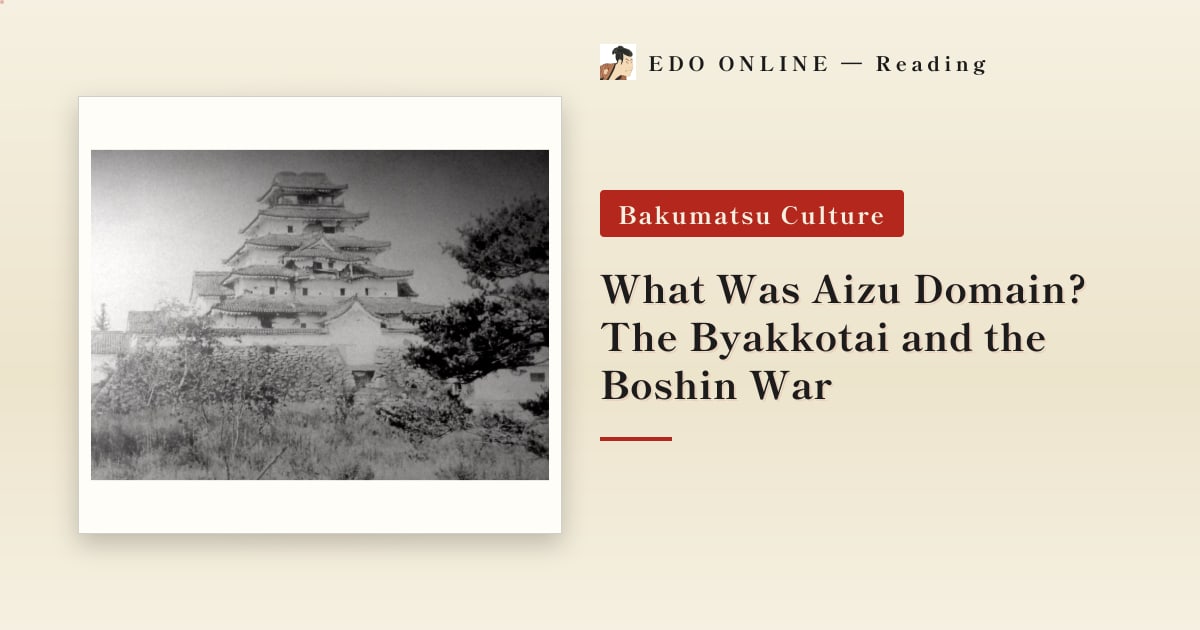
What Was Aizu Domain? The House Code, the Byakkotai, the Siege
Aizu stayed loyal to the shogunate to the end and was destroyed for it. Why Matsudaira Katamori took the Kyoto post, what happened to the Byakkotai, and how the domain was punished.
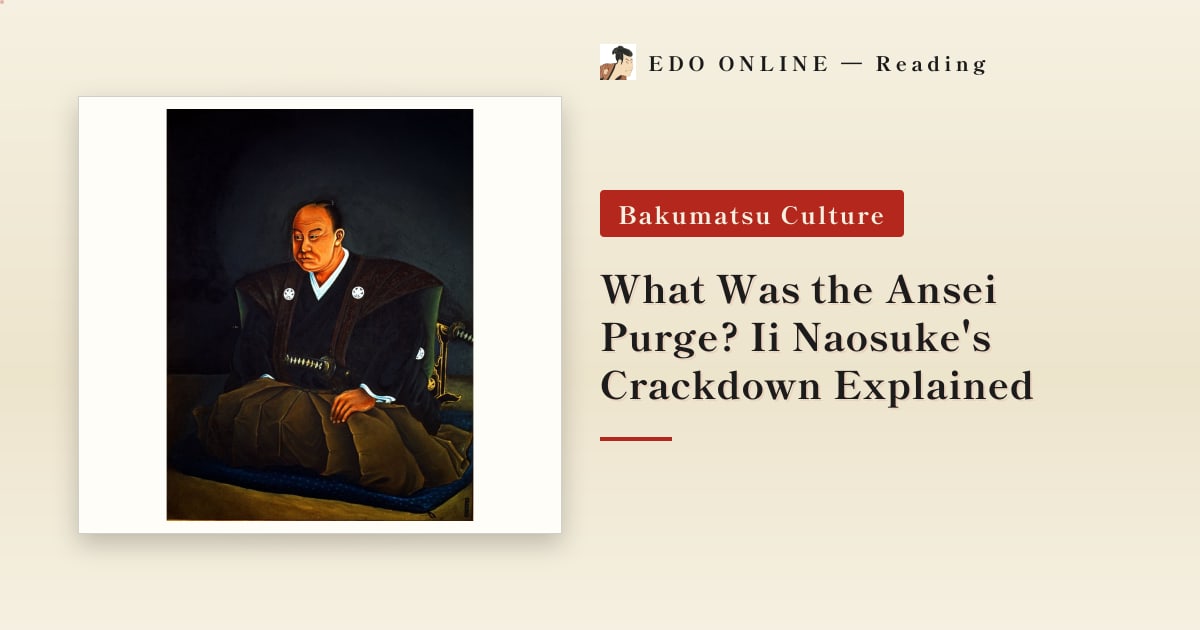
What Was the Ansei Purge? Ii Naosuke's Crackdown Explained
Between 1858 and 1859 the shogunate's chief minister Ii Naosuke purged more than a hundred opponents and executed eight, including Yoshida Shoin. Why it happened and what it destroyed.