Who Was Kido Takayoshi (Katsura Kogoro)? Life and Achievements
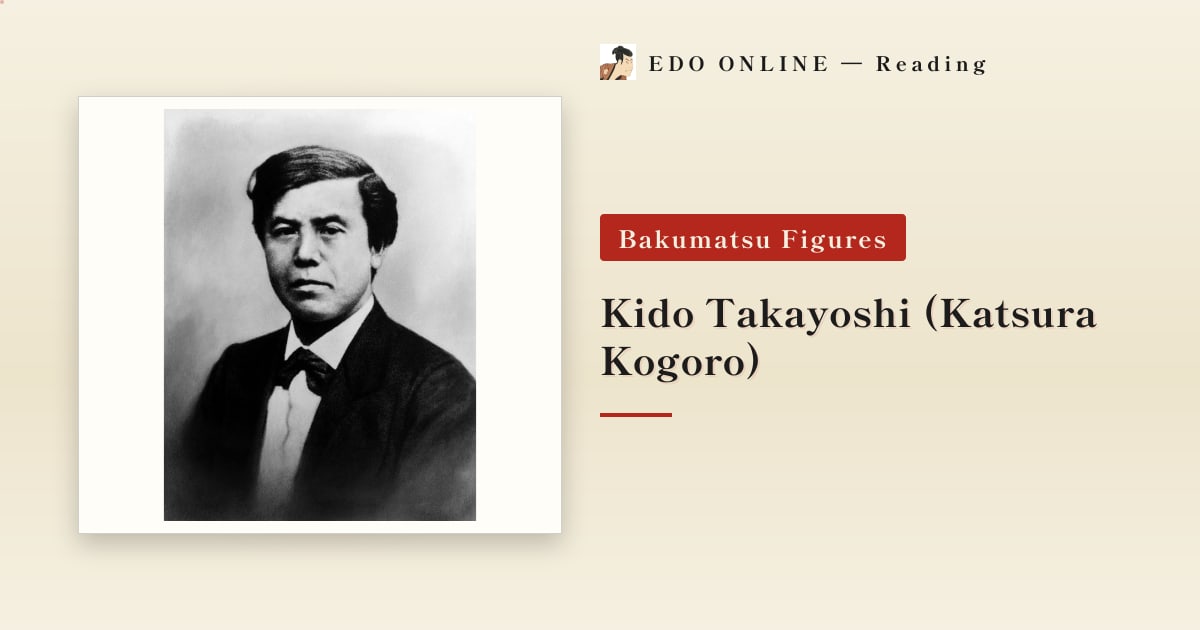
Counted with Saigō Takamori and Ōkubo Toshimichi among the Three Great Nobles of the Restoration, Kido Takayoshi was known during the Bakumatsu as Katsura Kogorō. He carried Chōshū from the overthrow of the shogunate into the construction of the modern state.
Contents
Why did Katsura Kogoro change his name to Kido Takayoshi?
The same man, two names, and a great deal of confusion. The explanation is straightforward.
Katsura Kogorō is the Bakumatsu name. Born into the Wada family of Chōshū domain physicians, he was adopted young into the Katsura house. After Chōshū was declared an enemy of the court following the Kinmon incident, he lived under assumed names while in hiding from shogunal agents.
Kido Takayoshi is the name he took around 1865, with his domain's permission, and used for the rest of his life in the new government.
As a result, his Bakumatsu activities are usually described under "Katsura Kogorō" and his Meiji career under "Kido Takayoshi."
Kido Takayoshi's early life
Born in 1833 to a Chōshū domain physician's family, Kido studied under Yoshida Shōin and later went to Edo, where he trained at a leading fencing school and became head student.
He earned the nickname "Kogorō the Runaway" for a consistent refusal to fight when fighting was pointless. At the Kinmon incident he deliberately left the field; at the time of the Ikedaya raid he had stepped out and avoided it.
The nickname was not an insult. Choosing to survive rather than die gloriously is what left Chōshū with a leader when it needed one.
Kido Takayoshi and the Satsuma-Choshu Alliance
As Chōshū's representative, Kido concluded the Satsuma-Chōshū Alliance in 1866 with a domain his own had been fighting two years earlier.
For Chōshū, isolated and facing a second shogunal expedition, the agreement was survival. For Kido personally it was a bitter act, and the meeting in Kyoto stalled for days because neither side would raise the subject first. Sakamoto Ryōma is credited with breaking the deadlock.
What did Kido Takayoshi achieve?
| Contribution | Detail |
|---|---|
| Satsuma-Chōshū Alliance | Signed for Chōshū, creating the conditions for the shogunate's fall |
| Charter Oath | Deeply involved in drafting and revising the new government's founding statement |
| Return of the domain registers and abolition of the domains | Pressed centralisation, and had Chōshū surrender its registers first |
| Iwakura Mission | Toured Europe and America as vice-envoy, studying constitutions and assemblies |
| Constitutional government | Argued from an early stage for a constitution and a national assembly |
His advocacy of constitutional government distinguishes him from Saigō and Ōkubo. After seeing parliaments in the West he argued repeatedly that Japan needed both a constitution and an elected assembly. He did not live to see either, but the line runs from him to the freedom and popular rights movement and the constitution of 1889.
Kido Takayoshi's diary
The diary of Kido Takayoshi is among the most valuable primary sources for the Restoration period.
It is the record of a man at the centre of the new government writing down his daily business, the meetings he attended and his assessments of the people in them. Policy arguments, personal relationships, and his own hesitations and irritations are all there, giving a view of the Meiji government that official records do not provide.
What emerges is someone caught permanently between principle and practicality. He resisted reforms he thought too fast while having no patience for preserving the old order, and he records his disagreements with Saigō and Ōkubo at length. Highly strung, conscientious, and prone to worry is the portrait the diary gives.
How did Kido Takayoshi die?
Kido died of illness on 26 May 1877, aged forty-three, while the Satsuma Rebellion was still being fought. Overwork and strain are usually cited.
He is said to have spoken Saigō's name at the end.
Of the Three Great Nobles, Kido died first, in May 1877; Saigō fell at Shiroyama that September; Ōkubo was assassinated the following May. All three were gone within a year.
Timeline of Kido Takayoshi's life
| Year | Event |
|---|---|
| 1833 | Born to a Chōshū physician's family; later adopted into the Katsura house |
| 1849 | Studies military science under Yoshida Shōin |
| 1852 | Goes to Edo; becomes head student at the Renpeikan fencing school |
| 1864 | Kinmon incident; Chōshū declared an enemy of the court and he goes into hiding |
| c. 1865 | Takes the name Kido Takayoshi |
| 1866 | Concludes the Satsuma-Chōshū Alliance for Chōshū |
| 1868 | Involved in the Charter Oath |
| 1871 | Travels as vice-envoy with the Iwakura Mission |
| 26 May 1877 | Dies of illness, aged 43 |
Frequently asked questions
Who was Kido Takayoshi?
A Chōshū statesman, one of the Three Great Nobles of the Restoration, who signed the Satsuma-Chōshū Alliance and helped build the Meiji state.
Are Katsura Kogoro and Kido Takayoshi the same person?
Yes. Katsura Kogorō was his Bakumatsu name; he took the name Kido Takayoshi around 1865.
Why was he called "Kogoro the Runaway"?
Because he repeatedly withdrew rather than fight losing engagements, preferring to survive and remain useful to his domain.
How did Kido Takayoshi die?
Of illness in May 1877, at the age of forty-three, during the Satsuma Rebellion.
For the other two of the three see Saigō Takamori and Ōkubo Toshimichi.
Related reading
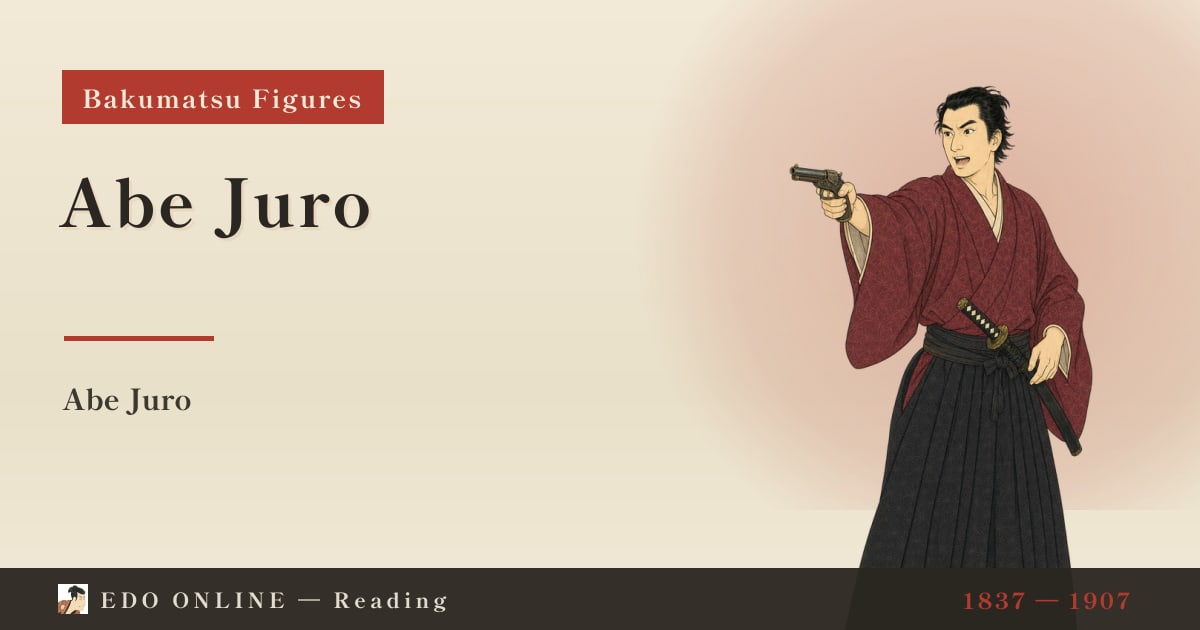
Abe Juro — The Former Member Who Talked
He deserted the Shinsengumi and rejoined under another name, shot at Kondo Isami as one of the Goryō Eji, and then grew apples in Sapporo. His late-Meiji testimony is where the ranking of the corps' best swordsmen comes from.
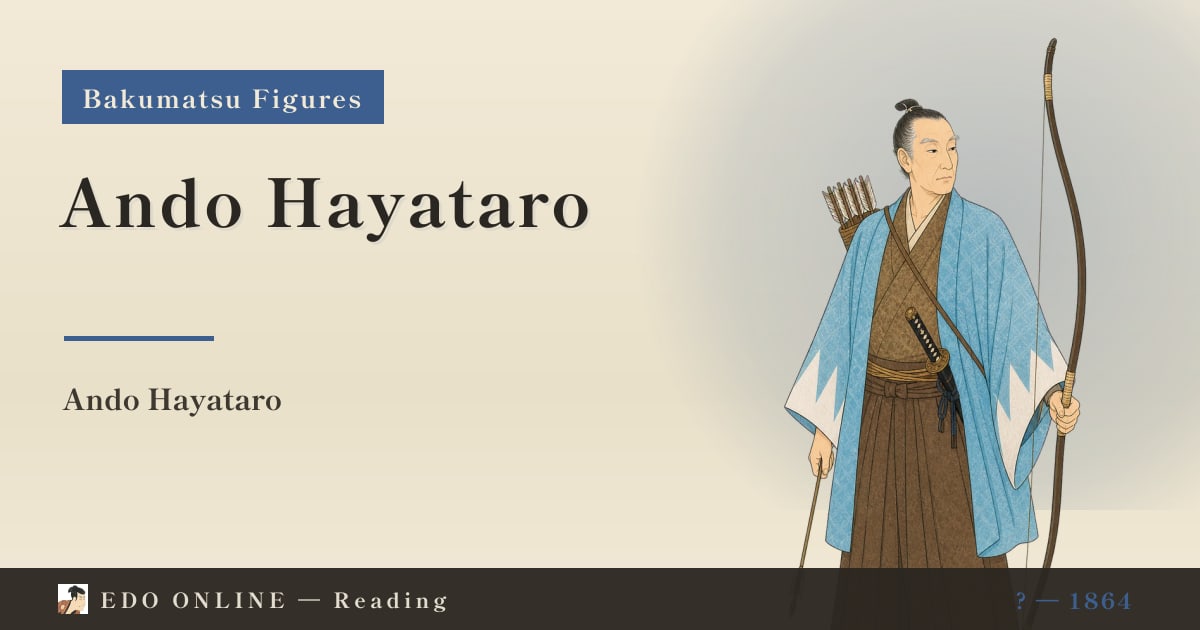
Ando Hayataro — The Shinsengumi's Record-Breaking Archer
He set the standing national record in the long-range shooting at the Tōdai-ji Great Buddha Hall, sending 8,685 arrows the length of the corridor. Nearly fifty, he joined the Shinsengumi and died of wounds taken in the back garden of the Ikedaya.
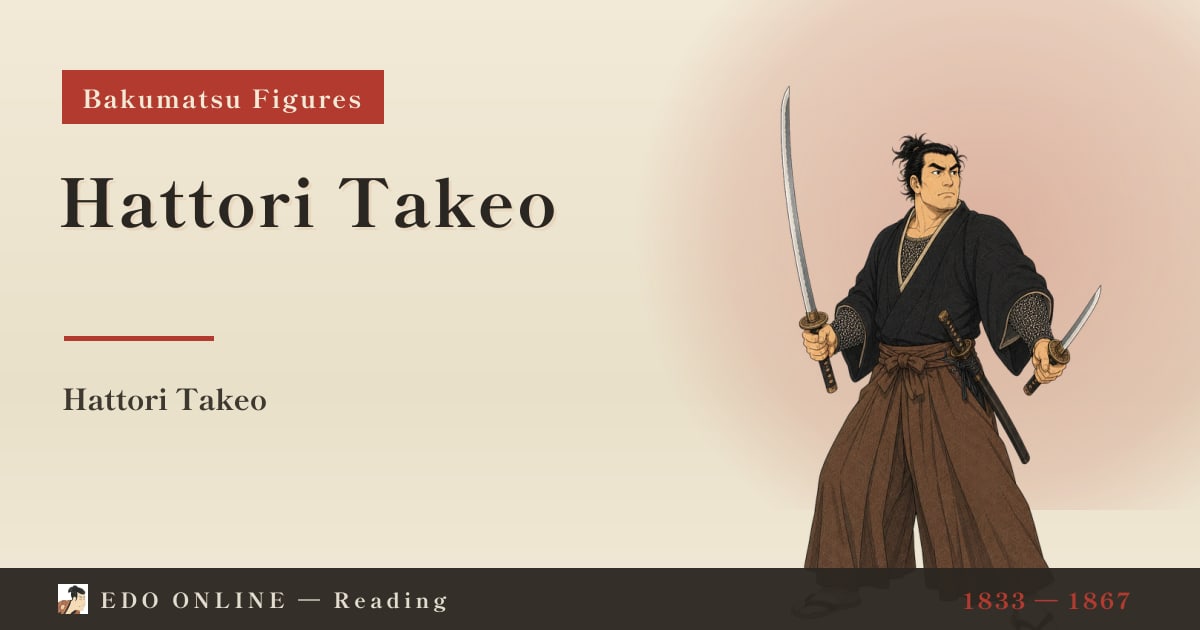
Hattori Takeo — Two Swords at Aburanokoji
A two-sword master and fencing instructor of the Shinsengumi who defected with the Goryō Eji. At Aburanokōji he alone wore mail, held a wall against the whole corps, and fell with more than twenty wounds.