Who Was Okubo Toshimichi? Achievements and Descendants
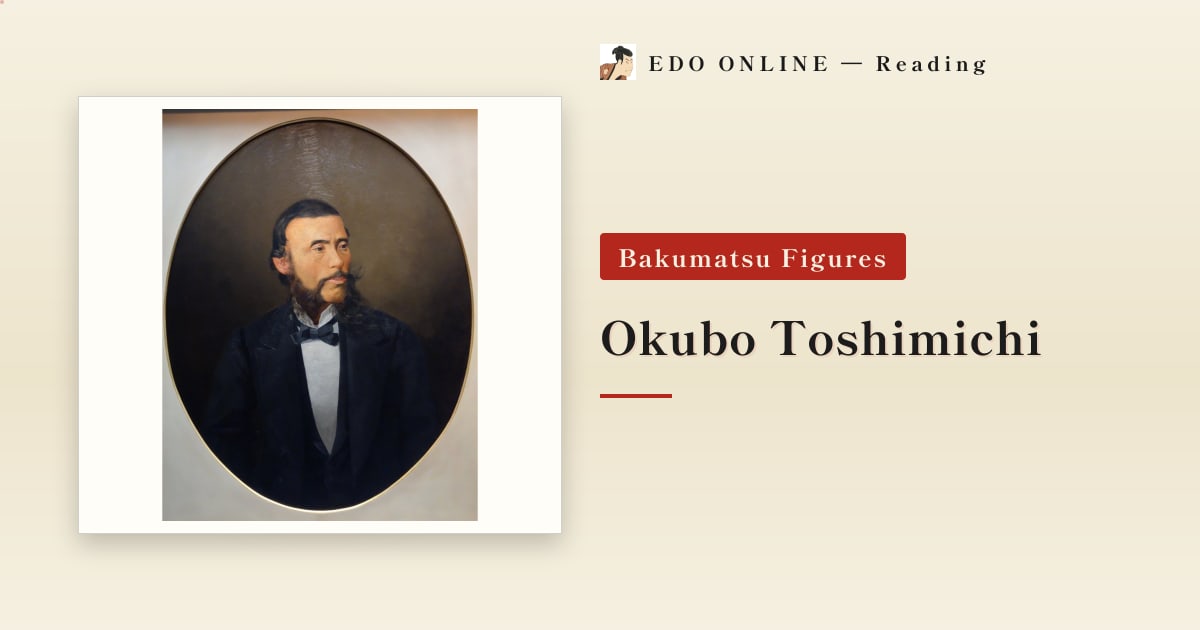
If Saigō Takamori was the man people followed out of devotion, Ōkubo Toshimichi was the one who built the machinery. Born in the same domain, childhood companions, the two men made the Restoration together and ended as enemies.
Contents
What did Okubo Toshimichi do?
Ōkubo was the chief architect of the Meiji state's institutions.
| Reform | What it did |
|---|---|
| Abolition of the domains (1871) | Replaced 260 years of domain rule with prefectures under central control |
| The Iwakura Mission | Toured Europe and America, returning with a blueprint for a modern state |
| Land tax reform (1873) | Shifted taxation from rice in kind to cash on assessed land value, stabilising state finances |
| Creation of the Home Ministry | Concentrated local government, policing and industry under one office, which he ran |
| Industrial promotion | Built state factories and transport infrastructure |
The abolition of the domains is the extraordinary item. Two and a half centuries of feudal division were dissolved essentially at a stroke, without the civil war such a measure would normally provoke.
Okubo Toshimichi and Saigo Takamori
The two grew up together in a low-ranking samurai neighbourhood of Kagoshima and rose together. Their partnership drove the Restoration; Saigō supplied the authority over men, Ōkubo the calculation and the follow-through.
They split over the Seikanron crisis of 1873. Saigō wanted to go to Korea as envoy; Ōkubo, just back from the West, insisted domestic construction came first. Saigō lost and left the government.
The real divergence was structural. Ōkubo's programme required stripping the samurai of their stipends and status, and Saigō became the figurehead of the men that programme dispossessed. When the Satsuma Rebellion came in 1877, Ōkubo directed its suppression against his oldest friend.
Saigō died that September. Ōkubo was assassinated the following May.
Why was Okubo Toshimichi assassinated?
On the morning of 14 May 1878, Ōkubo's carriage was attacked at Kioizaka in Tokyo as he travelled to the palace. Six former samurai, led by Shimada Ichirō, killed him. He was forty-seven.
They carried a written justification denouncing him for "rule by officials" — the charge that a small clique of bureaucrats had appropriated the state. To men who had lost everything, Ōkubo was the author of that loss.
Within three years, all Three Great Nobles of the Restoration were dead: Kido Takayoshi of illness in 1877, Saigō at Shiroyama that September, Ōkubo by assassination in 1878. Ōkubo is buried at Aoyama Cemetery in Tokyo.
Okubo Toshimichi's descendants and Taro Aso
Ōkubo's line runs directly into modern Japanese politics. Former prime minister Tarō Asō is his great-great-grandson.
| Generation | Person |
|---|---|
| Himself | Ōkubo Toshimichi |
| Son | Makino Nobuaki, adopted into the Makino family; diplomat and Lord Keeper of the Privy Seal |
| Granddaughter | Makino Yukiko, who married Yoshida Shigeru |
| Great-granddaughter | Yoshida Kazuko, who married Asō Takakichi |
| Great-great-grandson | Tarō Asō |
Note that Ōkubo and prime minister Yoshida Shigeru were connected by marriage, not by blood: Yoshida married Ōkubo's granddaughter.
His eldest son Ōkubo Toshikazu and third son Ōkubo Toshitake both entered government service. His grandson Ōkubo Toshiharu was a trading company executive convicted in the Lockheed scandal.
What was Okubo Toshimichi like?
Contemporaries agree on an unnerving reserve. Accounts describe meetings falling silent when he sat down without speaking, and subordinates trembling in his presence. Where Saigō moved people by presence, Ōkubo moved them by office and argument.
The phrase he chose for his own calligraphy was "government clear and bright" — administration should be transparent and unambiguous.
When his affairs were settled after the assassination, he was found to have substantial personal debts, having put his own money into state projects. It is the detail most often cited against the image of the cold bureaucrat.
Timeline of Okubo Toshimichi's life
| Year | Event |
|---|---|
| 1830 | Born in Kagoshima to a Satsuma samurai family |
| 1866 | The Satsuma-Chōshū Alliance is concluded |
| 1868 | The Meiji Restoration; enters the new government |
| 1871 | Carries out the abolition of the domains; joins the Iwakura Mission |
| 1873 | Returns; defeats Saigō over Seikanron; becomes Home Minister |
| 1877 | The Satsuma Rebellion; Saigō is defeated |
| 14 May 1878 | Assassinated at Kioizaka, aged 47 |
Frequently asked questions
Who was Okubo Toshimichi?
A Satsuma samurai and one of the Three Great Nobles of the Restoration, who as Home Minister built the institutional framework of the modern Japanese state.
Why was Okubo Toshimichi assassinated?
Former samurai who had lost their stipends and privileges under his reforms killed him in 1878, accusing him of monopolising power through officialdom.
Is Taro Aso related to Okubo Toshimichi?
Yes. Tarō Asō is Ōkubo's great-great-grandson, through Makino Nobuaki and Yoshida Shigeru's family.
What was Okubo Toshimichi's greatest achievement?
The abolition of the domains in 1871, which replaced feudal territories with a centrally governed prefecture system without provoking civil war.
For his counterpart and rival see Saigō Takamori; for the third of the Three Great Nobles see Kido Takayoshi.
Related reading
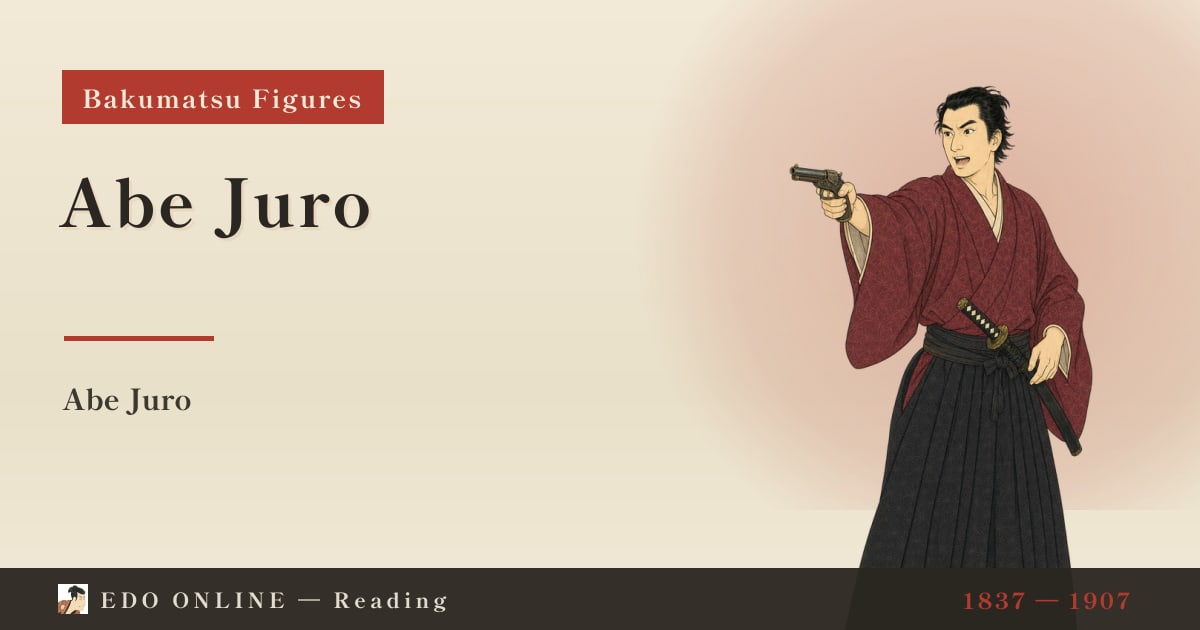
Abe Juro — The Former Member Who Talked
He deserted the Shinsengumi and rejoined under another name, shot at Kondo Isami as one of the Goryō Eji, and then grew apples in Sapporo. His late-Meiji testimony is where the ranking of the corps' best swordsmen comes from.
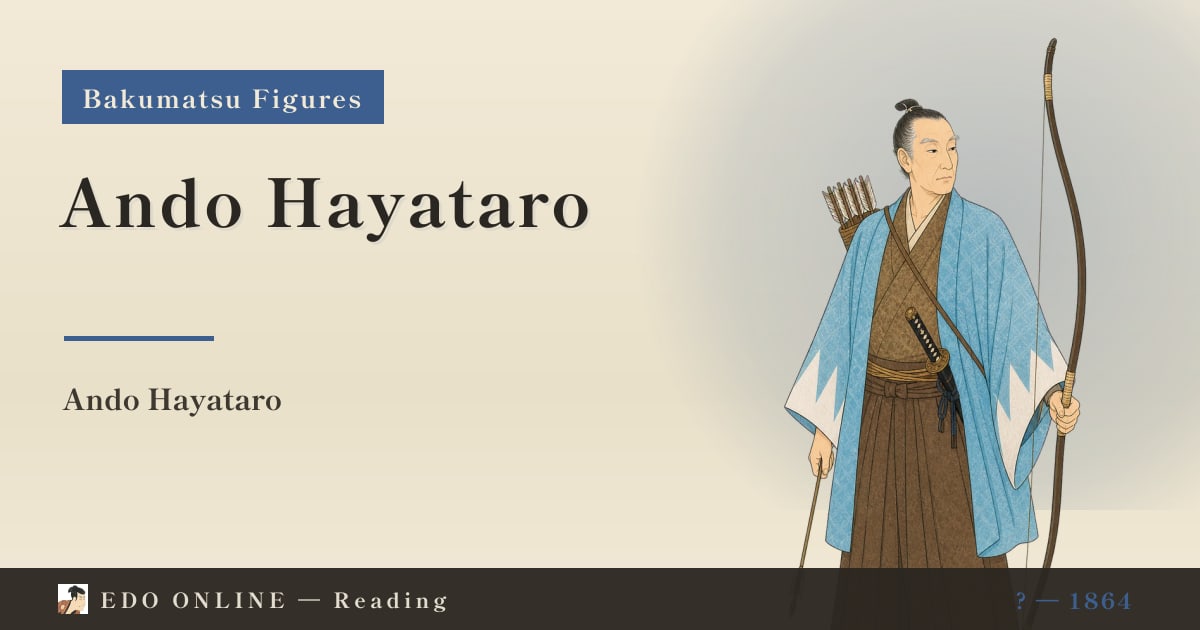
Ando Hayataro — The Shinsengumi's Record-Breaking Archer
He set the standing national record in the long-range shooting at the Tōdai-ji Great Buddha Hall, sending 8,685 arrows the length of the corridor. Nearly fifty, he joined the Shinsengumi and died of wounds taken in the back garden of the Ikedaya.
Hattori Takeo — Two Swords at Aburanokoji
A two-sword master and fencing instructor of the Shinsengumi who defected with the Goryō Eji. At Aburanokōji he alone wore mail, held a wall against the whole corps, and fell with more than twenty wounds.