Kazurayama Takehachiro — He Denounced Kondo Isami and Died for It
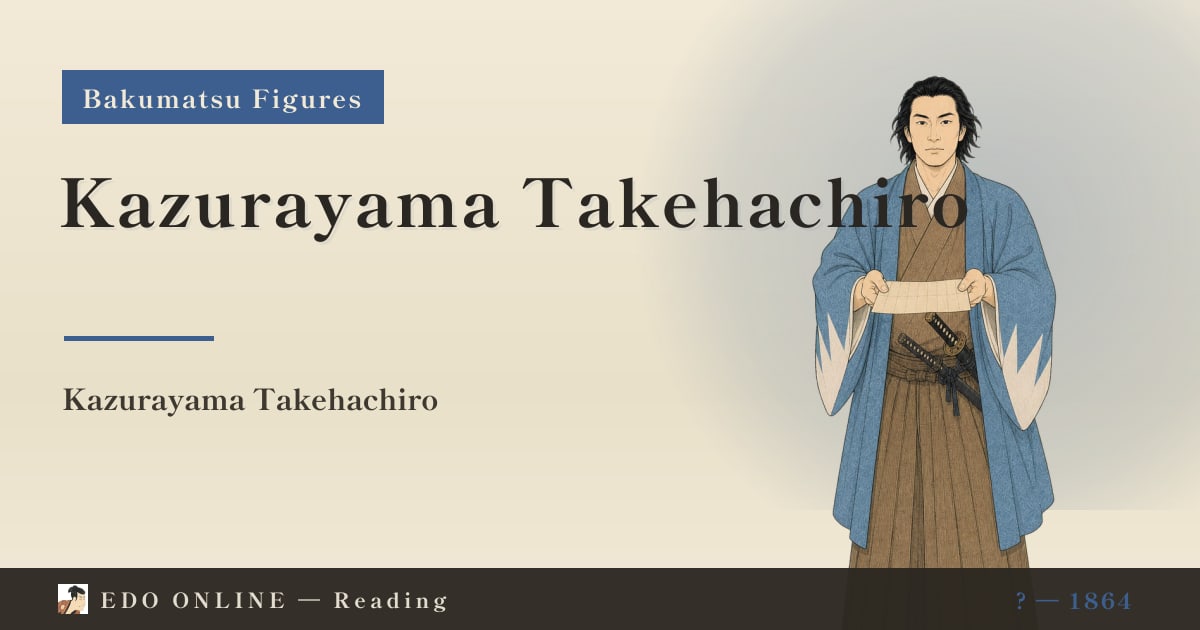
One member denounced Kondo Isami to the Aizu domain. Kazurayama Takehachirō. After the matter was settled, he alone opened his belly.
Contents
Who Was Kazurayama Takehachiro?
Kazurayama was a corporal of the Shinsengumi.
He came from the Aizu domain; his birth year is unknown. Before joining he is said to have been a komusō, one of the flute-playing mendicant monks.
He committed seppuku on 6 October 1864.
Kazurayama Takehachiro at the Ikedaya
At the Ikedaya Incident, Kazurayama fought hard.
For it he received a reward of seventeen ryō from the shogunate, through the Kyoto Shugoshoku Matsudaira Katamori.
Seventeen is a high figure. The same as Tani Sanjuro's, above Matsubara Chuji's fifteen, below Tani Mantaro's twenty. His contribution was recognised as real.
He was, in other words, a man in good standing.
Kazurayama Takehachiro's Petition
And he denounced his commander.
Taking the position that he was not Kondo Isami's personal retainer, he drew up a five-point indictment of Kondo's misconduct and overreach and submitted it to the Aizu domain.
The co-signatories are not minor names.
Nagakura Shinpachi, Harada Sanosuke, Saito Hajime, Shimada Kai and Ozeki Masajiro. And Kazurayama.
These are the men who would go on to hold the captaincies and inspectorships. Their 1864 posts were not the same as their later ones — but the core of the corps had turned on Kondo all the same.
The thrust of the complaint was that they were not Kondo's private retainers. The Shinsengumi was under the patronage of the Aizu domain, and its members were not one man's household troops — the petition went to the character of the organisation itself.
Why Kazurayama Takehachiro Alone Died
Matsudaira Katamori arranged a reconciliation with Kondo.
Kazurayama committed seppuku anyway.
Two explanations exist.
One: he kept protesting to the last and died of it.
Two: the leadership wanted an example made, and pinned responsibility on the hot-blooded man who would not back down.
On the second reading, one of the six signatories was handed over.
Nagakura lived into the Meiji era, and so did Saitō, Shimada and Ozeki. Harada fell at Ueno. Only Kazurayama paid for the petition.
The commander is denounced, the organisation carries on, and one of the accusers disappears. This is evidence that the Shinsengumi's internal killings were not only about factional lines of the kind that killed Serizawa Kamo and Ito Kashitaro.
Frequently asked questions
Who was Kazurayama Takehachiro?
A corporal of the Shinsengumi. He was rewarded seventeen ryō for his fighting at the Ikedaya Incident and later co-signed a petition denouncing Kondo Isami.
Why was Kazurayama Takehachiro made to commit seppuku?
He died after the quarrel with Kondo Isami had been patched up. One account has him protesting to the end; the other has the leadership making an example of him.
Who co-signed the petition?
Nagakura Shinpachi, Harada Sanosuke, Saito Hajime, Shimada Kai, Ozeki Masajiro and Kazurayama — senior men who went on to hold the captaincies and inspectorships.
What did the petition say?
It set out Kondo Isami's misconduct and overreach in five points, on the position that the signatories were not his personal retainers, and was submitted to the Aizu domain.
Kazurayama Takehachiro Timeline
| Year | Event |
|---|---|
| Birth unknown | Born in the Aizu domain; said to have been a mendicant komusō before joining |
| Jun 1864 | Fights hard at the Ikedaya Incident and is rewarded seventeen ryō |
| 1864 | Co-signs a five-point indictment of Kondo Isami to the Aizu domain |
| After the settlement | Matsudaira Katamori arranges a reconciliation with Kondo |
| 6 Oct 1864 | Commits seppuku |
For his co-signatories see Nagakura Shinpachi, Shimada Kai and Ozeki Masajiro; for the roster, the Shinsengumi members; for the corps, the Shinsengumi.
Related reading
Abe Juro — The Former Member Who Talked
He deserted the Shinsengumi and rejoined under another name, shot at Kondo Isami as one of the Goryō Eji, and then grew apples in Sapporo. His late-Meiji testimony is where the ranking of the corps' best swordsmen comes from.
Ando Hayataro — The Shinsengumi's Record-Breaking Archer
He set the standing national record in the long-range shooting at the Tōdai-ji Great Buddha Hall, sending 8,685 arrows the length of the corridor. Nearly fifty, he joined the Shinsengumi and died of wounds taken in the back garden of the Ikedaya.
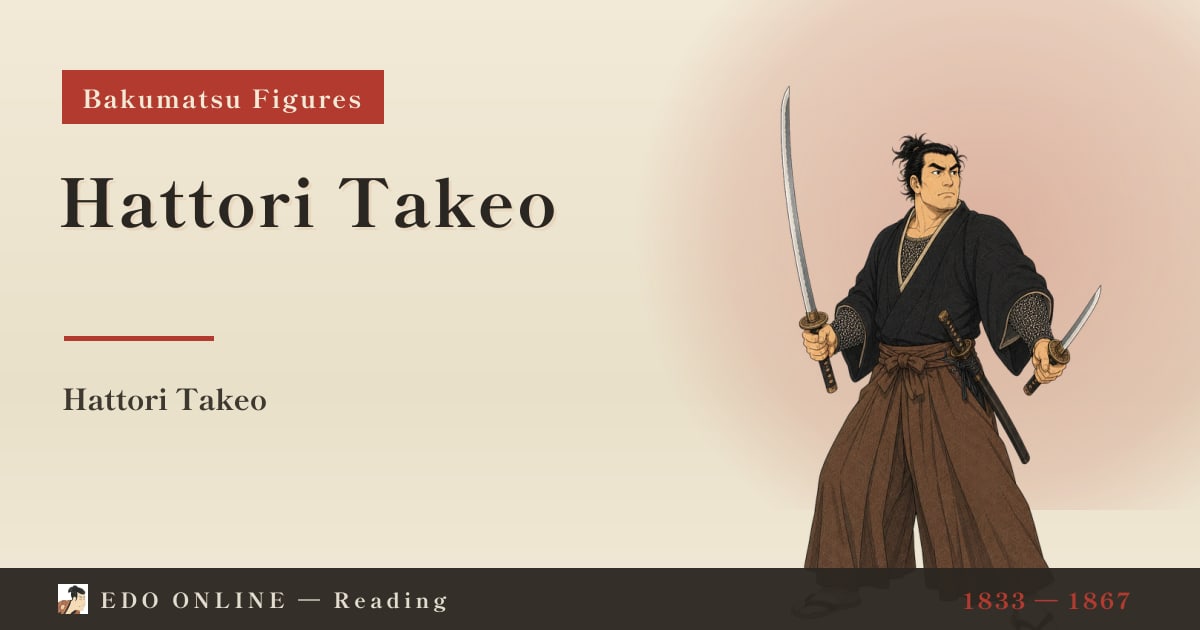
Hattori Takeo — Two Swords at Aburanokoji
A two-sword master and fencing instructor of the Shinsengumi who defected with the Goryō Eji. At Aburanokōji he alone wore mail, held a wall against the whole corps, and fell with more than twenty wounds.