Ito Kashitaro — The Theorist Who Split the Shinsengumi and Died at Aburanokoji
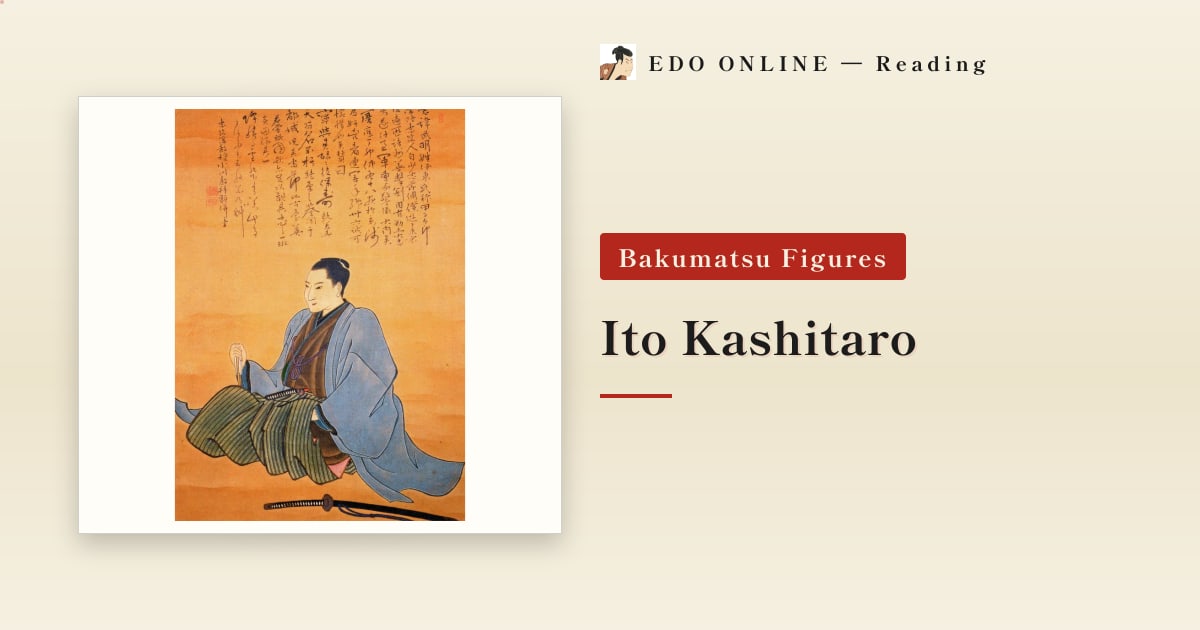
The Shinsengumi had a senior officer recruited for his learning and killed for his convictions. His name was Ito Kashitaro.
Contents
Who Was Ito Kashitaro?
Ito served as the Shinsengumi's staff officer (sanbo).
The Shinsengumi was a body of swordsmen centred on Kondo Isami. Into it came Ito, a theorist with learning and eloquence as well as the sword — a high-grade mind for the unit.
But his thought was fundamentally at odds with the unit's line. Ito was an imperial loyalist, placing the emperor at the centre. Inside a body that served the shogunate, that gap could not be closed.
In time he broke away, and was killed.
Ito Kashitaro's Learning and Swordsmanship
Ito is said to have come from Hitachi, in present-day Ibaraki, and studied both scholarship and swordsmanship in Edo. His sword was Hokushin Itto-ryu; his learning, loyalist thought shaped by the Mito school. Mito was a great centre of "revere the emperor, expel the barbarians", and Ito's convictions came from that ground.
The Shinsengumi recruited him in Edo. The member Todo Heisuke, an old fencing associate, is said to have brought him in.
Ito appears to have joined believing he could realize his own ideas inside the unit — perhaps calculating that he could turn the Shinsengumi toward loyalism from within.
Ito Kashitaro and the Goryo Eji
But the Shinsengumi could not be turned. The line of Kondo and Hijikata did not bend.
In 1867 Ito left. The pretext was guarding the tomb of the late Emperor Komei, and the group he formed is called the Goryo Eji (also the Kodaiji faction).
Among those who left with him was Todo Heisuke, the man who had recruited him — the recruiter departing with his recruit. Saito Hajime also joined the Goryo Eji, but this is widely held to have been an infiltration on the Shinsengumi's behalf.
The Goryo Eji were not merely defectors. They were a group pursuing political activity of their own from a loyalist position, and Ito is said to have been in contact with Satsuma.
How Ito Kashitaro Died at Aburanokoji
To the Shinsengumi, Ito was dangerous. He knew the unit's inner affairs, was in touch with the loyalist side, and moved independently — not a man who could be left alone.
In December 1867 the Shinsengumi assassinated him. He was invited to a drinking party and attacked on the way home, taken by surprise and killed.
The unit then left his body lying in the street at Aburanokoji — as bait for the Goryo Eji who would come to collect it.
When his men came, the Shinsengumi fell on them. This is the Aburanokoji incident, in which Todo Heisuke and others were killed. The man who had brought Ito into the Shinsengumi died beside Ito's body.
Ito Kashitaro's Poetry
Ito also composed poetry — a man of the brush as well as the sword and the argument.
Several traditions report words spoken as he was cut down, but the words of a man struck down are rarely transmitted precisely, and all of them may have been shaped afterward. None rests on firm attribution.
Ito has been framed as a theorist who was nonetheless killed — learned, skilled with a sword, martyred to his ideas. That is the frame in which he was remembered.
Ito Kashitaro Timeline
| Year | Event |
|---|---|
| 1835 | Said to have been born in Hitachi |
| early 1860s | Studies Hokushin Itto-ryu and loyalist learning in Edo |
| 1864 | Joins the Shinsengumi through Todo Heisuke; becomes staff officer |
| spring 1867 | Leaves and forms the Goryo Eji |
| Dec 1867 | Assassinated by the Shinsengumi; the Aburanokoji incident follows |
For the unit see the Shinsengumi; for the man who died with him, Todo Heisuke; for the suspected infiltrator, Saito Hajime.
Related reading
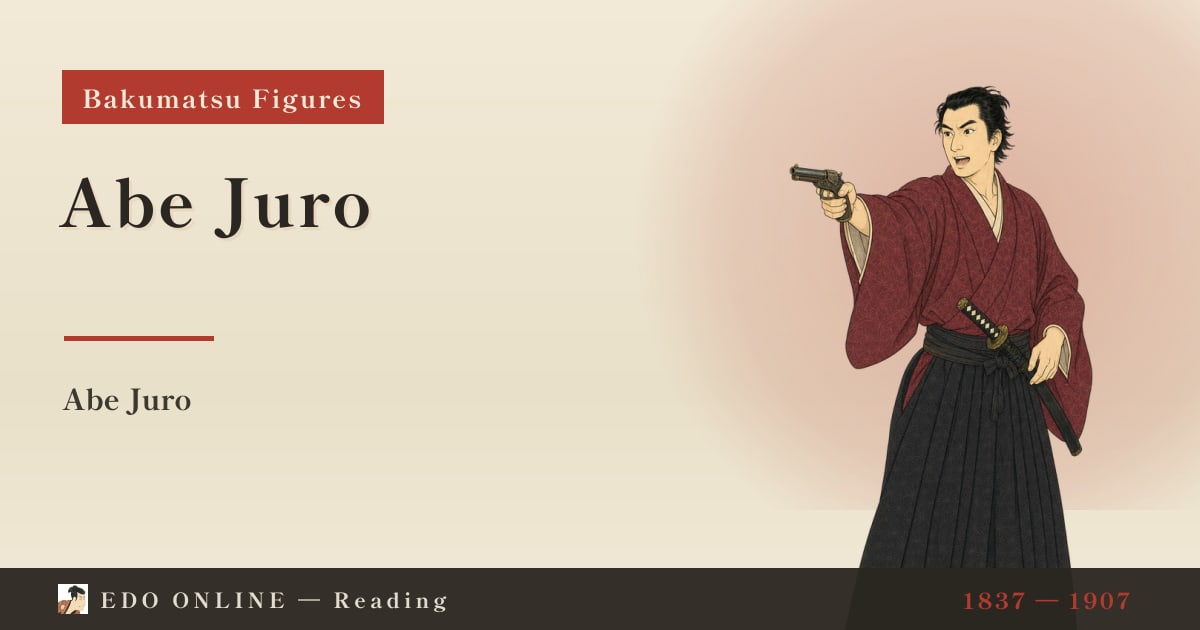
Abe Juro — The Former Member Who Talked
He deserted the Shinsengumi and rejoined under another name, shot at Kondo Isami as one of the Goryō Eji, and then grew apples in Sapporo. His late-Meiji testimony is where the ranking of the corps' best swordsmen comes from.
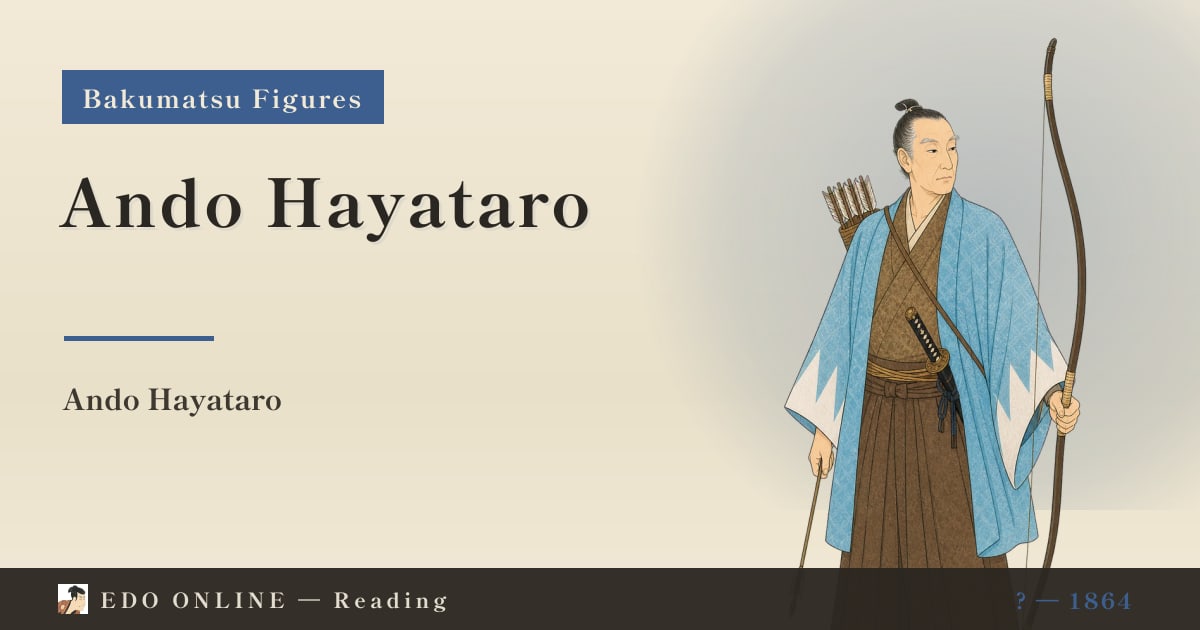
Ando Hayataro — The Shinsengumi's Record-Breaking Archer
He set the standing national record in the long-range shooting at the Tōdai-ji Great Buddha Hall, sending 8,685 arrows the length of the corridor. Nearly fifty, he joined the Shinsengumi and died of wounds taken in the back garden of the Ikedaya.
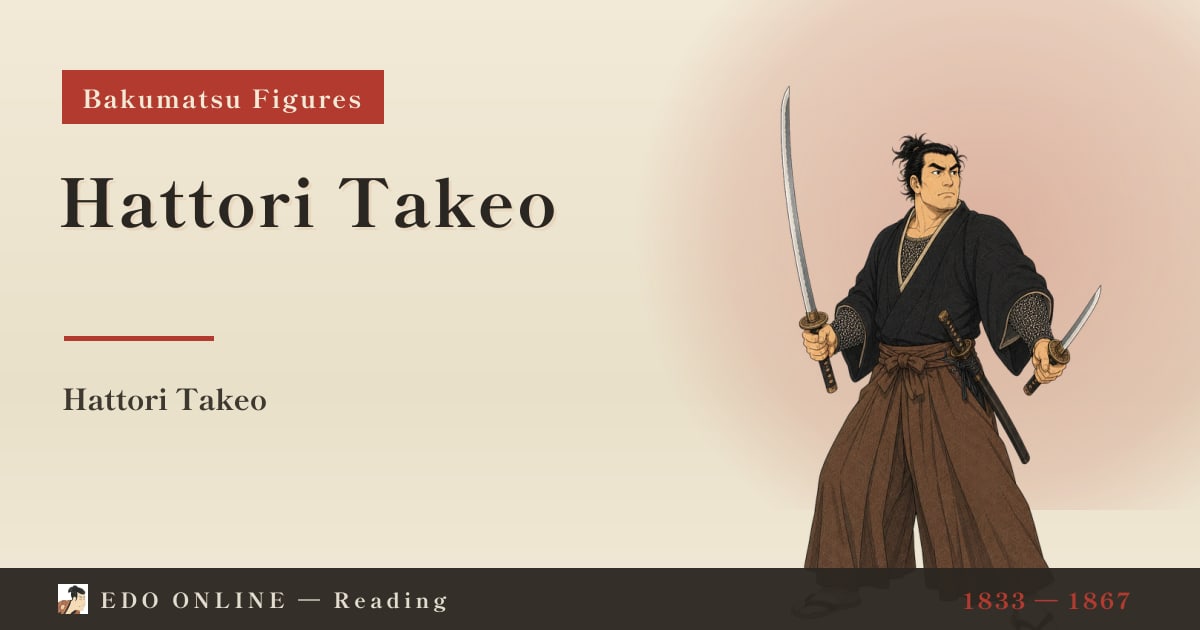
Hattori Takeo — Two Swords at Aburanokoji
A two-sword master and fencing instructor of the Shinsengumi who defected with the Goryō Eji. At Aburanokōji he alone wore mail, held a wall against the whole corps, and fell with more than twenty wounds.