Serizawa Kamo — The Shinsengumi Chief Killed by His Own Men
The Shinsengumi had an early chief who was killed by the men of his own unit. His name was Serizawa Kamo.
Contents
Who Was Serizawa Kamo?
Serizawa was one of the chiefs of the Mibu Roshigumi, the Shinsengumi's immediate predecessor — level with Kondo Isami, and by some accounts above him. He was not a sole founding commander; some sources count Niimi Nishiki among the chiefs as well.
The unit began as a coalition of two groups: Serizawa's, out of the Mito tradition, and Kondo's, out of the Shieikan dojo in Tama. The arrangement did not last, and it ended in a purge.
Little about his background is firm. He is described as coming from a rural samurai family in Hitachi Province, but his name and career vary between accounts, and his birth year is unknown.
Serizawa Kamo's Swordsmanship
Serizawa trained in Shinto Munen-ryu, a school widely practised in Edo and known for its practical bent.
He is credited with real skill, and is often described carrying an iron war fan. A large, forceful man who dominated a room — that impression is common to both the records and the later stories.
Specific blades are named as his, but attributions of famous swords to Shinsengumi men mostly hardened well after the fact and should not be treated as documented.
Serizawa Kamo from Mito to Kyoto
Serizawa is associated with the Tengu-to current in Mito. Under Tokugawa Nariaki, Mito had become the intellectual centre of the expel-the-foreigners movement, and this was its militant wing.
In 1863, when a corps of masterless samurai was recruited ostensibly to guard the shogun, Serizawa joined and travelled to Kyoto. When the corps' organizer turned it back toward Edo, both Serizawa and Kondo were among those who stayed.
That remnant became the Mibu Roshigumi, placed under Aizu domain, and later renamed the Shinsengumi.
Serizawa Kamo's Violence, and What It Cost
What fixed Serizawa's reputation was his conduct in Kyoto.
A brawl with sumo wrestlers in Osaka. Extortion at merchant houses. And the burning of a merchant establishment called the Yamatoya. These are in the record.
The difficulty is that his unit was the body responsible for keeping order. When the men policing the streets ran riot in them, the domain sponsoring them lost face.
He had become a threat to the organization's existence.
How Serizawa Kamo Was Killed
In October 1863 Serizawa was attacked in his sleep at the Yagi residence in Mibu and killed. Sources differ over the exact day.
The killers were members of the unit itself. Hijikata Toshizo and Okita Soji are among the names given, but exactly who did what is not established.
Officially the death was treated as an attack by outsiders, and the unit held a funeral. That it was an internal purge appears to have been widely understood at the time.
The effect was to consolidate command under Kondo and Hijikata. Serizawa's death is the moment the Shinsengumi became an organization that would kill its own for the sake of discipline. The seppuku of Yamanami Keisuke and other purges followed.
Niimi Nishiki, Serizawa's counterpart in rank, is reported in later accounts to have been forced to commit seppuku shortly before, though the circumstances remain uncertain. Either way, the Mito faction was removed as a group.
What Was Serizawa Kamo Like?
Serizawa is described almost uniformly as a violent man — a heavy drinker who drew his sword when crossed and frightened everyone around him.
One caution is worth stating. Most of the record about him was left by the side that killed him. Justifying a purge requires the victim to have been impossible.
That said, incidents such as the Yamatoya burning appear in outside records as well, so the reputation is unlikely to be pure fabrication.
What can be established is that he became dangerous to the organization, and was judged so and removed.
Serizawa Kamo Timeline
| Year | Event |
|---|---|
| unknown | Said to have been born in Hitachi Province |
| 1863 | Joins the roshi corps and travels to Kyoto; remains when it turns back |
| 1863 | Becomes one of the chiefs of the Mibu Roshigumi |
| 1863 | The Osaka brawl and the Yamatoya burning |
| Oct 1863 | Assassinated at the Yagi residence in Mibu (the exact day is disputed) |
For what the unit became, see the Shinsengumi and its captains.
Related reading
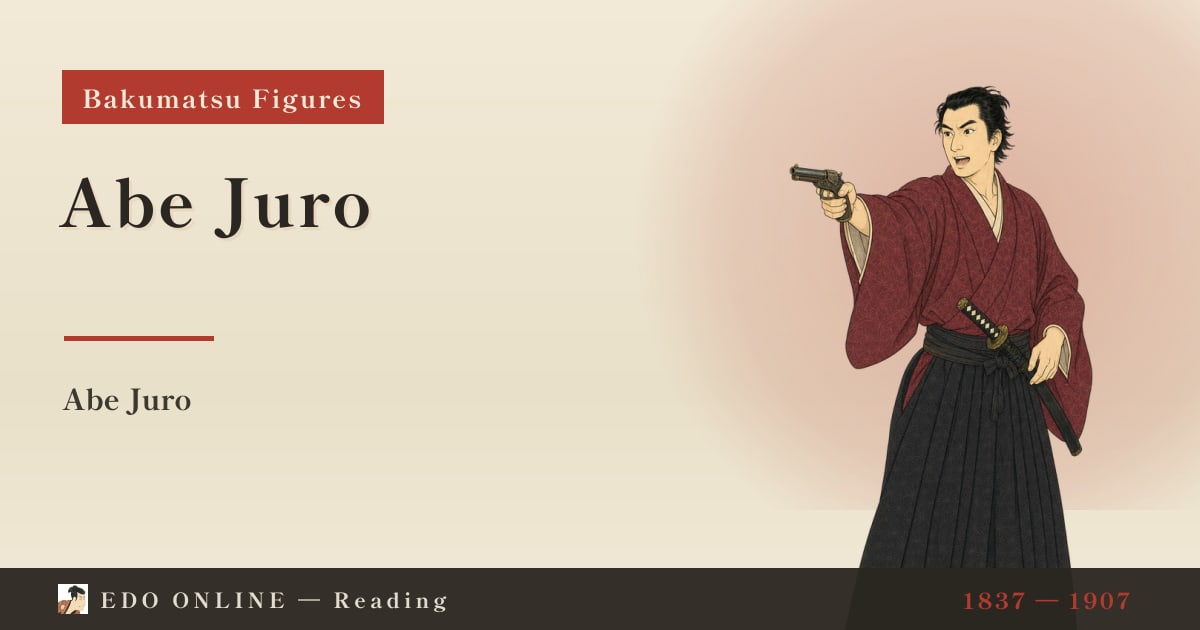
Abe Juro — The Former Member Who Talked
He deserted the Shinsengumi and rejoined under another name, shot at Kondo Isami as one of the Goryō Eji, and then grew apples in Sapporo. His late-Meiji testimony is where the ranking of the corps' best swordsmen comes from.
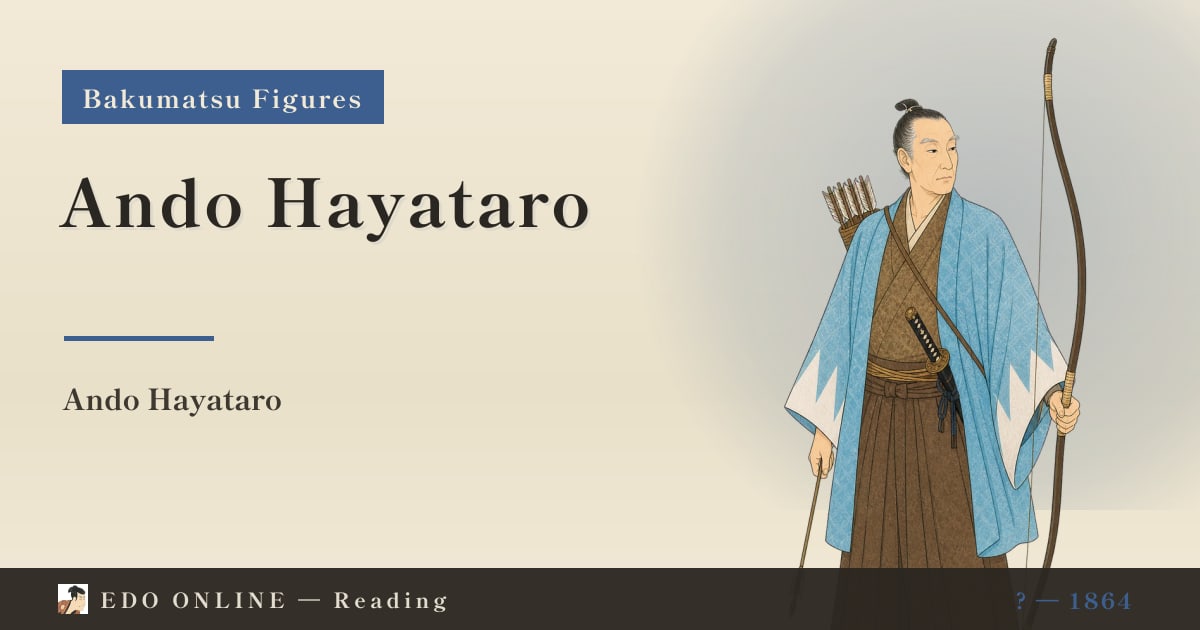
Ando Hayataro — The Shinsengumi's Record-Breaking Archer
He set the standing national record in the long-range shooting at the Tōdai-ji Great Buddha Hall, sending 8,685 arrows the length of the corridor. Nearly fifty, he joined the Shinsengumi and died of wounds taken in the back garden of the Ikedaya.
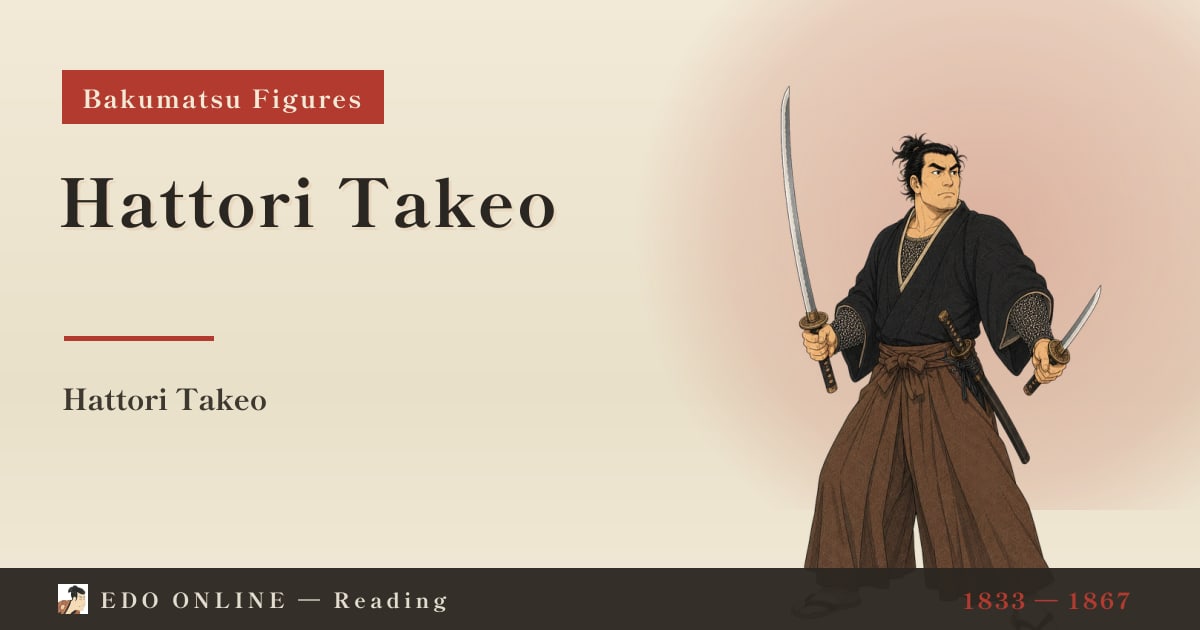
Hattori Takeo — Two Swords at Aburanokoji
A two-sword master and fencing instructor of the Shinsengumi who defected with the Goryō Eji. At Aburanokōji he alone wore mail, held a wall against the whole corps, and fell with more than twenty wounds.