Nagakura Shinpachi — The Shinsengumi Swordsman Who Survived
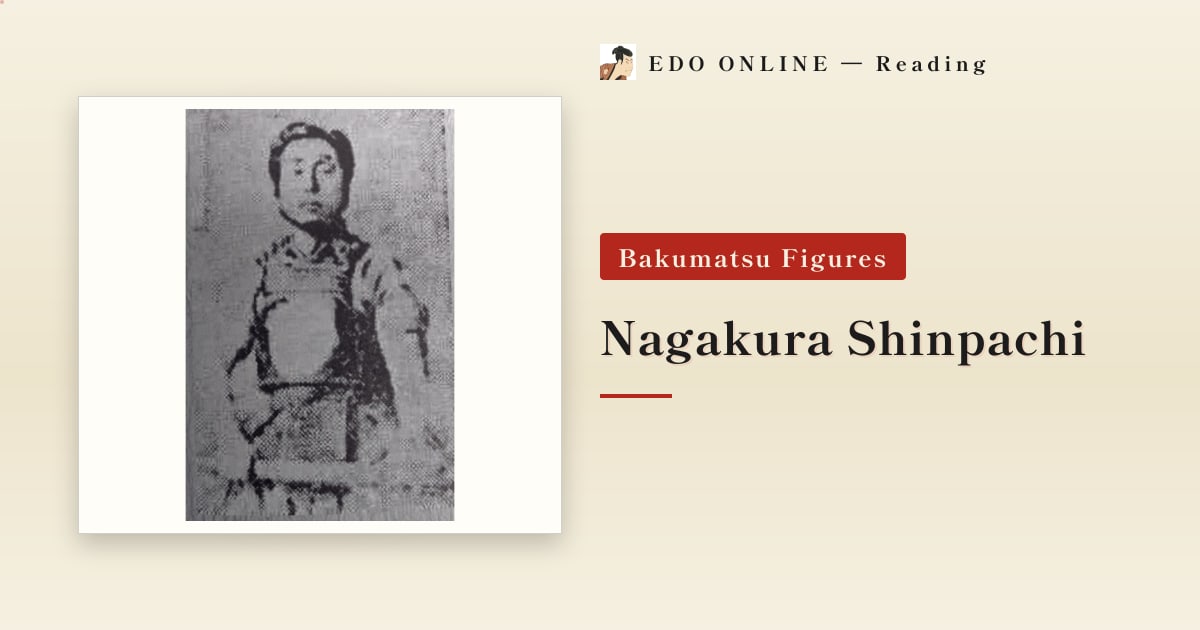
Who was the best swordsman in the Shinsengumi? Alongside Okita Soji, the name that comes up is Nagakura Shinpachi. And Nagakura lived.
Contents
Who Was Nagakura Shinpachi?
Nagakura was captain of the second unit and one of the unit's sword instructors.
Born in 1839 to a retainer of Matsumae domain posted in Edo, he was properly samurai by birth — unlike Kondo Isami and Hijikata Toshizo, who came from farming families.
He trained in Shinto Munen-ryu at one of the strongest schools in Edo and earned his certificate there. He then began frequenting Kondo's Shieikan and threw in his lot with that circle.
Men of different schools and different birth gathered around Kondo. Nagakura is the clearest example.
Why Nagakura Shinpachi Is Called the Strongest
The case for Nagakura rests on surviving evidence of actual fighting.
Four men went through the door first at the Ikedaya: Kondo, Okita, Nagakura, and Todo Heisuke. In a close melee indoors, Nagakura fought on after injuring his hand.
Okita collapsed partway through and Todo was wounded. Nagakura was one of the few still standing at the end.
He then fought in the Boshin War, campaigning north before returning to Edo by way of Yonezawa, and lived into the twentieth century. Documented in combat, and alive afterward — the reputation rests on both.
How Nagakura Shinpachi Complained About Kondo Isami
The most remarkable thing about Nagakura is that he went over Kondo's head.
A group of members, holding that Kondo had become high-handed, submitted a formal complaint to Aizu domain, the unit's sponsor. Nagakura was among those behind it.
The unit enforced severe discipline, at times through forced seppuku and outright purges. Against that, naming your commander in a document sent outside the unit was a life-risking act. He was not punished, and he stayed.
The episode shows that he understood himself as a comrade rather than a retainer.
Nagakura Shinpachi's Sword and Character
The blade associated with Nagakura is a Tegarayama Ujishige. He recorded that it was notched and damaged at the Ikedaya.
Where most Shinsengumi "famous swords" hardened into legend through later fiction, Nagakura's rests on his own late testimony, which makes it better grounded than most.
His character is described as blunt and forthright. The complaint against Kondo is not unrelated to that.
Nagakura Shinpachi's Later Life in Hokkaido
After the defeat at Toba-Fushimi in 1868, the Shinsengumi withdrew to Edo.
Nagakura parted from Kondo there, choosing to fight on with a separate force rather than remain under his command. Kondo was executed at Itabashi; Hijikata was killed at Hakodate.
Nagakura survived. In the Meiji era he married the daughter of a Matsumae physician and took the name Sugimura Yoshie.
He did not put the sword down. He moved to Hokkaido and served as fencing instructor at the Kabato prison, and later ran a dojo in Tokyo. His life after the Shinsengumi was far longer than his life inside it.
What Nagakura Shinpachi Recorded About the Shinsengumi
Nagakura's greatest contribution may not be his swordsmanship at all. It is the record.
In old age he recounted his experiences, and they were written down. Much of the detail we now have about the Shinsengumi rests on the testimony of this survivor.
In an era when the winners write the history, a participant from the losing side left an account in his own words. That is not a small thing.
He died in 1915, aged seventy-five (seventy-seven by the traditional count), forty-seven years after Kondo.
Nagakura Shinpachi Timeline
| Year | Event |
|---|---|
| 1839 | Born to a Matsumae retainer posted in Edo |
| 1850s | Trains in Shinto Munen-ryu |
| 1863 | Goes to Kyoto and helps found the Shinsengumi |
| 1864 | Among the first through the door at the Ikedaya; captain of the second unit |
| 1868 | Parts from Kondo in Edo after Toba-Fushimi |
| Meiji era | Takes the name Sugimura Yoshie; teaches fencing in Hokkaido and later in Tokyo |
| 1915 | Dies, aged 75 |
For the unit see the Shinsengumi and its captains.
Related reading
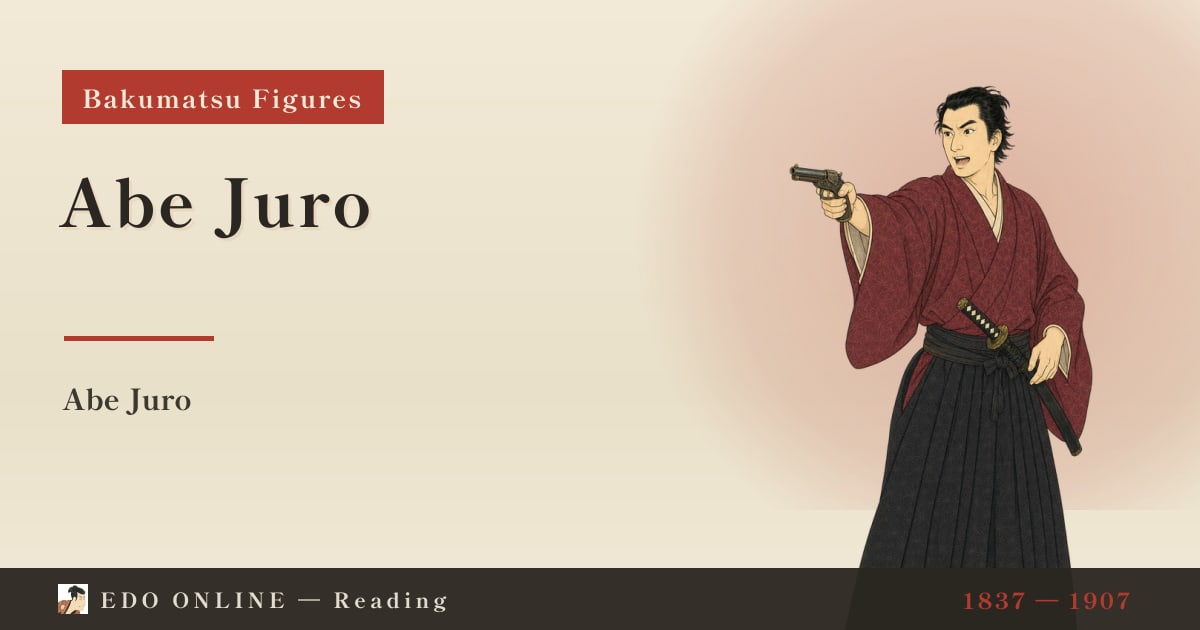
Abe Juro — The Former Member Who Talked
He deserted the Shinsengumi and rejoined under another name, shot at Kondo Isami as one of the Goryō Eji, and then grew apples in Sapporo. His late-Meiji testimony is where the ranking of the corps' best swordsmen comes from.
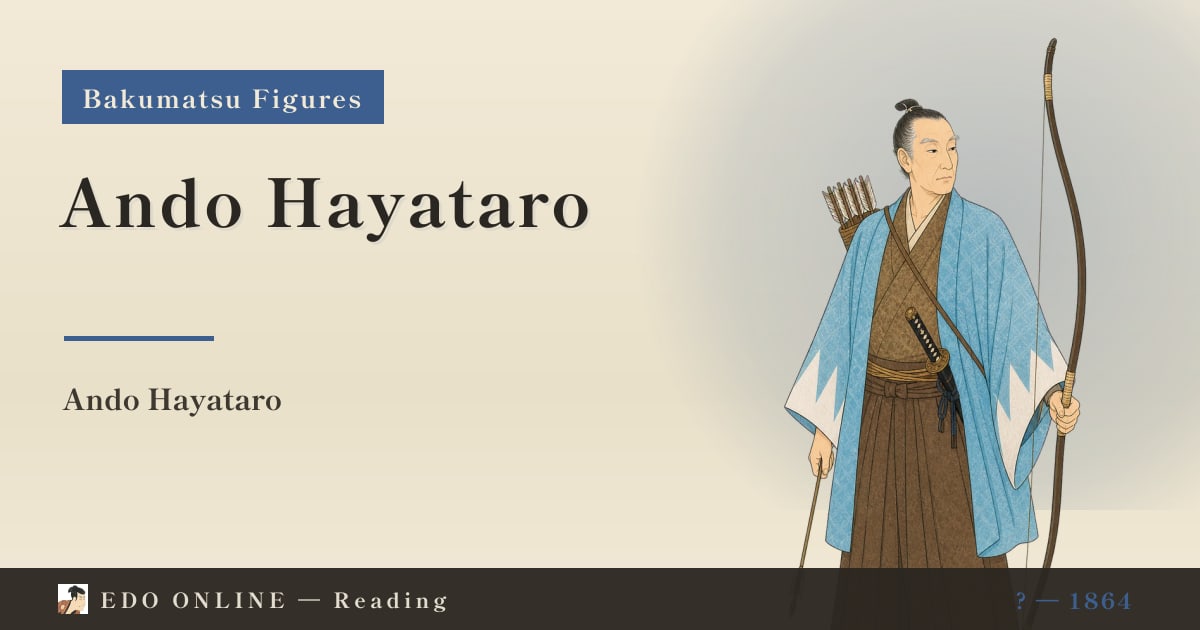
Ando Hayataro — The Shinsengumi's Record-Breaking Archer
He set the standing national record in the long-range shooting at the Tōdai-ji Great Buddha Hall, sending 8,685 arrows the length of the corridor. Nearly fifty, he joined the Shinsengumi and died of wounds taken in the back garden of the Ikedaya.
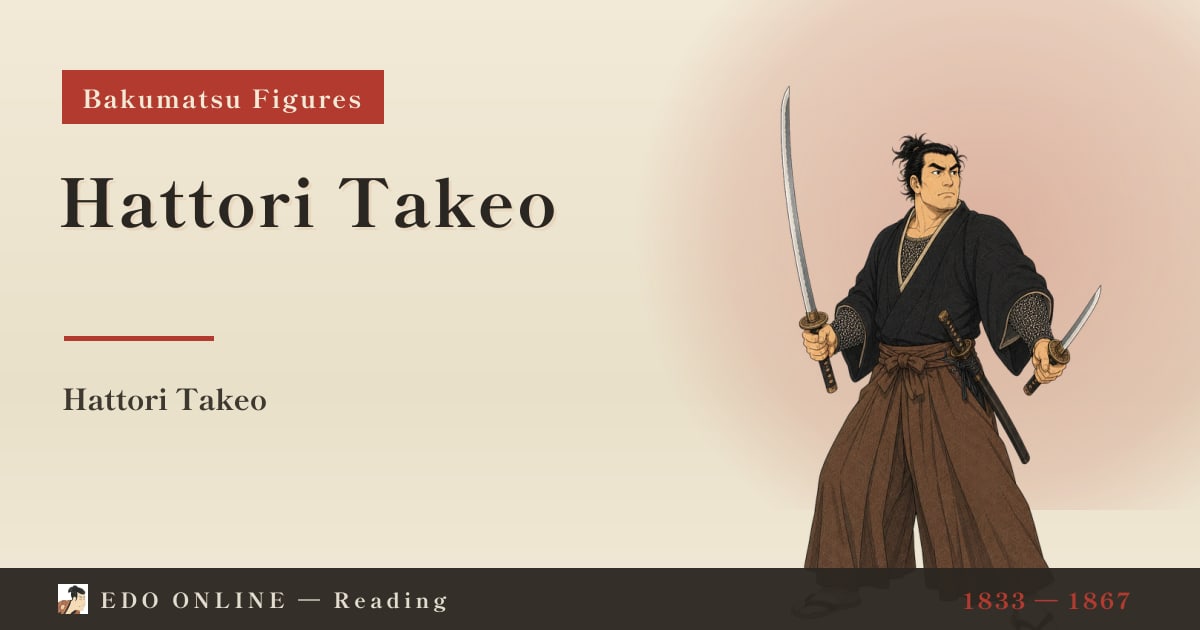
Hattori Takeo — Two Swords at Aburanokoji
A two-sword master and fencing instructor of the Shinsengumi who defected with the Goryō Eji. At Aburanokōji he alone wore mail, held a wall against the whole corps, and fell with more than twenty wounds.