Abe Juro — The Former Member Who Talked
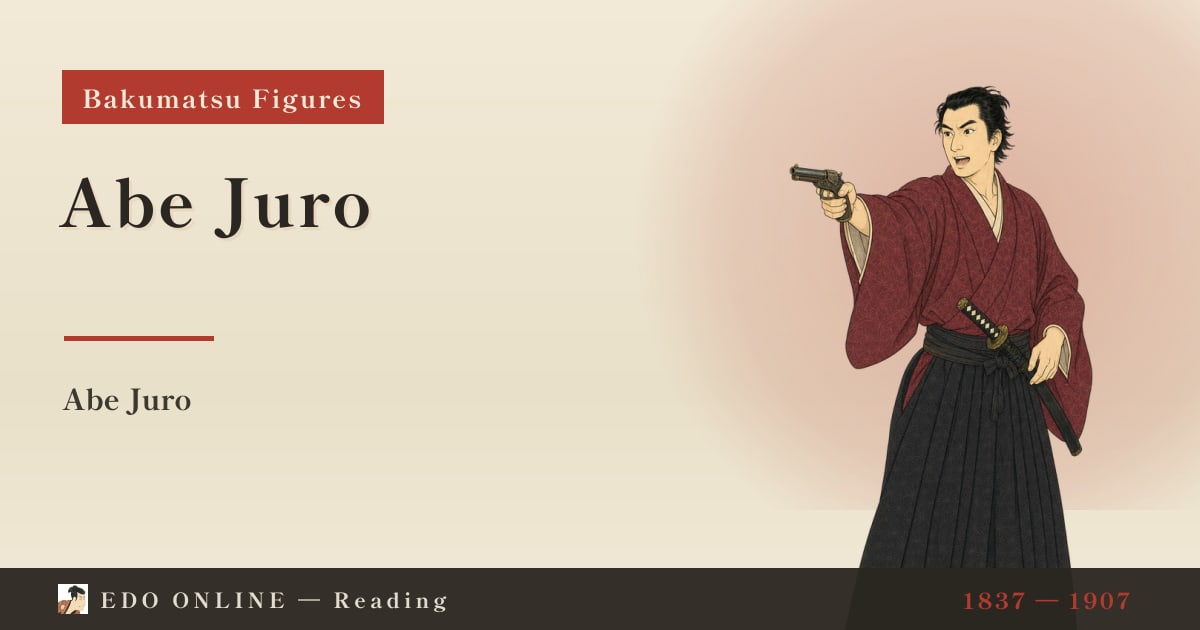
The famous ranking — Nagakura first, Okita second, Saitō third — comes from one man's testimony. Abe Jūrō. He is one of the members who talked.
Contents
Who Was Abe Juro?
Abe served in the Shinsengumi, in the Goryō Eji, and in the Sekihōtai. After the Restoration he called himself Abe Takaaki.
He was born on 21 September 1837 at Habiro village in Dewa province, second son of a farmer, and became a samurai by adoption into the Takano family of the Kameda domain.
He died in Tokyo on 6 January 1907, aged sixty-nine.
Abe Juro Deserted and Came Back
His career doubles back on itself.
He left his domain and joined the Mibu Rōshi — later the Shinsengumi — under the name Abe Shinzō, some time before July 1863.
But he fell out with the corps' direction and deserted. He was sheltered by the Mito retainer Yoshinari Yūtarō, and it was then that he met the Satsuma man Nakamura Hanjirō, later Kirino Toshiaki.
Calling himself Takano Jūrō, he trained under Tani Mantaro in Osaka, and worked with Tani in the Zenzaiya affair.
On the strength of that, he was back by about May 1865, under the name Abe Shinjirō.
He deserted and returned under another name. The Shinsengumi is known for its severity about desertion, but in practice some men came and went.
In the corps he served as corporal and instructor in gunnery.
Abe Juro and the Ambush of Kondo Isami
In March 1867 he founded the Goryō Eji with Ito Kashitaro and eleven others.
He was out hawking during the Aburanokōji affair and so was not there. Told of it afterwards, he took refuge in the Satsuma residence.
On 12 January 1868 he ambushed Kondo Isami at Sumizome in Fushimi and wounded him.
In the Boshin War he served under Nakamura Hanjirō with Satsuma at Toba-Fushimi, and later joined the Sekihōtai.
What Abe Juro's Testimony Built
Abe matters because he attended the Shidankai historical society after 1897 and left testimony about the period.
The best-known passage: Okita Soji was Kondo's first disciple and served very well; next was Saito Hajime; and then, from a different school, there was Nagakura Shinpachi — who was rather further advanced in his training than Okita.
That passage is still quoted whenever the question of the corps' best swordsman comes up.
There is a rawer piece. At the Shidankai on 17 March 1900, Abe explained why the ambush of Kondo failed: that Shinohara Tainoshin and Kano Washio, whose job was to finish Kondo with spears after the shooting, lost their nerve, threw down the spears and ran.
Abe then cut off contact with both men unilaterally.
Shinohara, for his part, maintained at the Shidankai and in his later memoir that he was the man who shot Kondo.
Men who were in the same place on the same night contradict each other more than thirty years later. Few things demonstrate the character of the Shinsengumi record so plainly.
Abe also believed to the end of his life that Saito Hajime — the informer — had returned to the corps because he stole fifty ryō of Itō's to spend on a geisha and could no longer stay. A witness's testimony carries the witness's convictions with it.
Abe Juro After the Restoration
He served in the Danjōdai, then in the Hokkaidō Colonisation Commission and the Hokkaidō government.
On retiring he ran an orchard in Sapporo, growing apples among other fruit.
Kano Washio also went to the Colonisation Commission, and Nagakura Shinpachi to Hokkaidō. Goryō Eji or Shinsengumi, they ended up in the same place.
He died in Tokyo in 1907, aged sixty-nine.
Frequently asked questions
Who was Abe Juro?
A corporal and gunnery instructor of the Shinsengumi who later defected with the Goryō Eji, and who after the Restoration gave testimony about the period to the Shidankai society.
Who was the strongest swordsman in the Shinsengumi?
Abe Jūrō's Shidankai testimony is usually cited: Nagakura Shinpachi first, Okita Soji second, Saito Hajime third. It is one man's recollection, not a settled ranking.
Did Abe Juro desert the Shinsengumi?
Yes. He fell out with its direction and deserted, was sheltered by a Mito retainer, and rejoined around 1865 under a different name.
Did Abe Juro take part in the ambush of Kondo Isami?
Yes. On 12 January 1868 he ambushed Kondo Isami at Sumizome in Fushimi and wounded him.
Abe Juro Timeline
| Year | Event |
|---|---|
| 1837 | Born a farmer's second son in Dewa province; adopted into a Kameda domain samurai family |
| 1863 | Joins the Mibu Rōshi as Abe Shinzō; later deserts over the corps' direction |
| After desertion | Trains under Tani Mantaro in Osaka; works in the Zenzaiya affair |
| c. 1865 | Rejoins as Abe Shinjirō; serves as corporal and gunnery instructor |
| Mar 1867 | Founds the Goryō Eji with Ito Kashitaro and eleven others |
| 13 Dec 1867 | Out hawking during the Aburanokōji affair; later reaches the Satsuma residence |
| 12 Jan 1868 | Ambushes Kondo Isami at Sumizome |
| 1868 | Serves under Nakamura Hanjirō at Toba-Fushimi; later the Sekihōtai |
| After 1869 | Serves in the Danjōdai and in Hokkaidō; runs an orchard in Sapporo |
| 1900 | Gives Shidankai testimony on the ambush of Kondo and the corps' swordsmen |
| 6 Jan 1907 | Dies in Tokyo, aged sixty-nine |
For his fellow Goryō Eji see Shinohara Tainoshin, Kano Washio and Tomiyama Yahei; for the roster, the Shinsengumi members; for the corps, the Shinsengumi.
Related reading
Ando Hayataro — The Shinsengumi's Record-Breaking Archer
He set the standing national record in the long-range shooting at the Tōdai-ji Great Buddha Hall, sending 8,685 arrows the length of the corridor. Nearly fifty, he joined the Shinsengumi and died of wounds taken in the back garden of the Ikedaya.
Hattori Takeo — Two Swords at Aburanokoji
A two-sword master and fencing instructor of the Shinsengumi who defected with the Goryō Eji. At Aburanokōji he alone wore mail, held a wall against the whole corps, and fell with more than twenty wounds.
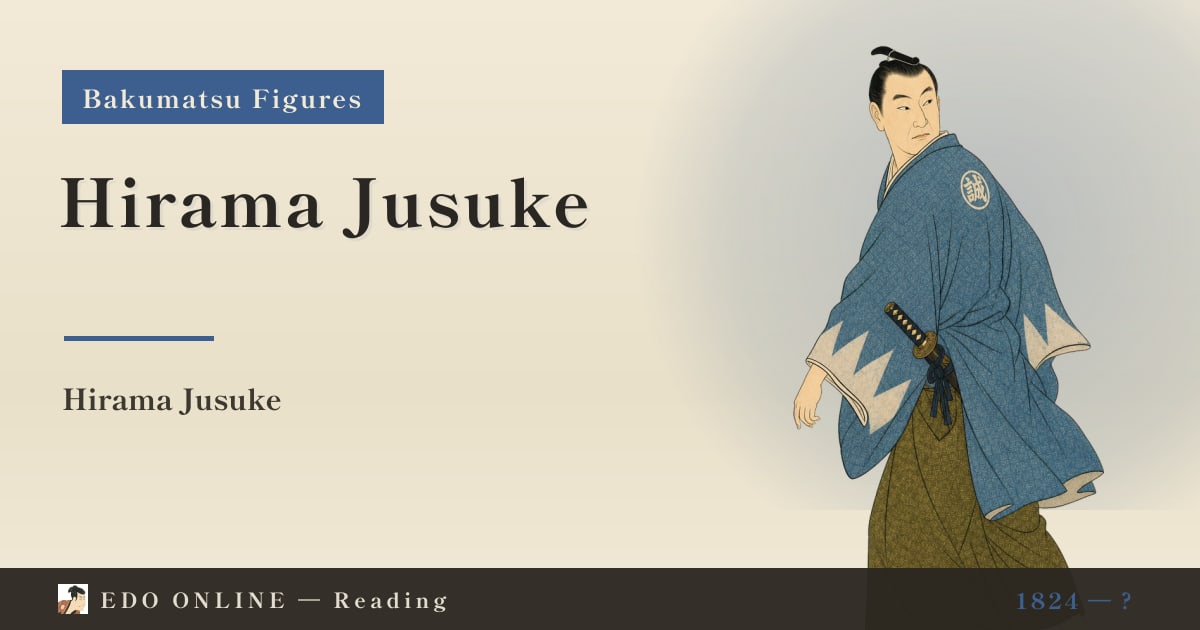
Hirama Jusuke — The One Who Got Out of the Yagi House
Assistant vice-commander and paymaster of the Mibu Rōshi, and the one man of Serizawa Kamo's party who walked out of the Yagi house alive and escaped purging altogether. He then vanished from the record.