Tani Mantaro — The Brother Who Ran the Osaka Barracks
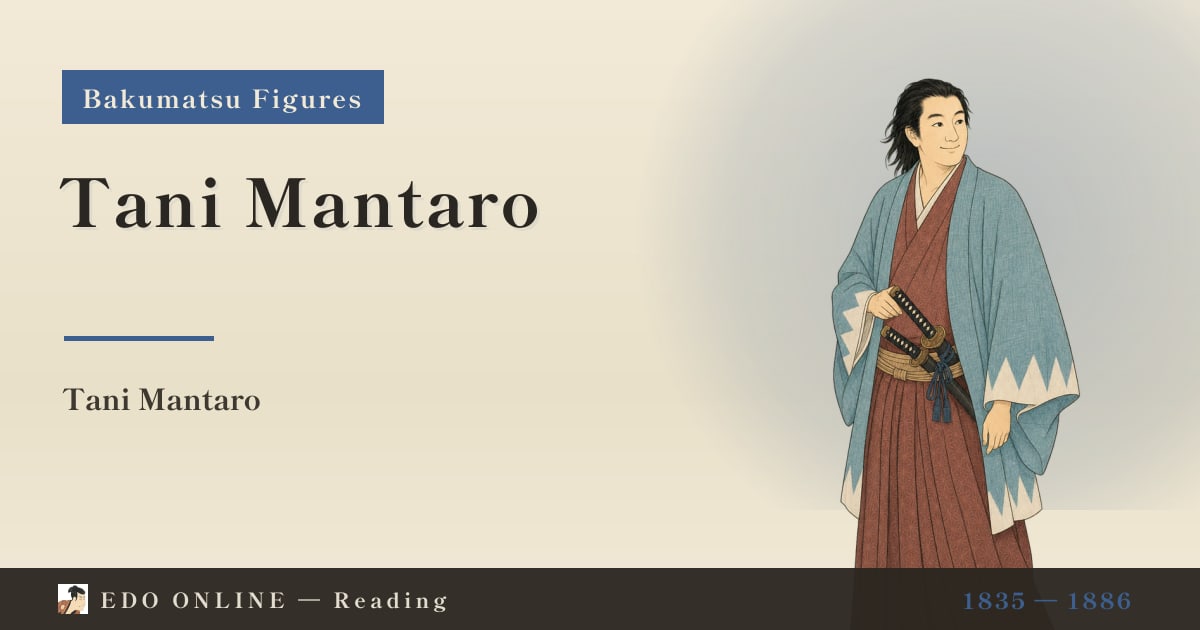
The Shinsengumi had barracks in Osaka, and a member who ran them. Tani Mantarō. Tani Sanjuro's younger brother.
Contents
Who Was Tani Mantaro?
Tani was a member of the Shinsengumi.
He was born on 1 January 1835, second son of Tani Sanjirō Tomoyuki, a retainer of the Bitchū Matsuyama domain. His elder brother was Tani Sanjuro, his younger Tani Shuhei.
He died of oesophageal cancer at Osaka on 30 June 1886, aged fifty-one. His grave is at Honden-ji in Kita ward, Osaka.
Tani Mantaro's Arts and His Hall
He learned martial arts from his father in childhood. He used the Taneda-ryū spear and Jikishin-ryū fencing.
That his brother Sanjūrō is called a master of the spear may be a confusion with Mantarō. It was Mantarō who actually used the Taneda spear.
When scandal extinguished the Tani house around October 1856, he left home with his brother Sanjūrō. He became a dependant of Iwata Bunseki, physician to the noble Nakayama family, married his daughter Sue, and opened a training hall at Minami-Horie in Osaka.
That hall connects to the Shinsengumi at several points. Shinohara Tainoshin stayed there before joining the corps, and Abe Juro was Mantarō's student.
Tani Mantaro and the Zenzaiya Affair
He joined the corps around September 1863.
At the Ikedaya Incident he served in Kondo Isami's party and received a reward of twenty ryō — among the higher sums paid. That December's organisation lists him in the second unit.
His major action was the Zenzaiya affair.
In January 1865 at Osaka he helped forestall a plot by remnants of the Tosa loyalist party to burn the city. With his brother Sanjūrō and Abe Juro among others, he killed Ōri Teikichi.
"Zenzaiya" was the sweet-shop the activists used as a safe house. The affair is named for the raid on it.
Mantarō was based chiefly at Osaka and headed the barracks there.
He often operated separately from the main body in Kyoto, however, and appears to have left the Shinsengumi after his brother Sanjūrō's death.
Tani Mantaro's Later Life
He went on running a town training hall in Osaka after the Restoration.
Then something unexpected. During the Satsuma Rebellion, on the recommendation of the Osaka prefectural governor Watanabe Noboru, he was for a time nominated to command a drawn-sword unit.
A former Shinsengumi member as a candidate to lead an imperial army sword unit. Watanabe was himself a Shintō Munen-ryū swordsman who had acted on the Chōshū side in the bakumatsu years.
The hall then failed, and he spent his remaining years working as a bodyguard for merchant houses.
He divorced Sue and lived with Yoshimura Tami. He died of oesophageal cancer at Osaka in 1886, aged fifty-one.
His friendship with Shinohara Tainoshin outlasted the Restoration. The man who defected with the Goryō Eji and helped ambush Kondo Isami, and the man who ran the Osaka barracks, were still in touch in the Meiji era.
Frequently asked questions
Who was Tani Mantaro?
A member of the Shinsengumi and younger brother of Tani Sanjuro. He headed the corps' Osaka barracks and killed Ōri Teikichi in the Zenzaiya affair.
What was the Zenzaiya affair?
In January 1865, Shinsengumi men forestalled a plot by remnants of the Tosa loyalist party to burn Osaka, raiding the sweet-shop they used as a safe house. Tani Mantarō was among those who killed Ōri Teikichi there.
Which Tani brother used the Taneda-ryu spear?
Mantarō. The conventional account making his brother Sanjūrō a master of the spear may be a confusion between them.
What did Tani Mantaro do after the Restoration?
He ran a training hall in Osaka and was briefly nominated to lead a sword unit during the Satsuma Rebellion. The hall failed and he worked as a merchant's bodyguard until his death in 1886.
Tani Mantaro Timeline
| Year | Event |
|---|---|
| 1835 | Born second son of a Bitchū Matsuyama domain retainer |
| Oct 1856 | Leaves home with Sanjūrō after the house is extinguished; opens a hall in Osaka |
| c. Sep 1863 | Joins the Shinsengumi |
| Jun 1864 | Serves in Kondo Isami's party at the Ikedaya Incident; rewarded twenty ryō |
| Jan 1865 | Kills Ōri Teikichi in the Zenzaiya affair |
| In service | Heads the corps' Osaka barracks |
| After 1866 | Appears to leave the corps following Sanjūrō's death |
| 1877 | Briefly nominated to lead a drawn-sword unit in the Satsuma Rebellion |
| 30 Jun 1886 | Dies of oesophageal cancer at Osaka, aged fifty-one |
For his brothers see Tani Sanjuro and Tani Shuhei; for men connected to his hall, Shinohara Tainoshin and Abe Juro; for the roster, the Shinsengumi members.
Related reading
Abe Juro — The Former Member Who Talked
He deserted the Shinsengumi and rejoined under another name, shot at Kondo Isami as one of the Goryō Eji, and then grew apples in Sapporo. His late-Meiji testimony is where the ranking of the corps' best swordsmen comes from.
Ando Hayataro — The Shinsengumi's Record-Breaking Archer
He set the standing national record in the long-range shooting at the Tōdai-ji Great Buddha Hall, sending 8,685 arrows the length of the corridor. Nearly fifty, he joined the Shinsengumi and died of wounds taken in the back garden of the Ikedaya.
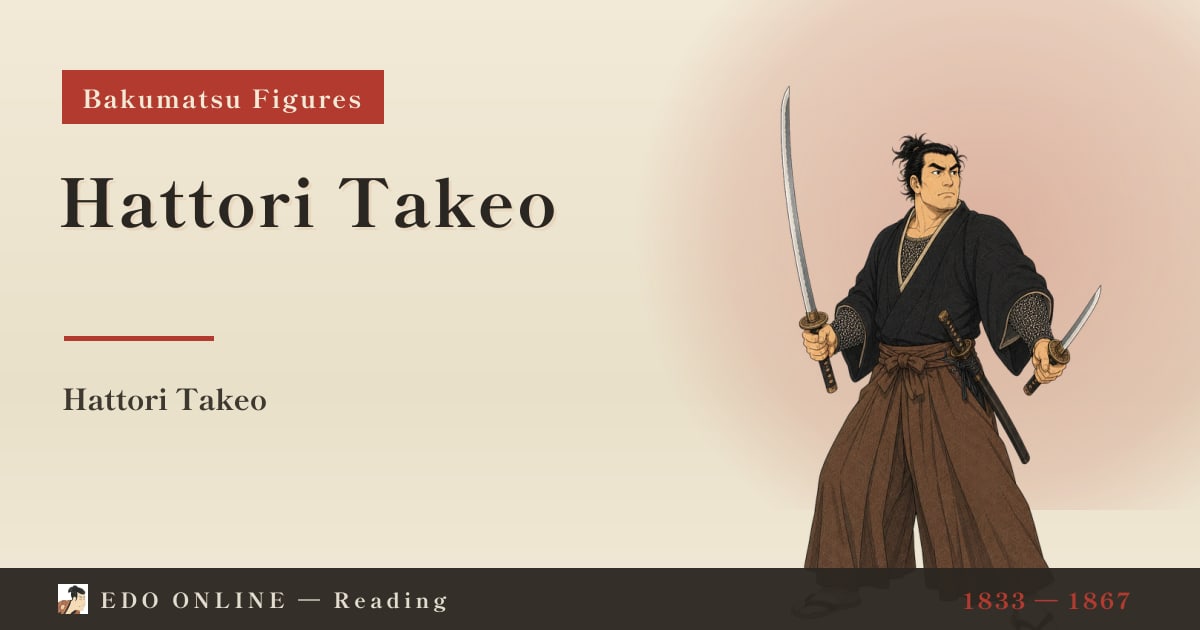
Hattori Takeo — Two Swords at Aburanokoji
A two-sword master and fencing instructor of the Shinsengumi who defected with the Goryō Eji. At Aburanokōji he alone wore mail, held a wall against the whole corps, and fell with more than twenty wounds.