Matsubara Chuji — The Shinsengumi's "Modern Benkei"
Two men in the Shinsengumi were remembered locally as the kind ones. One was Yamanami Keisuke. The other was Matsubara Chūji. Both died inside the corps.
Contents
Who Was Matsubara Chuji?
Matsubara was captain of the fourth unit of the Shinsengumi and its instructor in jūjutsu.
He was born the son of a retainer of the small Ono domain in Harima province, around 1815 — the year is not fixed. That made him one of the oldest men in the corps.
He died on 20 October 1865. The corps recorded illness. Other accounts disagree.
Matsubara Chuji's Jujutsu
His art was not the sword.
He studied Tenjin Shin'yō-ryū jūjutsu under Funakawa Kajinosuke Ryūshinsai and went on to found his own school, Hokushin Shin'yō-ryū. He also transmitted Sekiguchi-ryū staff technique, and possibly Fusen-ryū. He was a founder, not merely a student.
Granted leave to travel in the Ansei years, he ran a school in Osaka; Nagakura Shinpachi refers to him as "a rōnin of Osaka."
By May 1863 he had joined the Mibu Rōshi, the Shinsengumi's predecessor. He was there from the founding.
The corps reads as a sword outfit, but in practice it was a fair of schools. Matsubara's jūjutsu, Harada Sanosuke's spear, Takeda Kanryusai's military science — each man held an instructorship in his own weapon.
Why Matsubara Chuji Was Called the "Modern Benkei"
In the coup of 18 August 1863, Matsubara drew guard duty in front of the Sentō palace and at the southern gate of the imperial enclosure.
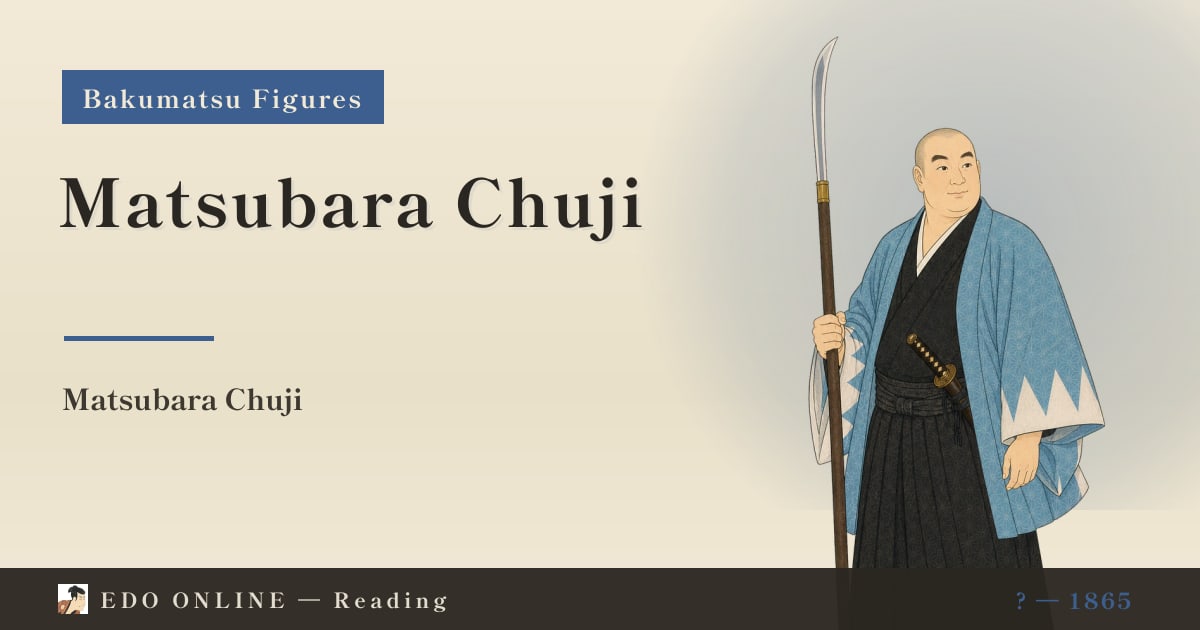
What he looked like doing it was remarkable. A shaven head, a white headband, and a great naginata at his side.
That got him the nickname "Modern Benkei" — the warrior-monk of legend, made flesh with a polearm on his shoulder.
The man inside was the opposite. Matsubara was known for a mild temperament, and in the Mibu neighbourhood people said: "the kind ones are Yamanami and Matsubara."
During that same coup, when Yamanami Keisuke lost his temper on discovering he had no armour, it was Matsubara who calmed him down.
At the Ikedaya Incident in 1864 he served in Hijikata Toshizo's party, distinguished himself, and received a reward of fifteen ryō. On the strength of that, the reorganisation of April 1865 made him captain of the fourth unit and instructor in jūjutsu.
The Accounts of Matsubara Chuji's Death
He died in the same year he got the captaincy.
The Shinsengumi recorded illness. Several other versions survive.
What most of them share is that he attempted seppuku for some reason, failed to complete it, and was demoted to the rank and file. One account says he was shot.
The historian Nara Katsuji of Hiroshima University points to a mishandled dispute between rural samurai and estate officials at Maji village in Tanba province as a contributing cause. The same Maji affair recurs in Takeda Kanryusai's interrogations, which suggests the corps stumbled badly on the local disputes it was handed.
His grave is at Kōen-ji in Kyoto.
The "Mibu Love Suicide"
The best-known story about his death is "the Mibu love suicide," written by Shimozawa Kan in Tales of the Shinsengumi.
In it: shortly after taking the captaincy and the instructorship, Matsubara was found to be keeping a mistress near the barracks. She was the widow of a rōnin Matsubara himself had cut down. Reproved by Hijikata Toshizo and feeling the weight of his rank, he died with her.
This cannot be used as source material as it stands.
Its provenance: Yagi Tamesaburō heard stories about Matsubara from Shinohara Tainoshin and Saito Hajime, and Shimozawa reconstructed them. Both Shimozawa's books and Yagi's reminiscences are heavily embellished. There is real reason to think the episode is invention.
And yet "the Mibu love suicide" is why the name Matsubara Chūji survives at all. A gentle jūjutsu master dying beside the wife of the man he killed. It works too well as a story to be trusted as history.
Frequently asked questions
Who was Matsubara Chuji?
Captain of the fourth unit of the Shinsengumi and its jūjutsu instructor. He founded the Hokushin Shin'yō-ryū school of jūjutsu and had been with the corps since its founding.
Why was Matsubara Chuji called the "Modern Benkei"?
Because of how he appeared on guard duty during the coup of 18 August 1863 — shaven head, white headband, and a great naginata, the image of the legendary warrior-monk Benkei.
How did Matsubara Chuji die?
The Shinsengumi recorded illness. Other accounts have him attempting seppuku and being demoted, or being shot. It is not settled.
Did the "Mibu love suicide" really happen?
It is a story Shimozawa Kan reconstructed from second-hand reminiscences. Both his books and his sources are heavily embellished, and the episode may well be invented.
Matsubara Chuji Timeline
| Year | Event |
|---|---|
| c. 1815 | Born in Harima province, son of an Ono domain retainer (year uncertain) |
| Training years | Studies Tenjin Shin'yō-ryū jūjutsu and founds Hokushin Shin'yō-ryū |
| Ansei years | Granted leave to travel; runs a jūjutsu school in Osaka |
| By May 1863 | Joins the Mibu Rōshi |
| Aug 1863 | Guards the palace during the coup of 18 August; nicknamed "Modern Benkei" |
| 1864 | Serves in Hijikata Toshizo's party at the Ikedaya Incident; rewarded fifteen ryō |
| Apr 1865 | Made captain of the fourth unit and instructor in jūjutsu |
| 20 Oct 1865 | Dies. The corps records illness. Buried at Kōen-ji |
For the other "kind one" see Yamanami Keisuke; for the spearman, Harada Sanosuke; for the roster, the Shinsengumi members; for the corps, the Shinsengumi.
Related reading
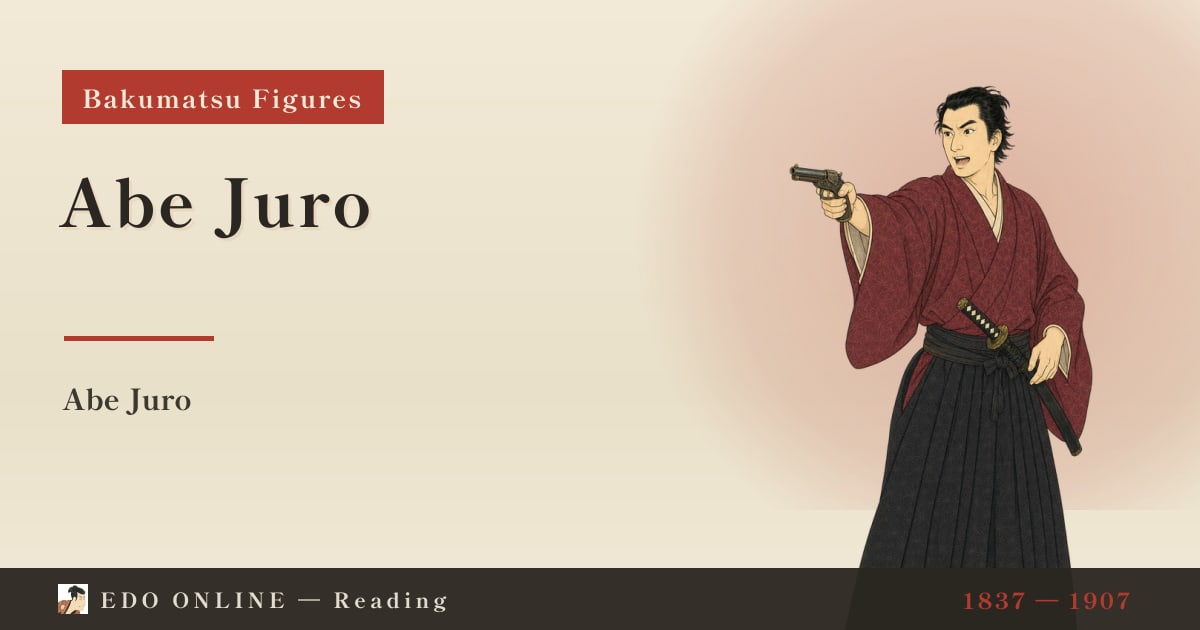
Abe Juro — The Former Member Who Talked
He deserted the Shinsengumi and rejoined under another name, shot at Kondo Isami as one of the Goryō Eji, and then grew apples in Sapporo. His late-Meiji testimony is where the ranking of the corps' best swordsmen comes from.
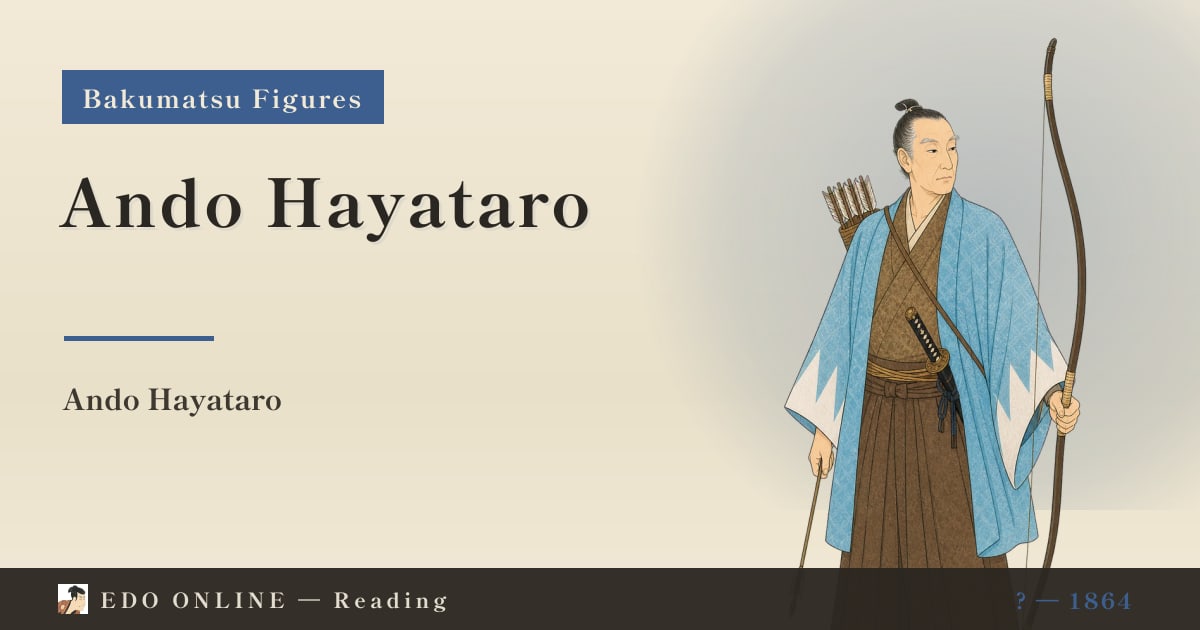
Ando Hayataro — The Shinsengumi's Record-Breaking Archer
He set the standing national record in the long-range shooting at the Tōdai-ji Great Buddha Hall, sending 8,685 arrows the length of the corridor. Nearly fifty, he joined the Shinsengumi and died of wounds taken in the back garden of the Ikedaya.
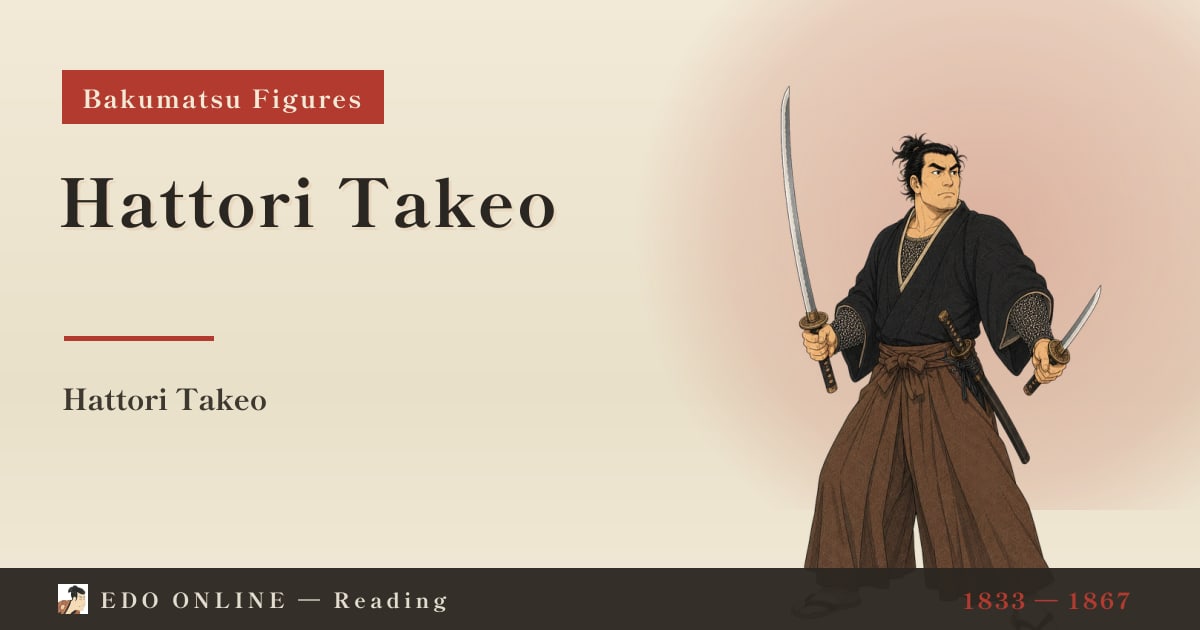
Hattori Takeo — Two Swords at Aburanokoji
A two-sword master and fencing instructor of the Shinsengumi who defected with the Goryō Eji. At Aburanokōji he alone wore mail, held a wall against the whole corps, and fell with more than twenty wounds.