
Saito Hajime — The Shinsengumi Captain Who Stayed at Aizu
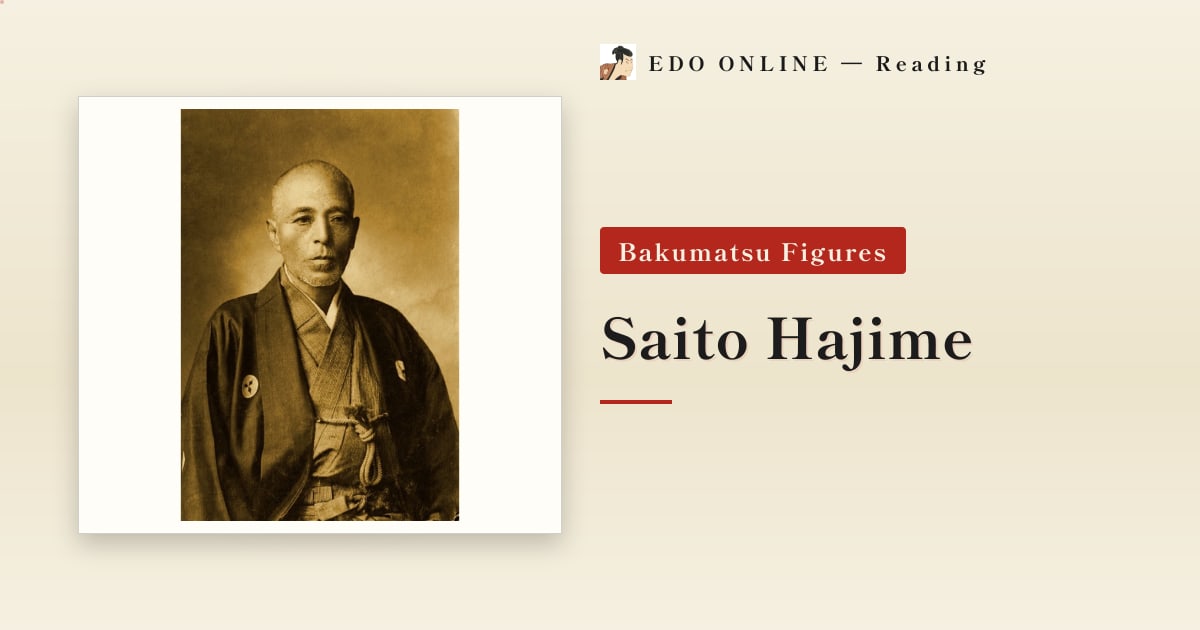
Most Shinsengumi men did not outlive the era that made them. Saito Hajime did. He fought in Kyoto, stayed at Aizu to the end, took a new name, served the government he had once fought, and died in 1915.
Contents
Who Was Saito Hajime?
Saito was captain of the Shinsengumi's third unit and one of its sword instructors — a core figure alongside Kondo Isami and Hijikata Toshizo.
He was born in Edo in 1844. His father is said to have been a foot soldier from Akashi, though accounts of his status differ. The son's name was Yamaguchi Hajime. A story circulates that he fled to Kyoto after killing a man in Edo, but no firm record confirms it.
How Saito Hajime Infiltrated the Goryo Eji
The defining episode of Saito's Shinsengumi years is his time among the Goryo Eji, the faction that split off under Ito Kashitaro.
Ito held imperial-loyalist convictions that put him at odds with Kondo's leadership, and he left with a group of followers. Saito went with them — and then returned to the Shinsengumi, carrying what he had learned.
Modern scholarship increasingly reads this as a planned infiltration from the start. Ito was killed by the Shinsengumi at Aburanokoji shortly afterward. Exactly what Saito reported, and how far it shaped that ambush, is not established. What the episode does show is that he was trusted not only with a sword but with a posting inside the enemy's camp.
Why Saito Hajime Stayed With Aizu
After the defeat at Toba-Fushimi, the Shinsengumi fought their way north through the Boshin War.
At Aizu their paths diverged. Hijikata went further north to keep fighting. Saito stayed.
He is said to have argued that abandoning a castle on the verge of falling was not something a samurai does. Aizu had sheltered and sponsored the Shinsengumi throughout their Kyoto years. When the debt came due, he paid it. Whatever else is uncertain about his life, this choice is not.
After Aizu surrendered, he followed its surviving retainers to Tonami in the far north, and to the hard years that followed.
Saito Hajime's Wife, Tokio
In the Meiji era Saito took the name Fujita Goro and married Tokio, daughter of the Aizu retainer Takagi Kojuro.
The match was arranged by leading figures of the former domain; Matsudaira Katamori, Aizu's last lord, is said to have stood as a go-between. That detail says a great deal about how thoroughly Aizu had taken Saito as its own.
Tokio had lived through the siege, serving among the women who tended the wounded inside the castle. A man who had fought the war and a woman who had witnessed it built a household on the other side of it. They had children, and the line continued.
Saito Hajime's Sword and Swordsmanship
A specific blade is often named as Saito's own. It should be treated with caution: the attribution rests on later tradition rather than solid contemporary evidence. Many Shinsengumi "famous swords" acquired their names through popular writing well after the fact, and this is one of them.
His school of swordsmanship is likewise unsettled. Mugai-ryu is the most commonly cited, but the point is not established.
The familiar image — a master of the thrust, left-handed — also owes more to later retelling than to contemporary record. What is solid is that he held the position of sword instructor and trained the men of the unit.
Saito Hajime as a Police Officer in the Satsuma Rebellion
Under the new government Saito joined the Tokyo Metropolitan Police. A man who had fought for the shogunate now enforced the law for the state that replaced it.
In 1877 he served in Kyushu during the Satsuma Rebellion, attached to a police unit that fought with drawn swords, and was wounded there. It was the last war in Japan in which the generation trained for the sword fought with it.
He worked afterward at the Tokyo Higher Normal School and other posts, and died in 1915 aged seventy-one — seventy-two by traditional Japanese reckoning. He is buried at Amidaji temple in Aizu-Wakamatsu — not in Kyoto, and not in Edo, but at Aizu.
Saito Hajime Timeline
| Year | Event |
|---|---|
| 1844 | Born in Edo as Yamaguchi Hajime |
| 1863 | Joins the Mibu Roshigumi, forerunner of the Shinsengumi |
| 1864 | Ikedaya Incident; serves as third-unit captain and sword instructor |
| 1867 | Joins the Goryo Eji, then returns; the Aburanokoji ambush follows |
| 1868 | Defeated at Toba-Fushimi; remains at Aizu |
| 1869 | Relocates to Tonami |
| c. 1874 | Takes the name Fujita Goro, marries Tokio, and joins the police |
| 1877 | Serves and is wounded in the Satsuma Rebellion |
| 1915 | Dies aged 71; buried at Amidaji, Aizu-Wakamatsu |
For the wider organization and its other members, see the Shinsengumi and the roster of its captains.
Related reading
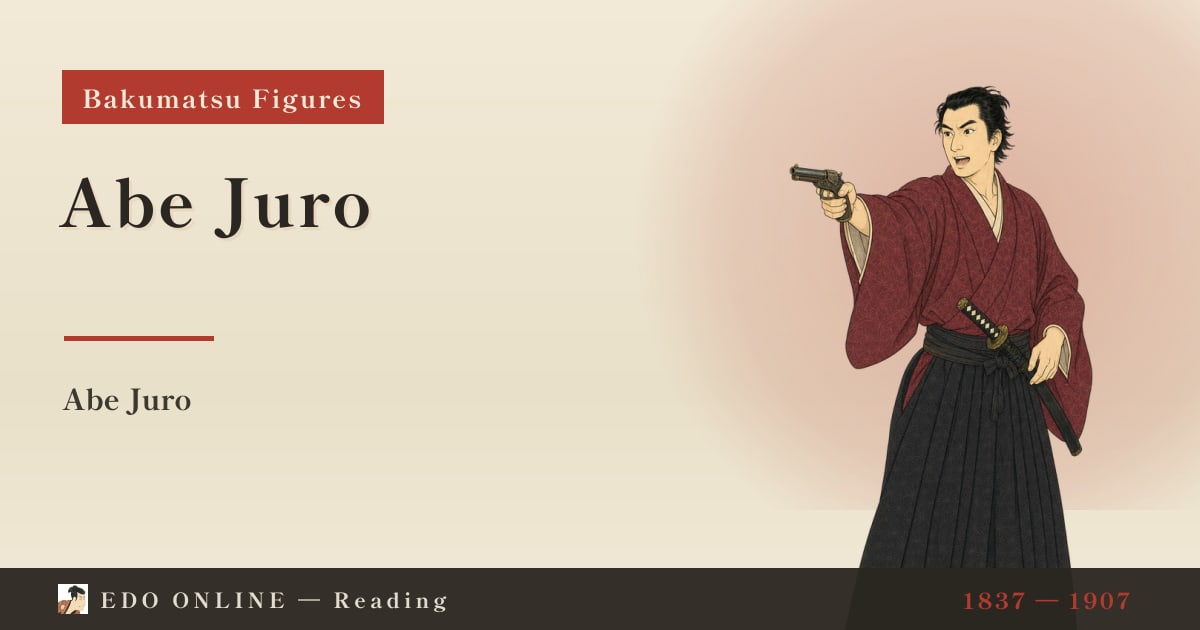
Abe Juro — The Former Member Who Talked
He deserted the Shinsengumi and rejoined under another name, shot at Kondo Isami as one of the Goryō Eji, and then grew apples in Sapporo. His late-Meiji testimony is where the ranking of the corps' best swordsmen comes from.
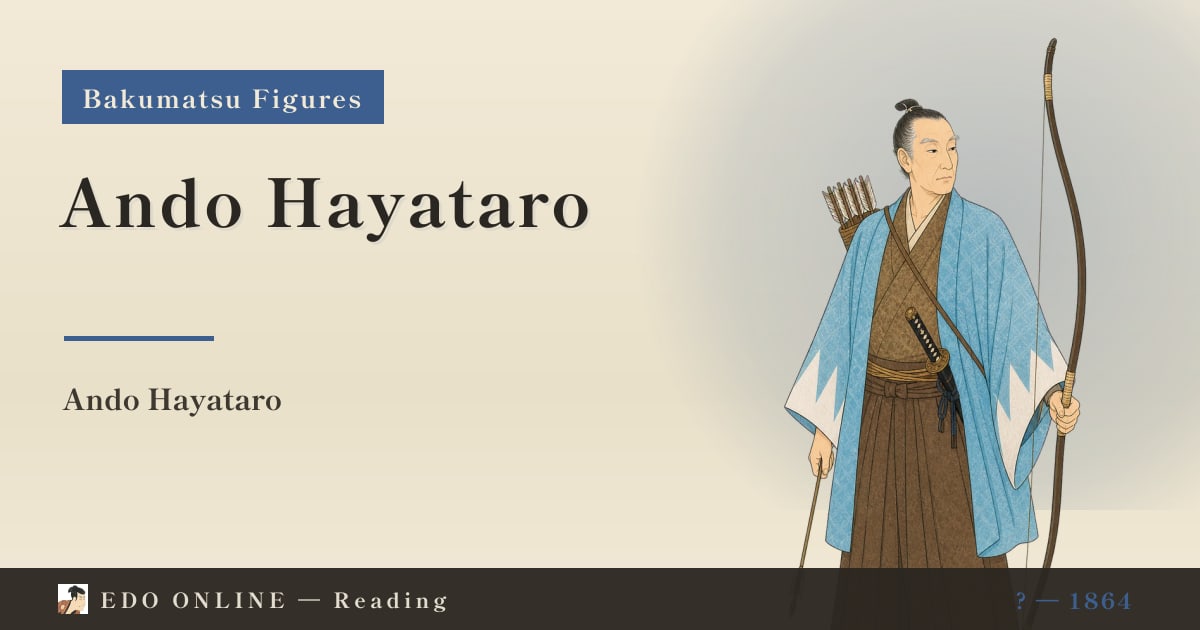
Ando Hayataro — The Shinsengumi's Record-Breaking Archer
He set the standing national record in the long-range shooting at the Tōdai-ji Great Buddha Hall, sending 8,685 arrows the length of the corridor. Nearly fifty, he joined the Shinsengumi and died of wounds taken in the back garden of the Ikedaya.
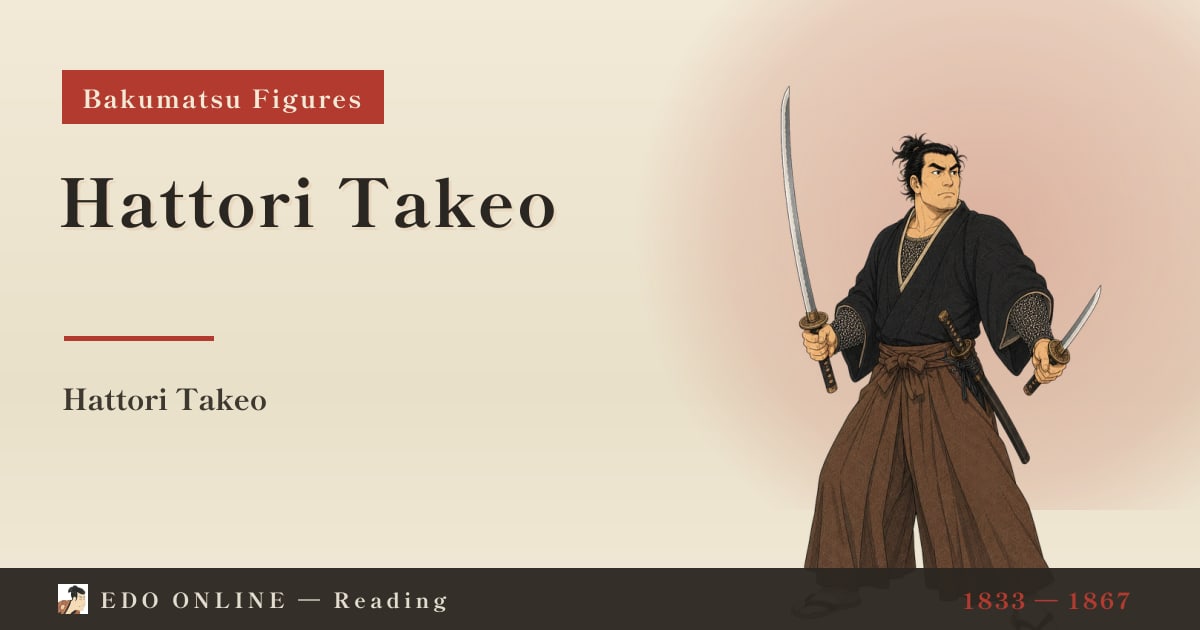
Hattori Takeo — Two Swords at Aburanokoji
A two-sword master and fencing instructor of the Shinsengumi who defected with the Goryō Eji. At Aburanokōji he alone wore mail, held a wall against the whole corps, and fell with more than twenty wounds.