Ozeki Masajiro — The Man Who Carried the Banner
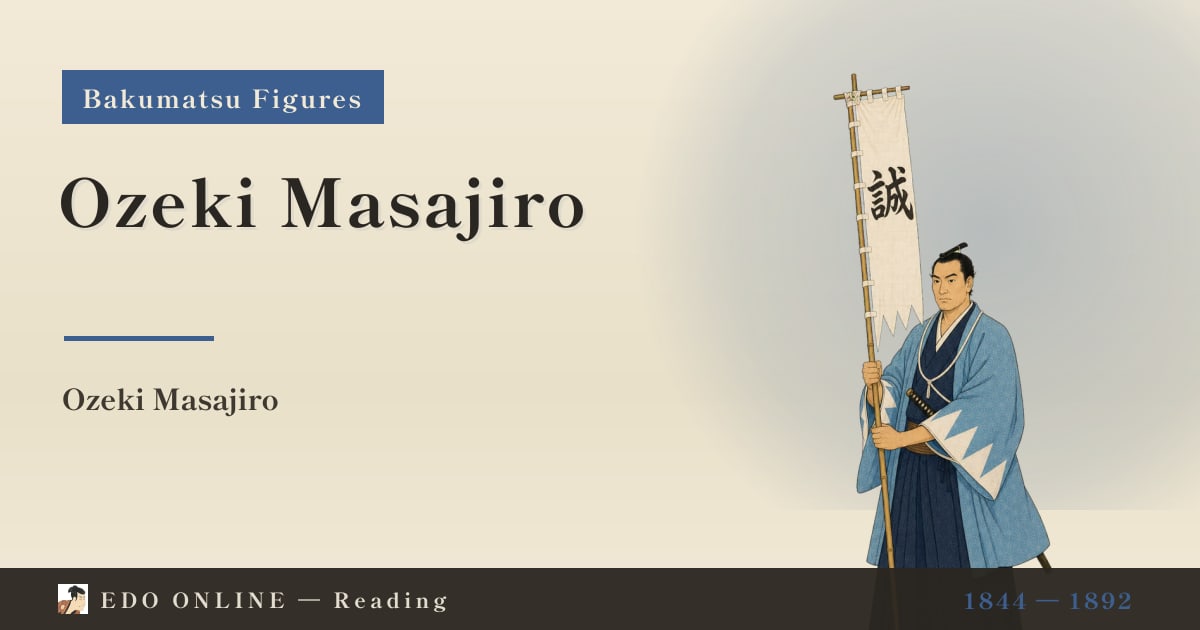
Somebody carried the Shinsengumi's banner. Ozeki Masajirō. The head of the column was his post.
Contents
Who Was Ozeki Masajiro?
Ozeki was an inspector of the Shinsengumi. He later changed his given name, and after the Restoration called himself Ozeki Kaoru.
He was born in 1844 at Takatori in Yamato province, second son of Ozeki Bunzaemon, a retainer of the Takatori domain.
He died at Takatori in Nara prefecture on 28 February 1892, aged forty-seven or forty-eight. His grave is at Kōun-ji.
Ozeki Masajiro Carried the Banner
He joined the Mibu Rōshi, the Shinsengumi's predecessor, around 1863.
And he was given the standard, at the head of the column.
It is a conspicuous job. The corps is known for the banner bearing the single character makoto — and there was a man who actually carried it.
It is also a dangerous one. The standard-bearer is the first thing an enemy sees, and both his hands are full.
He took part in the coup of 18 August. He was not, however, at the Ikedaya Incident.
Ozeki Masajiro and the Petition
Ozeki was on the side that denounced the commander.
With Nagakura Shinpachi, Harada Sanosuke, Saito Hajime, Shimada Kai and Kazurayama Takehachiro, he submitted the petition setting out Kondo Isami's misconduct in five points to the Aizu domain.
Only Kazurayama died for it. Ozeki lived, and stayed in the corps.
Ozeki Masajiro in the Boshin War
Defeated at Toba-Fushimi, he returned to Edo, and thereafter moved with Hijikata Toshizo, Shimada Kai and Soma Kazue.
In the Aizu campaign he was an infantry field officer, and at Hakodate a field officer of the second detachment.
A field officer moves the unit. Beginning as standard-bearer, he ended up trusted with directing troops in action.
After surrendering at Hakodate in 1869 he was placed in the Takatori domain's custody and pardoned in 1870. He then took the name Ozeki Kaoru.
He died at Takatori in 1892.
Why Ozeki Masajiro Is Worth Reading About
There is no famous swordfight in his record. He was not even at the Ikedaya. And yet he served from the founding to Hakodate.
He carried the banner at the head of the column, put his name to a petition against his commander, and directed troops at Aizu and Hakodate.
The Shinsengumi functioned as an organisation for six years because of this layer of men. The record on them is thin and the names are not widely known.
Shimada Kai, who co-signed the same petition, lived into Meiji and wrote things down. Ozeki did not. The quantity that survives differs accordingly.
Frequently asked questions
Who was Ozeki Masajiro?
An inspector of the Shinsengumi. In the Mibu Rōshi period he carried the standard at the head of the column, and he served as a field officer in the Aizu and Hakodate campaigns.
Was Ozeki Masajiro involved in the petition against Kondo Isami?
Yes. He co-signed it with Nagakura Shinpachi, Harada Sanosuke, Saito Hajime, Shimada Kai and Kazurayama Takehachiro.
Was Ozeki Masajiro at the Ikedaya Incident?
No. He took part in the coup of 18 August 1863 but was not at the Ikedaya.
What happened to Ozeki Masajiro after the Restoration?
He surrendered at Hakodate, was held by the Takatori domain, and pardoned in 1870. As Ozeki Kaoru he lived at Takatori in Nara until his death in 1892.
Ozeki Masajiro Timeline
| Year | Event |
|---|---|
| 1844 | Born at Takatori in Yamato province, second son of a domain retainer |
| c. 1863 | Joins the Mibu Rōshi; given the standard at the head of the column |
| Aug 1863 | Takes part in the coup of 18 August |
| Jun 1864 | Not present at the Ikedaya Incident |
| 1864 | Co-signs the petition against Kondo Isami |
| Jan 1868 | Defeated at Toba-Fushimi; returns to Edo |
| 1868 | Infantry field officer in the Aizu campaign |
| 1869 | Field officer of the second detachment at Hakodate; surrenders in May |
| 1870 | Pardoned; takes the name Ozeki Kaoru |
| 28 Feb 1892 | Dies at Takatori, Nara, aged forty-seven or forty-eight |
For his co-signatories see Shimada Kai and Kazurayama Takehachiro; for the roster, the Shinsengumi members; for the corps, the Shinsengumi.
Related reading
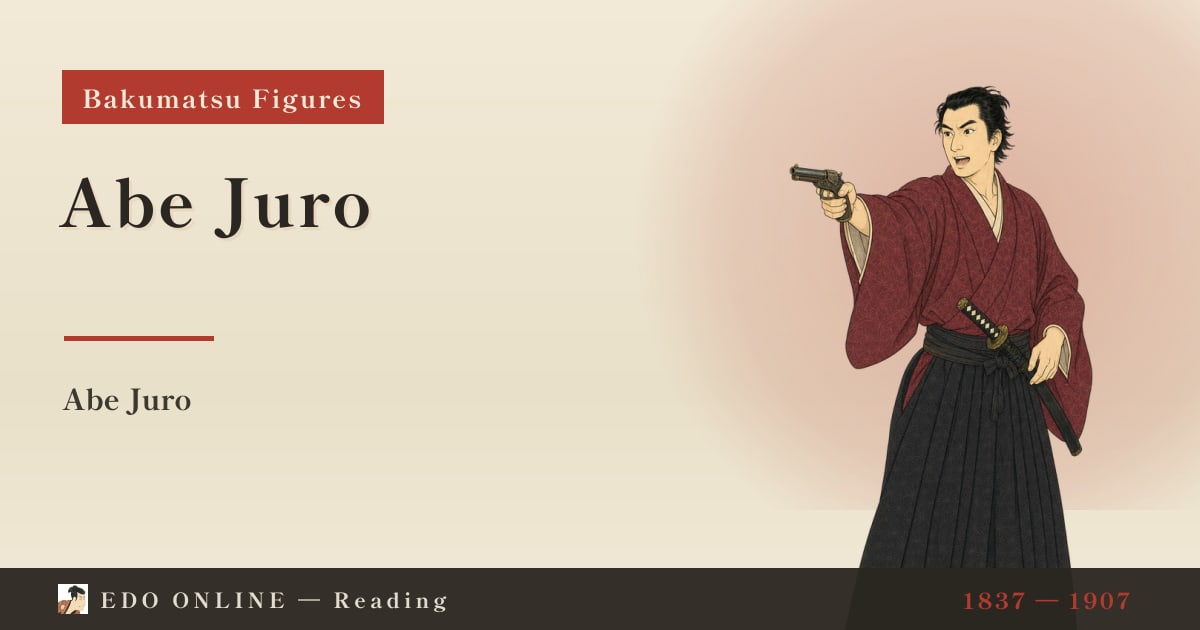
Abe Juro — The Former Member Who Talked
He deserted the Shinsengumi and rejoined under another name, shot at Kondo Isami as one of the Goryō Eji, and then grew apples in Sapporo. His late-Meiji testimony is where the ranking of the corps' best swordsmen comes from.
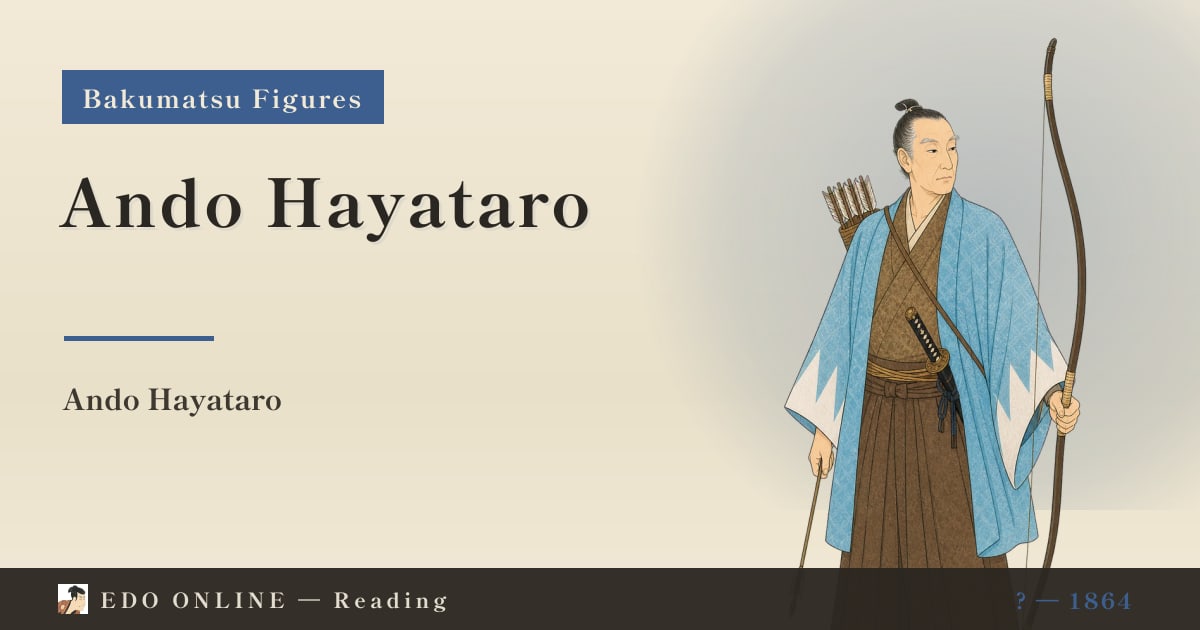
Ando Hayataro — The Shinsengumi's Record-Breaking Archer
He set the standing national record in the long-range shooting at the Tōdai-ji Great Buddha Hall, sending 8,685 arrows the length of the corridor. Nearly fifty, he joined the Shinsengumi and died of wounds taken in the back garden of the Ikedaya.
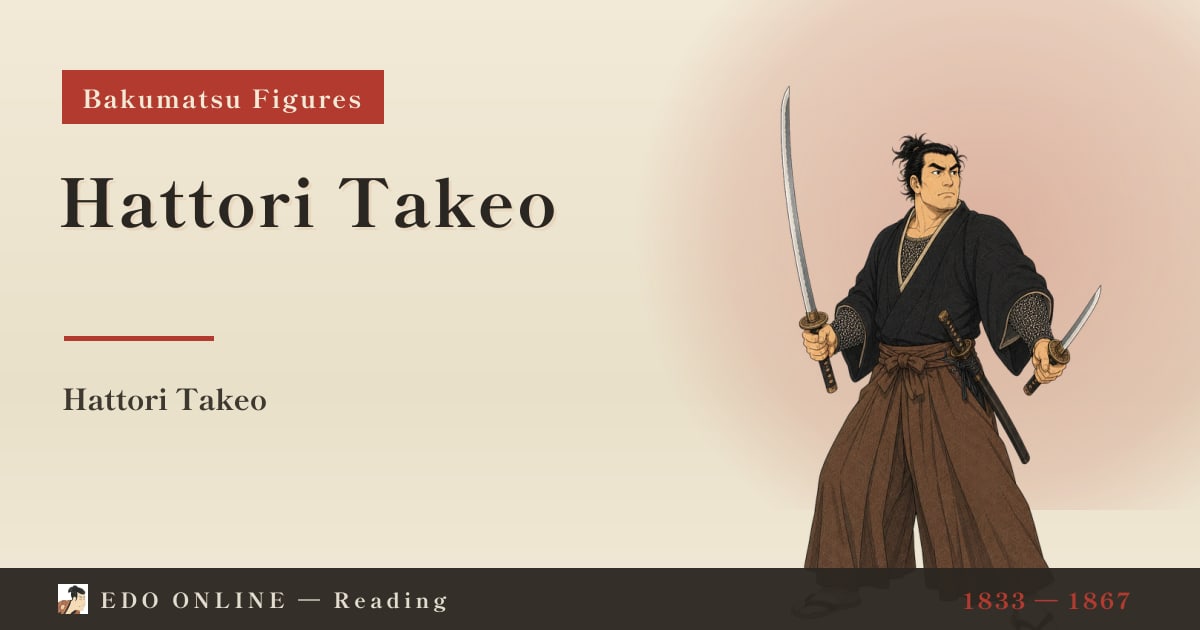
Hattori Takeo — Two Swords at Aburanokoji
A two-sword master and fencing instructor of the Shinsengumi who defected with the Goryō Eji. At Aburanokōji he alone wore mail, held a wall against the whole corps, and fell with more than twenty wounds.