Yoshida Toshimaro — The Shoka Sonjuku Talent Lost at the Ikedaya
The most regretted death to come out of the Shoka Sonjuku may be this one. Yoshida Toshimaro — gone at twenty-three, on the night of the Ikedaya Incident.
Contents
Who Was Yoshida Toshimaro?
Toshimaro was a low-ranking Choshu samurai turned activist. He studied at Yoshida Shoin's Shoka Sonjuku and was counted among the school's outstanding students alongside Kusaka Genzui and Takasugi Shinsaku. With Irie Kuichi the four of them are remembered as the school's "four heavenly kings."
Two things stand out in what he actually did.
He gathered intelligence in Edo. For a period he left the domain and lived in Edo attached to the household of a shogunal retainer, watching the government side from the inside.
He tried to make soldiers of people the class system excluded. The unit he proposed is remembered as the Toyutai, and the idea sat well outside what a samurai of the time was expected to think.
He was born on 16 March 1841 and died on 8 July 1864.
Where Yoshida Toshimaro Stood in the School
Toshimaro was born in Matsumoto village, Hagi — the same village as Yoshida Shoin. His family stood near the bottom of the samurai order.
The Shoka Sonjuku did not select its students by rank. A boy from a household like his sat at the same desk as the sons of senior retainers, and by all accounts Shoin thought highly of him.
His classmates went on to become Bakumatsu Choshu itself: Takasugi Shinsaku, Kusaka Genzui, Irie Kuichi, Maebara Issei, Shinagawa Yajiro, Ito Hirobumi, Yamagata Aritomo. Three of them, like Toshimaro himself, never saw the Meiji era.
Yoshida Toshimaro's Toyutai Idea
This is what makes his name distinctive.
People whose work involved leather and slaughter were placed outside the four-class order altogether — neither samurai nor farmer nor townsman. Toshimaro petitioned the domain to organise them as soldiers.
The logic was plain. If you are going to fight foreign fleets, more soldiers is better. And for men living outside the system, bearing arms meant a way up in it.
The petition did not stay on paper: Choshu ordered such men enlisted later the same year, in 1863.
The same instinct runs through the Kiheitai, the mixed-class militia Takasugi Shinsaku raised in 1863, which Toshimaro also joined. On the single point of giving up an army made only of samurai, Choshu moved earlier than anyone.
Read the military reforms of the Bakumatsu as the beginning of the end of the class system, and Toshimaro is standing at the front of them.
How Yoshida Toshimaro Died at the Ikedaya
On the night of 8 July 1864, the Shinsengumi raided the Ikedaya, an inn on Sanjo in Kyoto where loyalist activists had gathered. Toshimaro died that night — but exactly how is not settled.
- One account has him cut down fighting inside the inn.
- Another has him escaping to the Choshu residence and taking his own life on the way back, surrounded by Aizu troops.
Both are old, and the confusion of the night has never been fully resolved.
He was twenty-three. Others died at the inn that night, and a month later Kusaka Genzui and Irie Kuichi died in the Kinmon Incident. Within about six weeks, Choshu lost three of the school's core.
The "If Yoshida Toshimaro Had Lived" Question
Later writers return to Toshimaro with a particular regret, and his record shows why. He did intelligence work and institutional design, both — precisely the pair of skills the Meiji government turned out to need.
His classmate Ito Hirobumi became Japan's first prime minister; Yamagata Aritomo took the army and the interior ministry. It is not at all far-fetched that one of those chairs would have been his.
He was posthumously granted court rank in 1891.
Yoshida Toshimaro Timeline
| Year | Event |
|---|---|
| 16 Mar 1841 | Born in Matsumoto village, Hagi, in Choshu |
| late 1850s | Studies at the Shoka Sonjuku |
| 1859 | Yoshida Shoin is executed in the Ansei Purge |
| early 1860s | Lives in Edo attached to a shogunal retainer's household, watching the government |
| 1863 | Returns to Choshu, joins the Kiheitai, and petitions to enlist men from outside the class order |
| 8 Jul 1864 | Dies at the Ikedaya Incident, aged 23 |
| 1891 | Posthumous court rank |
For his classmates see Takasugi Shinsaku, Kusaka Genzui and Irie Kuichi; for the men who raided the inn, Kondo Isami and Okita Soji of the Shinsengumi.
Related reading
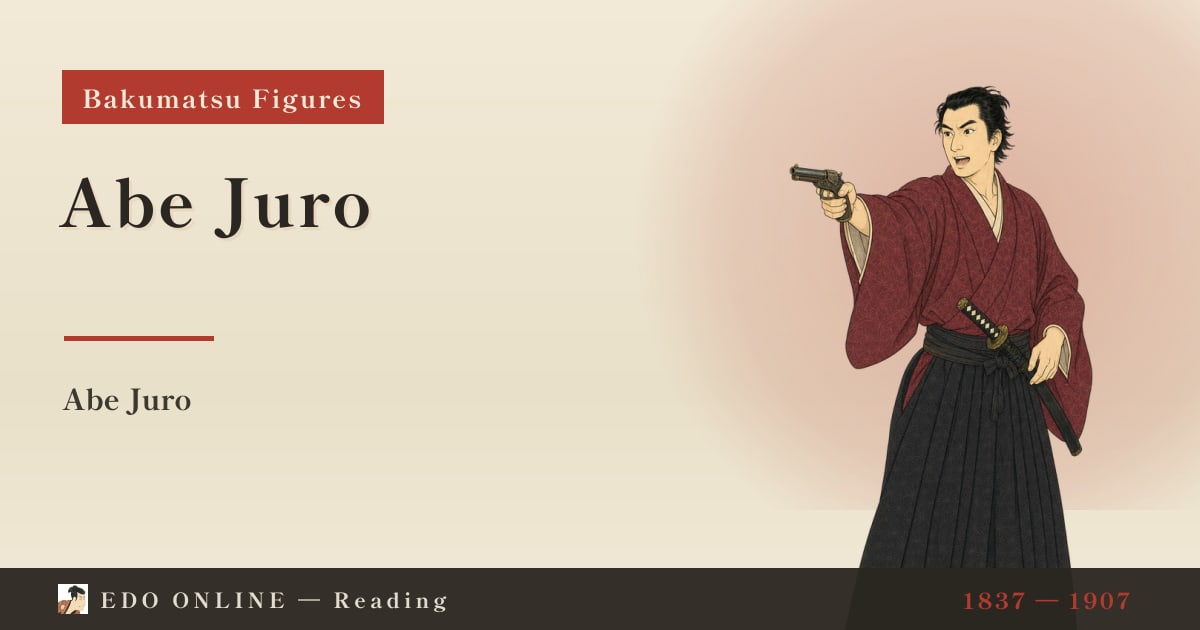
Abe Juro — The Former Member Who Talked
He deserted the Shinsengumi and rejoined under another name, shot at Kondo Isami as one of the Goryō Eji, and then grew apples in Sapporo. His late-Meiji testimony is where the ranking of the corps' best swordsmen comes from.
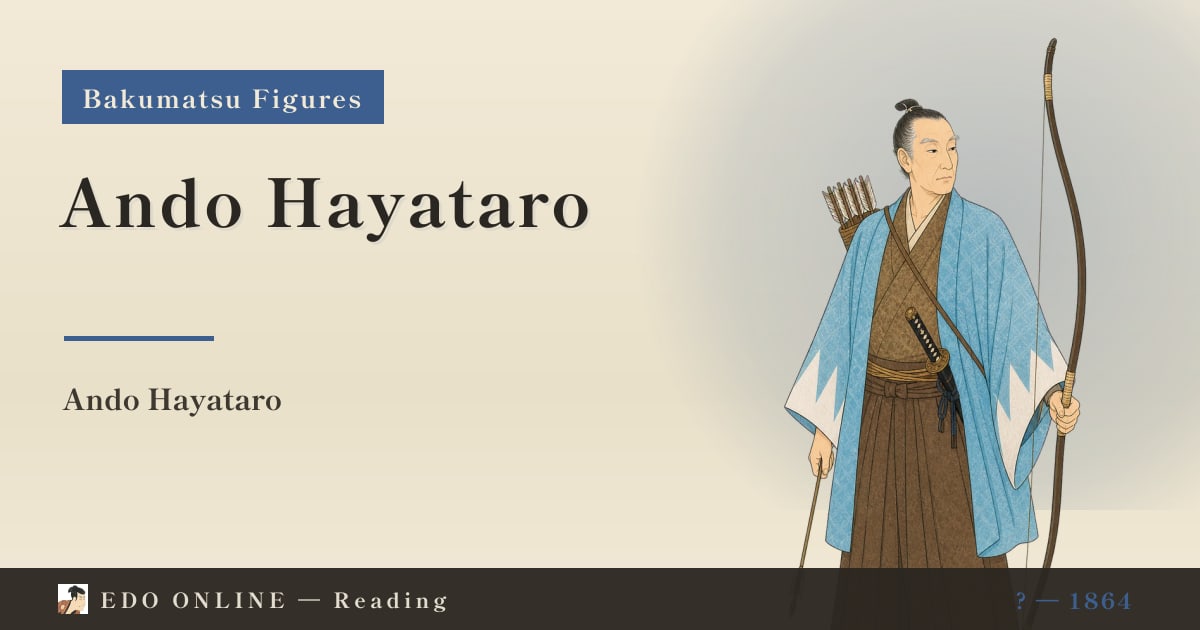
Ando Hayataro — The Shinsengumi's Record-Breaking Archer
He set the standing national record in the long-range shooting at the Tōdai-ji Great Buddha Hall, sending 8,685 arrows the length of the corridor. Nearly fifty, he joined the Shinsengumi and died of wounds taken in the back garden of the Ikedaya.
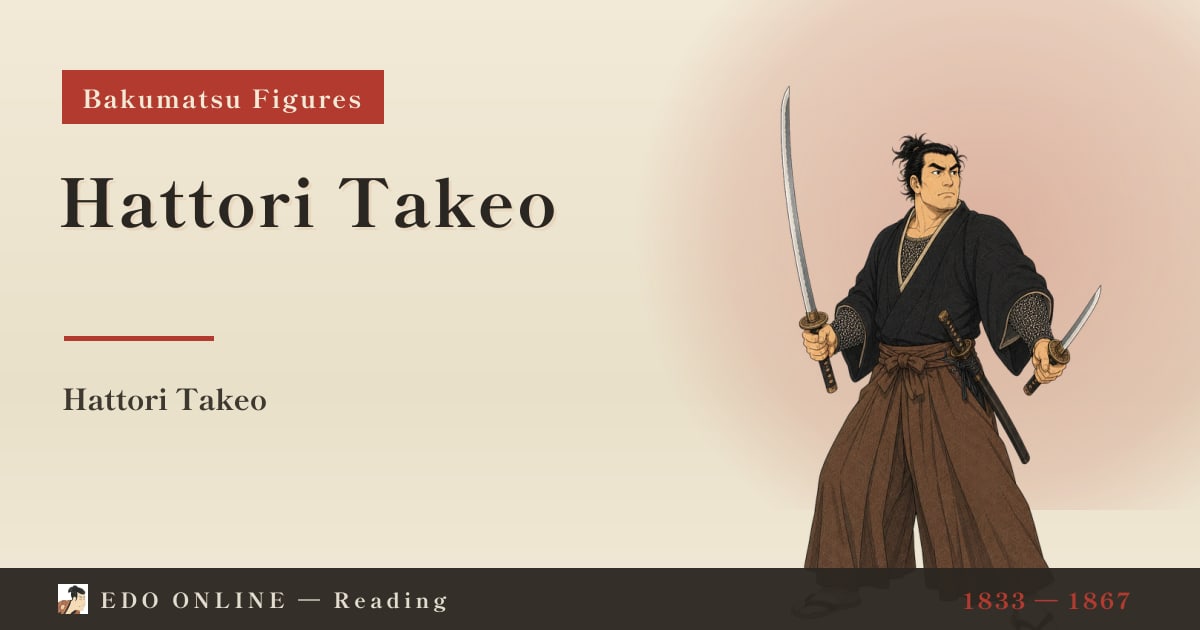
Hattori Takeo — Two Swords at Aburanokoji
A two-sword master and fencing instructor of the Shinsengumi who defected with the Goryō Eji. At Aburanokōji he alone wore mail, held a wall against the whole corps, and fell with more than twenty wounds.