Maebara Issei — Shoin's Student Who Rebelled Against the Meiji State
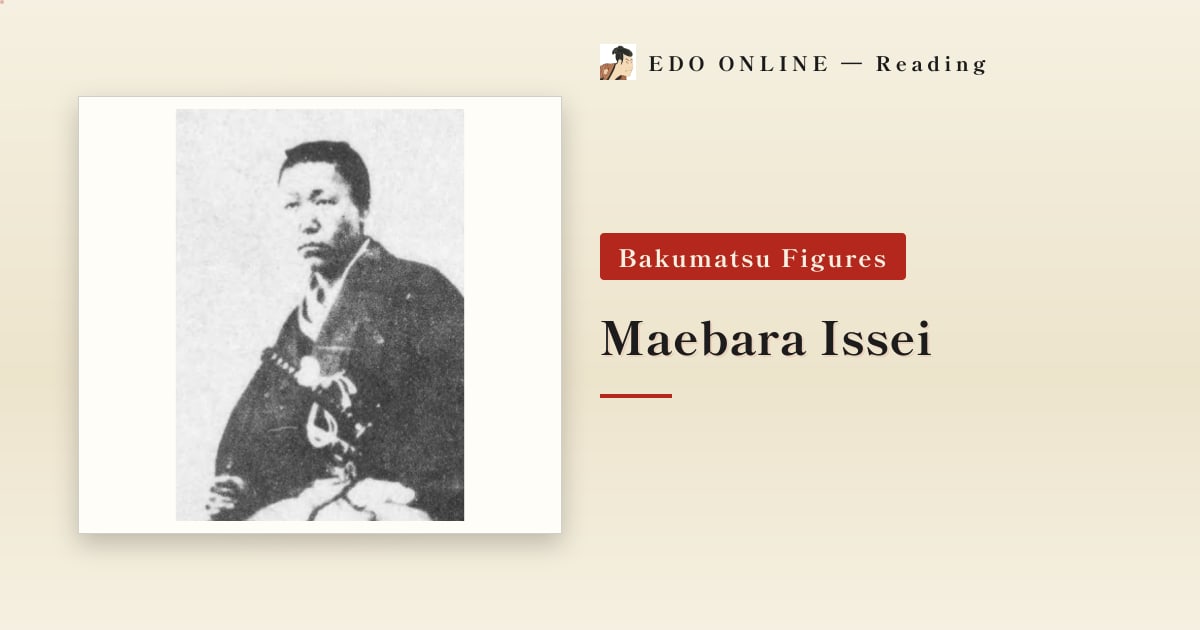
One of the men who made the Meiji Restoration took up arms against it. Maebara Issei — a student of Yoshida Shoin who had risen to councillor of state.
Contents
Who Was Maebara Issei?
Maebara was a Choshu samurai, a senior official of the Meiji government, and the leader of a rebellion. He was born Sase Yasoro.
His life breaks in three.
A student of the Shoka Sonjuku. He studied under Yoshida Shoin, who thought highly of his character.
A commander in the Boshin War. He served as staff officer on the Echigo front, against Kawai Tsugunosuke of Nagaoka.
The leader of the Hagi Rebellion. In 1876 he raised the former samurai of his home town against the government, lost, and was beheaded.
He was born in 1834 and died in 1876.
What Yoshida Shoin Saw in Maebara Issei
Maebara studied at the Shoka Sonjuku in Hagi, alongside Takasugi Shinsaku and Kusaka Genzui.
Shoin assessed each of his students in writing, and what he valued in Maebara was integrity rather than brilliance — not a man who would dominate an argument, but one who would quietly do what he had undertaken.
The judgment held up. Maebara was never an orator or a schemer, and he never bent on a position he had taken.
Maebara Issei on the Echigo Front
The Boshin War opened in 1868.
Maebara went north as a staff officer on the Echigo front, where his opponent was Kawai Tsugunosuke of Nagaoka. Nagaoka Castle changed hands twice, and the campaign was among the hardest fighting of the war.
Afterwards Maebara administered the province — and took up the diversion channel for the Shinano River.
The Shinano's floods had ruined Echigo farmers for generations. Maebara pressed hard for a channel to carry the water off. It is the period in which he faced local hardship as an administrator rather than a soldier.
Why Maebara Issei Left the Government
In 1869 Omura Masujiro was assassinated, and Maebara succeeded him as vice-minister of military affairs — in practice the head of army administration — and sat as a councillor of state. A Choshu man with a war record had arrived at the centre.
It did not last.
He collided with Kido Takayoshi and Yamagata Aritomo over the shape of the new army. In 1870 he resigned and went home to Hagi.
Maebara Issei and the Grievance of the Former Samurai
The Meiji government dismantled the samurai class in stages.
The sword ban forbade wearing swords in public. The commutation of stipends ended the hereditary incomes samurai families had lived on. A status and a livelihood that had stood for centuries were gone in a few years.
In 1876 the resentment broke out. The Shinpuren Rebellion in Kumamoto and the Akizuki Rebellion in Fukuoka came in quick succession.
In October of the same year Hagi rose too — the Hagi Rebellion, with Maebara Issei at its head.
How Maebara Issei Died in the Hagi Rebellion
His plan was to move along the Japan Sea coast to Kyoto and appeal directly to the imperial court.
It collapsed almost immediately. Government forces put down the rising fast and the Hagi samurai scattered. Maebara tried to escape by sea and was captured in Shimane.
He was beheaded at Hagi on 3 December 1876, aged forty-two.
Of Shoin's students, he was among the last still alive. Takasugi Shinsaku had died of illness, Kusaka Genzui in the fighting at Kyoto, while Ito Hirobumi and Yamagata Aritomo went to the top of the state. Men from a single village schoolroom ended up shooting at each other from opposite sides.
The following year Saigo Takamori raised the Satsuma Rebellion. Hagi was the last tremor before it.
Maebara Issei's Grave
His grave is in Hagi, where he has been remembered in two registers at once — a student of the famous school, and the leader of a rebellion.
Maebara Issei Timeline
| Year | Event |
|---|---|
| 1834 | Born in Hagi, Choshu |
| 1850s | Studies under Yoshida Shoin at the Shoka Sonjuku |
| 1868 | Staff officer on the Echigo front in the Boshin War |
| 1868–69 | Administers Echigo; presses for the Shinano River diversion |
| 1869 | Succeeds Omura Masujiro as vice-minister of military affairs |
| 1870 | Resigns after clashing with Kido Takayoshi and returns to Hagi |
| Oct 1876 | Raises the Hagi Rebellion |
| Dec 1876 | Captured in Shimane and beheaded at Hagi, aged 42 |
For his fellow students see Takasugi Shinsaku, Ito Hirobumi and Yamagata Aritomo; for the man he fought at Nagaoka, Kawai Tsugunosuke.
Related reading
Abe Juro — The Former Member Who Talked
He deserted the Shinsengumi and rejoined under another name, shot at Kondo Isami as one of the Goryō Eji, and then grew apples in Sapporo. His late-Meiji testimony is where the ranking of the corps' best swordsmen comes from.
Ando Hayataro — The Shinsengumi's Record-Breaking Archer
He set the standing national record in the long-range shooting at the Tōdai-ji Great Buddha Hall, sending 8,685 arrows the length of the corridor. Nearly fifty, he joined the Shinsengumi and died of wounds taken in the back garden of the Ikedaya.
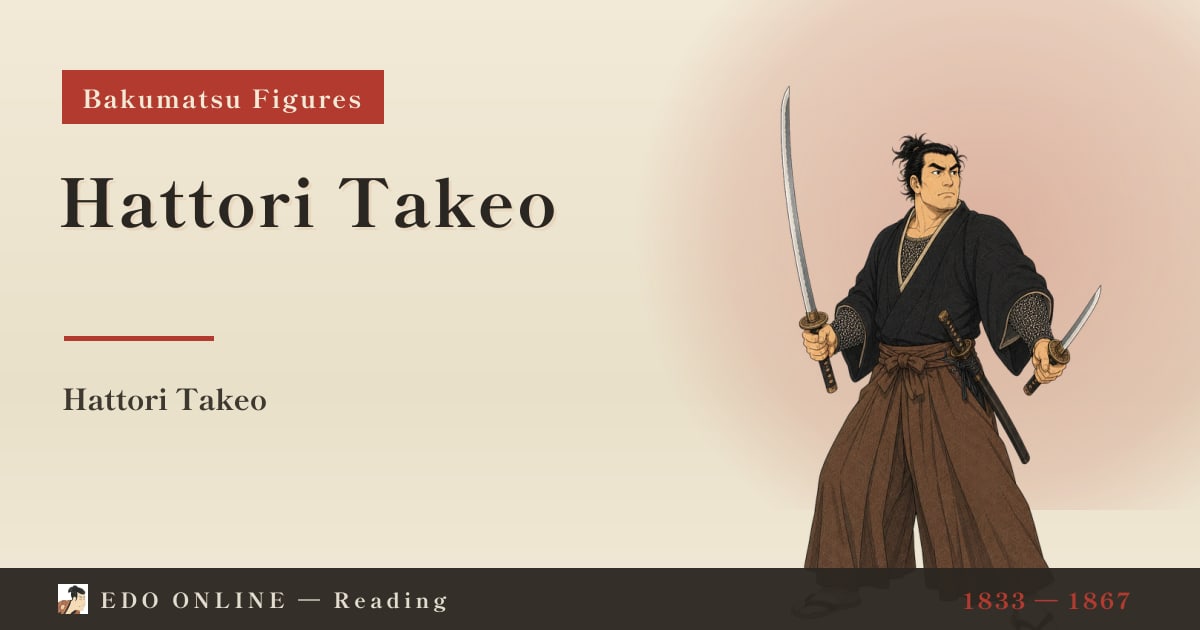
Hattori Takeo — Two Swords at Aburanokoji
A two-sword master and fencing instructor of the Shinsengumi who defected with the Goryō Eji. At Aburanokōji he alone wore mail, held a wall against the whole corps, and fell with more than twenty wounds.