Kusaka Genzui — Shoin's Theorist, Dead at Twenty-Four
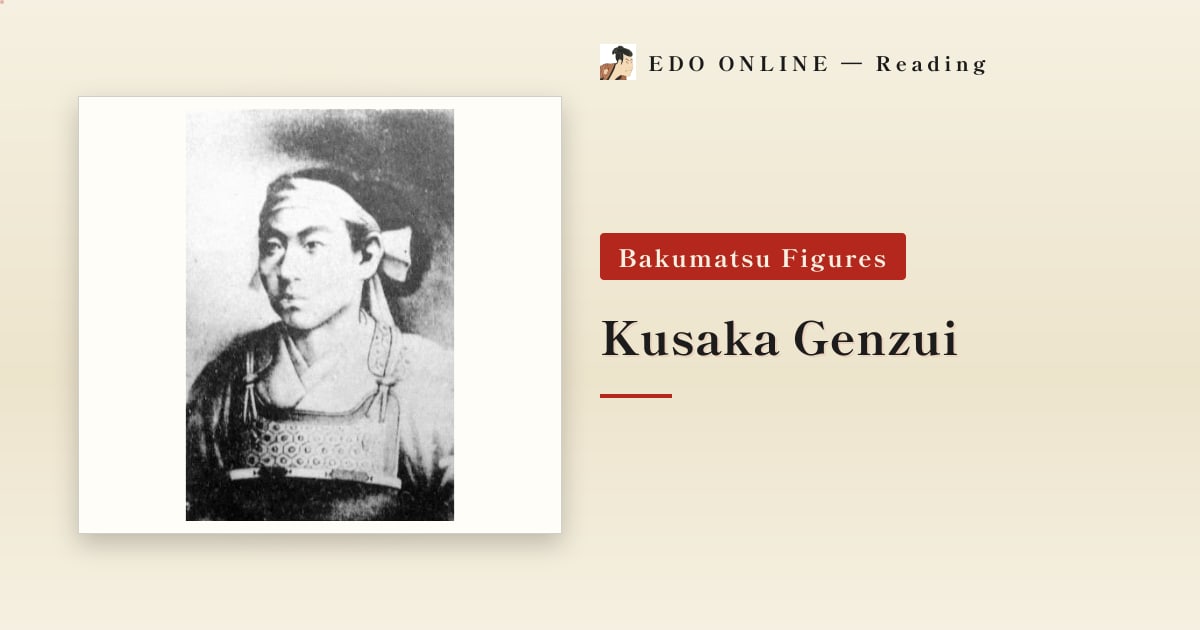
Yoshida Shoin married his sister to one of his students. That was Kusaka Genzui — the theorist Shoin expected most of, dead at twenty-four.
Contents
Who Was Kusaka Genzui?
Genzui was a Choshu samurai and a student of the Shoka Sonjuku, named with Takasugi Shinsaku as one of its two finest.
He did three things.
He built Choshu's expulsionist policy as an argument. Much of the writing and debate that swung the domain to sonno joi was his.
He worked the court and the other domains. In Kyoto he cultivated nobles and activists from elsewhere, and pushed Choshu to the centre of national politics.
He died in the Kinmon Incident, killing himself in a noble's mansion in Kyoto in August 1864. He was twenty-four.
He was born in 1840 and died in 1864.
Kusaka Genzui's Origins as a Physician's Son
Genzui was born the son of Kusaka Ryotei, a Choshu domain physician. His formal name was Michitake; he went by Gisuke, and later Genzui.
In his early teens he lost his parents and his elder brother in quick succession. He inherited the household in something close to orphanhood, and went from there into study.
At the Shoka Sonjuku in Hagi he became a student of Yoshida Shoin.
Shoin rated him highly. In argument and in writing he was the strongest in the school. Takasugi Shinsaku supplied the action and Genzui the logic. The pair were called the two finest.
And Shoin married his sister Fumi to Genzui — making a student family.
The Argument Kusaka Genzui Won
Shoin was executed in the Ansei Purge in 1859.
Genzui then entered real domain politics, against a senior Choshu official named Nagai Uta.
Nagai's programme was called the "Navigation and Distant Strategy." Accept opening the country, accumulate wealth through trade, and defend the country with the resulting strength. Court and shogunate should cooperate and Japan should go outward — a pragmatic design.
Genzui opposed it. Begin trading while the unequal treaties stand and the West will consume Japan. Repudiate the treaties first, then build strength — the position known as "break the treaties, expel the foreigners."
Genzui won the argument. Nagai lost his position and was ordered to commit suicide. Choshu's policy was fixed on expulsion.
A man in his early twenties had set a domain's national course by writing and debate.
Kusaka Genzui and Expulsion in Practice
In 1863 Choshu acted on the policy, firing on foreign ships passing through the Shimonoseki strait.
Retaliation was swift and total. American and French warships hit back and destroyed the batteries. In 1864 a four-nation fleet bombarded Shimonoseki and Choshu was crushed.
The policy Genzui had constructed did not survive contact with reality.
In the same period Inoue Kaoru and Ito Hirobumi had smuggled themselves to Britain and come home convinced that expulsion was impossible.
How Kusaka Genzui Died at the Kinmon Incident
The coup of September 1863 drove Choshu out of Kyoto.
Inside the domain, pressure built to march. Kijima Matabei led that party.
Genzui's position was less simple. He was still working the court and other domains in Kyoto, and is understood to have been looking for a political rather than military route back.
The momentum in the domain was not stoppable, and he went with the march.
On 20 August 1864 came the Kinmon Incident.
Genzui was at the Takatsukasa mansion near the palace, trying to get Choshu's petition transmitted to the court. Fighting broke out, the mansion was surrounded, and it was set alight.
Genzui killed himself there, together with his comrade Terajima Chuzaburo. He was twenty-four.
The same day, Kijima Matabei died at the Hamaguri Gate.
What Kusaka Genzui Left Behind
Genzui's widow Fumi lived on in Choshu and later remarried.
The expulsionist policy he had built was abandoned the year after his death. Takasugi Shinsaku's uprising turned the domain around, and Choshu switched to opening up, building strength, and using that strength to destroy the shogunate.
That was, in the end, close to the design of Nagai Uta — the man Genzui had argued out of office.
How Genzui would have reasoned his way through that reversal is unknowable. Dying at twenty-four, he saw his policy fail and nothing after it.
Kusaka Genzui Timeline
| Year | Event |
|---|---|
| 1840 | Born son of the Choshu domain physician Kusaka Ryotei |
| 1850s | Loses his family; studies under Yoshida Shoin |
| c. 1857 | Marries Shoin's sister Fumi |
| 1859 | Shoin is executed in the Ansei Purge |
| 1862 | Defeats Nagai Uta's programme; fixes Choshu on expulsion |
| 1863 | Choshu fires on foreign ships and is bombarded in return |
| Sep 1863 | Choshu is expelled from Kyoto |
| 20 Aug 1864 | Kills himself at the Takatsukasa mansion in the Kinmon Incident, aged 24 |
For the other of the two finest see Takasugi Shinsaku; for his teacher, Yoshida Shoin; for the man who died the same day, Kijima Matabei.
Related reading
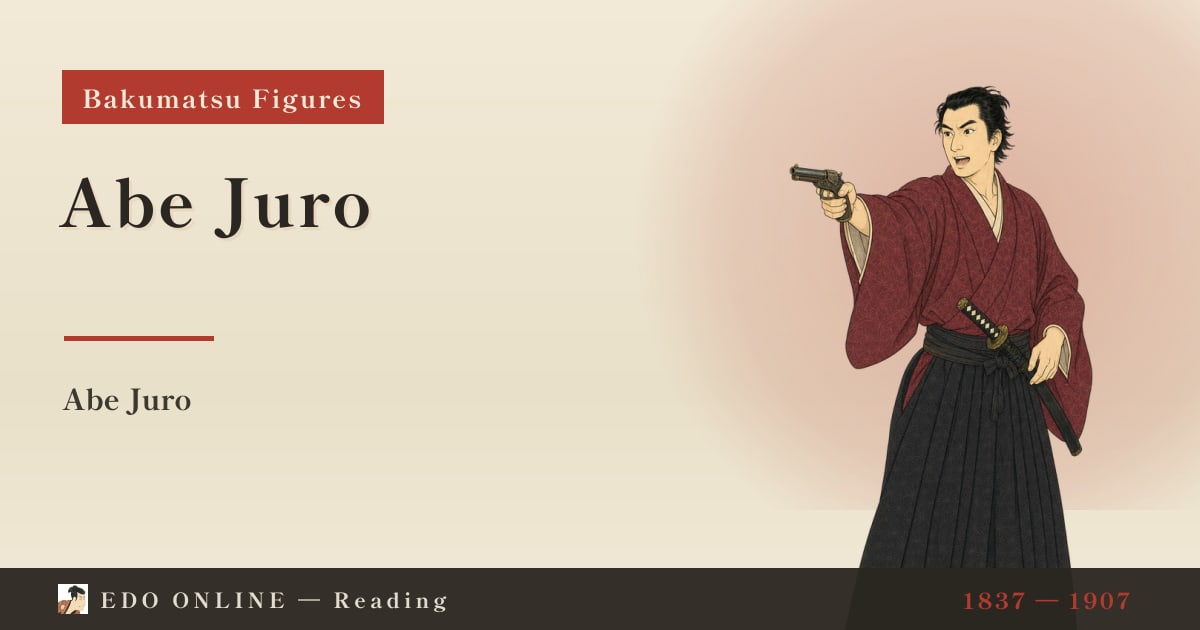
Abe Juro — The Former Member Who Talked
He deserted the Shinsengumi and rejoined under another name, shot at Kondo Isami as one of the Goryō Eji, and then grew apples in Sapporo. His late-Meiji testimony is where the ranking of the corps' best swordsmen comes from.
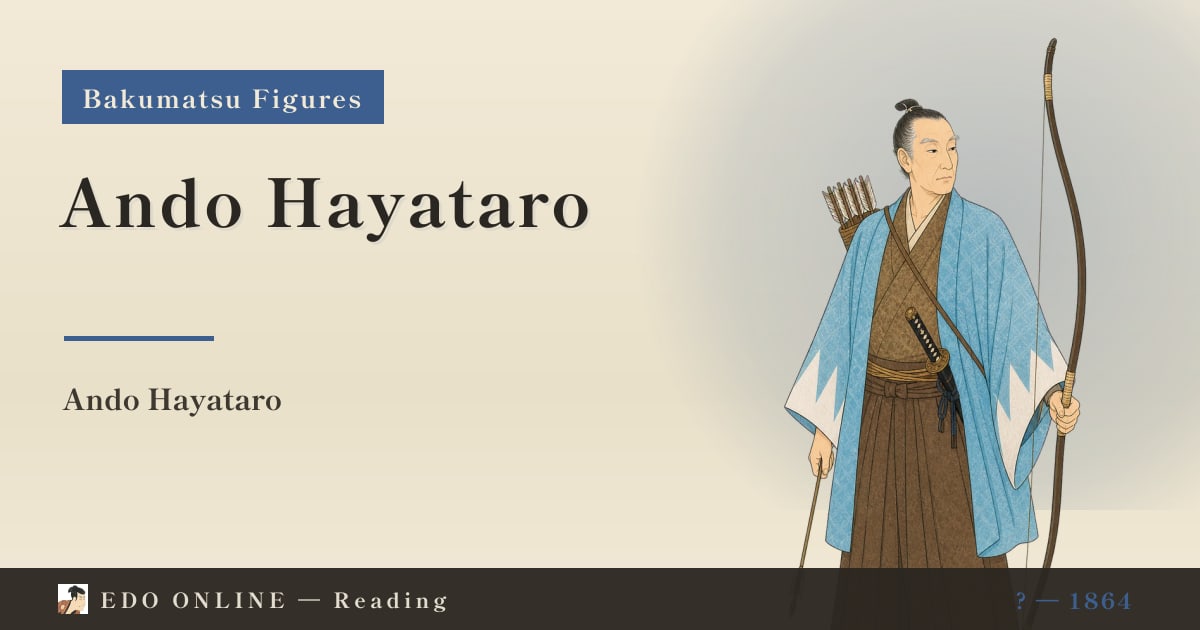
Ando Hayataro — The Shinsengumi's Record-Breaking Archer
He set the standing national record in the long-range shooting at the Tōdai-ji Great Buddha Hall, sending 8,685 arrows the length of the corridor. Nearly fifty, he joined the Shinsengumi and died of wounds taken in the back garden of the Ikedaya.
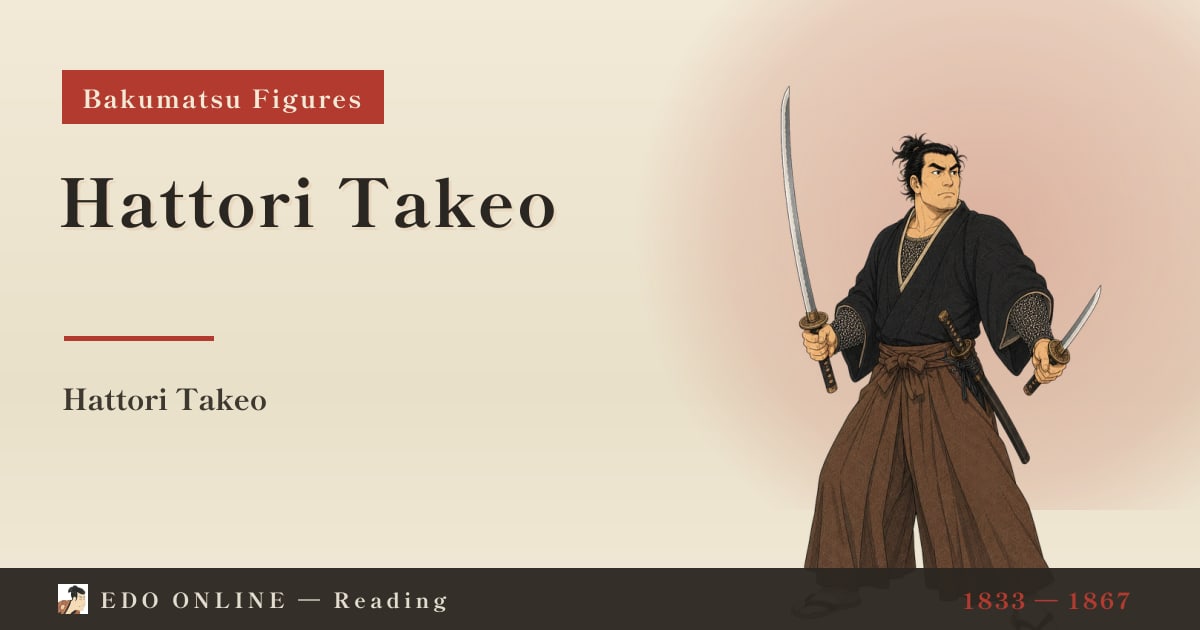
Hattori Takeo — Two Swords at Aburanokoji
A two-sword master and fencing instructor of the Shinsengumi who defected with the Goryō Eji. At Aburanokōji he alone wore mail, held a wall against the whole corps, and fell with more than twenty wounds.