
Shinagawa Yajiro — Japan's First War Song, and Its Worst Election
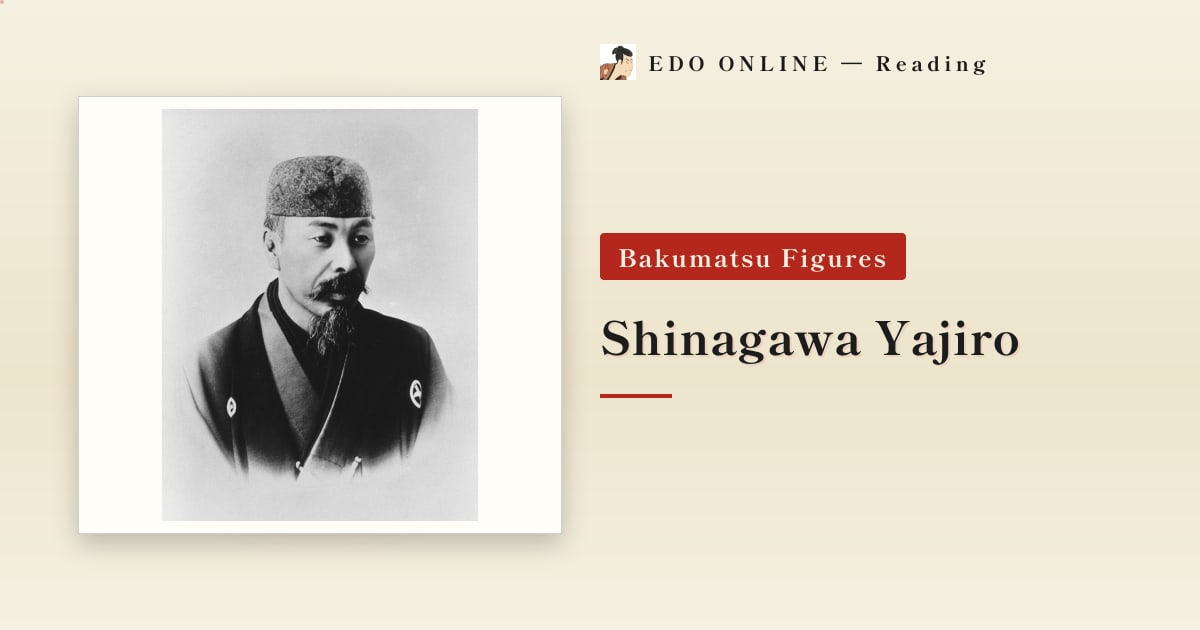
The man who wrote Japan's first war song also ran its first violent election. Shinagawa Yajiro — one person, both facts.
Contents
Who Was Shinagawa Yajiro?
Shinagawa was a Choshu samurai who rose to cabinet minister under the Meiji government.
His life has three parts.
The author of "Miya-san, Miya-san." The words of Tokoton'yare, the marching song the new government's army sang during the Boshin War, are credited to him.
The importer of the cooperative. Having seen German credit unions, he laid the groundwork for Japan's industrial cooperative system.
The minister behind the 1892 election interference. As home minister he intervened in the second general election, and resigned after people were killed.
He was born in 1843 and died in 1900.
Shinagawa Yajiro at the Shoka Sonjuku
Shinagawa was born to a low-ranking Choshu samurai family in Hagi and studied at the Shoka Sonjuku under Yoshida Shoin.
He was one of the younger students, not one of the celebrated pair like Takasugi Shinsaku and Kusaka Genzui. But he survived.
The fighting at Kyoto, the second campaign against Choshu, then the Boshin War. Shinagawa spent nearly the whole upheaval in the field.
Shinagawa Yajiro's Tokoton'yare Marching Song
In 1868 the new government's army marched east.
What it sang began "Miya-san, Miya-san — what is that fluttering in front of your horse?" The song is known as Tokoton'yare or "Miya-san, Miya-san."
"Miya-san" was Prince Arisugawa Taruhito, commander of the eastern expedition; the fluttering thing was the brocade banner of imperial authority. It was a song that told townspeople, as the column passed, that this army was the emperor's.
The words are credited to Shinagawa and the tune to Omura Masujiro — though authorship is disputed and cannot be called settled.
Either way it is regarded as Japan's first modern military marching song. Putting a political claim into a tune people can repeat was already an understood technique in 1868.
What Shinagawa Yajiro Saw in Germany
After the Restoration Shinagawa went to Europe and later served as minister to Germany.
What caught his attention there was not the army or the constitution. It was credit unions.
Farmers and small traders pooling money into an association and lending to each other. People who could not borrow from a bank individually could borrow collectively.
He set out to bring this to Japan as the industrial cooperative — the ancestor of Japan's agricultural and credit cooperatives. The Industrial Cooperative Act passed on 22 February 1900, four days before he died, and was promulgated on 7 March, after his death. He saw the law pass and never saw it in force.
He was also involved in founding the German Studies Association school, now the Dokkyo institutions.
Shinagawa Yajiro and the Election Interference of 1892
Then came 1892.
Shinagawa was home minister in the first Matsukata cabinet, at a time when the government was locked against the Diet: the government wanted its budget and popular-rights members would not pass it.
At the second general election for the House of Representatives that year, Shinagawa instructed prefectural governors to intervene against candidates opposed to the government.
Police were deployed, opposition meetings were broken up, voters were pressured. Twenty-five people were killed in the resulting clashes and several hundred injured.
People died over an election.
The government did not even get the seats it wanted. The criticism was severe, and Shinagawa resigned as home minister.
It stands as the worst instance of official interference in Japanese electoral history.
The Range of Shinagawa Yajiro
Shinagawa is hard to sum up.
The wit behind the marching song and the foresight behind the cooperatives were genuinely his. He seriously intended to build machinery that let farmers and small traders stand on their own.
At the same time, that same man tried to bend the electorate's choice by force.
"I want ordinary people's lives to improve" and "I do not trust ordinary people's political judgment" lived side by side in him — as they did in the early Meiji government generally.
How Shinagawa Yajiro Died
He died in 1900, aged fifty-six.
Few of Shoin's students outlived him. Takasugi Shinsaku died of illness, Kusaka Genzui in the fighting at Kyoto, Maebara Issei under the sword after the Hagi Rebellion. Shinagawa was still in politics near the end of the century.
Shinagawa Yajiro Timeline
| Year | Event |
|---|---|
| 1843 | Born to a low-ranking Choshu samurai family in Hagi |
| late 1850s | Studies under Yoshida Shoin |
| 1864 | Takes part in the fighting at Kyoto |
| 1868 | Serves in the Boshin War; credited with the words of Tokoton'yare |
| 1870s–80s | Travels to Europe; later minister to Germany, where he studies credit unions |
| 1891 | Becomes home minister in the first Matsukata cabinet |
| 1892 | Runs the election interference; resigns after 25 deaths |
| 22 Feb 1900 | The Industrial Cooperative Act passes, four days before his death; promulgated 7 March |
| 1900 | Dies, aged 56 |
For fellow students of Shoin see Takasugi Shinsaku, Maebara Issei and Ito Hirobumi; the tune is credited to Omura Masujiro.
Related reading
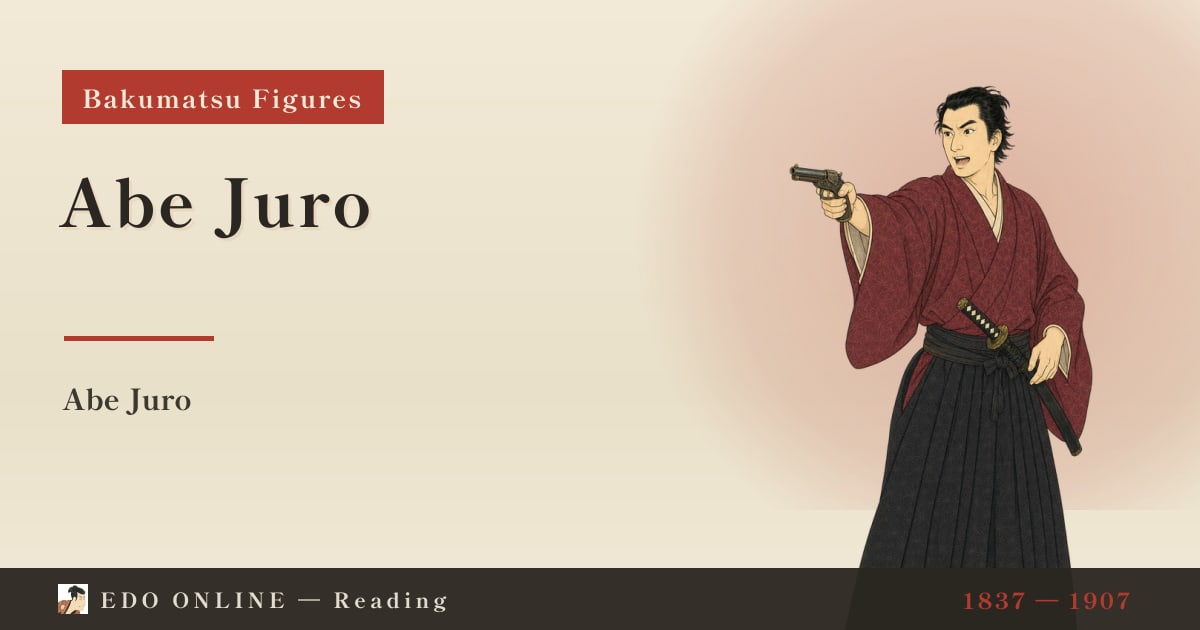
Abe Juro — The Former Member Who Talked
He deserted the Shinsengumi and rejoined under another name, shot at Kondo Isami as one of the Goryō Eji, and then grew apples in Sapporo. His late-Meiji testimony is where the ranking of the corps' best swordsmen comes from.
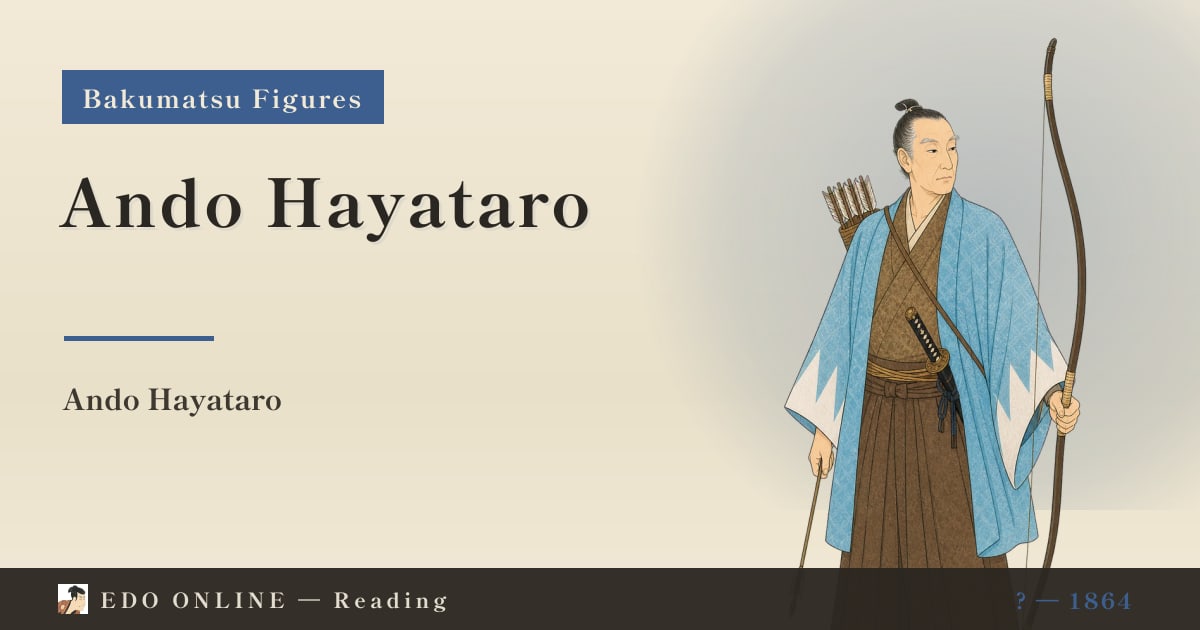
Ando Hayataro — The Shinsengumi's Record-Breaking Archer
He set the standing national record in the long-range shooting at the Tōdai-ji Great Buddha Hall, sending 8,685 arrows the length of the corridor. Nearly fifty, he joined the Shinsengumi and died of wounds taken in the back garden of the Ikedaya.
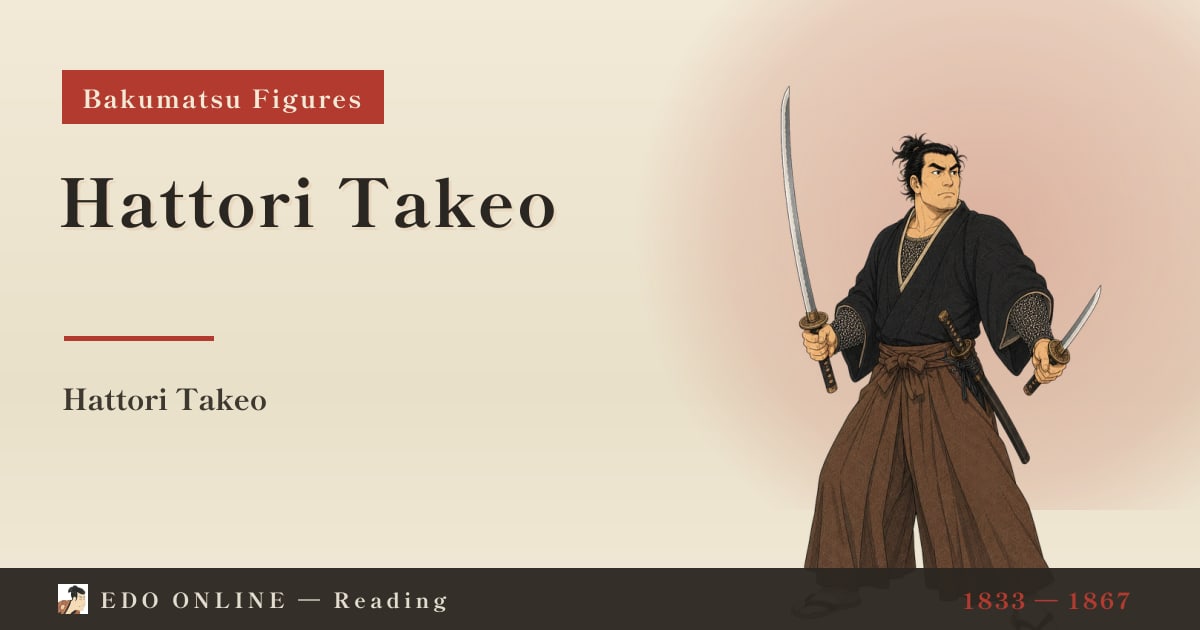
Hattori Takeo — Two Swords at Aburanokoji
A two-sword master and fencing instructor of the Shinsengumi who defected with the Goryō Eji. At Aburanokōji he alone wore mail, held a wall against the whole corps, and fell with more than twenty wounds.