Yamagata Aritomo — The Man Who Built the Japanese Army
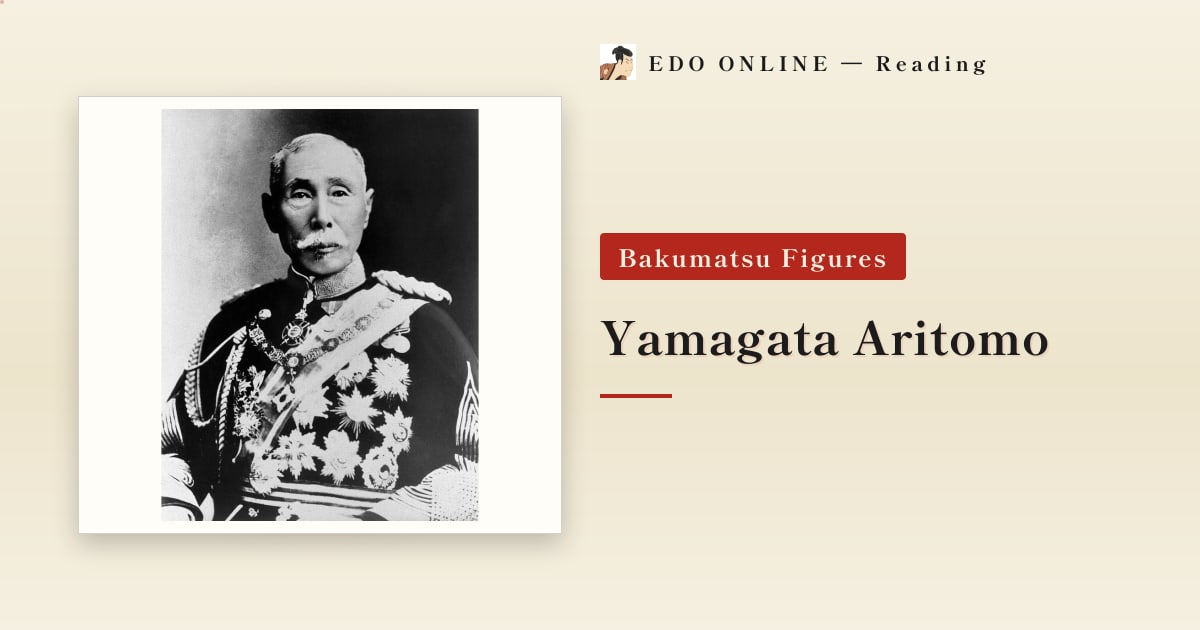
No one shaped the form of the Japanese military more deeply. Yamagata Aritomo, a low-ranking Choshu samurai schooled at Yoshida Shoin's academy, built the modern army of Japan.
Contents
Who Was Yamagata Aritomo?
His work was to build Japan's army, and the position that army held toward politics.
A modern army. He introduced conscription and built a force of citizen soldiers drawn regardless of birth.
A separation of the army from politics. While warning soldiers against involvement in politics, he built a structure in which the chain of military command was separated from the cabinet and tied directly to the emperor. That design cast a long shadow.
A long political dominance. He served twice as prime minister and then, as an elder statesman, held sway over cabinet appointments and military affairs for decades.
He was born in 1838 into a foot-soldier family of Choshu.
Yamagata Aritomo from the Shoka Sonjuku to the Kiheitai
Yamagata studied at Yoshida Shoin's Shoka Sonjuku, though only briefly, without long personal instruction from Shoin.
He came into his own in the Kiheitai, the irregular corps founded by Takasugi Shinsaku — a radical force that admitted farmers and townsmen alongside samurai. Yamagata experienced the idea of an army that ignored status at first hand there.
In the Boshin War he led the Kiheitai and built a record as a field commander. Within the same Choshu, where Ito Hirobumi took the road of politics and diplomacy, Yamagata took the road of the army.
Yamagata Aritomo's Conscription and the Modern Army
In the Meiji era Yamagata took charge of building the military system.
He travelled in Europe to study foreign armies and brought the results home. What he pushed through was conscription.
Ending the age in which only samurai fought and raising soldiers from the population was also a reform that stripped the samurai of privilege. The line that Omura Masujiro had conceived and been assassinated before completing was, in effect, carried through by Yamagata.
In the Satsuma Rebellion of 1877, the conscript government army defeated the samurai rebels. The citizen army Yamagata had built settled the age of the warrior for good.
How Yamagata Aritomo Separated the Army from Politics
The heaviest part of Yamagata's design, in later consequence, was the relation between army and politics.
He repeatedly told soldiers they must not meddle in politics. At the same time he worked to have the command system for operations answer to the emperor directly rather than to the cabinet (military administration and budgets still involved the government and diet, and the arrangements took shape by stages).
This structure — the command chain outside the government's control — is frequently identified as the ground on which the military later escaped civilian control. Whatever Yamagata's own intent, the institution he built had a long reach.
Yamagata Aritomo's Rule as an Elder Statesman
Yamagata was prime minister twice. But the substance of his power lay less in that office than in his standing as an elder statesman (genro).
The genro were the few senior figures who effectively chose the next prime minister through the Meiji and Taisho eras. As an elder alongside Ito Hirobumi, Yamagata influenced the making and unmaking of cabinets for decades.
In the military and the bureaucracy especially, his protégés filled the key posts, building the vast network known as the Yamagata faction. The public prime minister might change while Yamagata moved behind him — a situation that persisted for a long time.
Why Yamagata Aritomo Divides Opinion
Yamagata was little liked, in his own time or since.
Against the warm and popular Ito Hirobumi, Yamagata is usually drawn as dour, grasping after power, and distrustful.
But that is not the whole of it. His ability as the practical builder of Japan's army and bureaucracy is hard to deny. Disliked, but effective. He held the power structure of modern Japan more firmly than anyone.
And if the "independence of the army" he built led to later catastrophe, the responsibility for that design attaches to him as well. Great in both credit and blame — that is the verdict on Yamagata.
He died in 1922, aged eighty-three (eighty-five by the traditional count). His funeral is said to have been sparsely attended, a measure of how little public affection he commanded — a pointed contrast to the national funeral of Okuma Shigenobu, who died the same year.
Yamagata Aritomo Timeline
| Year | Event |
|---|---|
| 1838 | Born into a foot-soldier family of Choshu |
| 1850s | Studies at Yoshida Shoin's academy; rises in the Kiheitai |
| 1868–69 | Fights in the Boshin War |
| 1873 | Drives the introduction of conscription |
| 1877 | Commands the government army in the Satsuma Rebellion |
| 1880s | Builds the military and bureaucratic systems |
| 1889, 1898 | Serves twice as prime minister |
| Meiji–Taisho | Dominates politics as an elder statesman |
| 1922 | Dies, aged 83 |
For his fellow Choshu men see Ito Hirobumi and Takasugi Shinsaku; for the pioneer of the army system, Omura Masujiro.
Related reading
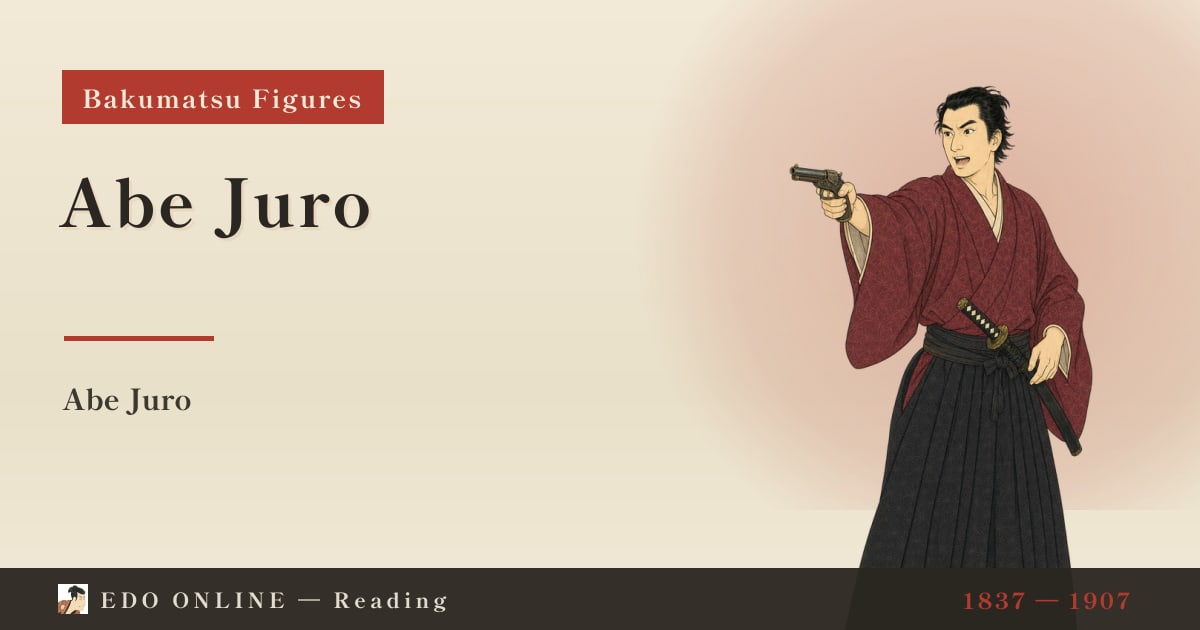
Abe Juro — The Former Member Who Talked
He deserted the Shinsengumi and rejoined under another name, shot at Kondo Isami as one of the Goryō Eji, and then grew apples in Sapporo. His late-Meiji testimony is where the ranking of the corps' best swordsmen comes from.
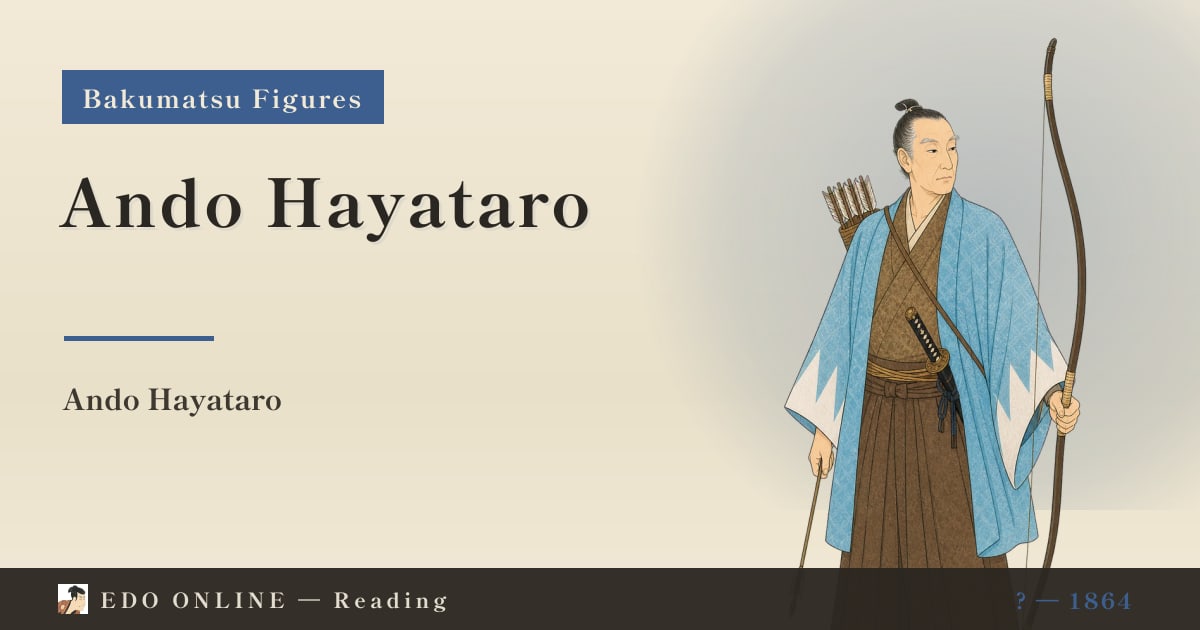
Ando Hayataro — The Shinsengumi's Record-Breaking Archer
He set the standing national record in the long-range shooting at the Tōdai-ji Great Buddha Hall, sending 8,685 arrows the length of the corridor. Nearly fifty, he joined the Shinsengumi and died of wounds taken in the back garden of the Ikedaya.
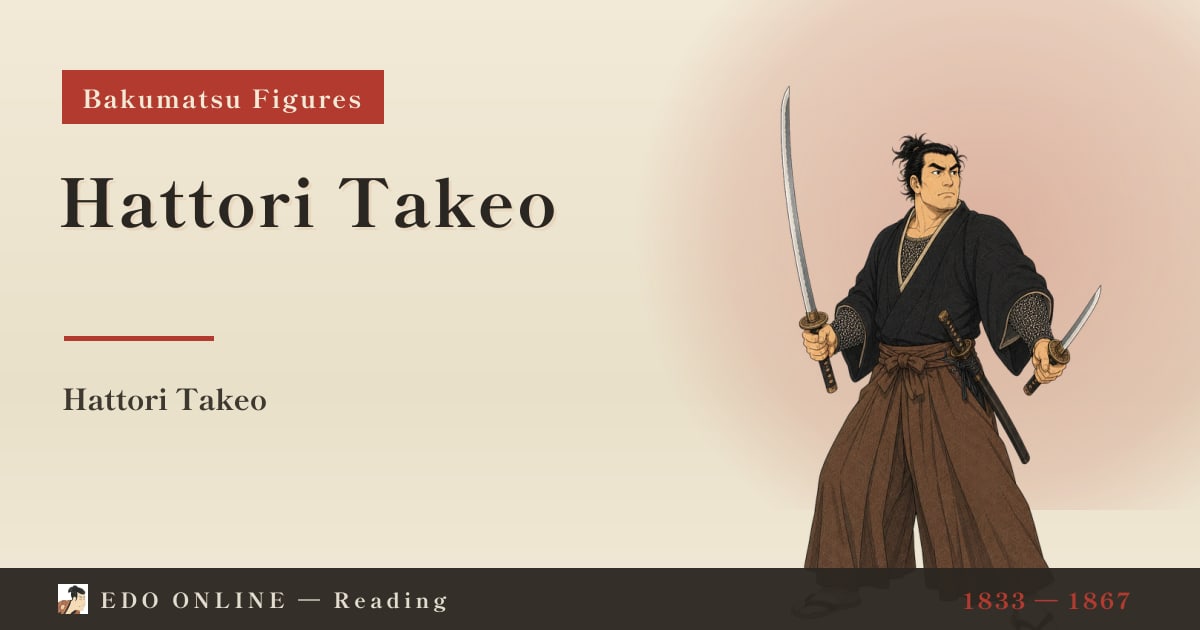
Hattori Takeo — Two Swords at Aburanokoji
A two-sword master and fencing instructor of the Shinsengumi who defected with the Goryō Eji. At Aburanokōji he alone wore mail, held a wall against the whole corps, and fell with more than twenty wounds.