Okita Soji — The Shinsengumi's Best Swordsman, and What Killed Him
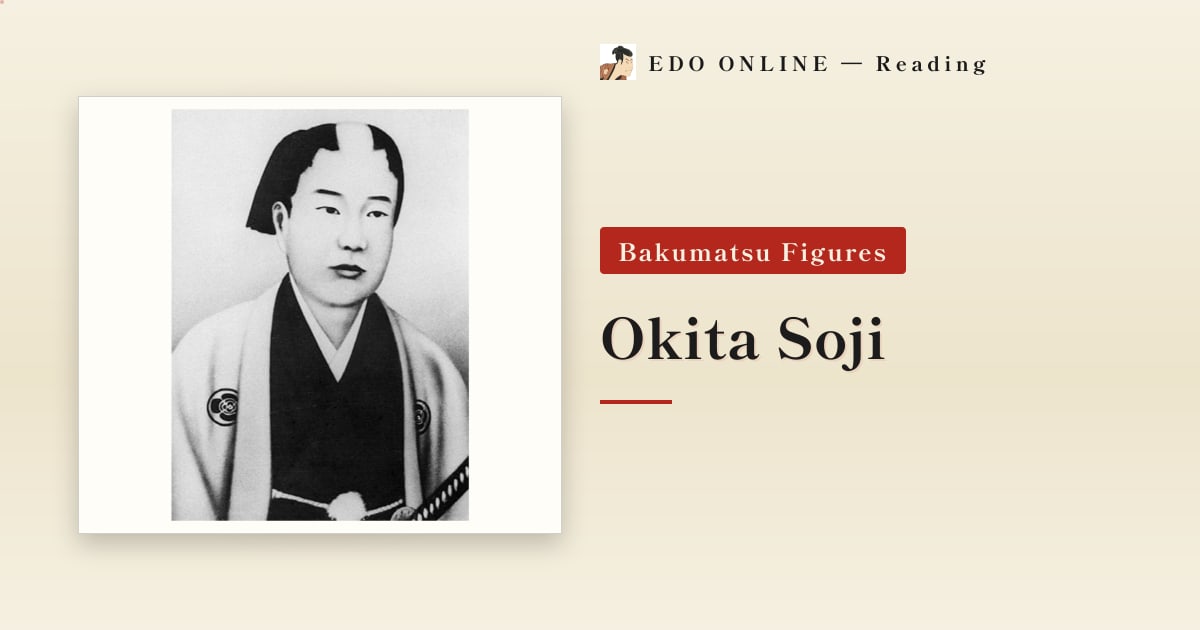
Ask who was the strongest man in the Shinsengumi and most answers come back the same. Okita Soji. Yet the years in which he could actually fight were remarkably few.
Contents
Who Was Okita Soji?
Okita was captain of the Shinsengumi's first unit and one of its sword instructors — the man at the head of its combat troops and the man teaching the rest of them.
He was born in an Edo domain residence, son of a retainer of Shirakawa. His birth year is variously given as 1842 or 1844; it is not settled.
His father died early, and at around nine he entered the Shieikan, the dojo of Kondo Isami. He trained in Tennen Rishin-ryu, received his license young, and served as head student. He is said to have been beating grown men while still a boy.
He went up to Kyoto with Hijikata Toshizo and the rest, and became core to the new unit.
Okita Soji's Sword
Okita is commonly said to have carried a blade called Kiku Ichimonji Norimune. This is a name that reached the public through fiction, not through the record.
The Kiku Ichimonji is a Kamakura-period masterwork and was already immensely valuable in Okita's day. It is difficult to believe an ordinary unit captain wore one, and the attribution is generally understood as a novelist's gift to a character.
The swords actually associated with him are working blades of the period: Kashu Kiyomitsu and Yamato-no-kami Yasusada. Fine work, but not legends.
A practical sword that cut well, rather than a fabled one — which suits the job of first-unit captain considerably better.
Did Okita Soji Have a Wife?
No reliable record of a marriage is known.
The many romances attached to him are later inventions. Stories about a woman who nursed him in his final illness are well known but rest on no reliable record.
The relative who is documented is his elder sister, Mitsu. She and her husband, who carried on the Okita family name, were among his few close kin, and the household that supported him during his last illness.
Okita Soji's Tuberculosis
What decided Okita's life was not a sword but a disease — rogai, what we now call pulmonary tuberculosis.
The story that he collapsed mid-fight during the Ikedaya Incident is famous, usually told as a sudden hemorrhage. Contemporary sources do not state the cause that plainly, and heat and exhaustion have also been proposed. That he went down is attested in more than one account; why, is not something to assert.
No source allows the onset or progression of the disease to be dated precisely. What is certain is that by the final years of the shogunate it was severe. By the battle of Toba-Fushimi in 1868 he was no longer able to fight. Through the most consequential months of the Shinsengumi's existence — the retreat to Edo, the march north — Okita was not in the line.
How Okita Soji Died
Back in Edo, he is said to have been taken in at a gardener's house in Sendagaya to convalesce.
He died in the summer of 1868. Sendagaya is the most widely accepted location, though Imado is also proposed and the point is unsettled. His age at death is traditionally given as twenty-five or twenty-seven — both by the older Japanese count, and both uncertain because his birth year is.
By then Kondo Isami had already been executed at Itabashi. Whether Okita was told varies from account to account.
He is buried at Senshoji temple in Motoazabu, Tokyo, the Okita family temple.
Why Okita Soji Remains So Popular
Okita's fame does not rest on what he accomplished. It rests on youth, skill, and an early death arriving together.
One of the finest swordsmen in the unit missed its final battles and watched the end of his era from a sickbed. A man who lived by the sword removed from the story by something the sword could not touch — that shape invites retelling.
And retelling has added things: a legendary blade, a lover, a scene at the Ikedaya. Popularity generates legend, and legend feeds popularity. The Okita Soji most people know was assembled in that loop.
Okita Soji Timeline
| Year | Event |
|---|---|
| c. 1842 | Born in Edo, son of a Shirakawa retainer (birth year disputed) |
| c. 1851 | Enters the Shieikan and trains in Tennen Rishin-ryu |
| 1863 | Goes to Kyoto with the Roshigumi; becomes core to the Shinsengumi |
| 1864 | Ikedaya Incident; collapses during the fighting |
| c. 1867 | Illness forces him out of active duty |
| 1868 | Dies in Edo, most likely at Sendagaya; traditional age given as 25 or 27 |
For the rest of the unit, see the Shinsengumi captains and the Shinsengumi at Mibu.
Related reading
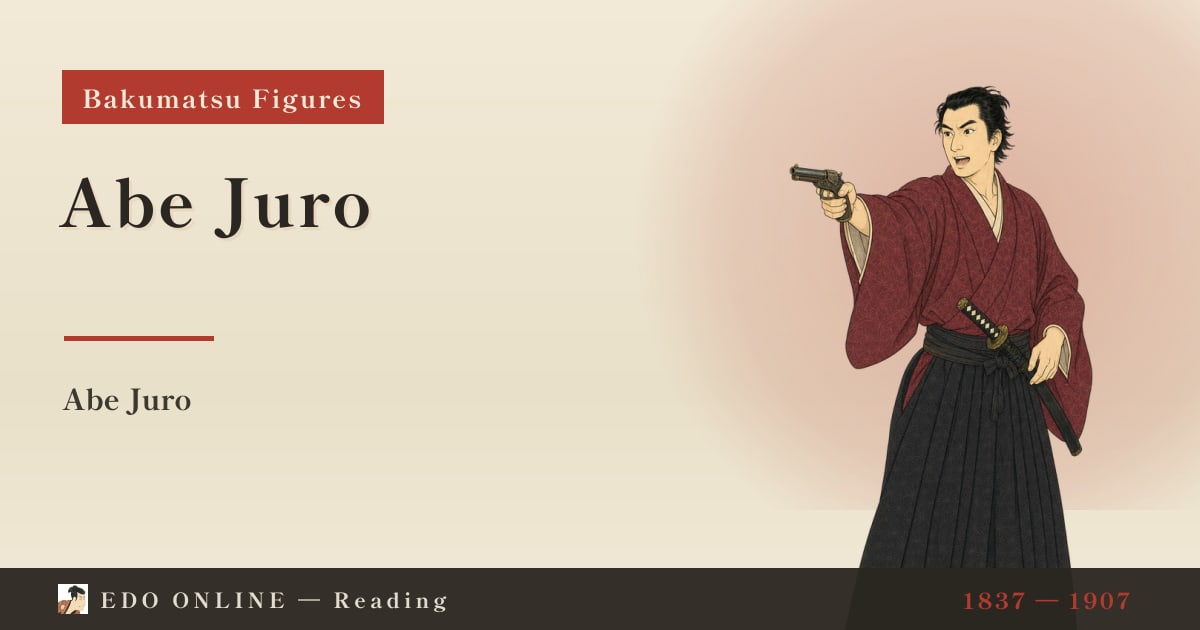
Abe Juro — The Former Member Who Talked
He deserted the Shinsengumi and rejoined under another name, shot at Kondo Isami as one of the Goryō Eji, and then grew apples in Sapporo. His late-Meiji testimony is where the ranking of the corps' best swordsmen comes from.
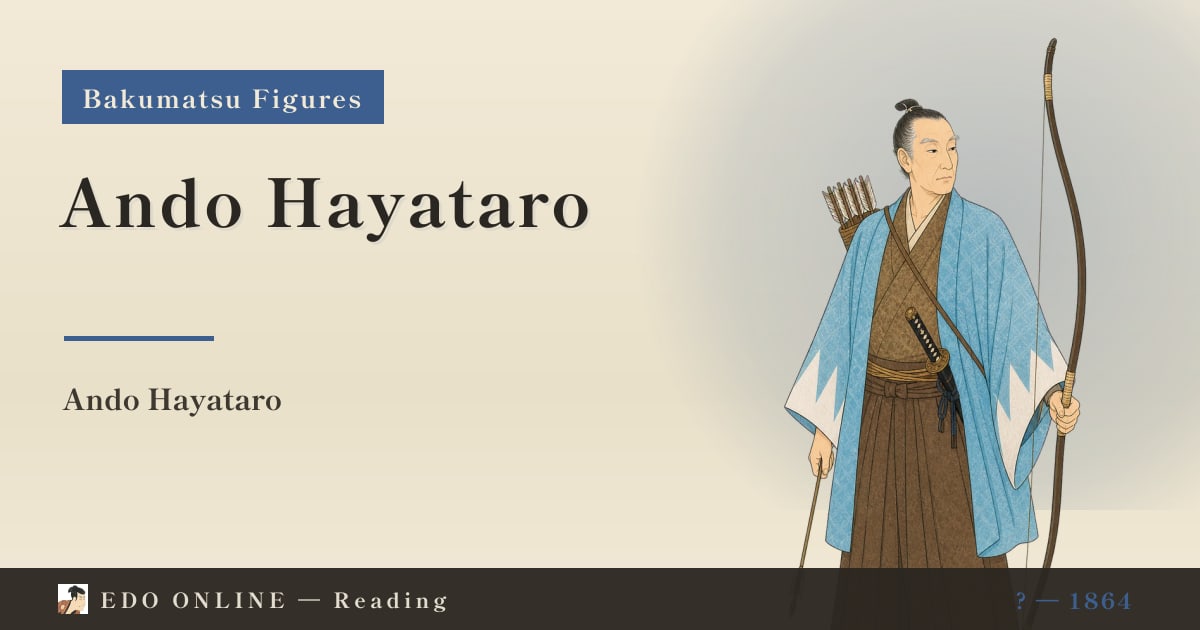
Ando Hayataro — The Shinsengumi's Record-Breaking Archer
He set the standing national record in the long-range shooting at the Tōdai-ji Great Buddha Hall, sending 8,685 arrows the length of the corridor. Nearly fifty, he joined the Shinsengumi and died of wounds taken in the back garden of the Ikedaya.
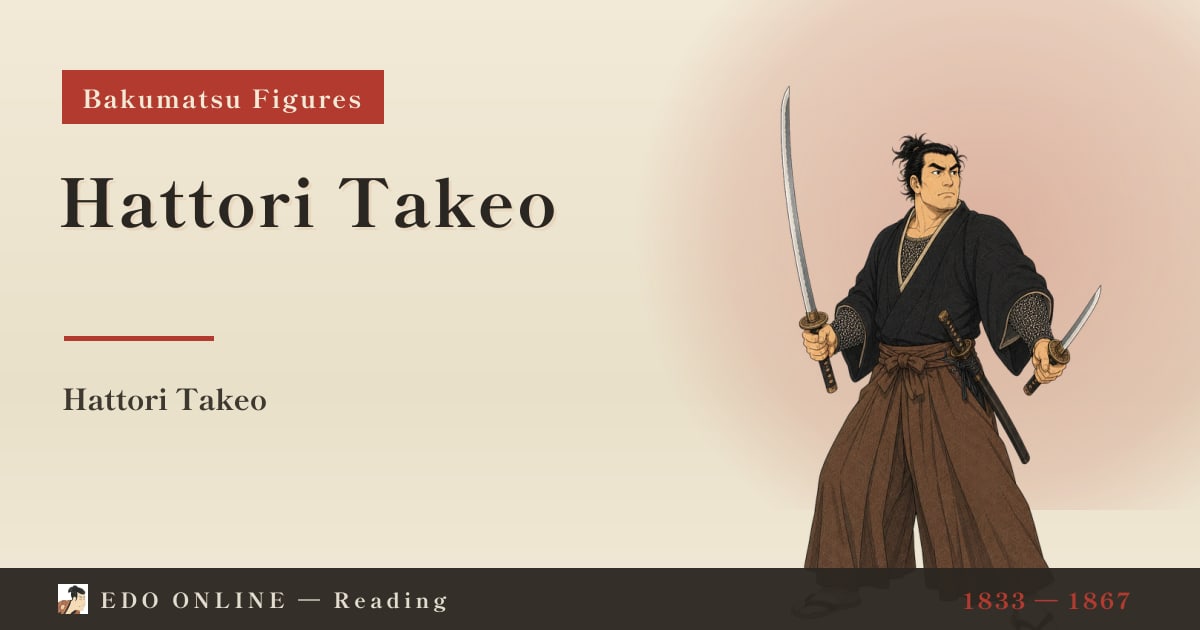
Hattori Takeo — Two Swords at Aburanokoji
A two-sword master and fencing instructor of the Shinsengumi who defected with the Goryō Eji. At Aburanokōji he alone wore mail, held a wall against the whole corps, and fell with more than twenty wounds.