Yokokura Jingoro — Died in Custody Over the Ryoma Accusation
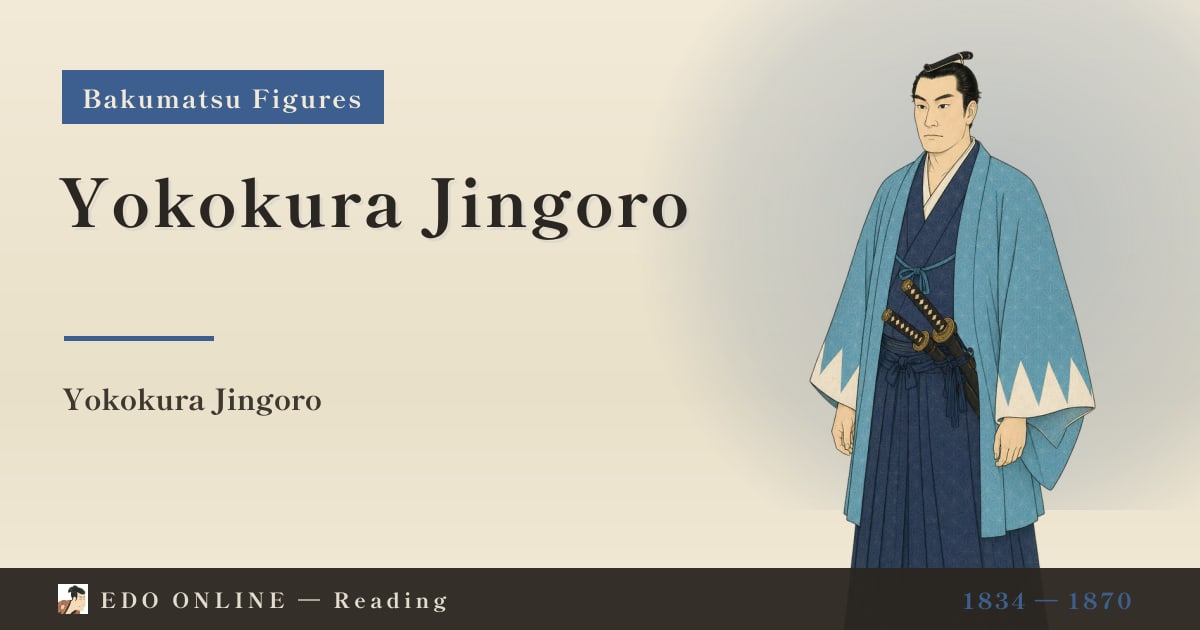
One member surrendered, was accused afterwards, and died in a cell. Yokokura Jingorō. The charges were the murders of Sakamoto Ryōma and Itō Kashitarō.
Contents
Who Was Yokokura Jingoro?
Yokokura was a member of the Shinsengumi.
He was born in 1834 at Horinouchi village in the Tama district of Musashi province — now Hachiōji — second son of Yokokura Ryōsuke. He trained in Tennen Rishin-ryū.
He died in custody on 10 September 1870, aged thirty-seven by the old inclusive count.
Yokokura Jingoro's Service
He joined the Shinsengumi in 1864, answering Kondo Isami's recruitment drive.
Tama-born and Tennen Rishin-ryū-trained puts him on the same road as Kondo, Hijikata, Inoue Genzaburo and Nakajima Nobori.
In the Aburanokōji affair of November 1867 he turned out with Oishi Kuwajiro and others.
That single fact later decided his fate.
When the Boshin War broke out in January 1868 he fought at Toba-Fushimi, at Katsunuma in Kai and in the Aizu campaign, then joined Enomoto Takeaki's fleet at Sendai and crossed to Ezo.
Yokokura Jingoro's Death Poem
On 24 June 1869 the Benten battery, where Yokokura and the others were holding out, surrendered.
A death poem he composed there survives.
Everything done for the sake of righteousness is foam on the water, vanishing and running away in the breaking waves.
As a verse written at a surrender, nothing could be more direct. These are the words of a man who watched six years of the Shinsengumi end at the Benten battery.
Yokokura Jingoro's Death in Prison
Surrendering did not end it.
Confined at the battery, Yokokura was then accused — along with Imai Nobuo, formerly of the Kyoto Mimawarigumi — of the murders of Sakamoto Ryoma and Ito Kashitaro.
On 9 November 1869 he was sent to the interrogation office in Tokyo.
He died there on 15 August 1870 by the old calendar.
Around the same period, Oishi Kuwajiro was beheaded and Soma Kazue exiled to Niijima over the same Itō killing — both on 10 October 1870 by the old calendar, two months after Yokokura died.
The men who had turned out at Aburanokōji were settled with, all together, three years later.
As for Sakamoto Ryoma, responsibility is generally placed with the Mimawarigumi, Sasaki Tadasaburo among them, and no source has been found supporting Shinsengumi involvement. The suspicion against Yokokura was pursued along that line and no further.
His grave was at Daihō-ji in Hachiōji; when postwar redevelopment moved the temple to Yarimizu in the same city, his descendants raised a new marker.
Frequently asked questions
Who was Yokokura Jingoro?
A member of the Shinsengumi. Tama-born and Tennen Rishin-ryū-trained, he joined in 1864 and fought as far as Hakodate.
How did Yokokura Jingoro die?
After surrendering at Hakodate he was sent to the interrogation office in Tokyo on suspicion of the murders of Sakamoto Ryoma and Ito Kashitaro, and died in custody on 10 September 1870.
Did Yokokura Jingoro assassinate Sakamoto Ryoma?
No source has been found supporting his involvement. Responsibility for the Ōmiya killing is generally placed with the Mimawarigumi, Sasaki Tadasaburo among them.
What was Yokokura Jingoro's death poem?
Composed at the surrender of the Benten battery, it says that everything done for righteousness is foam on the water, vanishing in the breaking waves.
Yokokura Jingoro Timeline
| Year | Event |
|---|---|
| 1834 | Born at Horinouchi village in the Tama district, second son of Yokokura Ryōsuke |
| Training years | Trains in Tennen Rishin-ryū |
| 1864 | Joins the Shinsengumi in Kondo Isami's recruitment |
| Dec 1867 | Turns out at Aburanokōji with Oishi Kuwajiro |
| 1868 | Fights at Toba-Fushimi, Katsunuma and Aizu; crosses to Ezo from Sendai |
| 24 Jun 1869 | Surrenders at the Benten battery; leaves a death poem |
| Nov 1869 | Sent to Tokyo on suspicion over Sakamoto Ryoma and Ito Kashitaro |
| 10 Sep 1870 | Dies in custody, aged thirty-seven |
For the men punished over the same killing see Oishi Kuwajiro and Soma Kazue; for a fellow Tama man, Nakajima Nobori; for the roster, the Shinsengumi members.
Related reading
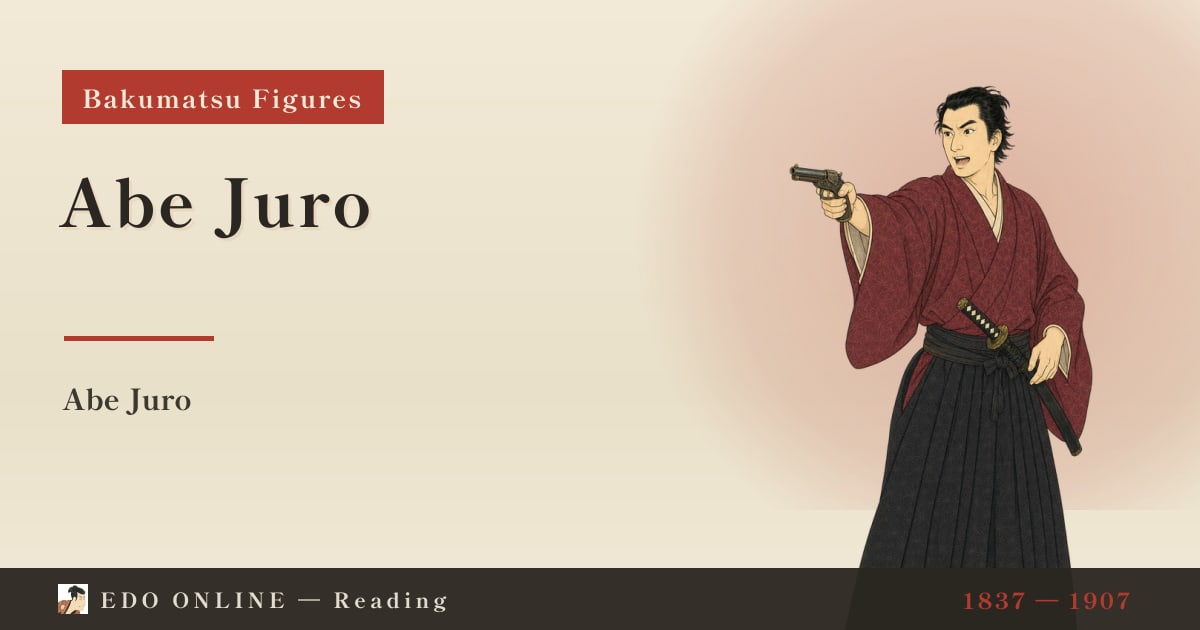
Abe Juro — The Former Member Who Talked
He deserted the Shinsengumi and rejoined under another name, shot at Kondo Isami as one of the Goryō Eji, and then grew apples in Sapporo. His late-Meiji testimony is where the ranking of the corps' best swordsmen comes from.
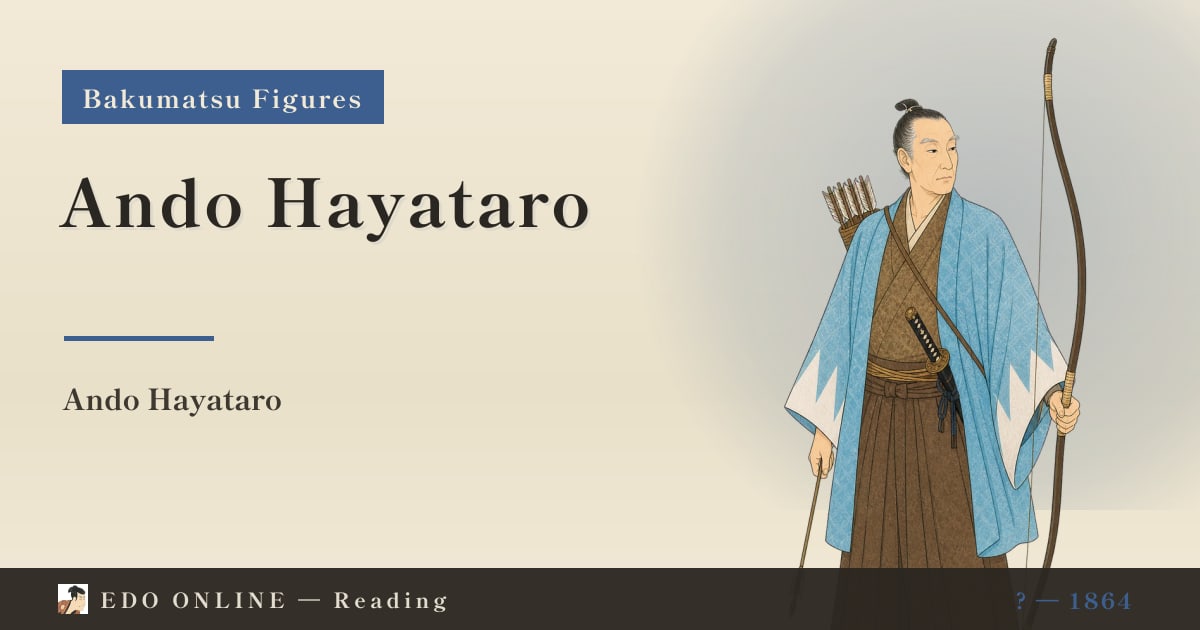
Ando Hayataro — The Shinsengumi's Record-Breaking Archer
He set the standing national record in the long-range shooting at the Tōdai-ji Great Buddha Hall, sending 8,685 arrows the length of the corridor. Nearly fifty, he joined the Shinsengumi and died of wounds taken in the back garden of the Ikedaya.
Hattori Takeo — Two Swords at Aburanokoji
A two-sword master and fencing instructor of the Shinsengumi who defected with the Goryō Eji. At Aburanokōji he alone wore mail, held a wall against the whole corps, and fell with more than twenty wounds.