Inoue Genzaburo — The Shinsengumi Captain Who Never Left
Among the Shinsengumi's senior officers from the Shieikan circle, he was the oldest — five years older than Kondo Isami, six older than Hijikata Toshizo.
Contents
Who Was Inoue Genzaburo?
Inoue was captain of the sixth unit.
Few dramatic anecdotes attach to him. But his position mattered enormously, because he was a comrade from the Shieikan days who never once left the unit, from its founding in Kyoto to his death.
The Shinsengumi was an organization defined by purges and defections. Serizawa Kamo was killed, Ito Kashitaro split off and was cut down, Yamanami Keisuke committed seppuku. Through all of it, Inoue simply stayed at his post.
Inoue Genzaburo's Family of Thousand Guards
Born in 1829 in the post town of Hino, in Musashi Province, Inoue came from a family of the Hachioji Sennin Doshin — the "thousand guards."
These were part-farmer, part-samurai households charged with securing the Koshu highway and the approaches to Kofu. Warriors rooted in the land who also worked it: the character of the Tama region in a single status category.
Kondo and Hijikata came from the same country. Inoue and his elder brother trained in Tennen Rishin-ryu and became members of Kondo's Shieikan dojo.
Same school, same district, same training hall. The core of the Shinsengumi rests on that Tama network.
Inoue Genzaburo, Captain of the Sixth Unit
Inoue went up to Kyoto with Kondo and Hijikata in 1863. He was thirty-four — no longer a young man.
He took part in the Ikedaya Incident and carried the duties of a unit captain. Some accounts judge his swordsmanship unexceptional, but he is consistently described as steady and well liked.
If Kondo was the public face and Hijikata the disciplinarian, Inoue was the one holding the interior of the unit together.
How Inoue Genzaburo Died at Toba-Fushimi
In January 1868 the battle of Toba-Fushimi opened the Boshin War.
The Shinsengumi fought for the shogunate and were driven back by the new government's rifles and guns. Inoue Genzaburo was shot and killed in the fighting at Yodo Senryomatsu. He was thirty-eight — forty by traditional Japanese reckoning.
His nephew Taisuke is said to have carried his head and sword from the field, and — unable to bring them far — to have buried them along the way. The supposed site is still pointed out.
He was among the first of the Shinsengumi's senior officers to die in battle. From there the unit's retreat to Edo and then north began.
He is buried at Hosenji temple in Hino.
The Inoue Genzaburo Museum
The thing most often searched about Inoue is, in fact, the museum.
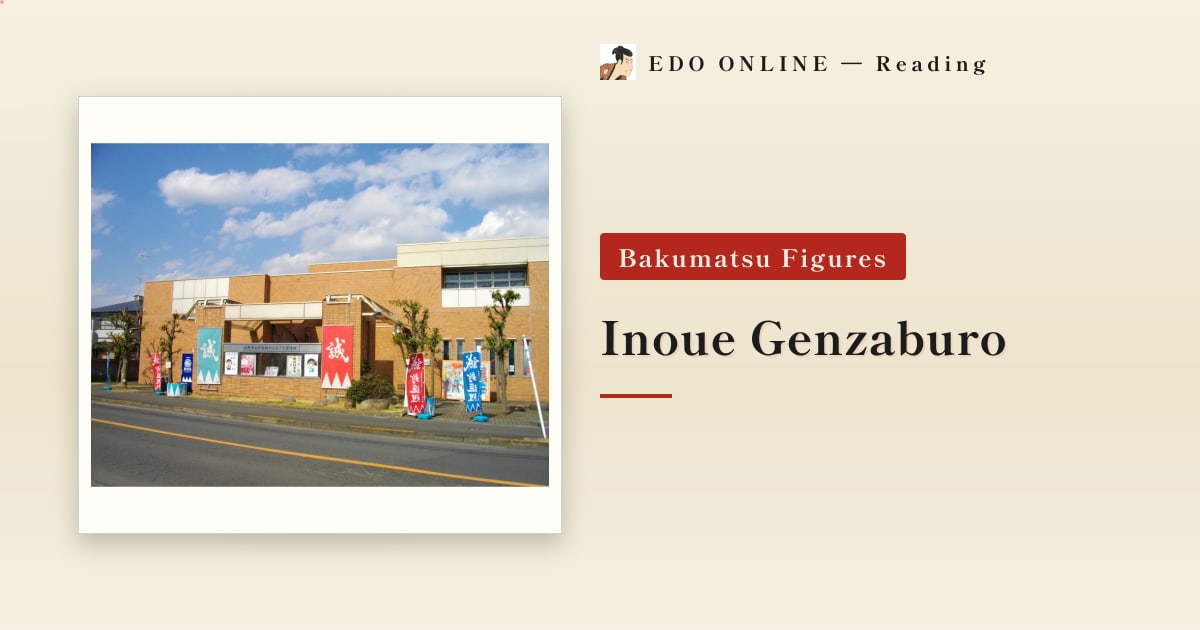
The Inoue Genzaburo Museum stands in Hino, Tokyo. Genzaburo left no direct descendants; the museum is run by descendants of his elder brother Matsugoro's line, and displays materials handed down in the family house.
It is rare among Shinsengumi figures for the family to have stayed on the land and kept the records there. Hino also has a Hijikata Toshizo museum, and the two can be walked in a single afternoon.
The unit made its name in Kyoto, but it started here. The Shinsengumi came out of Tama and returned to it — something the place itself makes obvious.
Inoue Genzaburo Timeline
| Year | Event |
|---|---|
| 1829 | Born in Hino, Musashi Province, into a Hachioji guard family |
| 1840s | Trains in Tennen Rishin-ryu; joins the Shieikan circle |
| 1863 | Goes to Kyoto and helps found the Shinsengumi |
| 1864 | Serves at the Ikedaya Incident; captain of the sixth unit |
| 1868 | Killed at Yodo Senryomatsu during Toba-Fushimi, aged 38 |
For others from the same district see Kondo Isami and Hijikata Toshizo, and for the dojo world they came from, Bakumatsu sword schools.
Related reading
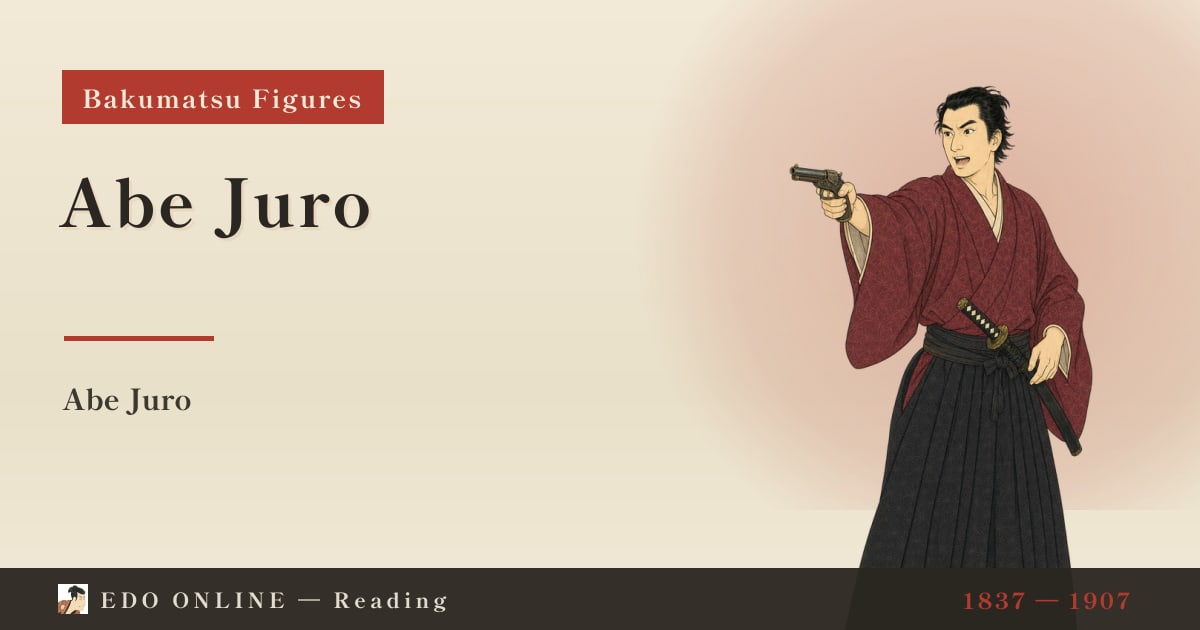
Abe Juro — The Former Member Who Talked
He deserted the Shinsengumi and rejoined under another name, shot at Kondo Isami as one of the Goryō Eji, and then grew apples in Sapporo. His late-Meiji testimony is where the ranking of the corps' best swordsmen comes from.
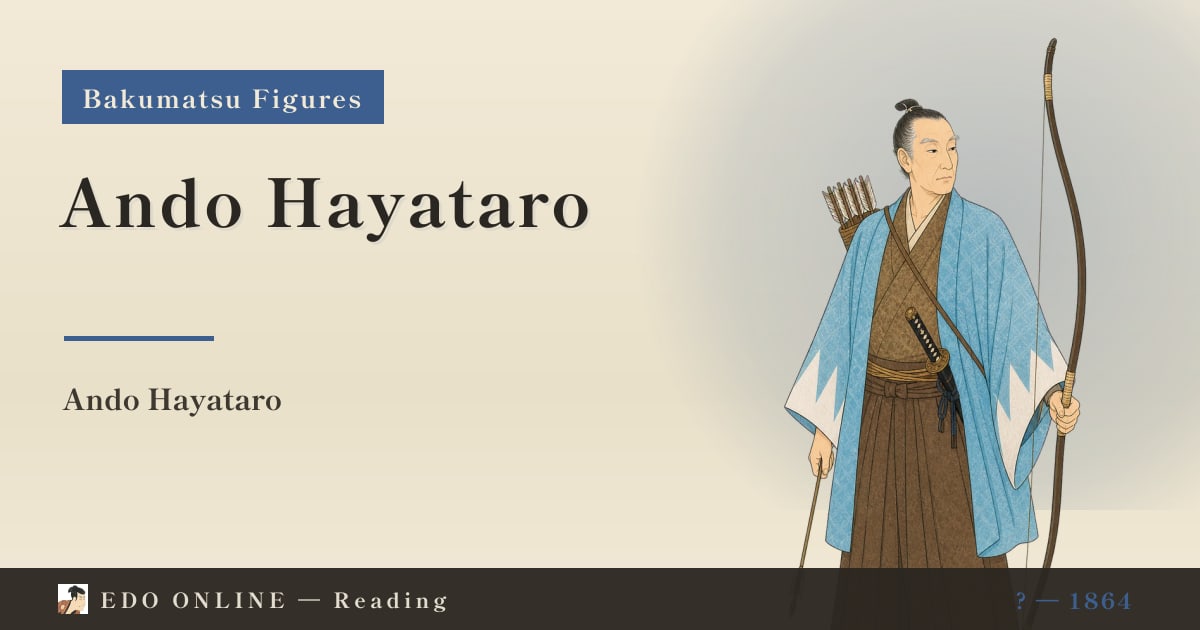
Ando Hayataro — The Shinsengumi's Record-Breaking Archer
He set the standing national record in the long-range shooting at the Tōdai-ji Great Buddha Hall, sending 8,685 arrows the length of the corridor. Nearly fifty, he joined the Shinsengumi and died of wounds taken in the back garden of the Ikedaya.
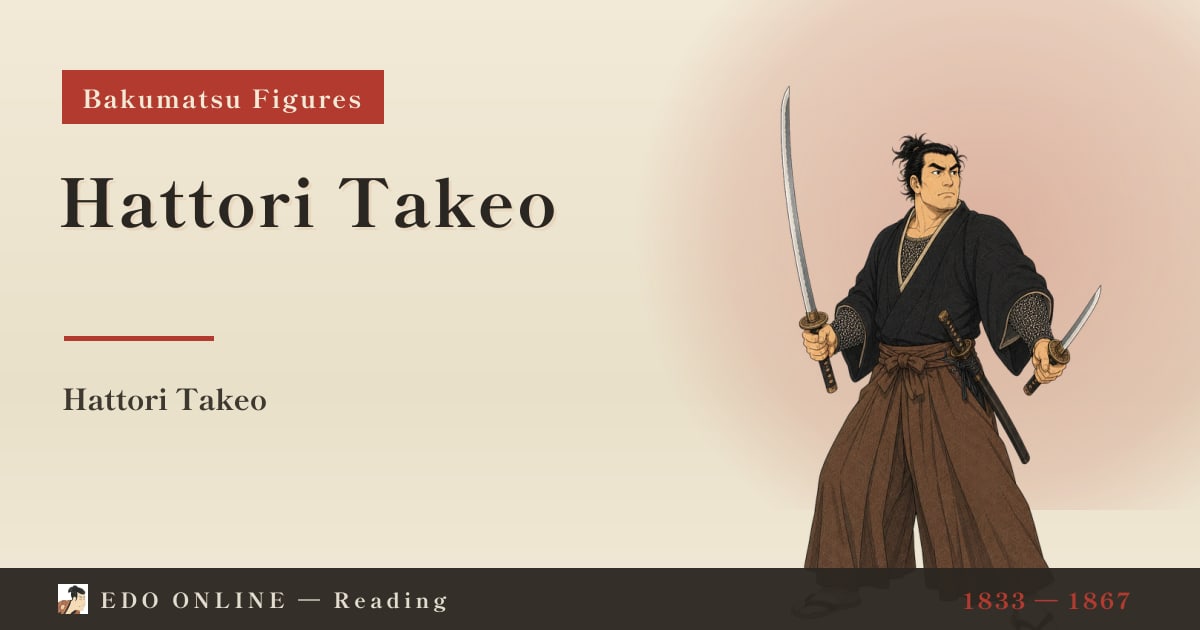
Hattori Takeo — Two Swords at Aburanokoji
A two-sword master and fencing instructor of the Shinsengumi who defected with the Goryō Eji. At Aburanokōji he alone wore mail, held a wall against the whole corps, and fell with more than twenty wounds.