Sasaki Tadasaburo — The Swordsman Said to Have Killed Sakamoto Ryoma
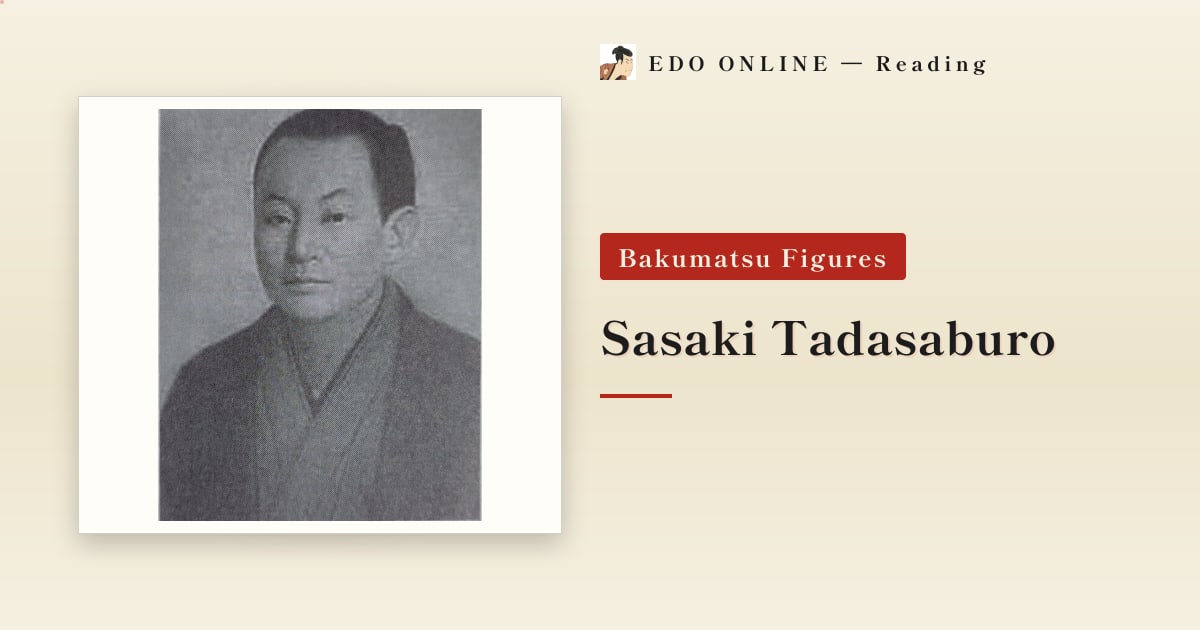
Who killed Sakamoto Ryoma? The leading answer is Sasaki Tadasaburo.
Contents
Who Was Sasaki Tadasaburo?
Tadasaburo was an officer of the shogunate's Kyoto Mimawarigumi.
The Mimawarigumi is often compared to the Shinsengumi. Both kept order in Bakumatsu Kyoto, but where the Shinsengumi was built from masterless men, the Mimawarigumi was a regular body of direct shogunal retainers — the more "official" of the two by rank.
As one of its officers, Tadasaburo policed Kyoto. And he is the man said to have carried out the Omiya incident — the assassination of Sakamoto Ryoma and Nakaoka Shintaro.
He was born in 1833 into a family connected to the Aizu line.
Sasaki Tadasaburo, "Best Short-Sword in Japan"
Tadasaburo was known as a master swordsman.
His weapon was the short sword (kodachi), harder to handle than a full-length blade, and he is said to have been called the best in Japan with it.
That Ryoma was cut down almost instantly at Omiya points to a practised hand. In a cramped room, a swordsman like Ryoma — off guard though he was — was killed before he could answer. That efficiency is cited as one ground for Tadasaburo's involvement.
Sasaki Tadasaburo and the Omiya Incident
In December 1867, on the upper floor of the Omiya in Kyoto, Sakamoto Ryoma and Nakaoka Shintaro were attacked.
Ryoma died on the spot, Nakaoka a few days later. Two loyalists vanished on the very eve of the Restoration.
The identity of the killers was long a mystery, and the Shinsengumi were at one time the leading suspects.
But from the later testimony of a surviving Mimawarigumi member and other evidence, the view now most widely held is that the killing was the work of the Kyoto Mimawarigumi, directed on the scene by Sasaki Tadasaburo.
One caution: this conclusion rests on circumstantial evidence and later testimony, not on hard proof. The argument over exactly who struck continues in its details.
Why Sakamoto Ryoma Was Targeted
The Mimawarigumi went after Ryoma because he was a dangerous man from the shogunate's point of view.
Ryoma was a broker of the drive to overthrow the shogunate and had a hand in the Satsuma-Choshu alliance. To the shogunal side he was a marked man, and he had earlier resisted officers at the Teradaya in Fushimi.
To the Mimawarigumi, Ryoma was a target in the line of duty. Not private grudge or special circumstance but a shogunal security force removing a man dangerous to the shogunate — that is how the Omiya incident is understood.
How Sasaki Tadasaburo Died at Toba-Fushimi
In January 1868 the battle of Toba-Fushimi began.
Tadasaburo led the Mimawarigumi as part of the shogunal army. Beaten by the imperial guns, he took a bullet and was gravely wounded.
He withdrew to Osaka and died of the wound. He was thirty-four (thirty-six by the traditional count).
The man said to have killed Ryoma fell on a battlefield himself little more than a month after Ryoma's death — barely two months after Omiya.
How Sasaki Tadasaburo Is Remembered
Tadasaburo usually appears in Ryoma's story as the villain.
But from his own side, he was an officer of a regular shogunal security force doing his job. The more Ryoma's story spread as heroism, the darker the picture painted of the man who cut him down.
The same act reverses in value depending on who wins the history. Tadasaburo is a case of it. Had the shogunate he served prevailed, Ryoma might have been remembered as the outlaw who was rightly suppressed.
Sasaki Tadasaburo Timeline
| Year | Event |
|---|---|
| 1833 | Born into a family connected to the Aizu line |
| 1860s | Becomes an officer of the shogunal Kyoto Mimawarigumi |
| Dec 1867 | The Omiya incident; said to have directed the killing of Sakamoto Ryoma and Nakaoka Shintaro |
| Jan 1868 | Gravely wounded at Toba-Fushimi |
| 1868 | Dies of the wound, aged 34 |
For those killed see Sakamoto Ryoma and Nakaoka Shintaro; for the other security force, the Shinsengumi.
Related reading
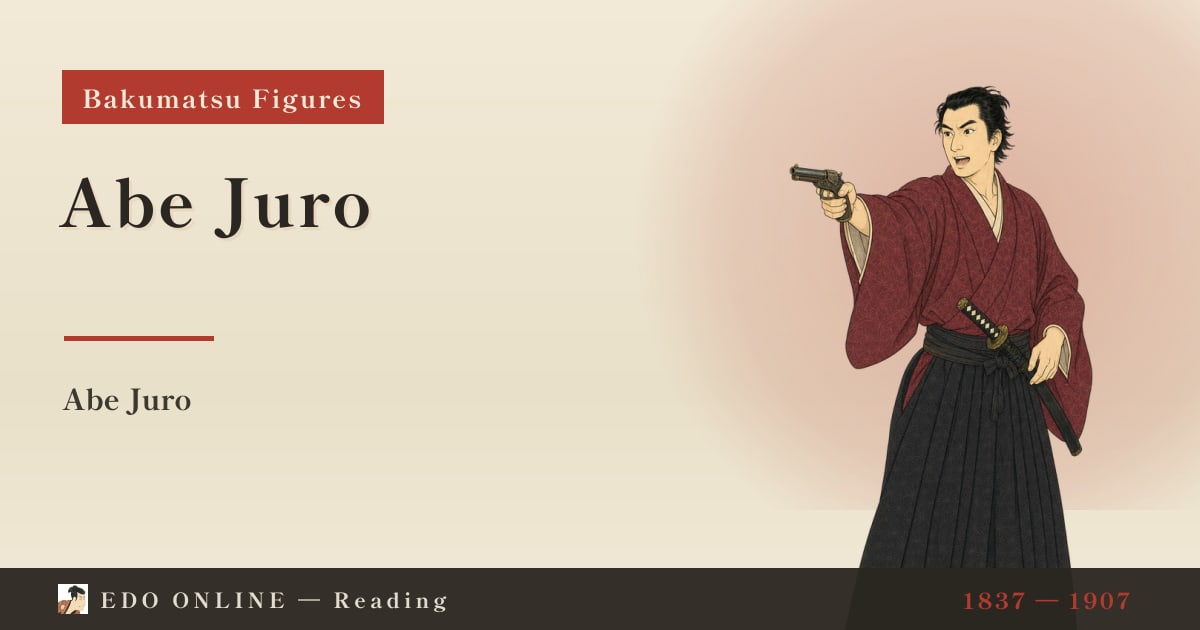
Abe Juro — The Former Member Who Talked
He deserted the Shinsengumi and rejoined under another name, shot at Kondo Isami as one of the Goryō Eji, and then grew apples in Sapporo. His late-Meiji testimony is where the ranking of the corps' best swordsmen comes from.
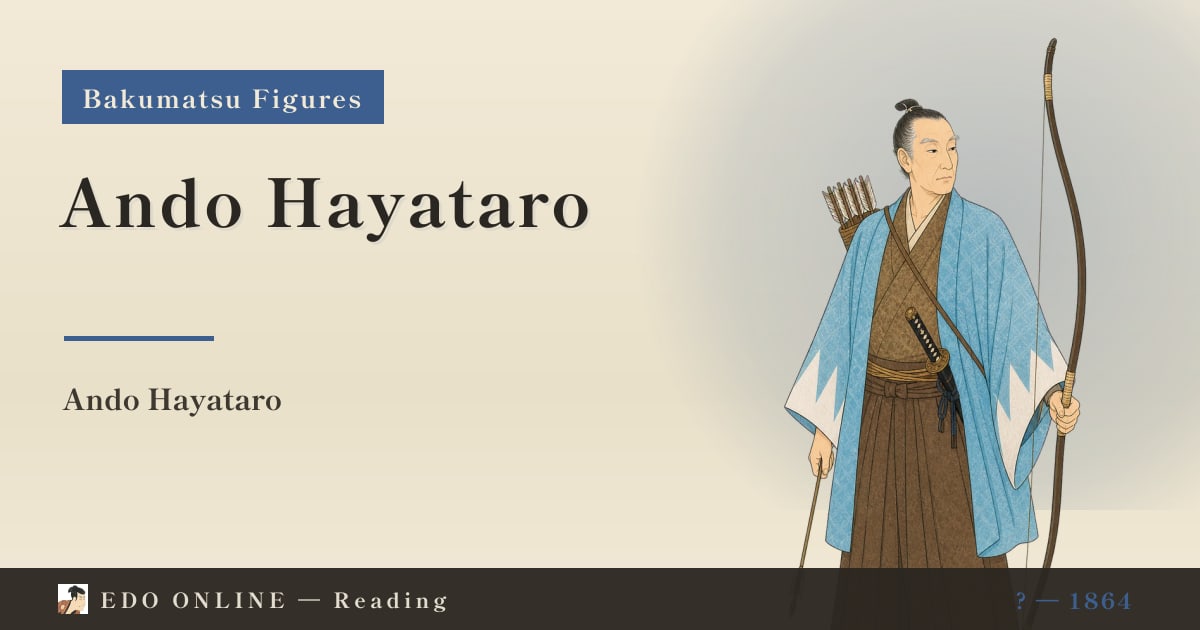
Ando Hayataro — The Shinsengumi's Record-Breaking Archer
He set the standing national record in the long-range shooting at the Tōdai-ji Great Buddha Hall, sending 8,685 arrows the length of the corridor. Nearly fifty, he joined the Shinsengumi and died of wounds taken in the back garden of the Ikedaya.
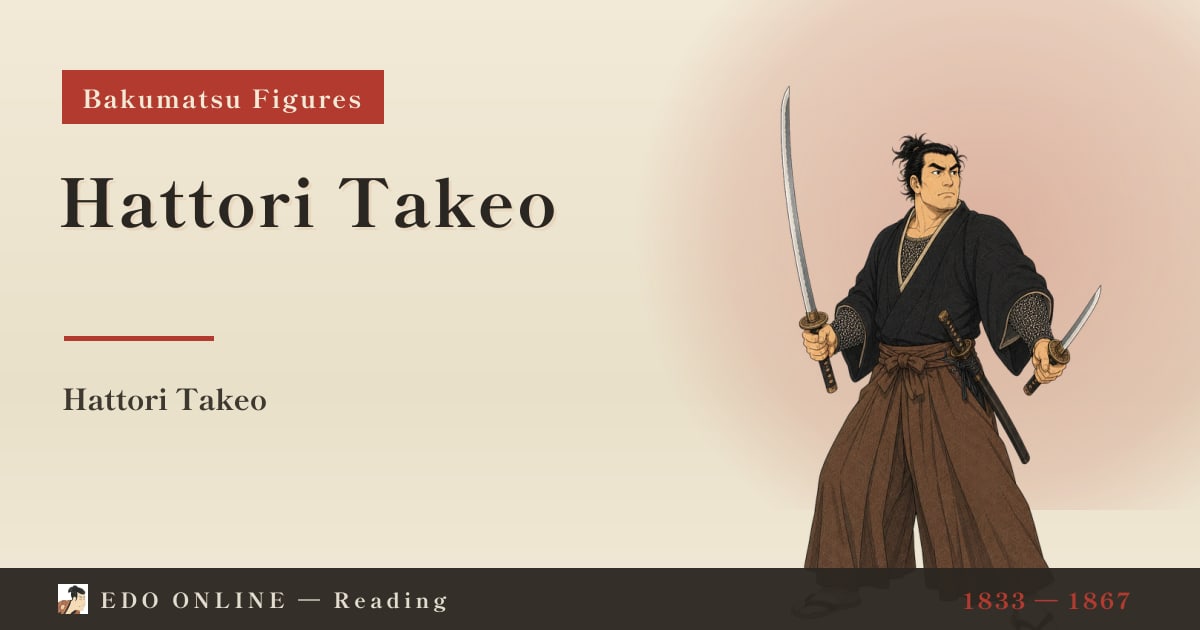
Hattori Takeo — Two Swords at Aburanokoji
A two-sword master and fencing instructor of the Shinsengumi who defected with the Goryō Eji. At Aburanokōji he alone wore mail, held a wall against the whole corps, and fell with more than twenty wounds.