Soma Kazue — The Last Commander of the Shinsengumi
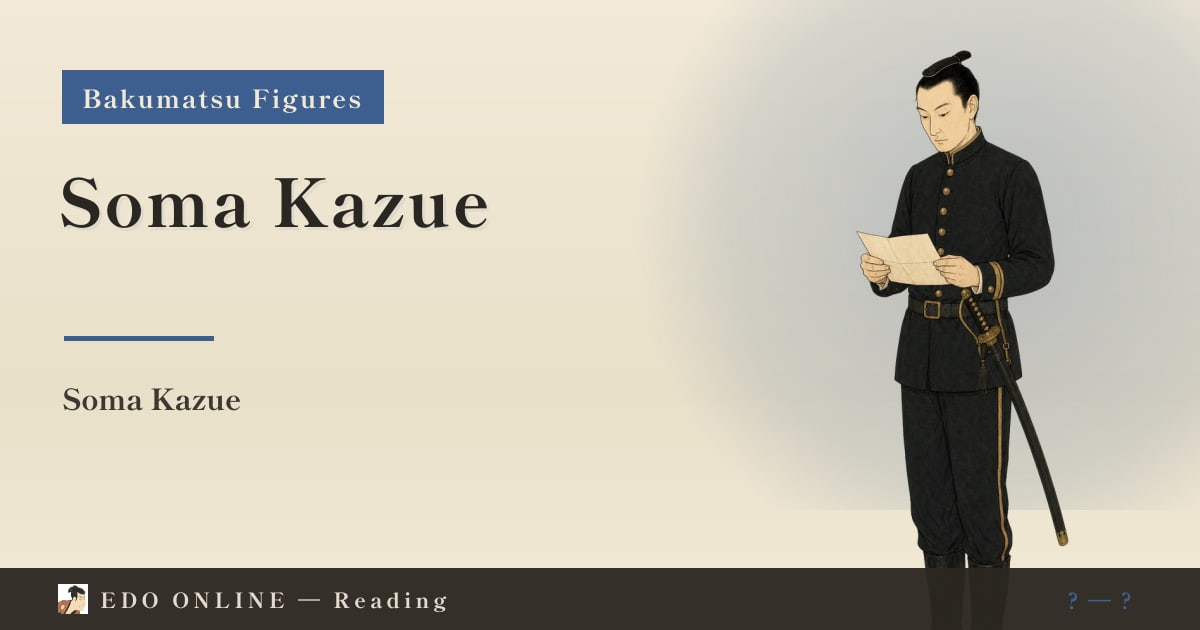
Someone had to put the last signature on the Shinsengumi. Sōma Kazue — who took command four days after Hijikata Toshizo was killed, and closed the corps within days.
Contents
Who Was Soma Kazue?
Sōma was a member of the Shinsengumi. His given name was Hajime, and he later called himself Sōma Tonomo; "Kazue" was the name he used in the corps.
When the Shinsengumi surrendered at Hakodate, he signed as commander in place of the dead Hijikata Toshizo. For this he is called the corps' last commander.
He was born a son of Funabashi Heihachirō Yoshikata, a retainer of the Kasama domain in Hitachi province. His birth year is given as either 1835 or 1843 and is unresolved.
His death is also unresolved. He is said to have died some time after February 1875 — but testimony discovered in recent years suggests he may still have been alive after 1897.
How Soma Kazue Reached the Shinsengumi
He left his domain in 1865 and answered the shogunate's call for infantry recruits.
In the second Chōshū expedition he was stationed at Mitsuura, in what is now Matsuyama in Ehime prefecture.
After that army was dissolved he joined the Shinsengumi. The date is unknown, but he was a member by the battle of Toba-Fushimi in January 1868.
He came in very late. He missed the years in which Kondo Isami and Hijikata Toshizo made the corps' name in Kyoto, joining at the end of that period and walking the whole retreat that followed Toba-Fushimi.
In the Kōyō Chinbutai he was made a section leader attached to the commander, and began to stand out.
Kondo Isami Saved Soma Kazue's Life
In April 1868 Kondo Isami surrendered to the imperial army at Nagareyama and was taken to the headquarters at Itabashi.
Sōma tried to save him.
Carrying a letter from Shōtō Gonnojō of the shogunate's army administration, he went to Itabashi to plead for Kondo's life.
Kondo had already been taken, and Sōma was arrested with him as an associate.
On 17 May 1868, Sōma was scheduled to be executed alongside him.
Kondo stopped it. At Kondo Isami's own plea, Sōma and Nomura Risaburō — arrested with them — were spared, and placed in the custody of the Kasama domain.
On the day he was beheaded, he saved someone else's life. No account of Kondo's end is complete without it.
How Soma Kazue Closed the Shinsengumi
Sōma escaped his confinement.
He joined the Shōgitai under Kasuga Saemon. When that force collapsed he fought through the Iwaki region with other former shogunal retainers, and met Hijikata Toshizo again at Sendai.
Under the regime Enomoto Takeaki and his colleagues established at Hakodate, he was responsible chiefly for policing the town.
On 20 June 1869, Hijikata Toshizo was killed at Hakodate.
The Shinsengumi men holding the Benten battery put their names to a letter of submission with Sōma as their commander. A letter by the physician Takamatsu Ryōun dates his appointment to 24 June 1869.
The history of the Shinsengumi ends with that signature.
From the Mibu Rōshi of spring 1863 to the Benten battery of summer 1869 — six years. With the end of the fighting around Goryōkaku, the corps was gone.
Soma Kazue's Exile and Unaccounted Death
On 3 November 1870 Sōma was exiled to Niijima, off Izu, on suspicion of involvement in the assassination of Ito Kashitaro.
On the same day, Oishi Kuwajiro was beheaded on the same charge.
On Niijima he was placed in the custody of a master carpenter, Uemura Jinbei, and opened a village school there. He also married Jinbei's second daughter, Matsu.
Pardoned in 1872, he moved to Tokyo with his wife. In 1873 he took a fifteenth-grade post in Toyooka prefecture, was promoted to fourteenth grade the next year, and worked mainly on judicial business.
Then, in February 1875, he was abruptly dismissed and returned to Tokyo.
What happened after that is unclear.
The conventional account is suicide. Matsu is said to have come home to find that he had cut his belly. He told her to say nothing of it, and she kept that to the end of her life. As a result the details of his death, and even his burial temple, remain unknown.
Against this, testimony found in recent years has been read as showing Sōma still alive after 1897, possibly serving as a district head somewhere in the provinces. The same material is said to hint at involvement in the 1863 assassination of Anegakōji Kintomo. This remains unverified and under examination, the provenance of the testimony included.
The man who closed the Shinsengumi has no established ending of his own.
Frequently asked questions
Who was Soma Kazue?
The last commander of the Shinsengumi. After Hijikata Toshizo was killed at Hakodate, he signed the corps' letter of submission as its commander.
Why was Soma Kazue not executed with Kondo Isami?
Because Kondo Isami pleaded for him. Sōma had been scheduled to die alongside him and was spared, together with Nomura Risaburō, at Kondo's own request.
When did the Shinsengumi end?
In June 1869, when the men at the Benten battery in Hakodate signed a letter of submission with Sōma as commander — six years after the Mibu Rōshi of 1863.
How did Soma Kazue die?
Conventionally by suicide some time after 1875, though his wife never spoke of it and no details survive. Recent testimony suggests he may have lived well past that.
Soma Kazue Timeline
| Year | Event |
|---|---|
| Birth year unknown | Born a son of a Kasama domain retainer (1835 or 1843) |
| 1865 | Leaves his domain and answers the shogunate's infantry recruitment |
| Second Chōshū expedition | Stationed at Mitsuura, in present-day Matsuyama |
| By Jan 1868 | A member of the Shinsengumi; section leader in the Kōyō Chinbutai |
| Apr 1868 | Goes to Itabashi to plead for Kondo Isami and is arrested with him |
| 17 May 1868 | Spared execution at Kondo's plea; placed in Kasama domain custody |
| 1868 | Escapes confinement for the Shōgitai; later meets Hijikata again at Sendai |
| 24 Jun 1869 | Becomes commander at the Benten battery and signs the surrender |
| 3 Nov 1870 | Exiled to Niijima over the killing of Ito Kashitaro |
| 1872 | Pardoned; enters prefectural service the following year |
| Feb 1875 | Abruptly dismissed; his subsequent death is unaccounted for |
For the commander he replaced see Hijikata Toshizo; for the man who saved him, Kondo Isami; for the roster, the Shinsengumi members; for the corps, the Shinsengumi.
Related reading
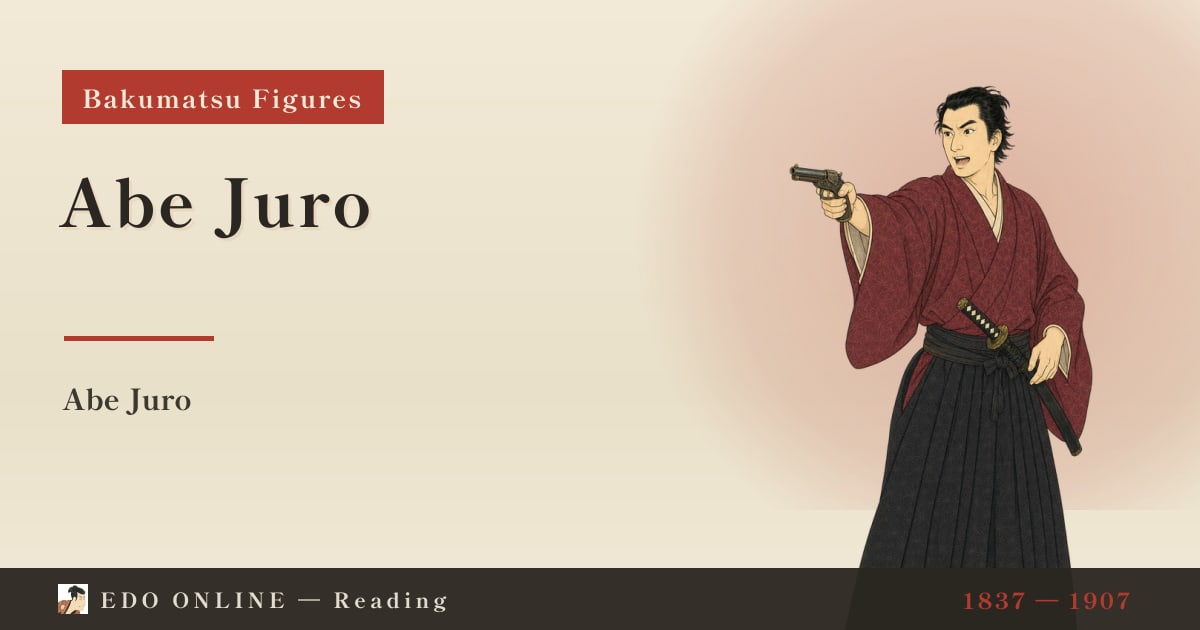
Abe Juro — The Former Member Who Talked
He deserted the Shinsengumi and rejoined under another name, shot at Kondo Isami as one of the Goryō Eji, and then grew apples in Sapporo. His late-Meiji testimony is where the ranking of the corps' best swordsmen comes from.
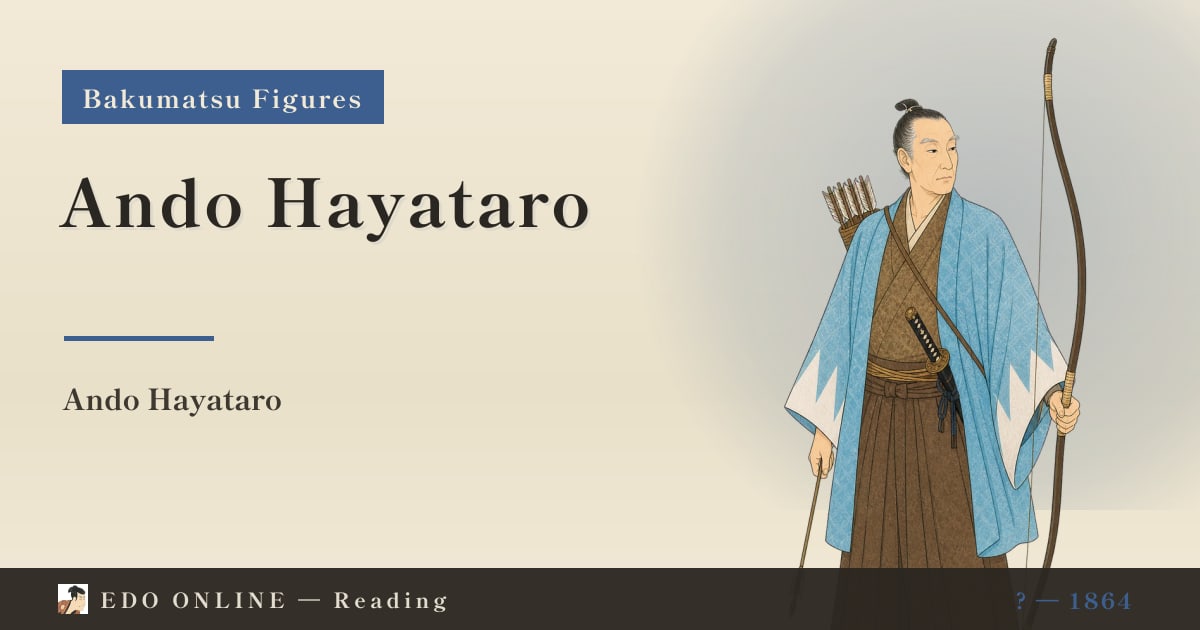
Ando Hayataro — The Shinsengumi's Record-Breaking Archer
He set the standing national record in the long-range shooting at the Tōdai-ji Great Buddha Hall, sending 8,685 arrows the length of the corridor. Nearly fifty, he joined the Shinsengumi and died of wounds taken in the back garden of the Ikedaya.
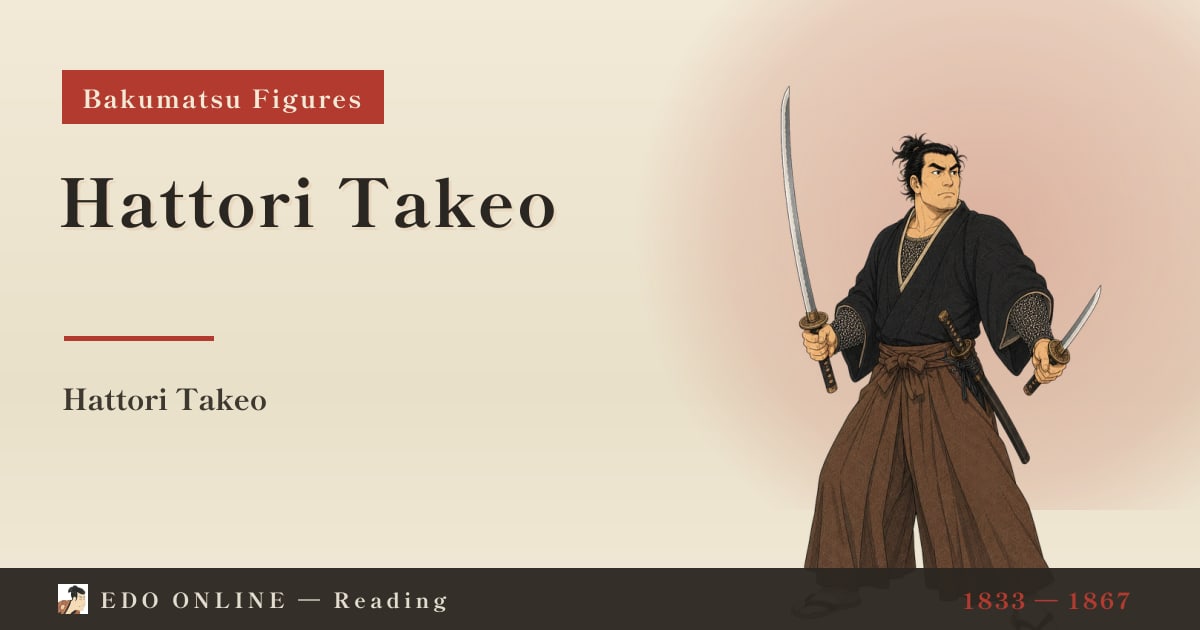
Hattori Takeo — Two Swords at Aburanokoji
A two-sword master and fencing instructor of the Shinsengumi who defected with the Goryō Eji. At Aburanokōji he alone wore mail, held a wall against the whole corps, and fell with more than twenty wounds.