Omura Masujiro — The Country Doctor Who Built an Army
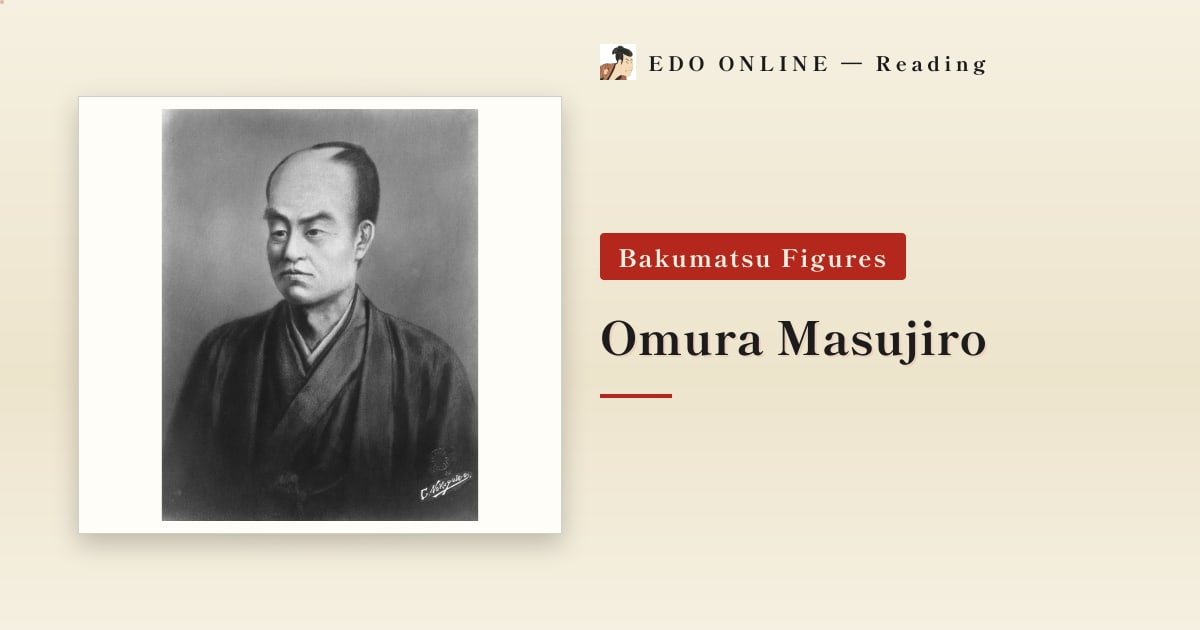
From physician to architect of an army. Few careers travel that far. Omura Masujiro was born Murata Zoroku.
Contents
Who Was Omura Masujiro?
Two things.
He served the imperial side in the Boshin War. As its operational planner he destroyed the Shogitai at Ueno in a single day.
He designed a modern army. Not a force of samurai but a national one, conscripted regardless of birth. He is generally called the founder of the Japanese army.
Omura Masujiro from a Village Practice to the Tekijuku
Born in Suo Province, in what is now Yamaguchi, to a village doctor. Not a samurai family. His birth year is given as either 1824 or 1825 and is not settled.
Studying medicine took him to Ogata Koan's Tekijuku in Osaka, where he rose to head student — the same school that produced Fukuzawa Yukichi.
What he acquired there was not only medicine. It was Dutch. And Dutch books at that time included European military science.
A man who could read the language turned out, incidentally, to be able to read the manuals. His entire change of career runs through that fact.
Omura Masujiro from Uwajima and Edo Back to Choshu
Uwajima domain noticed his languages and hired him, and he found himself building a steamship he had never seen, working from drawings and foreign books. It was at Uwajima that he taught Dutch to Kusumoto Ine.
He then moved to Edo, opened a school, and taught at the shogunate's institute for Western studies. He did not become a shogunal retainer: he held those teaching posts while remaining formally in Uwajima's service.
In 1860 his home domain of Choshu took him into its employ — before, not after, its clash with the Western squadron. The domain already needed someone who understood Western warfare.
Omura Masujiro and the Second Choshu Campaign
In 1866 the shogunate moved against Choshu again.
Omura commanded on the Sekishu front. Outnumbered, Choshu drove the shogunal army off.
Equipment and tactics explain it. Choshu carried Western rifles and fought dispersed rather than massed. The shogunal army, deployed in the older manner, could not answer it.
That defeat did decisive damage to the shogunate's authority, and Omura's reputation was made.
How Omura Masujiro Finished Ueno in a Day
In 1868 Edo was surrendered without a fight, but a body of former shogunal retainers, the Shogitai, dug in at Ueno.
Given charge of the operation, Omura is said to have announced that the battle would be over in one day.
He deliberately left a single line of retreat open and sealed the rest, then shelled the position from a distance with new Armstrong guns. The Shogitai tried to close and fight hand to hand, and broke before they arrived.
It ended that day, exactly as stated.
Arranging where people would die with that degree of calculation is also why opinions of him diverge.
How Omura Masujiro Was Assassinated
In 1869 Omura, now vice-minister of military affairs, began restructuring the armed forces.
His plan dismantled samurai privilege. A conscript army drawn from the whole population meant stripping the very men who had just won the war of their occupation and their standing.
That autumn he was attacked and badly wounded in Kyoto. The attackers are described as expulsionist ronin. Resentment of his military reforms is generally seen as the background, but no source fixes a single motive.
He was moved to Osaka for treatment, but the wound became infected, and he died in December 1869. Because his birth year is unsettled, he was forty-four or forty-five.
His design became law as the conscription ordinance a few years later. He was killed before it did.
The Omura Masujiro Statue at Yasukuni
A bronze statue of Omura stands on the approach to Yasukuni Shrine in Tokyo.
It is among the earliest Western-style bronzes made in Japan, and it is said to face toward Ueno — the ground where he destroyed the Shogitai.
Omura Masujiro Timeline
| Year | Event |
|---|---|
| 1824 or 1825 | Born to a village doctor in Suo Province, as Murata Zoroku |
| 1840s | Studies at the Tekijuku in Osaka and becomes head student |
| 1850s | Hired by Uwajima domain; works on steamship construction |
| late 1850s | Teaches in Edo, including at the shogunal institute for Western studies |
| 1860 | Enters the service of Choshu domain |
| 1866 | Repels the shogunal army on the Sekishu front |
| 1868 | Ends the battle of Ueno in a single day |
| 1869 | Begins military reform; attacked in Kyoto and dies in December, aged 44 or 45 |
For the war see the Boshin War, and for his schooling, rangaku and the Tekijuku.
Related reading
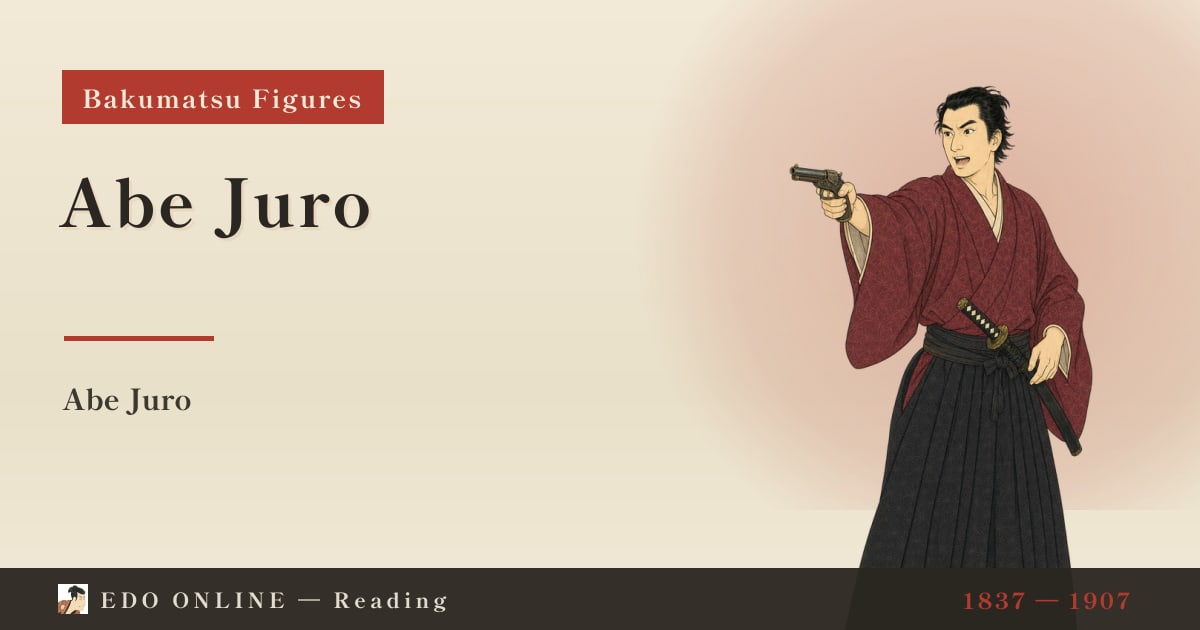
Abe Juro — The Former Member Who Talked
He deserted the Shinsengumi and rejoined under another name, shot at Kondo Isami as one of the Goryō Eji, and then grew apples in Sapporo. His late-Meiji testimony is where the ranking of the corps' best swordsmen comes from.
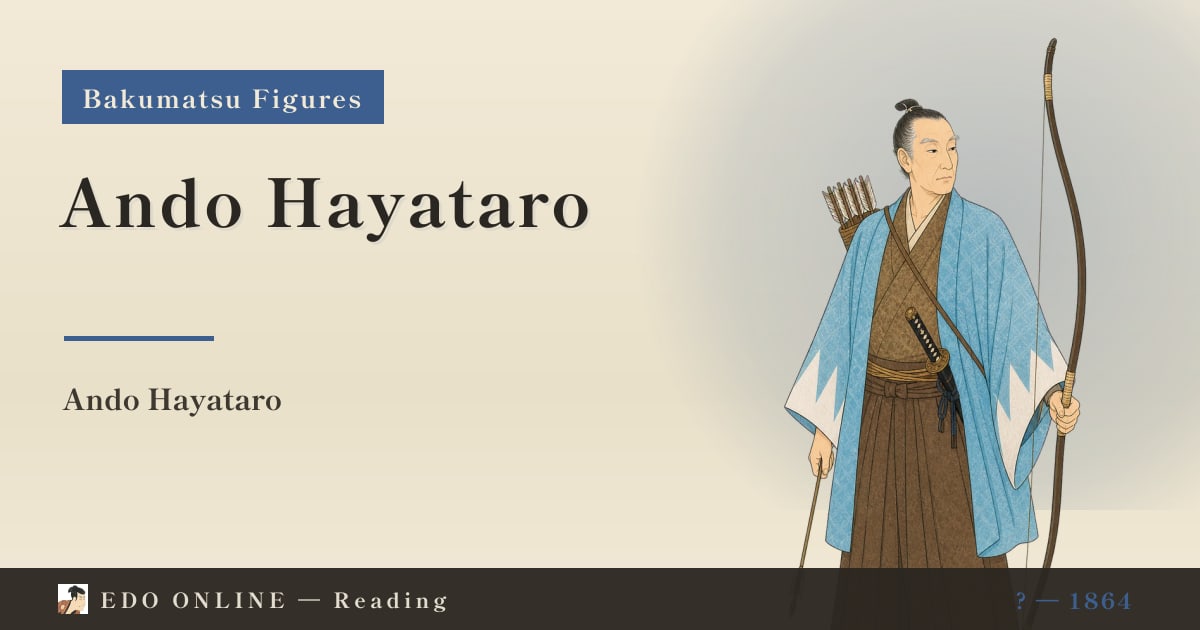
Ando Hayataro — The Shinsengumi's Record-Breaking Archer
He set the standing national record in the long-range shooting at the Tōdai-ji Great Buddha Hall, sending 8,685 arrows the length of the corridor. Nearly fifty, he joined the Shinsengumi and died of wounds taken in the back garden of the Ikedaya.
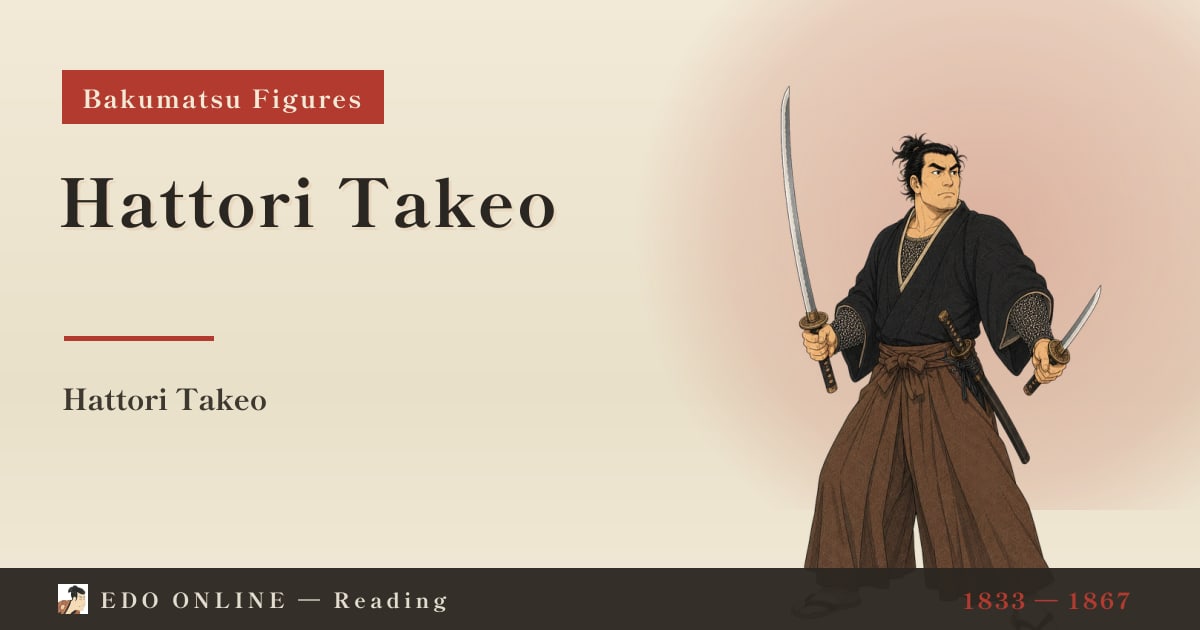
Hattori Takeo — Two Swords at Aburanokoji
A two-sword master and fencing instructor of the Shinsengumi who defected with the Goryō Eji. At Aburanokōji he alone wore mail, held a wall against the whole corps, and fell with more than twenty wounds.