Kiyokawa Hachiro — The Schemer Who Accidentally Created the Shinsengumi
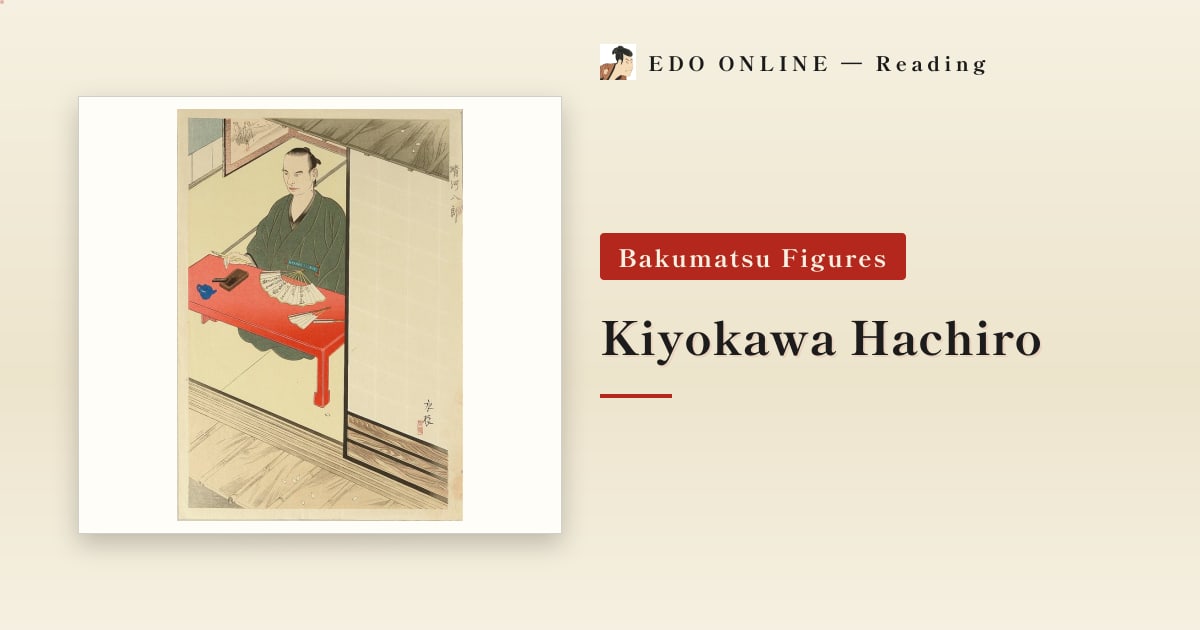
The Shinsengumi was not really the shogunate's idea. It came out of a scheme run by one masterless activist, Kiyokawa Hachiro — who was cut down himself fifty days later.
Contents
Who Was Kiyokawa Hachiro?
Kiyokawa came from Dewa province, in what is now Yamagata prefecture. Trained in both scholarship and swordsmanship, he ran his own school in Edo and stood near the centre of the loyalist movement.
His one great move was the Roshigumi, the corps of masterless samurai.
He persuaded the shogunate to recruit a corps of ronin to guard the shogun on his journey to Kyoto. Then, the night the corps arrived, he assembled the men and declared that they served not the shogunate but the emperor.
The shogunate recalled the corps to Edo at once — but some men stayed in Kyoto. Those men, under Kondo Isami and Serizawa Kamo, became the Shinsengumi.
He was born on 24 November 1830 and assassinated on 30 May 1863.
Kiyokawa Hachiro's Origins and His School in Edo
Kiyokawa was born into the Saito, a goshi (rural samurai) family of Kiyokawa village in Dewa; his childhood name was Motoji and his adult name Masaaki. It was a prosperous house that also brewed sake, and could afford to educate a son.
In Edo he studied Confucian texts and trained in swordsmanship at the Genbukan, Chiba Shusaku's celebrated Hokushin Itto-ryu school. Having both, he opened his own academy, the Kiyokawa juku, at Otamagaike in Kanda.
In 1860 he founded a loyalist society called the Kobi no Kai. Among its fifteen members was the young Yamaoka Tesshu.
In 1861 he killed a man in Edo, and with officers after him he spent the following period travelling western Japan, meeting activists everywhere he went. That year on the run gave him a nationwide network.
Kiyokawa Hachiro's Roshigumi Scheme
Late in 1862 Kiyokawa put a proposal to the shogunate through an intermediary: raise a corps of ronin to escort the shogun Tokugawa Iemochi to Kyoto.
The shogunate agreed. More than two hundred and thirty men signed up, and because recruitment ignored rank, it filled with unaffiliated swordsmen — including Kondo Isami and the rest of the Shieikan school.
The corps left Edo in the second month of 1863 and reached Mibu in Kyoto on 10 April 1863.
That night Kiyokawa gathered the men and made his speech: we are not the shogunate's soldiers; we are the emperor's, raised to expel the barbarians. He had a petition to the imperial court already drafted.
A unit the shogunate had paid to raise had turned into an imperial force on the day it arrived. The recall order came immediately.
How the Shinsengumi Came Out of Kiyokawa's Scheme
Back in Edo the corps was reconstituted as the Shinchogumi, policing the city under the command of the Shonai domain.
But part of it never left Kyoto. Kondo Isami, Hijikata Toshizo and Okita Soji of the Shieikan, together with Serizawa Kamo's Mito faction, placed themselves under Matsudaira Katamori of Aizu and took the name Mibu Roshigumi. That is the beginning of the Shinsengumi.
Without Kiyokawa's reversal there is no Shinsengumi. A loyalist's scheme produced the unit that would kill more loyalists than any other — one of the sharper ironies of the period.
How Kiyokawa Hachiro Died
A scheme that size made him impossible for the shogunate side to ignore.
On 30 May 1863, at the Ichinohashi bridge in Azabu, Edo, Kiyokawa was attacked and killed by a party led by Sasaki Tadasaburo. He was thirty-two.
Sasaki commanded the shogunate's Kyoto Mimawarigumi and is the man most often named as the one who later killed Sakamoto Ryoma.
Kiyokawa's grave is at Denzu-in in Bunkyo ward, Tokyo. In his home town in Yamagata, a shrine was later built in his name.
Why Kiyokawa Hachiro Is Called a Schemer
Kiyokawa is usually described as a schemer — a man who would use even the shogunate as a tool if it served the cause.
Opinion was split in his own day too. Some recognised the ability; others simply did not trust him, and several of his own corpsmen wrote him off the moment he reversed the unit in Kyoto.
Still, the amount of history his one scheme moved is large. Without the Roshigumi there is no Shinsengumi and no Shinchogumi, and the men at the Ikedaya would have been different men. The Bakumatsu was a period in which one person's scheme could still move an institution.
Kiyokawa Hachiro Timeline
| Year | Event |
|---|---|
| 24 Nov 1830 | Born into a rural samurai family in Kiyokawa village, Dewa |
| 1850s | Studies Confucianism in Edo, trains at Chiba Shusaku's Genbukan, opens his own school |
| 1860 | Founds the Kobi no Kai with fifteen members, including Yamaoka Tesshu |
| 1861 | Kills a man in Edo and travels western Japan pursued by officers |
| 1862 | Proposes the Roshigumi to the shogunate |
| 10 Apr 1863 | The corps reaches Mibu in Kyoto; Kiyokawa declares it an imperial force |
| 1863 | The corps returns to Edo as the Shinchogumi; those who stayed become the Shinsengumi |
| 30 May 1863 | Killed at Ichinohashi in Azabu by Sasaki Tadasaburo's party, aged 32 |
For the unit his scheme produced see the Shinsengumi; for his ally, Yamaoka Tesshu; for the man who killed him, Sasaki Tadasaburo.
Related reading
Abe Juro — The Former Member Who Talked
He deserted the Shinsengumi and rejoined under another name, shot at Kondo Isami as one of the Goryō Eji, and then grew apples in Sapporo. His late-Meiji testimony is where the ranking of the corps' best swordsmen comes from.
Ando Hayataro — The Shinsengumi's Record-Breaking Archer
He set the standing national record in the long-range shooting at the Tōdai-ji Great Buddha Hall, sending 8,685 arrows the length of the corridor. Nearly fifty, he joined the Shinsengumi and died of wounds taken in the back garden of the Ikedaya.
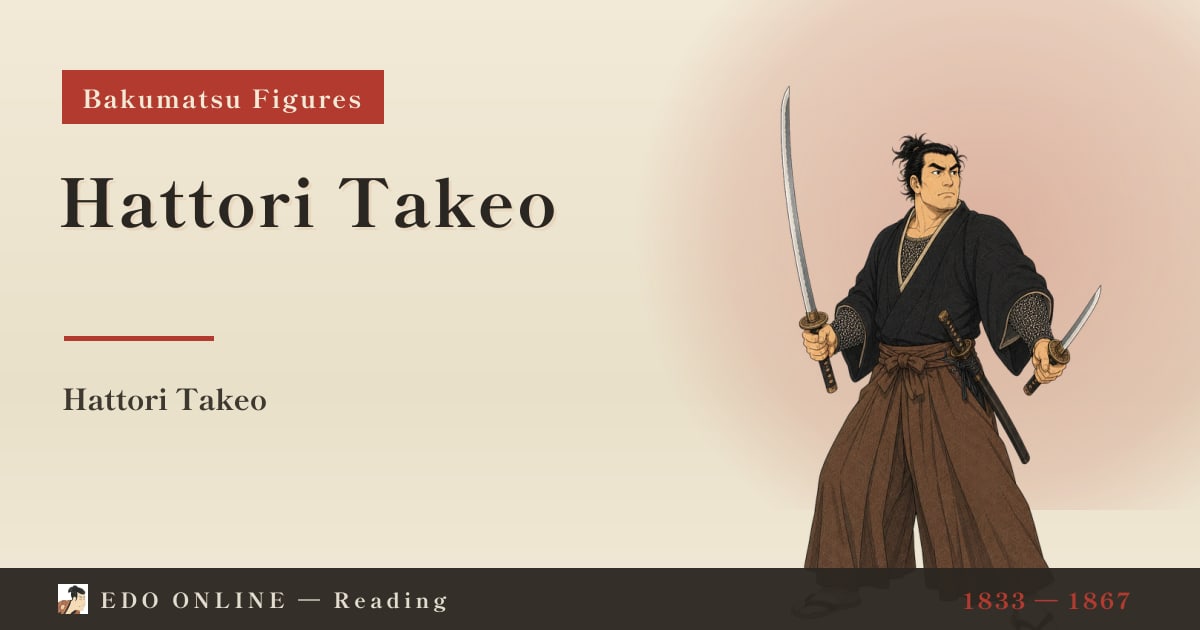
Hattori Takeo — Two Swords at Aburanokoji
A two-sword master and fencing instructor of the Shinsengumi who defected with the Goryō Eji. At Aburanokōji he alone wore mail, held a wall against the whole corps, and fell with more than twenty wounds.