Shinohara Tainoshin — In the Party That Ambushed Kondo Isami
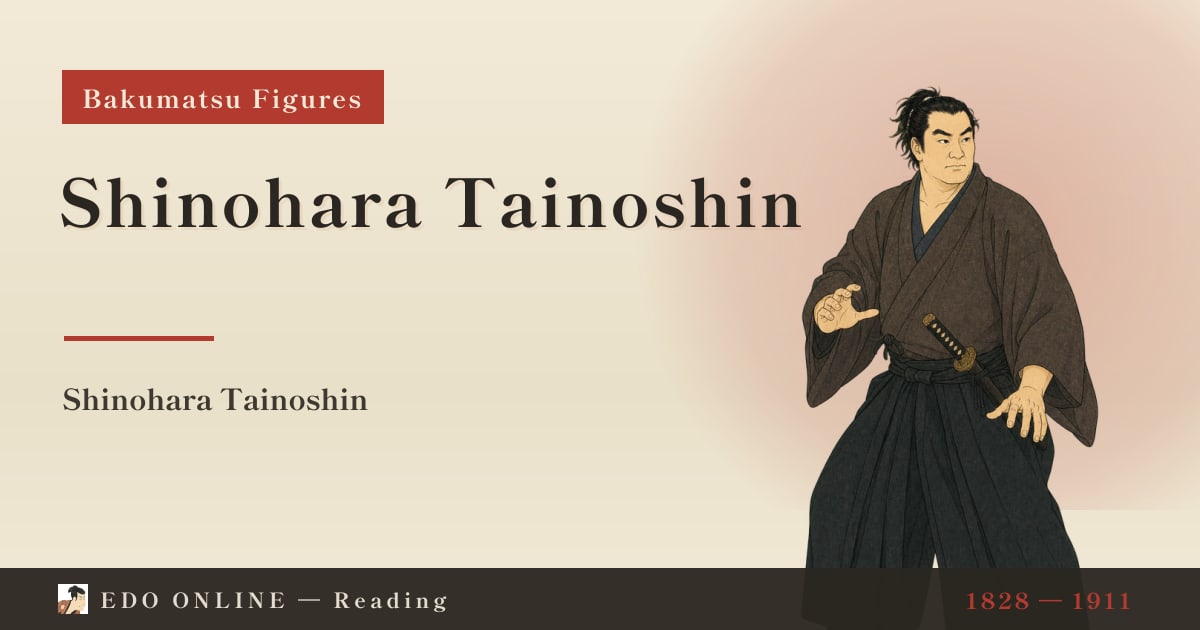
One of the men who ambushed Kondo Isami lived another forty-three years. Shinohara Tainoshin. He became a Christian in old age.
Contents
Who Was Shinohara Tainoshin?
Shinohara was an inspector of the Shinsengumi and its instructor in jūjutsu.
He later left with Ito Kashitaro to become one of the Goryō Eji.
He was born on 22 December 1828 at Takami village in Chikugo province, now Ukiha in Fukuoka prefecture, eldest son of Shinohara Motosuke, a wealthy farmer and stonemason.
His name changes repeatedly. Taisuke as a boy; Shinozuka Tomohei and Hata Kawachi as covers; and after the Restoration Hata Shigechika.
He died in Aoyama, Tokyo, on 13 June 1911, aged eighty-two. His grave is in Aoyama cemetery.
Shinohara Tainoshin's Martial Training
Shinohara collected schools.
He learned spear and sword from Mori Heiemon of the Kurume domain and from an instructor of the Taneda Hōzōin line, and in 1845 took up Ryōi Shintō-ryū jūjutsu under Shimozaka Gorōbei. In Edo he added Hokushin Ittō-ryū.
That accumulation is why he held the jūjutsu instructorship. Matsubara Chuji held the same post, another reminder that the Shinsengumi was never a sword-only outfit.
How Shinohara Tainoshin Reached the Shinsengumi
His early adulthood is a loyalist's wandering.
He became an attendant to Arima Ukon, a chief retainer of Kurume, and went up to Edo in 1857 on duty at the domain residence. Shaken by the assassination outside the Sakurada gate in 1860, he fled the residence the following month for Mito.
From 1861 he sheltered with jūjutsu masters in Edo, and under the bannerman Kubota Shigekatsu absorbed a hard-line expulsionist politics. The following year he mixed with loyalist activists in Osaka and Kyoto.
In 1863 he followed Kubota into employment at the Kanagawa magistracy, guarding the foreign settlement at Yokohama. It was there he grew close to Hattori Takeo, Kanō Washio, Sano Shimenosuke — and to Ito Kashitaro.
In October that year he made trouble. When three Englishmen forced their way into the customs house, he and others tied them up and left them on the beach — after which he went into hiding in Edo.
In October 1864 he travelled up to Kyoto with Ito, Suzuki Mikisaburo and four others, on the understanding that they would join the corps.
Shinohara alone did not join at once. He stayed at Tani Mantarō's hall in Osaka and looked over the Kyoto-Osaka region first, only signing on in 1865. The hall belonged to Tani Sanjuro's brother, and his friendship with the Tani family outlasted the Restoration.
Shinohara Tainoshin and the Ambush of Kondo Isami
In March 1867 he left the Shinsengumi with the founding of the Goryō Eji, calling himself Hata Kawachi.
The Goryō Eji commission is itself credited to Shinohara's efforts. He built the framework the defection travelled on.
After Ito Kashitaro was assassinated in the Aburanokōji affair of 18 November, Shinohara was sheltered in the Satsuma residence.
Then, on 12 January 1868, Shinohara and the other surviving Goryō Eji ambushed Kondo Isami on the Fushimi road.
Kondo was shot in the shoulder and badly hurt. Who fired is not established. That Shinohara was in the party is as far as the sources go. It was Shimada Kai who drove his horse clear and saved his life.
The wound mattered. Kondo went into the battle of Toba-Fushimi with it unhealed, and it shadowed his command from then on.
At Toba-Fushimi in 1868 Shinohara fought as part of the Satsuma force. In the Boshin War he joined the Sekihōtai, was imprisoned, then released and commissioned a sergeant, earning distinction in the Aizu and Echigo campaigns.
Shinohara Tainoshin After the Restoration
He renamed himself Hata Shigechika.
For his service he received hereditary samurai status, a grant of 250 ryō, and a lifetime stipend. He was a junior inspector of the Danjōdai in 1869 and an inspector for the Mint in 1872.
He then tried business and failed at it.
And in his last years he converted to Christianity.
A man who had once tied up Englishmen in the foreign settlement in the name of expelling the barbarians died a Christian. Where the generation that shouted for expulsion actually ended up is legible in one life.
He pushed his sons hard on English. His eldest, Yasuchika, became an architect, and when he worked on the Imperial Hotel its designer Frank Lloyd Wright took a liking to him. The suggestion that the Goryō Eji were studying English also comes from a notebook Shinohara left behind.
Corrections to the Record on Shinohara Tainoshin
Some invention has settled into his biography.
Shiba Ryōtarō's Shinsengumi Keppūroku has him dying of a middle-ear infection brought on by a habit of washing his ears with water.
It is fiction. According to his eldest son's wife, there was no such habit, and he never had any trouble with his ears in his life.
The Hata Shigechika Diary, likewise, is not a diary but a memoir he wrote at the very end of the Meiji period. Yasuchika was close to Shimozawa Kan and appears as a witness in Shimozawa's Shinsengumi books — but the Shinohara anecdotes Shimozawa wrote contain a great deal of invention.
After the Restoration Shinohara said plainly that the purpose of the Ito group's joining the corps had been to convert the Shinsengumi to the imperial cause. Kondo Isami, he wrote, refused to hear it, saying that everything they had they owed to the Tokugawa. The two sides were never compatible.
Frequently asked questions
Who was Shinohara Tainoshin?
An inspector and jūjutsu instructor of the Shinsengumi who left with Ito Kashitaro to join the Goryō Eji and rode in the party that ambushed Kondo Isami.
Did Shinohara Tainoshin shoot Kondo Isami?
He was part of the Goryō Eji group that ambushed Kondo Isami on the Fushimi road on 12 January 1868. Kondo was shot in the shoulder and seriously wounded, but who fired is not established.
Did Shinohara Tainoshin die of an ear infection?
No. The story that a habit of washing his ears killed him comes from a Shiba Ryōtarō novel; his family said he never had ear trouble at all.
What did Shinohara Tainoshin do after the Restoration?
He took the name Hata Shigechika and held posts as a Danjōdai inspector and an inspector for the Mint. He later failed in business and converted to Christianity late in life.
Shinohara Tainoshin Timeline
| Year | Event |
|---|---|
| 1828 | Born at Takami village, Chikugo province, to a wealthy farming and stonemason family |
| 1845 | Takes up Ryōi Shintō-ryū jūjutsu, having already trained in spear and sword |
| 1857 | Goes up to Edo on Kurume domain duty |
| 1860 | Flees the domain residence for Mito after the Sakurada gate assassination |
| 1863 | Guards the Yokohama foreign settlement for the Kanagawa magistracy; assaults three Englishmen |
| Oct 1864 | Travels to Kyoto with Ito Kashitaro; stays at Tani Mantarō's hall in Osaka |
| 1865 | Joins the Shinsengumi as inspector and jūjutsu instructor |
| Mar 1867 | Leaves with the founding of the Goryō Eji; calls himself Hata Kawachi |
| Nov 1867 | Sheltered in the Satsuma residence after the Aburanokōji affair |
| 12 Jan 1868 | Ambushes Kondo Isami on the Fushimi road |
| 1868 | Fights at Toba-Fushimi with Satsuma; later the Sekihōtai, then Aizu and Echigo as a sergeant |
| 1869 | Junior inspector of the Danjōdai; takes the name Hata Shigechika |
| 13 Jun 1911 | Dies in Aoyama, Tokyo, aged eighty-two |
For the men he followed see Ito Kashitaro and Suzuki Mikisaburo; for the roster, the Shinsengumi members; for the corps, the Shinsengumi.
Related reading
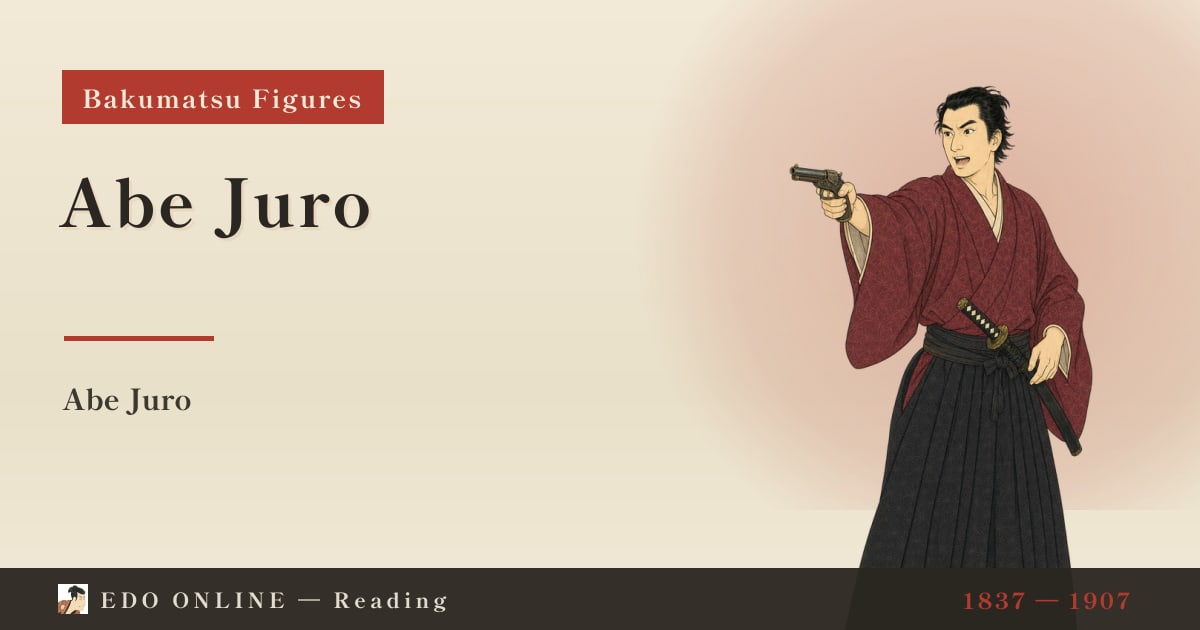
Abe Juro — The Former Member Who Talked
He deserted the Shinsengumi and rejoined under another name, shot at Kondo Isami as one of the Goryō Eji, and then grew apples in Sapporo. His late-Meiji testimony is where the ranking of the corps' best swordsmen comes from.
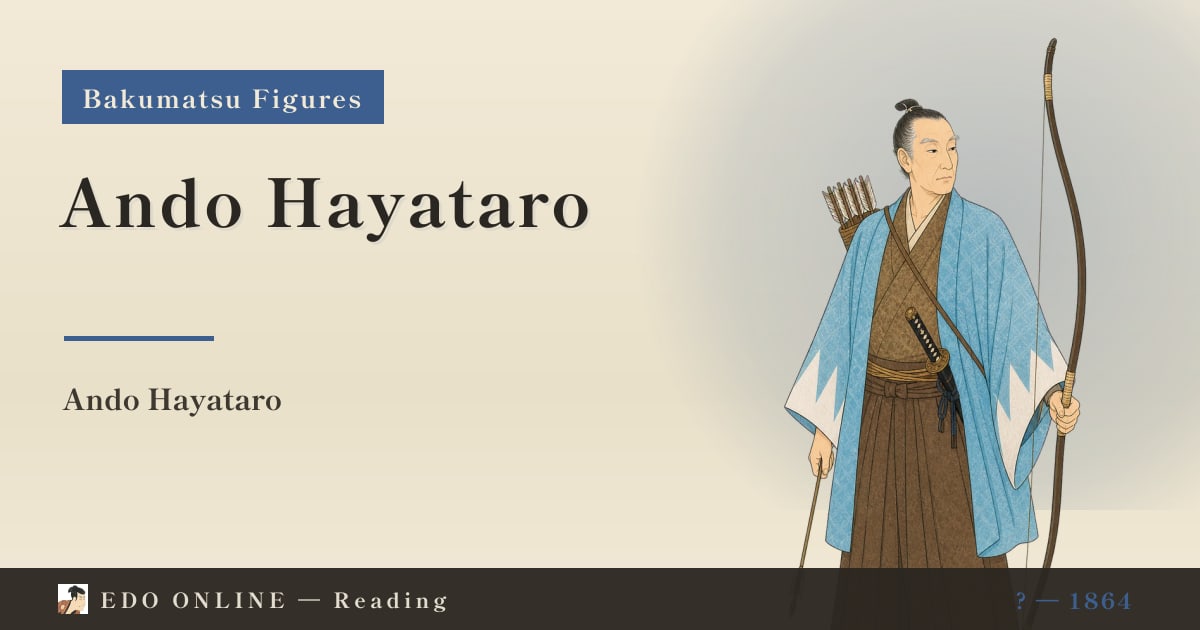
Ando Hayataro — The Shinsengumi's Record-Breaking Archer
He set the standing national record in the long-range shooting at the Tōdai-ji Great Buddha Hall, sending 8,685 arrows the length of the corridor. Nearly fifty, he joined the Shinsengumi and died of wounds taken in the back garden of the Ikedaya.
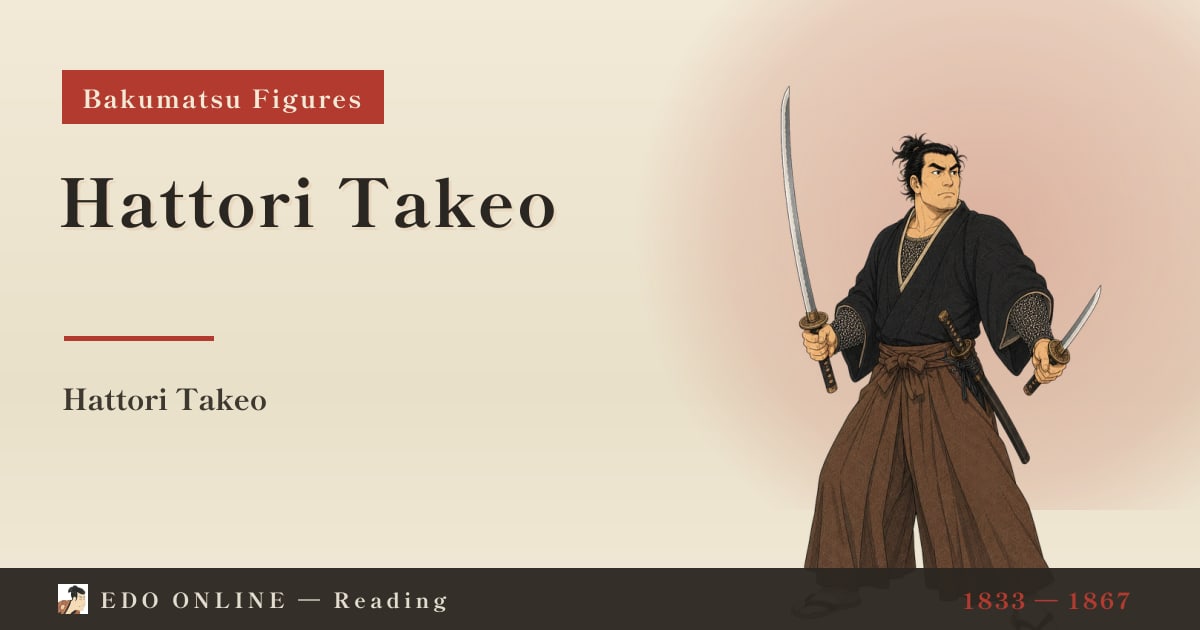
Hattori Takeo — Two Swords at Aburanokoji
A two-sword master and fencing instructor of the Shinsengumi who defected with the Goryō Eji. At Aburanokōji he alone wore mail, held a wall against the whole corps, and fell with more than twenty wounds.