Kano Washio — The Man Who Identified Kondo Isami at Itabashi
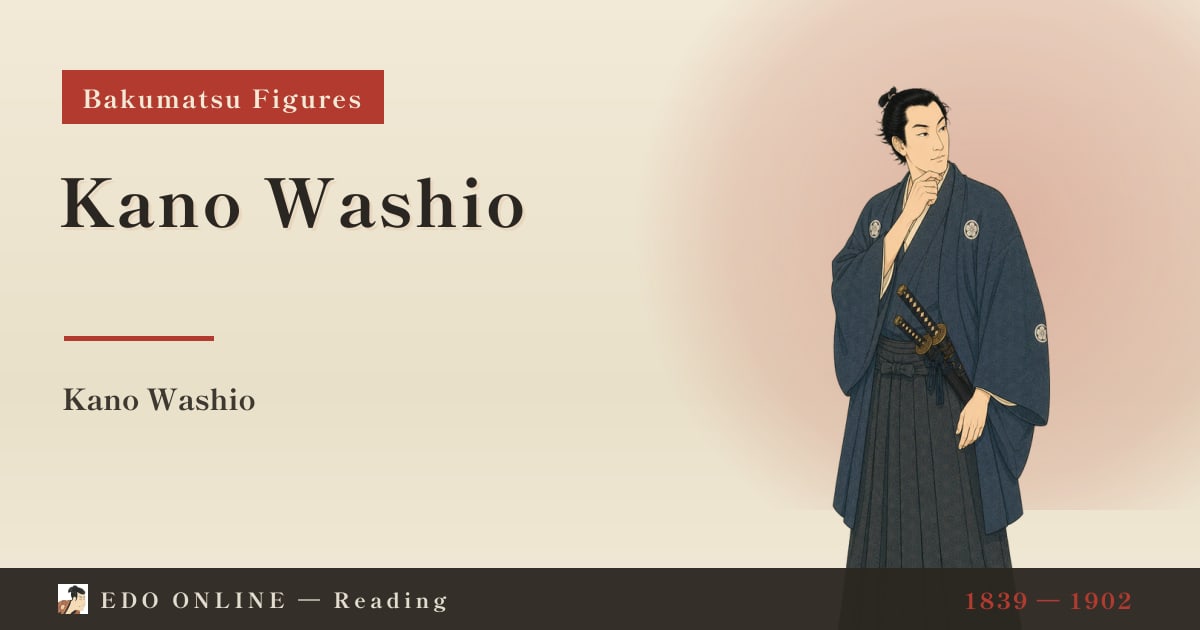
Kondo Isami surrendered under a false name. The man who saw through it had served under him. Kanō Washio. His word cost Kondo his head.
Contents
Who Was Kano Washio?
Kanō was a member of the Shinsengumi and later one of the Goryō Eji. After the Restoration he renamed himself Michihiro.
He was born on 14 December 1839 at Kanō village in Izu province, eldest son of a farmer named Takano Hanpei.
He died at his home in Azabu, Tokyo, on 27 October 1902, aged sixty-two. His grave is in Aoyama cemetery.
How Kano Washio Reached the Shinsengumi
He went to Edo young to train in swordsmanship, entering the Hokushin Ittō-ryū Chiba school at Otamagaike in Kanda. He later studied under Ito Kashitaro, who lived at Nakagawa-chō in Fukagawa.
He also accompanied Kubota Shigekatsu into service at the Kanagawa magistracy, alongside Shinohara Tainoshin, guarding the foreign settlement at Yokohama.
Yokohama is where Ito, Shinohara, Hattori Takeo and Sano Shimenosuke came together.
In October 1864 he answered the corps' recruitment with Ito's party and joined. The reorganisation of the following spring made him a corporal.
Kano Washio and the Aburanokoji Affair
In March 1867 he joined the founding of the Goryō Eji and left the Shinsengumi.
In the Aburanokōji affair that November their leader Ito Kashitaro was killed. Against the seven men who went to collect the body, the Shinsengumi laid an ambush with more than forty.
Todo Heisuke, Hattori Takeo and Monai Arinosuke were cut down.
Kanō, Shinohara Tainoshin, Suzuki Mikisaburo and Tomiyama Yahei broke out and ran for the Satsuma residence, where they were sheltered.
On 12 January 1868, with the other survivors, he ambushed Kondo Isami on the Fushimi road in reprisal. Kondo got away, but with a gunshot wound to the right shoulder. Who fired and who carried a spear differs between the survivors' recollections; Kanō cannot be identified as the man who shot him.
How Kano Washio Identified Kondo Isami
On 25 April 1868, at Nagareyama in Shimōsa.
Kondo Isami surrendered to the imperial army calling himself Ōkubo Yamato.
He was taken at Nagareyama and sent to headquarters at Itabashi.
There, at the identification, Kanō recognised him.
Kondo could no longer pass as an ordinary officer, and was beheaded at the Itabashi execution ground later that month.
Only a former subordinate could have done it. Kondo intended to pass under a false identity — an intention that cannot survive the presence, on the other side, of a man who knew his face.
Shinohara Tainoshin rode in the Fushimi ambush; Kanō unmasked him at Itabashi. The Goryō Eji survivors repaid Ito's death in two stages.
Kano Washio After the Restoration
In the Boshin War he served in the second unit of the Sekihōtai and then with the Satsuma force.
In 1871 he crossed to Sapporo to work for the Hokkaidō Colonisation Commission. He moved to the Ministry of Agriculture and Commerce in 1882 and into a private company in 1886.
He died at Azabu on 27 October 1902. His gravestone carries his wife Kimiko's name alongside his own, as "the grave of Kanō Michihiro." His son Junshirō rose to naval engineer captain.
He was not the only former member to end up in the Colonisation Commission. Abe Juro served there and in the Hokkaidō government, and Nagakura Shinpachi settled in Hokkaidō too. For men who had fought on the shogunate's side, the north was one of very few places to go.
Frequently asked questions
Who was Kano Washio?
A corporal of the Shinsengumi who defected with the Goryō Eji. At the Itabashi identification he recognised Kondo Isami, who had surrendered under a false name.
Who identified Kondo Isami?
Kanō Washio. Kondo Isami surrendered as Ōkubo Yamato and was taken at Nagareyama on 25 April 1868; Kanō recognised him at the identification after he was sent to Itabashi.
Did Kano Washio take part in the ambush of Kondo Isami?
Yes. On 12 January 1868 he was among the Goryō Eji survivors who ambushed Kondo Isami on the Fushimi road. Kondo took a gunshot wound to the right shoulder, but who fired is not established.
What did Kano Washio do after the Restoration?
He crossed to Sapporo in 1871 to serve the Hokkaidō Colonisation Commission, later moving to the Ministry of Agriculture and Commerce and then to private business. He died in Tokyo in 1902.
Kano Washio Timeline
| Year | Event |
|---|---|
| 1839 | Born at Kanō village in Izu province, eldest son of a farmer |
| Training years | Enters the Hokushin Ittō-ryū Chiba school; later studies under Ito Kashitaro |
| c. 1863 | Guards the Yokohama foreign settlement with Shinohara Tainoshin |
| Oct 1864 | Joins the Shinsengumi with Ito's party |
| Spring 1865 | Becomes a corporal |
| Mar 1867 | Leaves with the founding of the Goryō Eji |
| 13 Dec 1867 | Breaks out of the Aburanokōji ambush and reaches the Satsuma residence |
| 12 Jan 1868 | Rides in the ambush of Kondo Isami on the Fushimi road |
| 25 Apr 1868 | Kondo is taken at Nagareyama; Kanō identifies him at Itabashi |
| 1871 | Crosses to Sapporo for the Colonisation Commission |
| 27 Oct 1902 | Dies at Azabu, Tokyo, aged sixty-two |
For his fellow Goryō Eji see Shinohara Tainoshin, Suzuki Mikisaburo and Tomiyama Yahei; for the roster, the Shinsengumi members; for the corps, the Shinsengumi.
Related reading
Abe Juro — The Former Member Who Talked
He deserted the Shinsengumi and rejoined under another name, shot at Kondo Isami as one of the Goryō Eji, and then grew apples in Sapporo. His late-Meiji testimony is where the ranking of the corps' best swordsmen comes from.
Ando Hayataro — The Shinsengumi's Record-Breaking Archer
He set the standing national record in the long-range shooting at the Tōdai-ji Great Buddha Hall, sending 8,685 arrows the length of the corridor. Nearly fifty, he joined the Shinsengumi and died of wounds taken in the back garden of the Ikedaya.
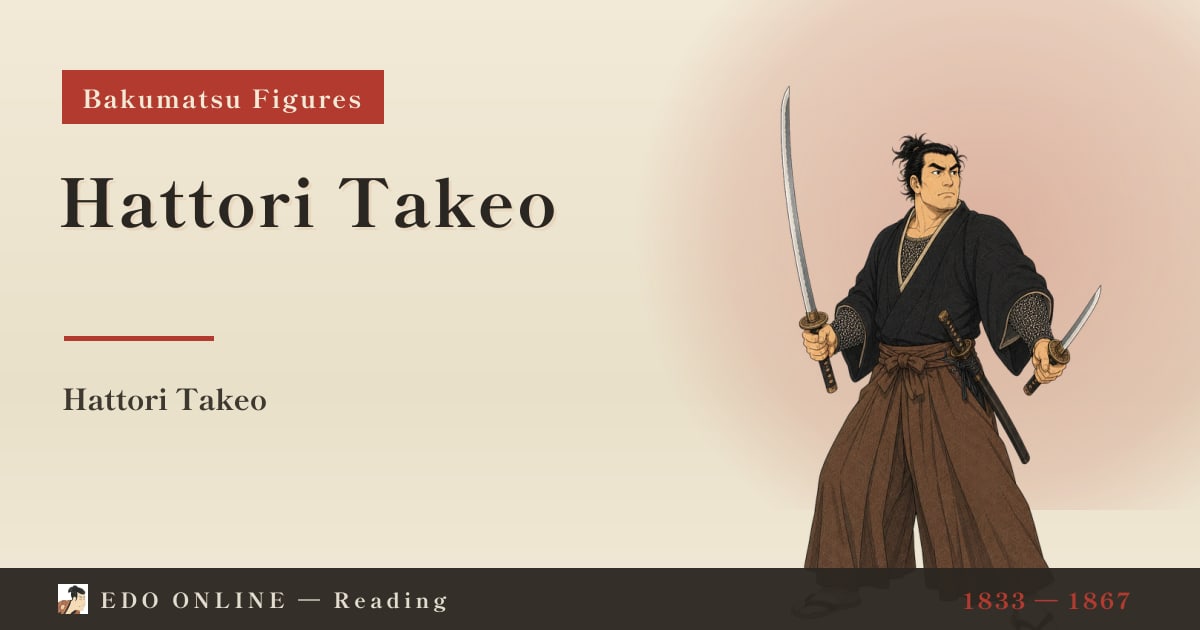
Hattori Takeo — Two Swords at Aburanokoji
A two-sword master and fencing instructor of the Shinsengumi who defected with the Goryō Eji. At Aburanokōji he alone wore mail, held a wall against the whole corps, and fell with more than twenty wounds.