Tomiyama Yahei — The Satsuma Man in the Shinsengumi
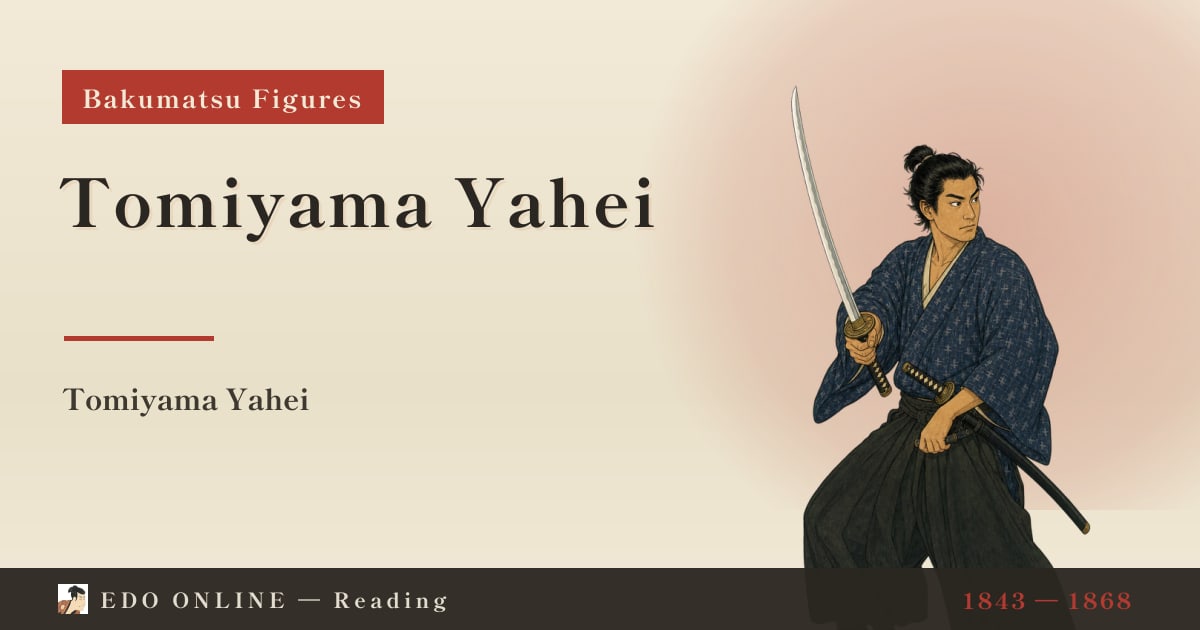
A Satsuma retainer's son served in the Shinsengumi. Tomiyama Yahei. They suspected him of spying when he joined.
Contents
Who Was Tomiyama Yahei?
Tomiyama was a member of the Shinsengumi and later one of the Goryō Eji.
He was born in 1843 into a Satsuma retainer's family. He was, by report, very fat.
He was killed in Echigo on 22 May 1868, aged twenty-six by the old inclusive count.
Was Tomiyama Yahei a Satsuma Agent?
He joined the Shinsengumi in 1864 and served in the seventh, artillery, unit, becoming a corporal in 1865.
On joining he was suspected of being a spy, on the grounds that he came from Satsuma.
Ito Kashitaro spoke for him, and he was admitted.
And there is an account that his joining was itself an insertion arranged by Satsuma's Uchida Masakaze.
The two are not in conflict. Suspected, protected by Ito, and genuinely Satsuma's man — that reads as a coherent story.
There is no proof, though. That Tomiyama moved to the Goryō Eji with Ito and served with Satsuma in the Boshin War is consistent with the spy reading without demonstrating it. Any member who had turned imperial loyalist would have taken the same road.
Tomiyama Yahei and the Aburanokoji Affair
In March 1867 he joined the founding of the Goryō Eji with Ito Kashitaro.
In the Aburanokōji affair that November he fought clear of the Shinsengumi and was sheltered by Satsuma along with Kano Washio, Shinohara Tainoshin and Suzuki Mikisaburo.
On 12 January 1868 he was among the survivors who, with Abe Juro, ambushed Kondo Isami on the Fushimi road.
How Tomiyama Yahei Died
In the Boshin War he served with Satsuma, fighting at Toba-Fushimi as a Satsuma soldier.
He was then sent to Izumozaki in Echigo to gather intelligence on the Aizu domain's movements.
There the Mito Shoseitō took him. He escaped once, failed, and was killed in May 1868.
The manner of it was extraordinary. Tomiyama is said to have been run through in some fifty places.
His head was displayed on a pike. And yet the placard beside it read:
"A man of true stature, an example to the samurai of ages to come."
Exposed by his enemies, and praised by them for how he fought.
A death poem survives, on giving his life to his country across seven lifetimes.
His body was buried on the field, and a joint grave was later raised at Takada in what is now Jōetsu, Niigata. At Kyōnen-ji in Izumozaki a marker survives inscribed "Monument to Tomiyama Shirō Toyokuni, retainer of Satsuma." He was also enshrined at Yasukuni.
A man who had been a Shinsengumi member is commemorated as a Satsuma samurai.
Frequently asked questions
Who was Tomiyama Yahei?
A member of the Shinsengumi's artillery unit and later a corporal, who defected with the Goryō Eji in 1867 and took part in the ambush of Kondo Isami.
Was Tomiyama Yahei a Satsuma spy?
Unestablished. He was suspected of it when he joined, on the grounds of his Satsuma origin, and Ito Kashitaro spoke for him. One account has Satsuma's Uchida Masakaze placing him there.
How did Tomiyama Yahei die?
Captured by the Mito Shoseitō while gathering intelligence at Izumozaki in Echigo, he was killed in May 1868, reportedly run through in some fifty places.
Where is Tomiyama Yahei's grave?
A marker survives at Kyōnen-ji in Izumozaki, Niigata. A joint grave was also raised at Takada in Jōetsu, and he is enshrined at Yasukuni.
Tomiyama Yahei Timeline
| Year | Event |
|---|---|
| 1843 | Born into a Satsuma retainer's family |
| 1864 | Joins the Shinsengumi's artillery unit; Ito Kashitaro vouches for him against a spying charge |
| 1865 | Serves as a corporal |
| Mar 1867 | Joins the founding of the Goryō Eji |
| 13 Dec 1867 | Escapes the Aburanokōji ambush and is sheltered by Satsuma |
| 12 Jan 1868 | Takes part in the ambush of Kondo Isami |
| Jan 1868 | Fights at Toba-Fushimi as a Satsuma soldier |
| 22 May 1868 | Captured and killed at Izumozaki in Echigo, aged twenty-six |
For his fellow Goryō Eji see Kano Washio, Shinohara Tainoshin, Suzuki Mikisaburo and Abe Juro; for the roster, the Shinsengumi members; for the corps, the Shinsengumi.
Related reading
Abe Juro — The Former Member Who Talked
He deserted the Shinsengumi and rejoined under another name, shot at Kondo Isami as one of the Goryō Eji, and then grew apples in Sapporo. His late-Meiji testimony is where the ranking of the corps' best swordsmen comes from.
Ando Hayataro — The Shinsengumi's Record-Breaking Archer
He set the standing national record in the long-range shooting at the Tōdai-ji Great Buddha Hall, sending 8,685 arrows the length of the corridor. Nearly fifty, he joined the Shinsengumi and died of wounds taken in the back garden of the Ikedaya.
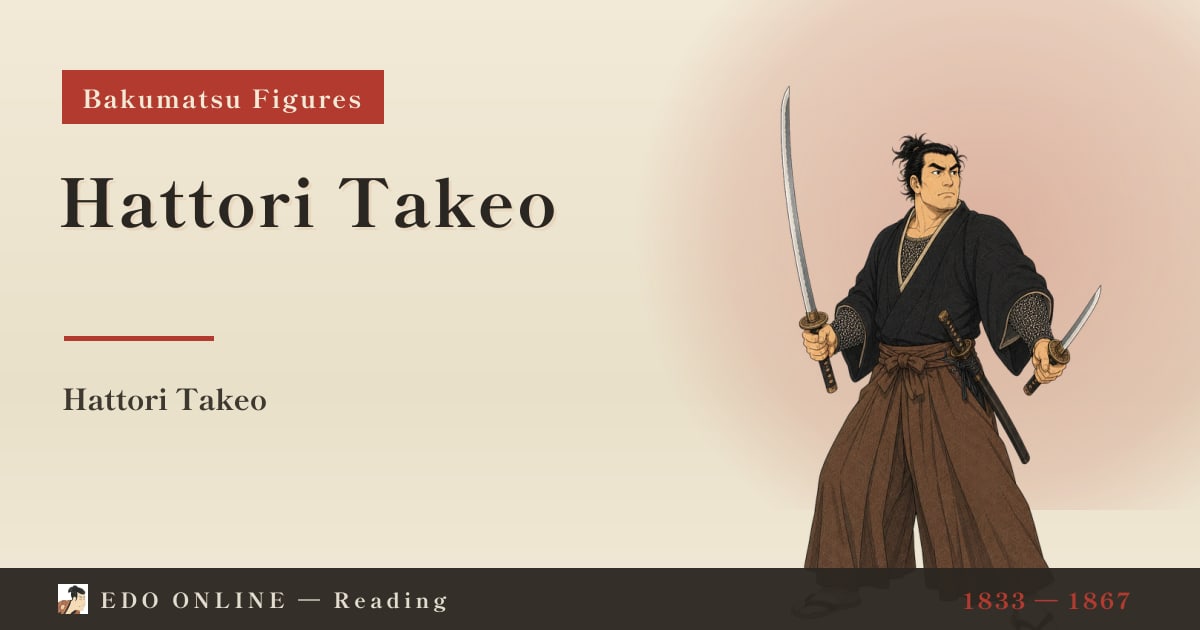
Hattori Takeo — Two Swords at Aburanokoji
A two-sword master and fencing instructor of the Shinsengumi who defected with the Goryō Eji. At Aburanokōji he alone wore mail, held a wall against the whole corps, and fell with more than twenty wounds.