Food in Edo Japan: How Sushi and Soba Began
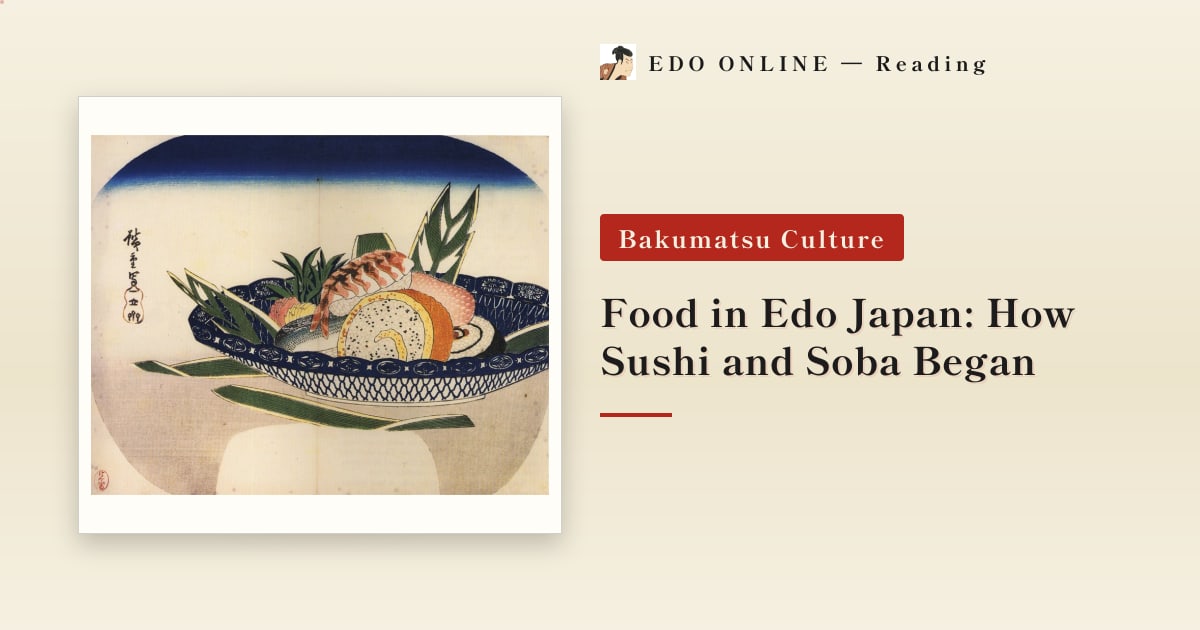
Sushi, soba, tempura, eel. The four dishes that represent Japanese cooking abroad were all created in Edo, and all of them began as street food. What is now fine dining started as the fast food of a crowded city.
Contents
What did people eat in Edo Japan?
The everyday diet was strikingly plain.
| Element | Detail |
|---|---|
| Staple | White rice, preferred over brown in the city |
| Soup | Miso soup |
| Side | One dish: pickles, a simmered vegetable or dried fish |
This is ichijū issai, one soup and one side. Fish was eaten reasonably often; meat from four-legged animals almost never. That imbalance is one reason average height in Edo Japan was the lowest in recorded Japanese history.
Three meals a day became standard in this period. Two had been the norm; lighting improved, waking hours lengthened, and physical labour was widespread, so lunch was added.
How did sushi begin?
The hand-formed sushi known as Edomae-zushi appeared in the 1820s.
Before that, sushi meant narezushi: fish packed with rice and left to ferment for months. Making it with vinegared rice and forming it on the spot collapsed that timescale to seconds.
Edo sushi differed from the modern dish in three ways.
- It was much larger — two or three times today's size, closer to a rice ball
- It was not raw — with no refrigeration, fish was simmered, marinated or cured in vinegar
- It was eaten standing at a stall — four to eight mon a piece, a snack taken on the move
Edomae originally meant fish caught in Edo Bay. Using local fish the same day was the premise the whole thing rested on.
Why was soba the food of Edo?
Soba was the city's most ordinary meal out. A bowl of plain soba cost 16 mon, a price that held for a long time.
Taking one ryō as 4,000 mon, that is roughly 500 yen in modern terms — almost exactly what a cheap bowl costs today.
Several factors put soba everywhere.
- It prevented beriberi. A diet of polished white rice lacked thiamine; buckwheat contains it. The mechanism was unknown, but people had noticed that soba eaters were less likely to develop the illness known as the "Edo affliction"
- It was quick. In a city of craftsmen and day labourers, a meal that took minutes was valuable
- It suited a stall. Night-time soba vendors operated across the city
The Kansai region preferred udon. The soba-versus-udon divide between eastern and western Japan dates from this period.
Tempura and eel
Tempura also spread as street food: seafood on skewers, fried and eaten immediately. Edo cooks generally used sesame oil, which gave it a pronounced fragrance.
There was a practical reason it stayed outdoors. Edo was terrified of fire, and deep-frying indoors in a city of packed wooden houses was discouraged. Tempura developed at open-air stalls as a result.
Eel took its modern form here. Edo cooks split the fish along the back and steamed it before grilling; Kansai split along the belly and grilled without steaming. The popular explanation — that a city of samurai avoided cutting the belly because of its association with seppuku — is a later rationalisation with no solid support.
The custom of eating eel on the midsummer ox day also became established in this period.
Why did Edo develop such an eating-out culture?
Edo had an unusual demographic problem: a heavy surplus of single men. Samurai brought from across the country by alternate attendance, migrant craftsmen, day labourers. Most lived in tenement rooms without a usable kitchen.
Fire regulation compounded it. In a city of tightly packed wooden buildings, cooking with open flame was restricted.
The result was a culture in which buying your meals was normal. By the late eighteenth century Edo supported thousands of stalls and cooked-food shops — an extraordinary concentration by the standards of any city in the world at the time.
Frequently asked questions
How many meals a day did people eat in Edo Japan?
Three. The shift from two to three meals became established during this period.
Was Edo sushi the same as modern sushi?
No. It was two or three times larger, made with cooked or cured fish rather than raw, and eaten standing at a street stall.
How much did a bowl of soba cost?
Sixteen mon for plain soba, roughly equivalent to 500 yen today.
Did people eat meat in Edo Japan?
Very little. Meat from four-legged animals was largely avoided, though boar and deer were eaten under the euphemism of "medicinal eating", and beef hotpot appeared late in the period.
For what the money meant see how much one ryō was worth; for the effect on people's bodies see average height in Edo Japan.
Related reading
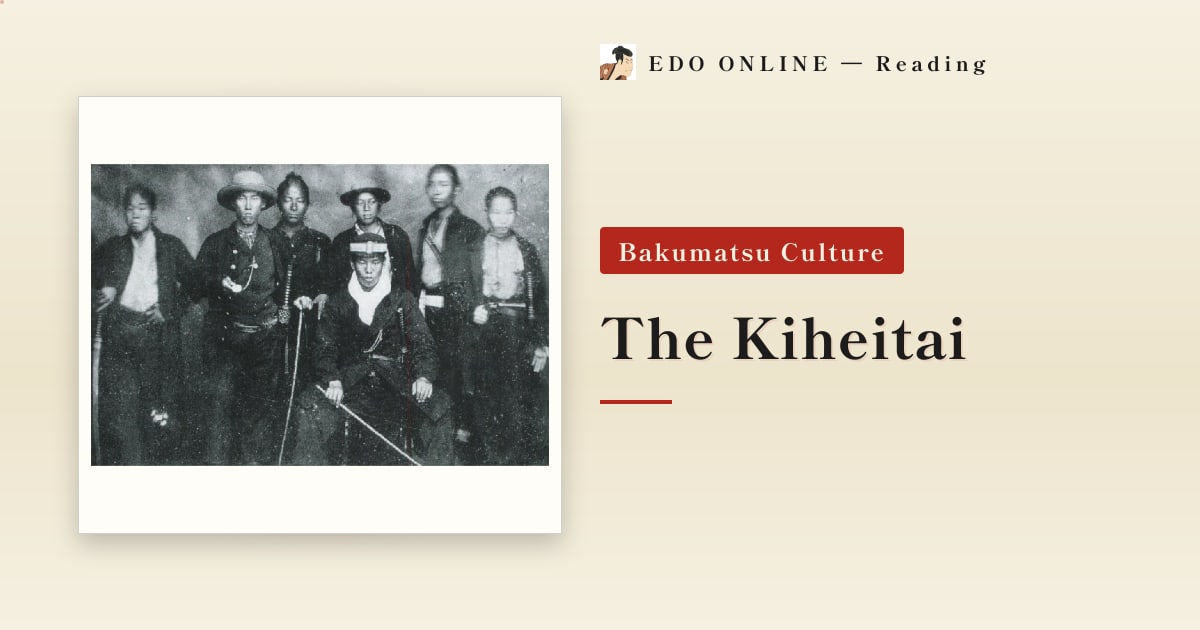
The Kiheitai — Takasugi's Army That Ignored Class
Raised in 1863 by Takasugi Shinsaku, the Kiheitai took commoners as soldiers. Why Choshu did it, how it differed from the regular army, what it won, and how the new government crushed it.
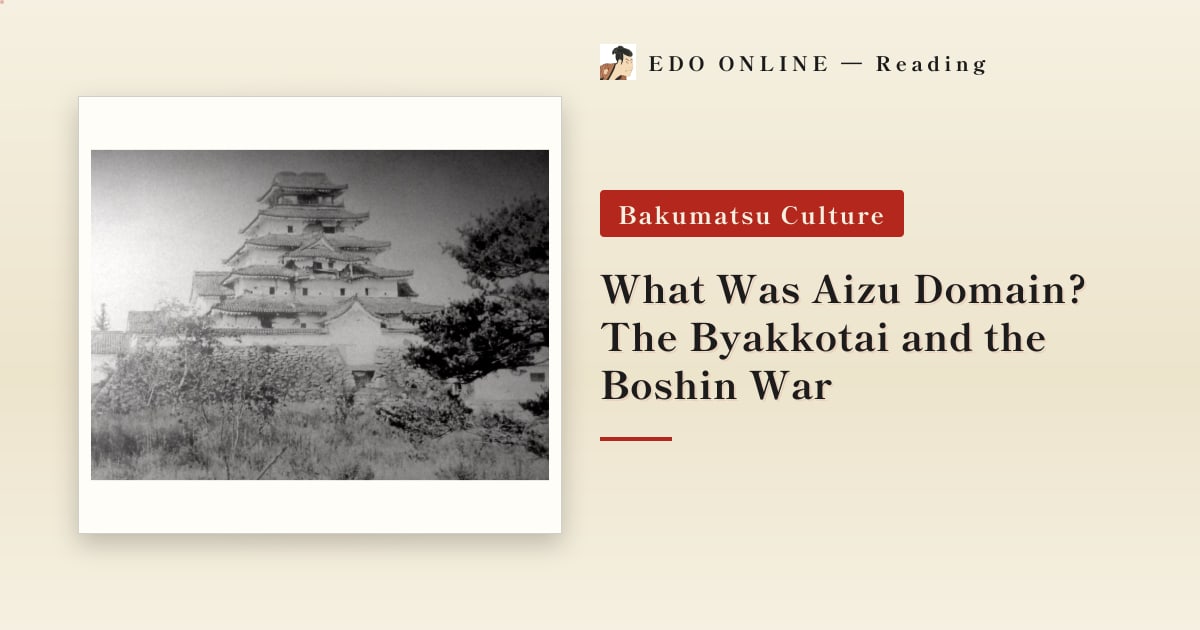
What Was Aizu Domain? The House Code, the Byakkotai, the Siege
Aizu stayed loyal to the shogunate to the end and was destroyed for it. Why Matsudaira Katamori took the Kyoto post, what happened to the Byakkotai, and how the domain was punished.
What Was the Ansei Purge? Ii Naosuke's Crackdown Explained
Between 1858 and 1859 the shogunate's chief minister Ii Naosuke purged more than a hundred opponents and executed eight, including Yoshida Shoin. Why it happened and what it destroyed.