Otori Keisuke — From Medical Student to Tokugawa Army Commander
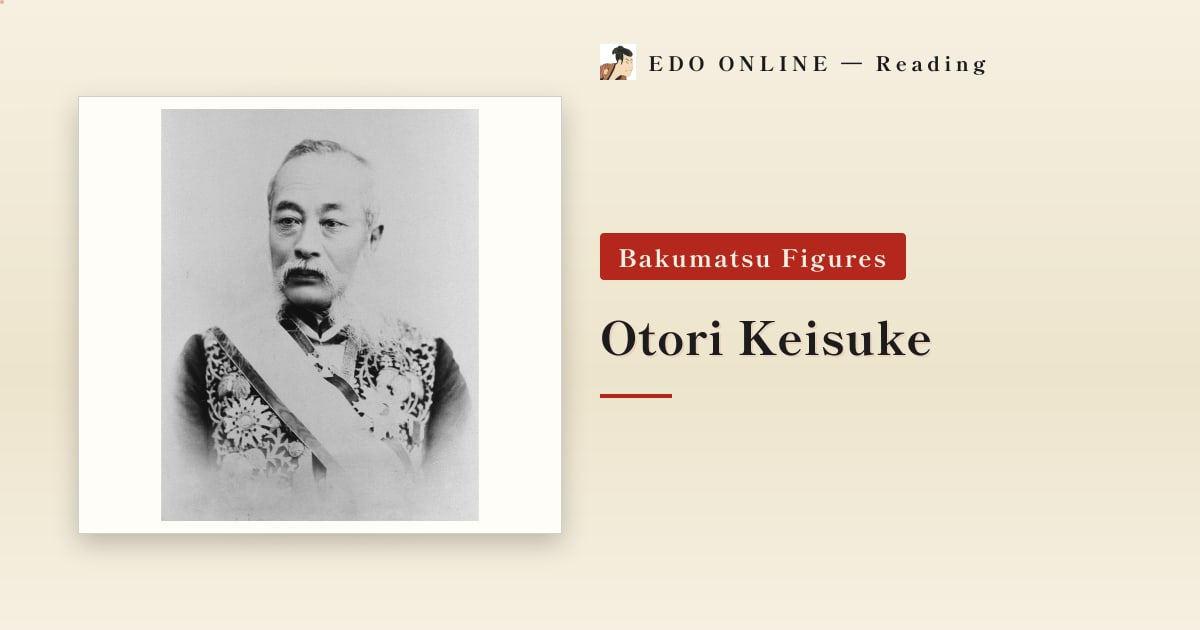
A man training to be a doctor ended up commanding the shogunate's army. Otori Keisuke — who surrendered at Goryokaku and then lived more than forty years into the Meiji era.
Contents
Who Was Otori Keisuke?
Otori was a Tokugawa retainer, a commander of Western-drilled infantry, and a Meiji technical official.
His life breaks in three.
A translator of military manuals. He translated Dutch works on warfare and brought Western military organisation to the shogunate.
A commander of the Tokugawa army. He led the French-drilled Denshutai through the Boshin War, from Utsunomiya to Aizu and on to Hakodate.
A Meiji technical educator. After his pardon he served as principal of the Imperial College of Engineering and trained engineers.
He was born in 1833 and died in 1911.
Otori Keisuke from a Village Doctor's House to Dutch Studies
Otori was born the son of a village physician in Harima, in what is now Hyogo Prefecture. Not a samurai.
What he set out to do was medicine, studying Dutch-style medicine at Ogata Koan's Tekijuku in Osaka — the same school as Fukuzawa Yukichi and Hashimoto Sanai.
But where Otori excelled was less medicine than the Dutch language itself.
Men who could read a European language were extremely scarce. Japan did not have enough people able to read Western technical books.
Otori turned to military manuals — infantry formations, artillery handling, fortification. Takashima Shuhan, Egawa Hidetatsu and Sakuma Shozan had already begun introducing this material, but specialists who could read the originals were still few.
The shogunate needed the capability. A farmer's son was taken into its service.
Otori Keisuke and the Denshutai
In the Keio years the shogunate began reforming its army on the French model, bringing in a French military mission and forming Western-style infantry.
The units they trained were the Denshutai — the newest and strongest formation in the Tokugawa army.
Otori came to command them. He had moved from translator to field officer.
Otori Keisuke from Utsunomiya to Hakodate
The Boshin War began in 1868.
Otori did not surrender. He kept fighting.
He fought at Utsunomiya, moved through Nikko, and on into Aizu. When Aizu fell he went north, and from Sendai boarded Enomoto Takeaki's fleet for Ezo.
Then Goryokaku at Hakodate.
The fort surrendered on 27 June 1869. Otori was captured and imprisoned.
Hijikata Toshizo, on the same front, was killed at Hakodate. Otori survived.
Otori Keisuke's Forty Years After the Pardon
Otori was pardoned in 1872.
And taken into the new government.
The reason is plain: there were not enough engineers. People who combined an understanding of Western military organisation, a foreign language, and actual field command were scarce on the new government's side too, so former Tokugawa specialists were put to use.
The direction Otori took was not the army but technical education.
He entered the Ministry of Public Works and served as principal of the Imperial College of Engineering, the institution that became the engineering faculty of Tokyo Imperial University — the starting point of engineering education in Japan.
He also served as head of the Gakushuin and as minister to Qing China.
He died on 15 June 1911, aged seventy-eight.
A commander who surrendered at Hakodate lived to the end of the Meiji era and built Japan's engineering schools.
The Route Otori Keisuke Took
Otori's life shows how talent moved in the period.
A village physician's son made a career from Dutch studies, entered shogunal service on his languages, became a soldier, was defeated and imprisoned, was pardoned, and became a technical official.
He moved on skill rather than status. And that skill did not lose its value when the shogunate fell.
Winners and losers alike used whatever engineers they could get. That was the condition of early Meiji Japan.
Otori Keisuke Timeline
| Year | Event |
|---|---|
| 14 Apr 1833 | Born the son of a village physician in Harima |
| 1850s | Studies Dutch medicine under Ogata Koan at the Tekijuku |
| 1850s–60s | Taken into shogunal service for his translations of military manuals |
| Keio years | Commands the French-drilled Denshutai |
| 1868 | Fights at Utsunomiya, Nikko and Aizu in the Boshin War |
| late 1868 | Crosses to Ezo with Enomoto Takeaki's fleet |
| 27 Jun 1869 | Goryokaku surrenders; he is captured and imprisoned |
| 1872 | Pardoned and taken into the new government |
| Meiji era | Principal of the Imperial College of Engineering; head of the Gakushuin; minister to Qing China |
| 15 Jun 1911 | Dies, aged 78 |
For others on the Hakodate front see Enomoto Takeaki and Hijikata Toshizo; for the fort, Goryokaku.
Related reading
Abe Juro — The Former Member Who Talked
He deserted the Shinsengumi and rejoined under another name, shot at Kondo Isami as one of the Goryō Eji, and then grew apples in Sapporo. His late-Meiji testimony is where the ranking of the corps' best swordsmen comes from.
Ando Hayataro — The Shinsengumi's Record-Breaking Archer
He set the standing national record in the long-range shooting at the Tōdai-ji Great Buddha Hall, sending 8,685 arrows the length of the corridor. Nearly fifty, he joined the Shinsengumi and died of wounds taken in the back garden of the Ikedaya.
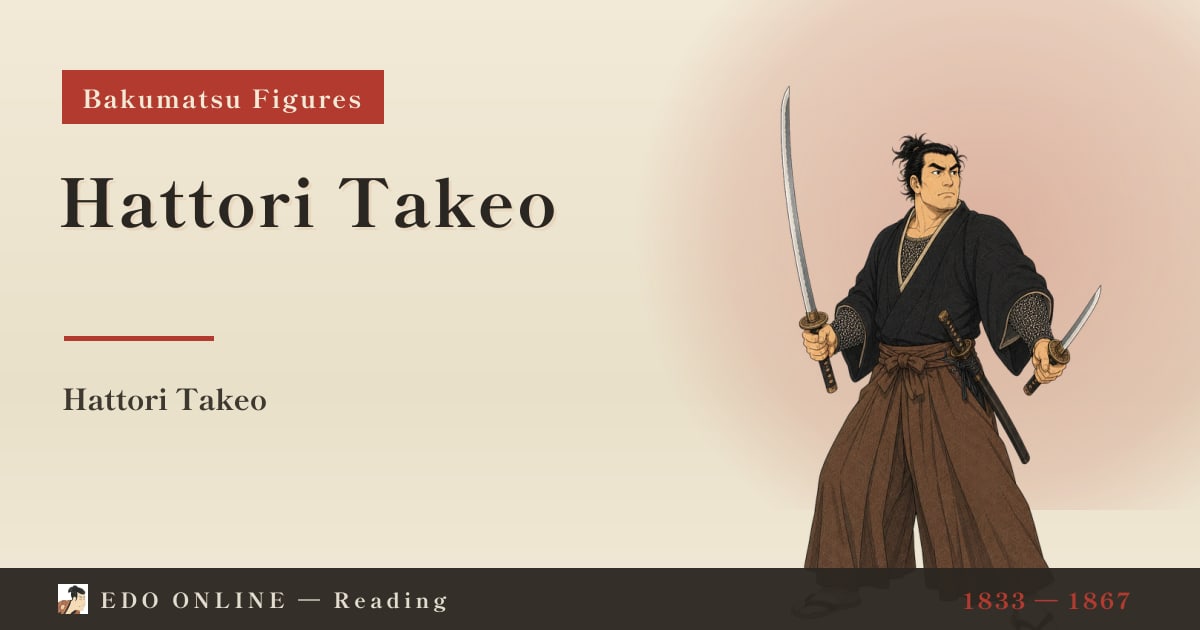
Hattori Takeo — Two Swords at Aburanokoji
A two-sword master and fencing instructor of the Shinsengumi who defected with the Goryō Eji. At Aburanokōji he alone wore mail, held a wall against the whole corps, and fell with more than twenty wounds.